
Search Results:
Search Results:
Search Results:
Search Results:
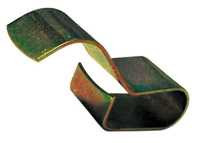
A spring clip is a single piece of formed metal shaped so that opening it stores elastic energy. Press the clip onto a cable, pipe, or shaft and it deflects, then springs back to grip the surface. The grip is provided by the metal itself, not by a screw or fastener thread. This is what makes a spring clip fast to install and easy to remove without damaging the work piece.
Spring clips hold one component to another using mechanical retention only. A girder clip slips over the flange of a steel beam to support cable trays, conduit, or threaded rod. A retaining clip seats into a groove on a shaft to stop axial movement. A U-clip pushes onto a panel edge to receive a screw on the other side. In every case, the clip replaces a more time-consuming fixing method.
Spring steel deforms under load and returns to its original shape when the load is removed. The clip is sized so the workpiece forces a small permanent deflection during fitting. The metal pushes back, and that residual force is what holds the assembly together. Clip designers control retention force by changing the wire gauge, the bend geometry, and the heat treatment.
Where a job calls for many identical fixings, a spring clip cuts labour time sharply. There is no drilling, no thread tapping, and no torque setting. The fitter snaps the clip into place and moves on. That repeatability is the reason spring clips dominate cable support on steel structures, switchgear assembly, and high-volume manufacturing.
Trade buyers choose spring clips for three reasons: speed, vibration tolerance, and consistent retention across a long assembly run. Each reason maps to a different fixing problem.
A licensed electrician can fit dozens of girder clips in the time taken to drill and bolt a single beam clamp. There is no power tool involved and no swarf to clean up. Removal is just as quick: lever the clip off, and the beam is unmarked. Tooling cost is zero on most sizes.
Threaded fasteners can loosen under sustained vibration unless they are torqued correctly and locked in place. A correctly sized spring clip stays in compression at all times. Small movements in the assembly are absorbed by the clip flexing, not by the joint loosening.
On a production line every clip applies the same retention force because the metal and geometry are identical. There is no operator-dependent torque, and no chance of cross-threading. This is why appliance manufacturers use spring clips to hold internal parts and trim panels.
Spring clips appear across electrical, mechanical, automotive, and general hardware work. The applications below cover the most common Australian trade uses.
Girder clips and beam clips suspend cable trays, conduit runs, and threaded rod from steel structures in commercial buildings. Smaller cable clips fix flat or round cable to timber, plasterboard, and brick. Used together, they form a complete support system for a cable run from the main switchboard to the final point. For PVC conduit work, also consider conduit saddles alongside spring clips.
Inside switchboards, motor starters, and distribution boards, spring clips hold DIN rail accessories, terminal covers, and small busbars. Inside white goods and HVAC equipment, they retain fan shrouds, capacitor covers, and wiring looms. The clip is invisible in service but critical to assembly.
Retaining clips and circlips hold bearings on rotating shafts in pumps, motors, and gearboxes. U-clips secure trim, badges, and access panels on vehicles. Custom-formed clips appear in furniture, appliances, and machinery wherever a hidden fastener is needed.
Spring clips fall into four broad families based on how they grip the workpiece. Each family has its own selection criteria.
Wire clips suit small loads where a low-cost, easy-fit solution is needed. Examples include trailer light cables, irrigation lines, and small-bore copper tubing on refrigeration work. They are not load-rated for structural use.
External circlips fit onto a shaft in a machined groove. Internal circlips fit inside a bore in the same way. Both prevent components like bearings, gears, and pulleys from sliding off or moving along the shaft. Standard sizes are listed in DIN 471 and DIN 472.
A U-clip slides over a panel edge and creates a captive thread that accepts a self-tapping screw. The screw bites into the soft metal of the clip, not the panel itself. This is ideal for thin sheet that would not hold a thread on its own.
Girder clips, beam clips, and hammer-on clips are formed for one task: gripping the flange of a structural steel beam. They are rated by flange thickness range, for example 8 to 13 millimetres or 25 to 32 millimetres. The clip arrives pre-shaped, the fitter taps it onto the beam, and a threaded eye or hook is then ready to take cable tray hangers or conduit.
Material choice drives most of the long-term performance of a spring clip. The same shape in three different metals will behave very differently in service.
Stainless grades 304 and 316 resist rust and chloride attack. Grade 316 is the right choice within a few hundred metres of salt water, in coastal industrial sites, and in food processing. Stainless costs more than carbon steel and has a slightly lower spring rate at the same gauge, so the clip may be made from heavier wire to compensate.
Plain carbon steel offers high strength at a low price. It must be plated or painted to resist corrosion. Zinc plating is standard on most Australian indoor electrical work and meets the needs of dry, conditioned spaces. Hot-dip galvanising suits exposed external work.
True spring steel is heat-treated to a high yield point. It returns reliably to shape after thousands of fitting and removal cycles. This is the grade used in high-cycle applications such as automotive trim, white goods, and machinery panels. The cost premium is justified by the service life.
A spring clip is only as good as the match between its geometry and the workpiece. Three design factors decide whether the clip will hold under real conditions.
Retention force grows with wire gauge, bend angle, and the depth of the gripping section. A heavier gauge clip holds better but takes more force to fit. Designers strike a balance: high enough to resist the working load, low enough that a fitter can install by hand.
The contact face of the clip wears against the workpiece every time the assembly moves. A polished finish slides without scratching. A textured or knurled finish bites in for higher hold but may mark soft surfaces such as PVC conduit. Match the finish to the host material.
Manufacturers publish working load limits for engineered clips like girder clips and beam clamps. These figures cover static load only. Apply a safety factor for dynamic loads, vibration, and shared support points. Never load a clip beyond its published rating.
For overhead cable support on steel beams, the published working load applies per clip. If a tray run uses three clips per metre, the load is distributed across all three. Failure of one clip transfers the load to the neighbours, so design the support spacing with that in mind.
Spring clips compete with screws, bolts, and cable ties on most fixing jobs. Each method has clear strengths and weaknesses. The table below sets them side by side.
| Fastening Method | Speed | Hold Strength | Re-use | Best Use |
|---|---|---|---|---|
| Spring Clip | Very fast | Medium to high | Yes | Repeated fixing, vibration |
| Screws and Bolts | Slow | Very high | Yes | Permanent, high-load joints |
| Cable Ties | Fast | Low to medium | No (single use) | Bundling, light bundling support |
| Adhesive Pads | Fast | Low | No | Light cable fixing on smooth surfaces |
Screws win on absolute hold strength and on heavy-load applications. Spring clips win on speed, on assembly cost, and on vibration tolerance. A typical electrical fit-out uses both: spring clips for cable support on steel, and screws to fix accessories to plasterboard.
Cable ties bundle and bundle-support. Spring clips fix cable to a structure. The two are complements, not substitutes. A neat run will use cable ties to bundle the cores and spring clips to fix the bundle to the beam. Compare the choices in our cable ties range.
Spring clips lose hold if the work piece dimension is outside the clip's rated range. Screws lose hold if the host material strips. Cable ties degrade in UV light unless rated for outdoor use. Match the method to the conditions, not to habit.
Selection comes down to three questions: what size, what load, and what environment. Get all three right and the clip will outlast the building.
Measure the workpiece first. For a girder clip, measure the flange thickness with a vernier. For a cable clip, measure the cable outer diameter. Pick a clip whose stated range covers the measured value with a small margin at each end. A clip that just fits new-build flanges will struggle on older steel, where dimensions vary.
Add up the working load on each clip, including the weight of cables, fittings, and any safety factor for movement. Compare to the manufacturer's stated working load limit. Build in spare capacity for added cables in future fit-outs.
Indoor, dry, conditioned space: zinc-plated carbon steel is fine. Damp areas and external work: hot-dip galvanised or stainless. Coastal sites within a kilometre of the surf line: grade 316 stainless. Get the corrosion call right and the clip will not need replacement.
Sizing tip: Always cross-check the clip range against the measured workpiece dimension. A 25 to 32 millimetre girder clip will not grip an 18 millimetre flange, and a clip pushed onto a flange thicker than rated will yield permanently and lose hold under load.
Australian electrical work uses spring clips throughout the cable management chain. The three areas below cover most installations.
Run flat building wire along timber or masonry using sized cable clips at regular intervals. AS/NZS 3000:2018 requires fixings at intervals that prevent strain on the conductor and prevent contact with hot or sharp surfaces. Spring-style cable clips fix without pre-drilled holes on most surfaces.
Clip rigid conduit to walls and ceilings using saddles, but use spring clips and girder clips where the conduit crosses steel structure. The clip wraps the beam flange and presents a hole for a threaded eye nut, which then takes the conduit hanger. Use electrical accessories from the same product family for a clean install.
Inside electrical enclosures, spring clips retain DIN rail covers, terminal shrouds, and small chassis components. They make service work faster: a single tool removes the cover, and the clip snaps back without re-torquing.
A spring clip is only reliable if it is fitted correctly. The three rules below cover most failures seen in service.
Open a circlip only as far as needed to clear the shaft. Press a girder clip onto the flange in one smooth motion, not by repeated rocking. Each over-bend takes the clip past its elastic limit and reduces final retention force. Once a clip is yielded it must be replaced.
The clip must seat fully against the work piece. A circlip must drop into its groove all the way around. A girder clip must sit flush on the flange with no daylight visible. Check by sight and by feel before moving on.
Hand-fit clips need only fingers. Circlips need circlip pliers, and trying to fit them with general pliers will spread the legs and ruin the clip. Heavy beam clips may need a soft-faced mallet for the final tap into place. Get the right tool from our hand tools range.
Spring clips are usually fit-and-forget items, but periodic checks catch problems before they cause an outage. The three signs below are the early warnings.
A clip that has lost tension will sit loose on the work piece, rattle when tapped, or slide under hand pressure. Deformation shows up as visible bend in the clip arms or as a flattened gripping face. Replace any clip that shows these signs.
Surface rust on a zinc-plated clip is normal after some years and not always cause for replacement. Pitting rust, white powder under the plating, or any cracks at the bend points are end-of-service signs. Stainless clips that show brown staining usually have surface contamination from carbon steel, not real corrosion.
Replace clips on a schedule for safety-critical work: every full equipment overhaul, or every five years in marine and coastal work. Keep spares of common sizes on the van. A failed clip that drops a cable tray during business hours costs far more than the replacement clip ever did.
Three errors account for most spring clip failures on Australian sites. All three are easy to avoid once recognised.
Loading a clip past its working load may not show up immediately. The clip yields a small amount, retention force drops, and weeks later the assembly slips. Always work to the published rating and never use the absolute strength figure as a design value.
The most common mistake is grabbing the wrong size from a mixed jar. A 4 millimetre cable clip on 6 millimetre cable will sit loose. A 25 to 32 millimetre girder clip on a 35 millimetre flange will not seat. Read the printed size on the jar label every time.
Plain zinc clips in a coastal location will rust through in two or three years. Carbon steel clips in a swimming pool plant room will fail faster. The cost difference between zinc plate and stainless on a single clip is small. The cost of a failure is not.
Spring clips that are sized, fitted, and selected correctly will outlast most other components in the assembly. The three factors below decide service life.
Every cycle of fitting and removal takes a small amount of life out of the clip. Spring steel clips rated for high-cycle service may give thousands of cycles. Plain carbon steel clips are intended for two or three cycles at most. Match the metal to the expected service.
Keep clips dry where possible. Avoid mixing carbon steel and stainless in the same fixing because galvanic action will eat the carbon steel side. In wet locations choose stainless or galvanised, and check the rating of any associated screws.
Inspect critical clip fixings during routine maintenance. Replace anything that looks tired before it fails. A planned replacement during scheduled downtime is always cheaper than an unplanned one during production hours.
Australian trade buyers have three main purchase channels for spring clips: online wholesale, hardware retail, and specialist fastener suppliers. Each suits a different need.
Online wholesalers stock the full size range, deliver next-day to most metro areas, and price for trade volumes. Sparky Direct ships spring clip packs Australia-wide and is a popular choice for licensed electricians sourcing job stock.
Cheap spring clips from generic suppliers may be made from low-grade steel with thin plating. They look identical to trade-grade clips on the shelf but fail earlier under load and corrosion. Trade-grade clips from established brands cost a little more but carry stated working loads and known material specs.
Most spring clips ship in jars of 100 or 200, and bulk pack pricing is sharply cheaper per unit than small-pack pricing. Contractors running multiple jobs benefit from buying jar quantities of the common sizes. Open trade accounts at Sparky Direct give access to volume pricing across the full range.
Three failure patterns cover most service calls on spring clip fixings. Each has a clear cause and a clear fix.
A clip that has lost tension was either over-bent on fitting, fitted to a work piece outside its size range, or has reached fatigue end-of-life. Replace with a correctly sized clip and check the dimensions of the work piece against the clip rating.
Clips that dislodge under vibration are usually undersized for the load. Step up to a heavier clip, or fit a second clip in series for redundancy. On critical assemblies consider a positive lock such as a split pin alongside the clip.
A broken clip is either fatigued or badly corroded. Fatigue cracks start at the bend points and are visible under good light. Corrosion shows as deep pitting, especially on the inside of the bend where moisture sits. Replace and upgrade the material grade if the same clip has failed twice.
Watch Spring Clip 25-32mm Jar of 100 | SC2532 video
Watch NLS 30213 | Girder Clip 8-13mm | Jar of 100 video
Watch Spring Clip 16-20mm Jar of 100 | SC1620 video

Sparky Direct literally saved my Christmas display. We had used all of the metal clips from previous years, and still had 50 metres of rope lights still to put on the Christmas train. A quick trip to the 2 large hardware stores in the area resulted in strange looks. No one knew metal electric cable clips!! Search the web and there was Sparky Direct!! A quick phone call sorted the size I needed and the order was in. The clips were easy to manipulate around the plastic rope, also folding the ends through the slots and back proved to no problem. Thanks to the excellent product and Speedy Direct's incredible customer service the Christmas Train and the Sleigh were completed in time for the children of the neighbourhood to enjoy.
Excellent, used these to hold wiring loom on veteran car with wooden body, they will ultimately blend in.
What can I say - they do the task that they were designed for - holding firm 6 mm cable and they do it well.
Quality products in stock • Fast Australia-wide delivery • Competitive trade pricing
Browse Spring Clips → Get Expert Advice →Yes, they significantly reduce installation time compared to screw terminals.
Sparky Direct supplies spring clips Australia-wide, offering fast and reliable electrical connection solutions with convenient delivery.
Spring clips are securely packaged and delivered via standard courier services.
Unused products are generally eligible for return according to the seller’s returns policy.
Warranty coverage varies by manufacturer and typically covers defects in materials or workmanship.
Yes, spring clips are typically sold individually or in packs.
Yes, correct selection ensures compatibility and safe connections.
Yes, they are commonly used when upgrading or modifying wiring.
They are usually concealed within fittings or junction boxes.
Yes, their compact design makes them ideal for tight enclosures.
Quality spring clips are designed for long-term performance.
Yes, spring tension maintains firm contact over time.
They are simple for licensed professionals to use correctly.
Spring clips are electrical connectors that use spring tension to hold conductors securely in place without screws.
Yes, they are widely used for their convenience and reliability.
They offer faster installation and consistent connection pressure.
Yes, they are commonly installed within junction boxes or enclosed fittings.
Yes, they are suitable for residential, commercial, and light industrial applications.
Yes, they are widely used in residential electrical wiring.
Some spring clip designs allow conductors to be removed and reinserted, depending on the product.
Many spring clips are suitable for both solid and stranded conductors, depending on the design.
Yes, they are designed for use with copper electrical conductors.
Yes, they are commonly used in light fittings and downlights.
Quality spring clips are manufactured to meet relevant AS/NZS electrical and safety standards when used correctly.
They are used to quickly connect and terminate electrical wires in lighting fittings, junction boxes, and electrical accessories.