
PRICE DROP
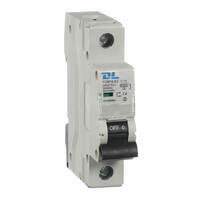
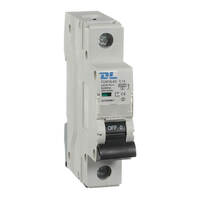
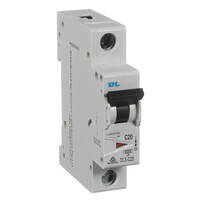
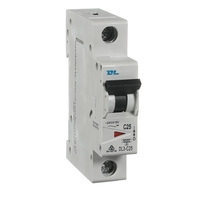
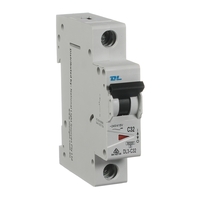
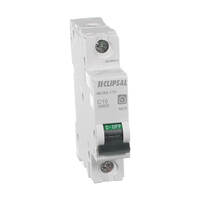
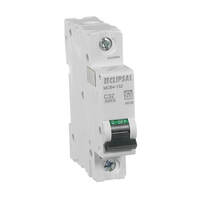
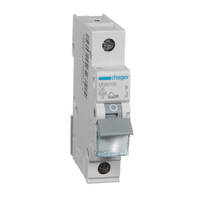
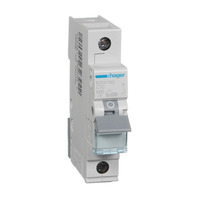
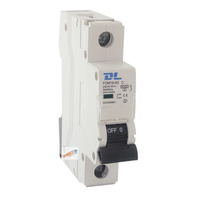
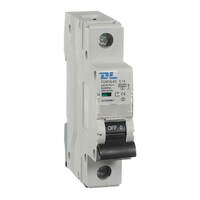
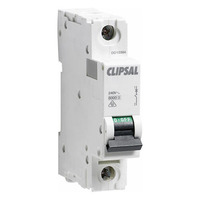
NLS 30376 | 16 amp Single Pole 10kA Circuit Breaker | DL.. Discontinued
Now $2.31
$2.10 ex. GST
Search Results:
Search Results:
Find the best single-pole circuit breakers here at Sparky Direct. [ Read More ]
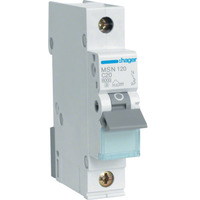
A single pole circuit breaker is a compact protection device that occupies one module on a DIN rail. It controls one active phase conductor and breaks the circuit automatically when current exceeds the rated value. The neutral conductor is not switched by a single pole device, which is why these breakers are paired with a separate neutral bar in the switchboard.
Most single pole MCBs sold in Australia are rated for 230/240 V AC and current values from 2 A through to 63 A. They are designed to be reset by hand after a trip, unlike the rewireable fuses they replaced.
Every single pole MCB contains two tripping mechanisms working in parallel. The thermal element uses a bimetallic strip that bends as it heats. Sustained overload current heats the strip enough to release the contacts, usually after several seconds or minutes depending on the overload size.
The magnetic element responds to short-circuit current. A solenoid pulls the contacts open within milliseconds when fault current exceeds the magnetic threshold, typically five to ten times the breaker rating. The combination protects against both slow overloads and instant high-current faults.
When either element operates, the breaker handle drops to the mid or off position and the circuit is isolated. The arc generated as the contacts separate is extinguished inside the arc chute, a vented chamber that splits and cools the arc safely. After the fault is cleared, the handle is pushed firmly to off and then back to on to restore power.
Cable insulation is rated for a maximum continuous current. Above that current, the insulation softens, degrades, and eventually fails. The single pole breaker is sized to trip before the cable reaches that limit, keeping the conductor within its safe operating temperature for the life of the installation.
Loose connections, partial faults, and gradual insulation breakdown can produce heat without an obvious short circuit. A correctly rated breaker, paired with sound terminations, limits the energy available at fault points and reduces the chance of switchboard or wall cavity fires.
One breaker per circuit means an electrician can isolate a single load without shutting down the whole installation. This makes routine work safer, speeds up fault finding, and reduces disruption to occupants during repairs. For full board isolation, look at single pole main switches.
The standard Australian home switchboard uses single pole MCBs for almost every final subcircuit. Lighting circuits typically run on 6 A or 10 A breakers. General power outlet circuits run on 16 A or 20 A, depending on the cable size and load profile.
Offices, retail tenancies, and small workshops use the same single pole MCB format for lighting, socket outlets, and dedicated equipment circuits. The DIN rail standard makes it easy to swap or extend protection as the tenancy fit-out changes.
In larger installations, single pole MCBs sit downstream of a main switch and three pole upstream protection. They handle branch circuits feeding individual loads. Pair them with quality distribution boards and proper insulated busbars for clean, code-compliant assemblies.
A single pole breaker switches one active conductor only. A two pole circuit breaker switches both an active and a neutral, or two actives in a 240 V split arrangement. Two pole devices are common on appliance and isolation duties where complete disconnection is required. Three actives in a balanced load use a three pole circuit breaker.
Rewireable and HRC fuses sense and clear faults using a fusible element. Once they operate they must be replaced. A circuit breaker performs the same protective function but is reset by hand and provides repeatable, calibrated trip behaviour over its service life. Modern Australian switchboards use breakers for final circuits and reserve fuses for service-entry roles only.
An MCB protects against overcurrent only. An RCD (Residual Current Device) detects earth leakage and protects people from electric shock. An RCBO combines both functions in a single module. A single pole RCBO is now the preferred choice for new circuits in many Australian installations because it provides per-circuit shock protection without group nuisance tripping.
The rated current is the continuous current the breaker will carry without tripping under reference conditions. Common values in Australia are 6 A, 10 A, 16 A, 20 A, 25 A, 32 A, 40 A, 50 A, and 63 A. The rating is matched to the cable cross-section and the connected load.
| Rating | Typical Cable | Common Use |
|---|---|---|
| 6 A | 1.0 mm² | Small lighting subcircuits |
| 10 A | 1.0 to 1.5 mm² | General lighting circuits |
| 16 A | 1.5 to 2.5 mm² | GPO circuits, small appliances |
| 20 A | 2.5 mm² | Standard GPO and dedicated outlets |
| 32 A | 4 to 6 mm² | Hot water, ovens, single-phase EV chargers |
The trip curve sets how quickly the magnetic element operates. B curve trips at three to five times rated current and suits resistive loads such as lighting and heating. C curve trips at five to ten times rated current and is the default for general power circuits with mixed inductive loads. D curve trips at ten to twenty times rated current and is reserved for high inrush loads such as motors and transformers.
Choosing the wrong curve causes nuisance tripping or, worse, fails to clear a real fault quickly. Lighting on a D curve will not trip on a faulted circuit fast enough. A motor on a B curve will trip every time it starts. Always match the curve to the load type.
The breaker rating must never exceed the current-carrying capacity of the cable it protects. Cable capacity depends on conductor size, insulation type, installation method, ambient temperature, and grouping with other circuits. AS/NZS 3008 sets the derating tables used in Australia.
Calculate the maximum demand for the circuit, allow a sensible margin for future load growth, and choose the next standard rating up to the cable capacity. For a 2.5 mm² GPO circuit drawing 12 A continuous, a 16 A or 20 A breaker is appropriate, depending on installation method.
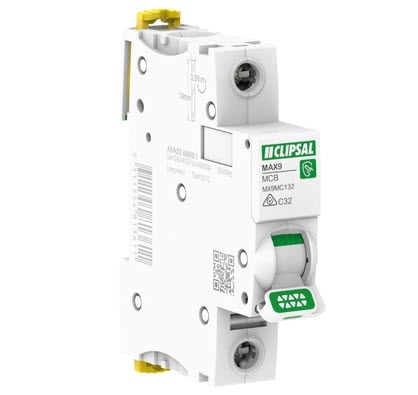
Not every breaker fits every board. Width per pole, terminal style, and combing arrangement vary between brands. Check the manufacturer specification before mixing brands on a single comb or busbar. The Clipsal MAX9 range uses standardised tunnels designed to accept a wide range of comb sizes.
The Wiring Rules require coordinated overcurrent protection on every final subcircuit. The breaker rating, cable size, and installation method must be designed together so that fault current is cleared within the time and energy limits set out in AS/NZS 3000.
Final subcircuits in domestic and most commercial premises require 30 mA RCD protection. The MCB and the RCD work as a pair. The MCB clears overcurrent and short circuit. The RCD clears earth leakage. A single pole RCBO replaces both with one device per circuit, giving cleaner discrimination and faster fault location.
Every breaker installed in Australia must carry the appropriate Regulatory Compliance Mark and meet AS/NZS 60898 for residential and similar use. Buying from established brands and a reputable supplier removes the risk of counterfeit or non-compliant product reaching site.
Licensed work only: The installation, alteration, and replacement of circuit breakers in fixed wiring is electrical work under state and territory law. It must be carried out by a licensed electrician.
Fitting a 32 A breaker to protect 2.5 mm² cable looks like a fix for nuisance tripping but removes the protection the cable is relying on. The cable will overheat well before the breaker reacts. Always size the breaker down to the cable, never the other way.
Putting a B curve on a circuit with a refrigeration compressor or large transformer almost guarantees nuisance tripping at start-up. Putting a D curve on a lighting circuit means a faulted lamp may not clear within the required disconnection time.
Breaker ratings are quoted at 30 degrees Celsius reference ambient. In a hot switchboard cabinet or a tightly packed row, real capacity drops. Apply derating factors from manufacturer data and AS/NZS 3008 when sizing for installations in roof spaces, plant rooms, or industrial sites.
One circuit per breaker means a fault on one circuit does not take out unrelated loads. Lights stay on while a faulty appliance circuit is investigated. This is a basic but important safety feature in occupied premises.
Each MCB acts as a labelled, lockable isolation point for the circuit it protects. Combined with proper labelling and a current circuit schedule on the inside of the board cover, this makes routine maintenance and emergency response straightforward.
Replacing aged fuses and ceramic fuse holders with modern MCBs improves both safety and reliability. The breaker resets after a fault, so a tripped lighting circuit at 11 pm does not need a fuse wire and a torch.
Quality MCBs are rated for thousands of mechanical operations and a smaller but still significant number of electrical operations under fault conditions. Brand engineering matters here: cheaper imported product can fail to clear repeatedly without obvious damage.
If a breaker trips repeatedly without an obvious overload, the cause is usually one of three things. The first is an undersized breaker for the real load. The second is a wrong trip curve for the load type. The third is a developing fault such as moisture in an outdoor circuit. Investigate the cause rather than swapping in a larger breaker.
A single pole final-circuit breaker should always trip before the upstream main switch, RCD, or three pole supply protection. This is called discrimination. Without it, a single faulted appliance can take out the whole installation. Use manufacturer coordination tables when designing the board.
The DIN rail single module MCB is the dominant format in Australia. Width is 17.5 to 18 mm per pole. Mounting is by spring clip onto a 35 mm top hat rail. Almost every modern switchboard is built around this footprint.
Several manufacturers now offer half-module MCBs, where two breakers share one full module slot. These are useful for retrofits where additional circuits must be added to an existing board without replacing the enclosure.
Within a brand range, breakers, RCDs, and combs are designed to work together. Across brands, the basic DIN rail mounting is interchangeable but combing and accessory rails generally are not. The main brands stocked at Sparky Direct include Clipsal, Hager, Eaton, Legrand, NHP Electrical, CBI-electric, and Connected Switchgear.
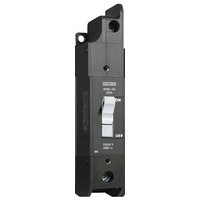
If the existing board is already plug-in style rather than DIN rail, look at plug-in circuit breakers for direct retrofit options.
Best practice for new domestic and small commercial work is one RCBO per final subcircuit. Where group RCD protection is used, single pole MCBs sit downstream of the RCD and protect against overcurrent only. The grouping arrangement should keep critical and non-critical loads on separate RCDs to limit nuisance tripping impact.
In three phase installations, loads are spread across the three phases to keep the system reasonably balanced. Single pole breakers make this straightforward because each circuit is allocated to a single phase at the busbar.
When upgrading older boards with rewireable fuses, plan the new layout around final RCBO protection rather than just swapping fuses for MCBs of the same rating. Cable size, insulation condition, and earthing arrangement all need review at the same time.
Sparky Direct stocks the full range of single pole MCBs from leading brands. The category page lists stock and pricing for individual breakers and pack quantities. Trade pricing is automatic for registered trade accounts.
Budget breakers can look identical to trade-grade product. The differences appear under fault conditions, in long-term mechanical reliability, and in compliance documentation. For fixed installations, stay with established brands carrying the Regulatory Compliance Mark.
For new builds, board upgrades, and ongoing maintenance work, buying breakers in trade packs reduces unit cost and keeps the van stocked. Combine MCB orders with the matching enclosures, busbars, and RCBOs from the same brand range to make the most of freight and ensure full system compatibility.
A breaker tripping more than occasionally is doing its job. Step one is to identify the load on the circuit, measure actual current with a clamp meter, and check for shorts or earth leakage. Replacing the breaker without investigation is unsafe and often ineffective.
If the breaker will not reset, the fault is still present on the circuit. Disconnect or isolate the suspect load and try again. If it still will not reset with all loads disconnected, the breaker itself may have failed and should be swapped out.
Warm or discoloured terminations point to loose connections rather than breaker faults. Re-terminate to the correct torque using manufacturer data. Persistent heat after re-termination indicates an undersized cable or breaker for the real load.
Club Clipsal is Australia's largest electrician community offering trade rewards, business support, and exclusive benefits. When you nominate Sparky Direct as your preferred wholesaler, we automatically apply your Clipsal spend points to your Club Clipsal account daily.
Entry-level offering coaching, mentoring, and training discounts
Unlock exclusive industry tools and networking events
Access Toyota fleet offers and business software discounts
Maximum benefits, including VIP experiences and rewards
1. Sign Up: Create your Club Clipsal account at clipsal.com/club-clipsal or via the iCat mobile app
2. Nominate Sparky Direct: Select Sparky Direct from the wholesaler dropdown menu in your profile
3. Add Email: Enter your Sparky Direct account email address in the membership number field
4. Start Earning: Every dollar spent on Clipsal products earns points automatically
Redeem points from the rewards store, including gift cards, tools, and experiences. Access business summits, product training, and industry networking events. Receive early access to new product launches and special promotions. Connect with fellow electricians via the Club Clipsal community app.
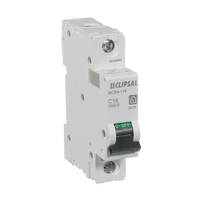
Watch CLIPSAL MCB4-120 | 20amp Single Pole 4.5kA Circuit Breaker video
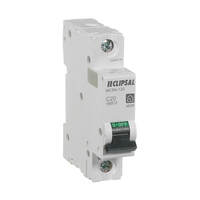
Watch CLIPSAL MCB4-150 | 50amp Single Pole 4.5kA Circuit Breaker video
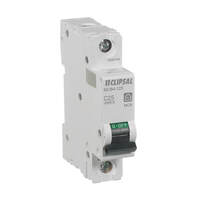
Watch CLIPSAL MCB4-163 | 63amp Single Pole 4.5kA Circuit Breaker video

Replaced the old breaker with this new breaker. Breaker worked as designed. Tripped out because A/c controller was faulty. Good to see it worked fine. Replaced controller on a/c and everything works fine and I know that I have a reliable circuit breaker. Absolutely have never had a problem with sparky direct.
I've been a sparky for over 45 years and used Clipsal products for most of that time and I have found them to be very reliable .
Easy to install and have my switchboard a much better look having Clipsal protection devices installed
Trusted brands • Expert advice • Fast Australia-wide delivery • Trade pricing
Shop Single Pole Circuit Breakers → Get Expert Advice →Yes. They are typically labelled to indicate which circuit they protect.
Yes. Single pole circuit breakers are available with fast dispatch and fast delivery Australia wide, covering both metropolitan and regional locations.
Circuit breakers single pole are available from Sparky Direct, offering access to compliant electrical protection products.
Yes. They are suitable for replacing existing breakers or upgrading older switchboards.
Yes. Warranty coverage depends on the manufacturer and supplier, with conditions applying.
Consider the required current rating, compatibility with the switchboard, and electrician recommendations.
Yes. They are used in both residential and light commercial installations.
They generally require no maintenance but are inspected during electrical safety checks.
Yes. They are commonly installed during electrical upgrades and renovations.
Yes. They are a key part of modern electrical protection systems.
No. They operate silently under normal conditions.
They are designed for long service life but may require replacement if they no longer operate correctly.
A single pole circuit breaker is a protective device designed to interrupt the active conductor in a single-phase electrical circuit when a fault or overload occurs.
The breaker switches off power to the circuit to prevent damage or safety risks.
They help protect wiring and appliances by disconnecting power when unsafe conditions occur.
Yes. Installation and replacement must be carried out by a licensed electrician.
They interrupt the active conductor only and are used as part of a compliant electrical system design.
Yes. After a fault is cleared, single pole circuit breakers can be reset rather than replaced.
Yes. When correctly rated, they are suitable for modern household electrical loads.
Single pole circuit breakers are available in various amp ratings to suit different circuit requirements.
Yes. They are widely used in Australian residential electrical installations.
It protects against overcurrent conditions such as overloads and short circuits that could damage wiring or connected equipment.
Single pole circuit breakers supplied in Australia are designed to meet relevant AS/NZS electrical and safety standards when installed correctly.
They are commonly used in residential and light commercial switchboards to protect individual circuits such as lighting or power outlets.