
Search Results:
Search Results:
Search Results:
Search Results:
A Hager timer is a modular timing device that clips onto DIN rail inside a switchboard or distribution board. It switches a load on or off based on a programmed schedule, an elapsed time, or a triggered input. Hager is a recognised European manufacturer of modular electrical control products, with a long history in light and energy management for Australian residential, commercial and industrial installations.
Most Hager timers run on 230V or 240V AC mains supply, matching standard Australian switchboard voltages. The output contacts then switch either a load directly, or a control signal that drives a larger device such as a contactor coil. This makes Hager timers suitable for everything from a single shop sign to multi-channel commercial lighting layouts.
A clock-based timer keeps internal time and switches its output relay when the programmed turn-on or turn-off time is reached. An analogue dial uses mechanical segments to define on and off periods across a 24 hour or seven day cycle. A digital timer uses a small display and buttons to set multiple schedules with greater precision.
Delay timers behave differently. They wait for a control input such as a button press or sensor signal, then count down a set delay before changing the output state. This is how staircase lighting timers or fan run-on functions are built. The same Hager DIN rail format hosts both clock-based and input-triggered devices.
Installation, wiring and commissioning of timers must be carried out by a licensed electrician under AS/NZS 3000 and relevant state regulations.
Timers reduce manual switching, lower energy use and produce repeatable schedules that do not depend on a person remembering to flick a switch. Lights that should run only at night, pumps that should cycle for a fixed window and signs that should stay on during trading hours all become reliable once a timer takes over.
Common use cases include outdoor lighting, pool pumps, off-peak hot water control, irrigation, stairwell lighting in apartment buildings and commercial lighting schedules in shops and offices. A timer also reduces the risk of equipment running unnecessarily when premises are unoccupied.
Hager timers occupy either one or two DIN rail modules, sitting alongside circuit breakers and RCD or RCBO devices. The module width determines how much space the timer takes from the available DIN rail in an electric switchboard. Planning for that space matters when retrofitting older boards or when adding multiple timers to a single distribution board.
Many Hager timers include a manual override, so an electrician or facility manager can force the load on or off without changing the underlying schedule. This is useful during commissioning, fault finding, and during one-off events where the normal pattern needs to be interrupted.
Hager has a long supply history in Australia through electrical wholesalers, with replacement parts and compatible accessories generally available across multiple years. That matters when a single timer in a commercial switchboard fails years after installation and a like-for-like replacement keeps the existing wiring intact.
Trade buyers also choose the brand because the published specifications make selection simple. Contact ratings, supply voltage, module width and programming features are clearly documented in the Hager datasheets. This helps electricians match a timer to a specific load and circuit design without guessing.
The Hager timer range covers four main groups: analogue time switches, digital programmable timers, delay timers and emergency lighting test relays. Each group suits a different scheduling need and a different programming style.
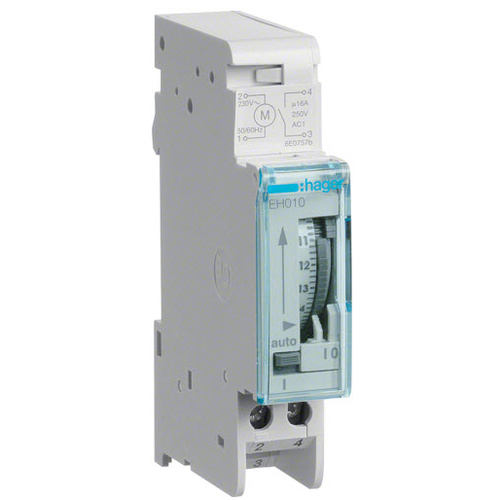
A 24 hour analogue time switch repeats the same daily on and off schedule. The user turns a mechanical dial and pushes small segments in or out to define switching periods, often in 15 minute increments. The same pattern then runs every day until it is changed.
This style is well suited to simple daily loads such as illuminated signs, garden lighting, sump pumps and routine lighting schedules. Analogue timers are easy to set up and easy to hand over to a non-technical end user.
A weekly analogue time switch extends the same dial concept across seven days, allowing different schedules for weekdays and weekends. This suits installations where a Saturday or Sunday pattern differs from the working week, such as shopfront signage or office reception lighting. Some weekly models include battery reserve so the schedule survives a short supply outage.
Digital weekly programmable timers store multiple on and off events across a seven day cycle, often with separate programs for each day. Digital timers typically offer holiday or override functions, summer and winter time adjustment, and pulse modes for momentary signals.
Channel count matters when planning the switchboard. A one channel timer drives a single output. Two channel and four channel models drive two or four independent outputs from one device, each with its own schedule. A multi-channel timer does not automatically deliver more load capacity per channel; the contact rating still applies to each output.
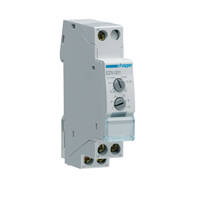
Delay timers respond to an input rather than the clock. ON-delay models wait a set time after the input arrives, then switch the output on. OFF-delay models keep the output on for a set time after the input is removed. Multifunction delay timers combine several modes in one device.
Applications include staircase lighting, bathroom and toilet exhaust fan run-on, process control, motor start delays and timed relay outputs in machine control panels. Hager delay timers cover ranges from seconds to several hours, depending on the model.
Emergency lighting timer relays support the periodic testing of emergency luminaires inside the switchboard. They are configured by the electrician to interrupt the normal supply for the required test duration, allowing the emergency lights and exit signs to run on their internal batteries. Australian buildings have ongoing testing obligations for emergency lighting, and this category of timer is part of how those tests are automated. Testing procedures, intervals and record keeping should follow the relevant Australian standards and competent trade maintenance.
Battery reserve keeps the timer clock running through a supply interruption. Without it, a power outage resets the time, and the schedule may drift or pause until the electrician resets it. Hager battery back up timers are preferred where schedule continuity matters, such as commercial lighting, security related lighting, hot water cycles and pump schedules.
Models without reserve power are acceptable for simple low risk loads where a manual reset is not a problem. The datasheet always states whether reserve power is included and how long it lasts after supply is lost.
| Feature | Analogue Hager Timer | Digital Hager Timer |
|---|---|---|
| Programming style | Mechanical dial with push segments | Buttons and display, multiple schedules |
| Setup simplicity | Very simple, visual at a glance | More setup, more flexibility |
| Schedule precision | Typically 15 minute increments | Minute-level precision, multiple events |
| Channels | Single channel models | 1, 2 or 4 channel models available |
| Battery reserve | Available on selected models | Common across the range |
| Best fit | Simple repeating daily or weekly loads | Complex weekly schedules, project work |
The same DIN rail timer footprint covers a wide range of real-world loads. Grouping by use case rather than only by product type helps buyers move quickly from intent to selection.
In homes and townhouses, Hager timers commonly drive outdoor lighting, driveway lighting, garden lighting, irrigation valves, pool pumps, hot water cylinders and security related lighting. A timer removes the need for the household to remember when to switch loads on or off, and it makes the schedule consistent night after night.
Apartment common areas and small businesses use similar timers for hallway lighting, stairwell lighting, signage and amenity ventilation. A licensed electrician sizes the timer and any contactor to the connected load.
Switching loads off when they are not needed is the simplest energy saving in many homes. A pool pump can run for its design cycle rather than all day. An outdoor light can come on at dusk and off at bedtime. A hot water cylinder can use off-peak hours. The savings vary by load and tariff, so the realistic benefit depends on the household pattern rather than a blanket figure.
Pool pumps and hot water cylinders often draw enough current to require careful contact selection. The Hager timer may switch the load directly if the rating allows, or it may control a contactor that handles the higher current. Motor inrush current and the load type both matter, so the electrician verifies the circuit rating, circuit protection and contactor choice before installation.
Outdoor equipment such as garden lighting transformers, low voltage landscape lighting drivers and irrigation solenoids each have their own current draw. A timer suited to one of these may be undersized for another.
Commercial buildings use Hager timers for shopfront lighting, signage, office lighting, warehouse lighting, mechanical plant cycles, fan run-on after-hours, and maintenance lockouts. Digital multi-channel timers suit these environments because separate schedules can run for different floors, zones or services from a single device.
Light industrial sites add applications such as conveyor cycle timing, batch process delays and timed interlocks. Heavy switching almost always passes through a contactor or relay sized to the load, with the timer providing the control signal. Sparky Direct stocks a range of electrical contactors for these higher current control needs.
Irrigation timing controls valves and pumps to water gardens at set times of day, often early morning to reduce evaporation. Simple daily schedules cover most residential needs, while weekly schedules suit zones that should water on different days. Local water restrictions can be reflected in the program, and seasonal adjustments are made by the householder or contractor.
Outdoor enclosures, IP ratings of any external switching device and pump load characteristics all factor into the design. The timer itself sits indoors in the switchboard, while the controlled valves or pumps are outside, so cabling and protection are designed accordingly.
A timer alone is sometimes enough. For larger or more demanding loads, the timer becomes a control device that signals another switching device. Understanding when each approach applies is part of correct specification.
Each Hager timer has a maximum current rating on its output contacts, along with separate ratings for resistive and inductive loads. Resistive loads such as incandescent lighting and heaters are the easiest case. Inductive loads such as motors, pumps and contactor coils place more stress on the contacts, particularly during start and stop transitions.
The Hager datasheet for the specific model lists the maximum AC1, AC3 or similar load ratings. Always check this rating against the actual load before specifying.
LED lighting circuits include drivers that can draw a brief high inrush current when energised, which is much higher than the steady-state load. Several LED drivers on one circuit can multiply that inrush. Where the inrush would exceed the timer contact rating, an electrician adds a contactor between the timer and the load. The timer then switches only the contactor coil, and the contactor handles the LED circuit. Modular contactors are commonly used for this purpose because they share the same DIN rail format.
Cable size, circuit protection and contactor rating are all chosen by the electrician to suit the design load, not the timer alone.
Hot water cylinders, pool pumps, HVAC auxiliary equipment and small commercial motors generally sit at currents where a contactor is preferred over direct timer switching. The contactor handles the rated current and any inrush, while the Hager timer provides clean control. This combination is reliable and replaceable, since either part can be changed independently if it fails.
Key questions to answer before choosing a timer and contactor combination include the load current, the control voltage, the switching frequency, the schedule complexity and the available switchboard space.
One channel timers cover a single load, such as a sign or a pool pump. Two channel timers cover paired schedules, such as lighting plus irrigation. Four channel timers suit small commercial lighting layouts where each zone has its own schedule. The same caution applies: more channels does not mean each output is rated higher. The per-channel contact rating still defines the safe load per output.
Hager timers are installed and wired by licensed electricians. They sit on DIN rail in a switchboard, and they connect to the supply and the controlled circuit through screw terminals. Installation, replacement and commissioning must be carried out in accordance with AS/NZS 3000 and relevant state regulations.
The electrician isolates the supply, mounts the timer on DIN rail and terminates the wiring to the specified torques. They then apply circuit protection as required by the design and commission the device by setting the schedule and verifying correct switching. Functional testing covers manual override, automatic switching at the programmed time, and where applicable, behaviour after a controlled supply interruption.
Step-by-step wiring instructions are outside the scope of this category page and are unsafe to follow without a licence.
Single module timers take roughly the same width as a single pole circuit breaker. Two module devices, common with multi-channel digital timers, take twice that width. Allow for adjacent contactors, circuit breakers, RCDs or RCBOs and clear labelling. Retrofits into older or crowded switchboards may require relocating existing devices or upgrading the enclosure to make room.
Document the programmed schedule on a simple sheet, label the timer at the switchboard, and walk the building owner or facility manager through the manual override. Daylight saving changes should be noted, along with how to check battery reserve where applicable. A short circuit schedule simplifies future maintenance.
The timer itself sits in the switchboard and is not exposed to weather. The controlled circuit may run outdoors to a pump, light or pool plant. IP rated enclosures, suitable outdoor luminaires and RCBO protection on the outdoor circuit are the electrician's responsibility, not the timer's. Hager Hager RCBO options pair well in the same switchboard for matching brand and form factor.
Schedule planning, model selection and commissioning logic come together at the setup stage. The aim is a schedule that matches how the building is actually used.
Outdoor lighting schedules typically run from dusk to a defined late-evening cut-off, with an optional early-morning section. A daily timer covers homes where the pattern is the same every night. A weekly timer covers premises where weekends differ from weekdays. Manual override supports late events or one-off needs.
Where dusk varies through the year, a photocell, a motion sensor on its own zone, or an astronomic time switch may be a better complement to a fixed schedule. Sparky Direct stocks a range of motion sensor options for these blended setups.
Daily irrigation schedules suit simple gardens with consistent watering needs. Weekly programs suit zones that water on different days, such as lawns three days a week and pots every day. Seasonal adjustment is usually a quick reprogram rather than a hardware change. Pumps and valves that exceed the timer contact rating need their own contactor.
Commercial premises usually need different schedules for trading days, late nights and weekends, with separate handling for public holidays. Digital weekly timers cover this well because most models include holiday or override programs. Project handover should include the schedule sheet, the timer label and a short note for the facility team.
OFF-delay and time-lag functions suit stairwells, corridors and amenity ventilation. A button press starts the timer; the load stays on for the set time, then switches off. This pattern reduces wasted run-time while still giving occupants enough light or airflow when they need it. Apartment common areas, gyms, end-of-trip facilities and utility rooms all use this style.
Moving from research to product selection is easier with a short decision framework. Trade buyers can use the same framework when standardising on a small number of timers across multiple projects.
Final selection should always check the product datasheet, and a licensed electrician should confirm the choice for the specific installation.
Commercial renovations often involve replacing existing timers in older switchboards. Matching the module width, contact rating, supply voltage and channel count of the original device avoids rework on the wiring side. Where the original model is discontinued, the current Hager equivalent is normally documented in the brand catalogue and is straightforward to specify.
Facilities procurement benefits from stocking spare timers for critical schedules, especially where commercial lighting, signage or pump cycles support trading activity. Standardising on a small set of Hager models simplifies maintenance and shortens future replacement cycles.
The lowest priced timer is not always the best value. Reliability, compliance, brand consistency and replacement availability all matter across the life of a switchboard. For ongoing commercial work, holding a couple of common Hager timers as spares avoids unnecessary travel when a unit fails on site. Sparky Direct is an Australian online electrical wholesaler with visible pricing, trade buying and Australia-wide delivery.
Genuine Hager timers, with proper product documentation and warranty support, are available from Australian electrical wholesalers. Online ordering with same business day dispatch suits time-sensitive electrical jobs, particularly when a switchboard fault is keeping a circuit out of service. Clear stock visibility, fast dispatch and a known supplier history all reduce risk on a job. The Hager brand range at Sparky Direct includes timers alongside RCBOs, contactors and other modular switchboard devices.
Selection often comes down to a comparison: Hager versus generic timer switches, Hager DIN rail timers versus smart automation, and analogue versus digital versus delay timers. Each comparison has practical answers rather than absolute winners.
Hager timers are designed for switchboard integration, with published specifications, replacement support and consistent product ranges across multiple years. Generic timers may suit simple non-critical tasks but can be weaker for commercial or long-term installations where compliance, supplier accountability and like-for-like replacement matter. Hager Theben and NHP Electrical sit alongside Hager as recognised trade timer brands in Australia.
Hager DIN rail timers are reliable standalone devices. They run their schedule whether or not the internet is working, and they keep running after a router reboot. Smart home systems suit installations where remote control, scenes, voice control or sensor integration are part of the brief. The two approaches can coexist: a DIN rail timer handles fixed building services schedules, while smart switches handle resident-facing lighting and scenes.
| Device Type | Typical Use | Best Fit |
|---|---|---|
| Analogue time switch | Simple daily or weekly schedule | Signs, garden lighting, basic pumps |
| Digital time switch | Multiple events, multiple channels, precise timing | Commercial lighting, multi-zone projects |
| Delay timer | Triggered time-lag after an input | Stairwells, fans, machine control |
| Smart switch or relay | App or voice control with cloud features | Resident-facing automation and scenes |
Most timer issues come down to programming, supply, battery reserve, or worn contacts. End users can check the basics safely, and licensed electricians handle anything that requires opening the switchboard.
Simple checks include confirming the display is lit and checking that the current time and date are correct. Look for a manual override indicator on the screen, review the active program, and note whether the device has recently lost supply. A blank display or a wrong time after a known outage often points to battery reserve loss. Switchboard inspection, wiring tests and any replacement must be handled by a licensed electrician.
Replacement planning starts with the model number on the existing device. Match the module width, contact rating, supply voltage, channel count and programming function. Where the original is discontinued, the current Hager equivalent is normally a direct fit, although the programming menu may have changed and need re-documenting. Older switchboards may also need additional work to meet current standards during the replacement.
Keep programmed schedules documented on a label or schedule sheet at the switchboard, inspect labels during routine maintenance, test the controlled load periodically and review schedules after tenancy or operational changes. For critical commercial loads where downtime is costly, plan proactive replacement before the timer fails rather than after.
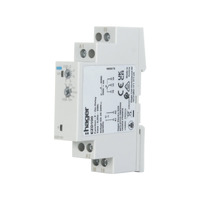
Watch Hager EHN010 | Single Pole Daily Time Switch 1 Channel 1 Module video
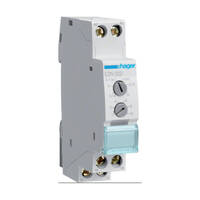
Watch Hager EHN011 | Single pole timer 24 hour 16(4)amp Analogue 120hr Battery Backup (EH011) video
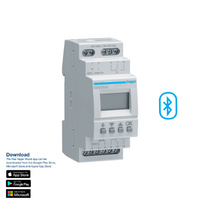
Watch Hager EG010 | 16amp Single pole Digital timer | Battery Backup video

I purchased a Hager EHN011 timer to replace an older Hager EH010 timer that started to get stuck. The old EH010 timer's dip switch only had ON and AUTO, while the new EHN011 now has ON, AUTO and OFF. The OFF option can come in handy. Also, the mechanical parts of the mew timer seem like a better design.
This product is exactly what i required to run my Xmas lights direct from the meter box
Say good bye to paying the electrical company.. install this timer and save save save
Quality products in stock • Fast Australia-wide delivery • Competitive trade pricing
Browse Hager Timers → Get Expert Advice →