
Search Results:
Search Results:
Search Results:
Search Results:
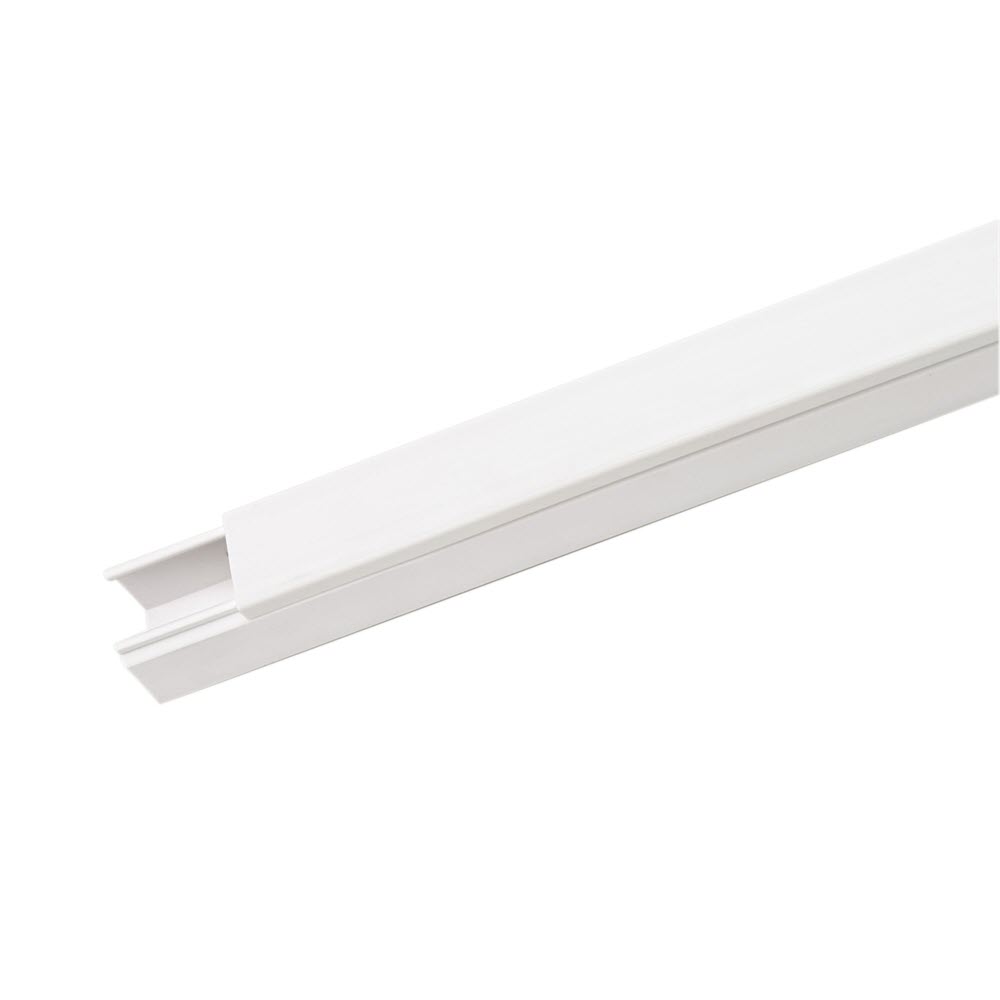
Learn all about the best Cable Duct here at Sparky Direct [ Read More ]
Cable duct is a structured cable management product. It holds power, control, and data cables inside a rigid plastic channel with a removable lid. Slotted side walls let installers route individual conductors out of the duct at any point. This makes cable duct the standard choice for switchboard wiring, control panel terminations, and commercial cable management.
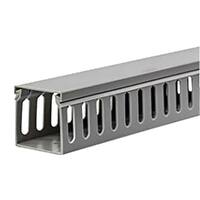
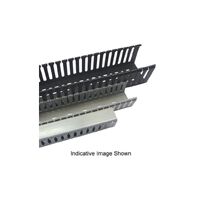
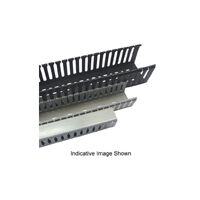
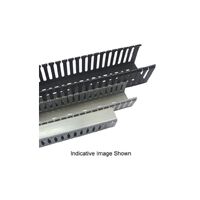
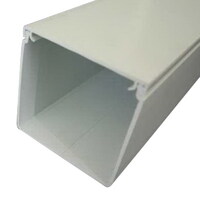
A typical cable duct consists of a U-shaped base and a snap-on cover. The base has slotted fingers along both sides, spaced at fixed intervals. Cables drop into the duct from above. They exit through the slots wherever a termination is needed. The lid then clips on top to close the run. This open-slot design is what distinguishes cable duct from closed conduit.
Cable duct solves three problems at once: it organises wiring, it protects cables from mechanical damage, and it speeds up future modifications. Removing the lid gives full access to every conductor in the run. This matters in switchboards where additions and changes are common over a panel's service life.
Conduit is a closed tube. Cables run end to end with no side access. Trunking is a broader term covering rectangular cable channels, including both closed and slotted types. Cable duct is the slotted version of trunking, designed for panel and switchboard interiors where lateral cable exit is needed at every termination point.
The duct walls shield cables from impact, abrasion, and contact with sharp panel edges. Separation between power and control circuits is easier to achieve when each circuit type runs in its own duct. This supports compliance with AS/NZS 3000:2018 segregation rules and helps prevent electromagnetic interference between high-current and signal cables.
Cable duct is supplied in several configurations, and each suits a specific installation context. Choosing the right type at planning stage avoids costly rework later.
Slotted wiring duct is the workhorse of switchboard cable management. It runs horizontally along DIN rail rows and vertically between panel sections. Slot pitch typically sits between 8mm and 12mm, giving installers flexible exit points for each conductor.
Closed duct is preferred where cables must remain fully enclosed for the entire run. Examples include underfloor service distribution and protected runs in plant rooms. Closed systems often use snap-fit covers with retention features to resist accidental opening.
Surface trunking is fixed directly to walls or skirtings. It carries cables from a switchboard out to floor outlets, workstation drops, or wall-mounted equipment. It provides a clean finish in offices and retail spaces where in-wall installation is impractical.
Outdoor variants add UV stabilisers and weather-rated seals. These run along external building facades, plant equipment skids, and exposed cable trays. The base material is usually still PVC, but with additives that resist sunlight degradation over decades of service.
Material choice drives the duct's working environment, fire performance, and lifespan. PVC dominates the Australian market, but specialised builds use metals or modified polymers for harsher conditions.
Rigid PVC is the default material for indoor cable duct. It is lightweight, easy to cut on site, and self-extinguishing under most ignition conditions. Standard PVC duct handles continuous operating temperatures up to around 60°C, which covers the vast majority of switchboard environments.
Steel and aluminium duct is used in heavy industrial settings. It handles higher temperatures, resists impact better than plastic, and provides electromagnetic shielding when bonded to earth. The trade-off is higher cost, heavier weight, and more complex installation.
Halogen-free duct is specified in tunnels, hospitals, data centres, and other environments where smoke toxicity in a fire is a concern. These materials emit less corrosive smoke during combustion and protect both occupants and sensitive electronic equipment.
Standard PVC degrades under prolonged UV exposure. Outdoor-rated duct uses UV-stabilised compounds that retain their mechanical properties for 15 to 25 years in Australian sun. Always check the manufacturer's UV warranty for external installations.
Cable duct is sized by internal width and depth. Common widths range from 25mm to over 200mm, with depth profiles matching panel space envelopes. Correct sizing balances current cable load against future expansion needs.
Compact 25mm by 16mm mini duct suits low-density signal wiring in small panels. Medium profiles like 40mm by 40mm and 50mm by 50mm cover most light commercial work. Wide profiles of 100mm by 100mm and above handle main switchboards and motor control centres where conductor counts are high.
Best practice limits cable fill to around 60 percent of the duct's internal cross-sectional area. Higher fill rates trap heat, and trapped heat increases cable insulation temperature, which derates the cable's current-carrying capacity. Plan for headroom when sizing the duct.
Slot pitch determines how often cables can exit the duct. Tight pitches give more flexibility but reduce wall strength. Where AS/NZS 3000 segregation rules apply, separate ducts are usually simpler than internal dividers.
Switchboards rarely shrink. Adding spare capacity at first install is far cheaper than retrofitting larger duct later. A common rule is to size duct for 50 percent more cables than the initial design demands.
For a typical commercial DB with 24 single-pole circuits, 40mm by 40mm slotted duct horizontally and 25mm by 40mm vertically usually meets current need with adequate spare capacity. Always confirm against actual cable bundle dimensions before ordering.
Selection comes down to four factors: environment, cable volume, future change rate, and budget. Each factor shifts the choice between mini duct, standard PVC slotted duct, heavy industrial systems, and weatherproof variants.
Residential installs rarely need cable duct beyond the main switchboard. Commercial fit-outs use it heavily in distribution boards and data cabinets. Industrial sites apply it to motor control centres, PLC cabinets, and process control panels where dense, organised wiring is essential.
Indoor PVC duct is fine for any conditioned environment. Outdoor selections require UV stabilisation, sealed lids, and corrosion-resistant fixings. Coastal and industrial atmospheres may also call for stainless steel mounting hardware to resist saltwater or chemical exposure.
Count the conductors, sum their outside diameters, and apply a 60 percent fill rule to find the minimum duct cross-section. Then add headroom for future circuits. Routing complexity matters too: tight bends and frequent branches favour smaller, more flexible profiles.
Undersizing for tomorrow's panel is the most frequent error. Mixing incompatible duct brands within a single panel is the second. The third is choosing standard PVC for outdoor installs and watching it crack within five years of UV exposure.
Cable duct appears in almost every modern electrical project at some scale. Its primary role is always the same: keeping cables organised, protected, and accessible.
Switchboard interiors are where cable duct earns its keep. It carries circuit cables from breakers down to load terminals, and from auxiliary contacts to control wiring blocks. Without duct, these panels become birds' nests within months of the first modification.
Surface-mounted trunking distributes power and data from the main DB to individual workstations and tenant zones. It is often paired with floor boxes, skirting trunking, and modular wall outlets to create a flexible service infrastructure.
Motor control centres, PLC cabinets, and machine control panels rely heavily on cable duct. Heavy-duty profiles with metal mesh or steel construction are common in these settings. They support thick power cables and resist mechanical knocks during plant maintenance.
Halogen-free, low-smoke duct is the norm in data centre cable trays and rack-side risers. Separation between power and signal pathways is critical here to prevent EMI from corrupting high-speed data signals.
Cable duct is straightforward to install, but neat results take attention to detail. Surface preparation, fixing pattern, and lid management all affect the final look and serviceability.
Mark the duct centreline before fixing. Use a level for horizontal runs and a plumb line for verticals. Standard fixing methods include self-tapping screws into back panels, machine screws into prepared mounting plates, and clip-on systems for DIN rail integration.
PVC duct cuts cleanly with a fine-tooth saw or PVC cutter, and cut ends should be deburred to avoid cable damage. Joining is end-to-end with butt joints, using internal joiners for long runs and corner pieces for direction changes. A sharp wire-stripping and prep tool kit nearby helps speed up the work.
Lay cables in groups by circuit or function. Run incoming feeds along one wall of the duct and outgoing terminations along the other. Maintain 10mm to 15mm of free space at the top to allow lid closure without crushing conductors.
Lids should remove without tools wherever practical. Mark each duct run with circuit identifiers using durable labels. Schedule annual inspection of fill levels, lid security, and any signs of insulation distress.
Installation tip: Always de-energise and lock out the panel before opening cable duct lids in live equipment. Even with the lid in place, conductors inside the duct may be at full circuit potential.
Accessories complete the system. They handle direction changes, junction points, and integration with adjacent infrastructure such as conduit junction boxes and electrical enclosures.
Internal and external 90-degree bends maintain cable bend radius. Tee pieces split a single duct run into two branches without site fabrication. Couplers join straight lengths end to end for runs longer than the standard 2m or 4m supply lengths.
Lids vary from plain push-fit covers to retained snap-on systems with positive locking. Some include integrated cable retention barriers to prevent conductors from springing out during lid removal. Spare lids are usually stocked separately for repair and replacement.
Self-tapping screws, mounting clips, adhesive backing, and DIN rail brackets cover most fixing scenarios. Conduit saddles and cable clips support transitions between duct and free cable runs outside the panel.
Modern duct systems align with standard DIN rail spacing. This lets installers run horizontal duct directly above and below each rail, with vertical duct at panel section boundaries. The result is a regular, predictable wiring grid that simplifies both new build and future modification.
Cable duct installation falls under several Australian standards. The two most relevant are AS/NZS 3000 (the Wiring Rules) and AS/NZS 61084 (cable trunking and ducting systems).
Section 3 of AS/NZS 3000:2018 covers selection and installation of wiring systems. It sets requirements for mechanical protection, segregation of circuits at different voltages, and identification of cables. Cable duct supports compliance with all three.
AS/NZS 61084 specifies the construction and performance of cable trunking and ducting systems. It defines impact resistance ratings, temperature limits, and fire performance categories. Compliant products carry markings on the duct itself or on the supplier packaging.
Power cables operating above 50V should be separated from extra-low-voltage signal cables. Methods include separate ducts, internal duct dividers, or maintained physical clearance. Specifics depend on cable type, voltage, and run length.
The National Construction Code references AS/NZS standards for cable systems in fire-rated zones. In some buildings, halogen-free or low-smoke duct is mandatory. Always verify the building classification before specifying standard PVC products in commercial or institutional projects.
Cable duct is not always the right answer. Conduit, cable tray, and flexible systems each serve different roles, and choosing the right one depends on cable type, environment, and future serviceability.
| System | Best Use Case | Typical Environment | Key Trade-Off |
|---|---|---|---|
| Cable Duct (slotted) | Switchboards, control panels | Indoor, panel interiors | Open access reduces mechanical protection |
| Rigid Conduit | Wall and ceiling cable runs | In-wall, exposed surfaces | No lateral cable exit |
| Cable Tray | Long horizontal runs, plant rooms | Above ceilings, industrial spaces | Open top exposes cables |
| Flexible Conduit | Equipment connections, vibration zones | Machinery, motor terminations | Limited length, lower protection |
Conduit is closed while cable duct is slotted. Conduit suits in-wall and exposed surface runs where cables travel end to end, while cable duct suits panel interiors where cables exit at multiple points along the run. Many installations use both: conduit between buildings or floors, and cable duct inside the panel.
Cable tray carries large bundles over long horizontal distances, usually above ceilings or along plant room walls. Tray has an open top, so cables remain visible and accessible. Cable duct provides a closed channel with much higher mechanical protection at the cost of greater material use per metre.
Rigid duct is the standard for fixed installations. Flexible duct or corrugated conduit handles tight curves, vibration, and movement. Flexible products typically replace duct only at machinery interfaces and equipment penetrations.
Use cable duct inside switchboards and panels, use conduit for cable runs through walls and across surfaces, and use cable tray for long horizontal bundle transport. Flexible conduit covers movement and vibration zones at machine interfaces. Most projects combine all four systems in their proper places.
Cable duct is a long-life product. A well-specified PVC system installed in a conditioned switchboard environment routinely lasts 30 years or more. Performance over that lifetime depends on initial selection and ongoing maintenance.
The duct walls absorb impact loads that would otherwise transfer to cable insulation. They also provide a smooth, snag-free path that reduces installation damage when cables are pulled in. Burr-free cut ends and proper joiner use are critical to maintaining this protection.
Overfilled duct traps heat, and heated cables suffer accelerated insulation aging and reduced current capacity. Maintaining the 60 percent fill rule preserves both cable life and circuit integrity. In high-current applications, calculate worst-case heat rise before finalising duct dimensions.
Removable lids let electricians inspect, modify, and extend wiring without disturbing adjacent circuits. This is the duct's biggest practical advantage over conduit. Panels using cable duct can be re-engineered in hours rather than days.
Conditioned indoor environments are easy on PVC duct, while outdoor and industrial settings are considerably harder. UV exposure, temperature cycling, chemical exposure, and humidity all degrade standard plastics over time. Match duct specification to environment from day one to avoid premature failure.
Most cable duct failures trace back to four root causes. Each is preventable with proper planning and basic site discipline.
Undersizing is usually a budget decision that backfires. The cost difference between 40mm and 60mm duct is small, but the cost of replacing undersized duct after the panel is in service is large. Plan for headroom from day one.
Long PVC duct spans deflect under cable load. Fix duct at intervals no greater than 500mm for standard profiles. Reduce that spacing for heavy cable loads or vertical runs subject to gravity stress.
Brands look similar but rarely interchange cleanly: lid retention features differ, and internal dimensions vary by 1mm to 3mm. Joiners and accessories from one brand may not fit another, so specify a single brand for each panel and stick to it.
Running 415V power conductors alongside 24V signal cables in the same duct is a code violation and a reliability problem. Use separate ducts. The cost is minimal compared to the troubleshooting hours saved when EMI starts corrupting PLC signals.
Cable duct pricing varies with profile size, material grade, and pack quantity. Standard PVC duct in 2m or 4m lengths is the volume seller. Specialty profiles and outdoor-rated products carry a premium of 30 to 100 percent over standard lines.
Indicative trade pricing for 25mm by 16mm mini duct sits in the low single-digit dollars per metre. Standard 40mm by 40mm and 50mm by 50mm slotted duct typically prices in the mid range. Heavy industrial profiles and stainless or aluminium variants run significantly higher.
Bulk buying delivers 10 to 25 percent savings on large projects. Project supply is suitable for smaller jobs where storage space and cash flow matter. Trade buyers running multiple commercial fit-outs usually mix both: bulk for staple sizes, project supply for specialty profiles.
Very low-priced duct may not meet AS/NZS 61084 impact, fire, or temperature performance. The savings disappear quickly when an inspector flags non-compliant product on a commissioning visit. Verify standards markings on the product or with the supplier before committing to volume purchases.
Traditional trade counters offer face-to-face advice and immediate pickup. Online wholesalers like Sparky Direct combine wider stock holdings, transparent trade pricing, and direct delivery to site. Many trade buyers now use both depending on urgency and project size.
Sparky Direct dispatches in-stock cable duct lines nationwide, usually within one to two business days. For urgent project supply, ordering before the daily cutoff often gives next-day arrival on the east coast.
Buying cable duct well comes down to four habits: matching duct to the project, planning accessories alongside the duct, building in expansion capacity, and sourcing from a supplier that holds stock.
Define the panel layout first. Then size duct to suit cable count, fill ratio, and free-space targets. Specify the same brand throughout each panel. Note the duct length per panel section and order with a 5 to 10 percent overage to cover cuts and offcuts.
Ordering only the straight lengths and forgetting end caps, joiners, or branch pieces is a frequent oversight. So is buying enough duct for current needs without any spare. A few extra metres on the order avoids costly part-deliveries when the design changes mid-project.
For each panel, count duct metres, lids, joiners, end caps, and fixing screws, then cross-check against bend allowances and add expansion margin. Treat cable ties and identification labels as part of the same procurement bundle.
Sparky Direct stocks Clipsal, IPD, NLS, and Trader cable duct alongside fittings, accessories, and complementary electrical cables. Trade pricing applies on registered accounts, and bulk discounts kick in at typical project quantities. Same-day dispatch covers most stocked product lines.
Club Clipsal is Australia's largest electrician community offering trade rewards, business support, and exclusive benefits. When you nominate Sparky Direct as your preferred wholesaler, we automatically apply your Clipsal spend points to your Club Clipsal account daily.
Entry-level offering coaching, mentoring, and training discounts
Unlock exclusive industry tools and networking events
Access Toyota fleet offers and business software discounts
Maximum benefits, including VIP experiences and rewards
1. Sign Up: Create your Club Clipsal account at clipsal.com/club-clipsal or via the iCat mobile app
2. Nominate Sparky Direct: Select Sparky Direct from the wholesaler dropdown menu in your profile
3. Add Email: Enter your Sparky Direct account email address in the membership number field
4. Start Earning: Every dollar spent on Clipsal products earns points automatically
Redeem points from the rewards store, including gift cards, tools, and experiences. Access business summits, product training, and industry networking events. Receive early access to new product launches and special promotions. Connect with fellow electricians via the Club Clipsal community app.
Watch 75mm Duct Cover Plastic 2 meter length | 1 Buy only | SD-75 video
Watch CableClear CC001AU | Cable Manager 50mm video
Watch MATCHMASTER 04MM-RP04 | Recessed Wall Box With Cable Management System video

Clipsal grey ductwork was easy to work with, sturdy with a well fitting lid that actually stays on
I have previously ordered Ducting online and it was damaged more times than i care to think of, Thanks Guys We will use you again
Super cheap & shipped and received within days. We need a couple of these to replace some sorely rusted out ones we had out the backyard. Bunnings didn’t stock them but Sparky Direct had them in stock ready to go at an awesome price. I’ve bookmarked these guys for the next time I need electrical gear.
Quality products in stock • Fast Australia-wide delivery • Competitive trade pricing
Browse Cable Duct → Get Expert Advice →It is straightforward for trained professionals to cut, mount, and load with cables.
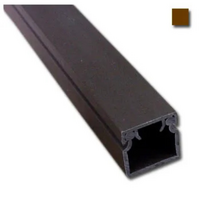
At Sparky Direct, we offer ducting in white, grey, and brown.
Installation of a cable duct system is typically straightforward.
Sparky Direct supplies cable duct, offering reliable cable management solutions.
No, cable duct is a pick-up only item.
Unused products are generally eligible for return according to the seller’s returns policy.
Warranty coverage varies by manufacturer and typically covers defects in materials or workmanship.
Yes, cable duct is typically sold in standard lengths with matching covers.
Yes, choosing the correct size allows room for current and future cabling.
Once installed correctly, it generally requires no maintenance.
Yes, it is often used when upgrading or reworking electrical panels.
Yes, it keeps cables separated and neatly routed.
It is usually concealed inside switchboards or enclosures.
Yes, removable covers make it easy to add or modify cabling later.
Cable duct is a cable management system used to route, protect, and organise electrical and communication cables.
Yes, it is a standard product in many electrical installations.
Yes, it provides a clean and professional finish inside panels and enclosures.
Cable duct keeps wiring organised, tidy, and easier to manage.
Yes, it helps protect cables from abrasion, movement, and accidental contact.
Yes, it is often used to manage data and communication cables.
Yes, they are commonly used in commercial and light industrial electrical projects.
Yes, cable ducts are available in a wide range of widths and depths to suit different cable volumes.
They are typically made from durable plastic materials suitable for electrical environments.
Yes, cable duct is widely used inside switchboards and control panels for neat cable management.
It is suitable for electrical cables, data cables, and control wiring, depending on the application.
Quality cable duct is manufactured to meet relevant AS/NZS electrical and safety standards when installed correctly.
It is commonly used in switchboards, control panels, commercial installations, and structured cabling systems.