
Search Results:
Search Results:
Search Results:
Search Results:
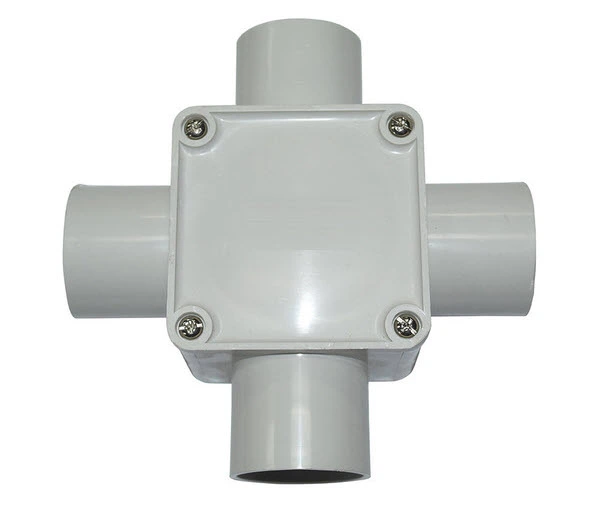
Find the best 32mm Conduit Junction Boxes here at Sparky Direct. [ Read More ]
A 32mm junction box is a moulded enclosure with two or more 32mm conduit entries. It sits at a transition point in a conduit run and lets the electrician join, branch, or terminate cables inside a protected space. The body screws or clips closed, sealing the joint against dust, moisture, and impact.
The box does three jobs at once. It anchors the conduit ends so cables are not strained inside the joint. It contains any heat or arcing inside a non-flammable shell. It also gives a fixed, accessible point for future inspection without cutting into the wall or slab.
The 32mm size sits above the 20mm and 25mm sizes used in domestic point work. It carries larger conductors, more circuits per run, and higher current ratings. Commercial fit-outs, switchboard sub-mains, and three-phase distribution all rely on it.
A 32mm bore also gives more space for cable installation. Pulling 4mm or 6mm twin and earth cables through smaller conduit is slow work. The extra bore reduces friction and the risk of insulation damage during the pull.
| Conduit Size | Typical Use | Cable Capacity |
|---|---|---|
| 25mm | Domestic point wiring, lighting circuits | Suits 1.5mm and 2.5mm twin and earth |
| 32mm | Commercial fit-out, sub-mains, three-phase | Suits 4mm and 6mm cables, multi-circuit runs |
| 40mm | Heavy industrial, large sub-mains | Suits 10mm and larger conductors |
The right choice depends on the cable bundle, not just the circuit rating. Cable fill rules in AS/NZS 3000 cap how much of the bore can be occupied. Going one size up is usually cheaper than reworking an undersized run.
AS/NZS 3000 treats every conductor join as a point that must be enclosed, accessible, and mechanically protected. A 32mm junction box ticks all three of those requirements when installed correctly. The enclosure stops fingers and foreign objects reaching live terminals. The cover gives later access for inspection without disturbing the conduit run.
Round bodies are the standard choice for in-line joins on lighting and power circuits. They are compact and use less wall or ceiling space than square bodies. Square and rectangular bodies give more internal volume and are easier to terminate inside. They suit busier joints with many conductors or terminal strips.
Shallow boxes sit closer to the surface, which suits surface-mount conduit on plant rooms or factory walls. Deep boxes give more room for cable bends and terminal blocks. Deep is the safer pick when the conductor count is high or stiffer cables are involved.
Knockout designs ship with sealed openings the electrician removes only as needed. Unused knockouts stay sealed, which protects the IP rating. Pre-configured boxes have fixed entries and must be matched to the run before installation.
PVC is the dominant material for 32mm junction boxes in Australian electrical work. It is light, easy to cut, non-conductive, and pairs cleanly with PVC medium duty rigid conduit. PVC also resists most common chemicals found on building sites.
Steel and die-cast aluminium boxes step in where impact, heat, or fire risk rule out PVC. Plant rooms, switchrooms, and industrial sheds with forklift traffic often need metal. The trade-off is weight, the need for earth bonding, and the higher unit cost.
Polycarbonate sits between PVC and metal in cost and performance. It handles UV exposure and impact better than standard PVC and is preferred for outdoor enclosures. Thermoplastic blends offer improved temperature performance for cable runs that warm up under load.
Salt air, chemical fumes, and constant wash-down all attack metal enclosures. PVC and polycarbonate are the safer pick for coastal sites and food-grade rooms. Where metal is required, look for galvanised or marine-grade finishes paired with stainless screws.
The IP code uses two digits to describe enclosure protection. The first rates protection against solids: 5 keeps out most dust, 6 is fully dust-tight. The second rates water: 4 handles splashes, 5 handles low-pressure jets, 6 handles strong jets. Indoor 32mm junction boxes are commonly rated IP54 or IP55. Outdoor boxes target IP66 or higher to handle wind-driven rain and pressure washing.
The IK code rates how well an enclosure handles a strike. IK07 covers a 2 joule impact, suitable for general site use. IK10 handles a 20 joule impact and is preferred for plant rooms and external walls where the box may be hit by trolleys, ladders, or tools.
An IP66 box only delivers IP66 if it is installed correctly on site. The cover must be fully seated with all screws torqued to the manufacturer's specification. Cable entries must use matched glands or grommets sized for the conductor. Knockouts that stay open destroy the rating, no matter how well the rest of the work is done.
The 32mm entry must match the outside diameter of the chosen conduit. Heavy duty orange and medium duty grey rigid conduit both come in true 32mm sizes. Shop the box and the conduit bends together to avoid mismatched fittings on site.
Internal volume sets the maximum number of conductors the box can hold safely. AS/NZS 3000 caps cable fill so heat can dissipate and conductors can move during thermal cycling. Manufacturers publish a maximum conductor count for each box body, usually based on a single common cable size.
A simple in-line joint of three single conductors fits comfortably in a shallow body. A multi-circuit splice with terminal blocks may need a deep body or even an adaptable box. Plan the wiring layout and conductor count before choosing the box size.
Overfilled boxes are a known fault point in long-term electrical installations. Conductor insulation softens at sustained high temperature, joints loosen, and the box becomes a fire risk. If the lid feels tight when fitting, the box is too small for the conductor count. Step up one size or split the join across two boxes.
Stay within one conduit family across the entire run wherever possible. Mixing brands at the box can create a poor seal at the entry point. Pair a 32mm grey medium duty box with grey medium duty conduit, couplings, and bends. Pair an orange heavy duty box with orange heavy duty conduit and matching fittings.
Indoor work in a dry ceiling space tolerates a basic IP-rated box. Outdoor work needs a higher IP rating, UV stability, and weather-sealed entries. Industrial environments add impact, chemical, and sometimes thermal demands on top of the standard IP requirement.
Choose the IP rating first based on the install environment, then the material that delivers it. PVC handles most indoor and many outdoor jobs at a competitive price point. Polycarbonate is the better outdoor pick for long service life under sun and rain. Metal is reserved for high-impact, high-heat, or fire-rated installations.
Specifying IP44 for an outdoor wall, choosing a shallow body for a multi-cable splice, mixing 32mm box and 25mm conduit by mistake, and ignoring impact rating in carparks. Each of these forces a return visit to fix the install.
Open-plan offices use 32mm conduit to feed multiple lighting and power circuits from a central riser. Junction boxes sit above the ceiling tile line, giving access for future moves. The 32mm size carries enough conductors to serve a full grid of TPS cable drops without going to a larger size.
Factories, workshops, and warehouses run cables along structural steel, often with high impact risk from forklifts and trolleys. Heavy duty 32mm boxes paired with heavy duty rigid conduit protect the run from physical damage and are easy to clean during shutdowns.
The 32mm size is common for sub-mains running from the meter box to a remote switchboard, granny flat, or shed. The bore handles 16mm and 25mm consumer mains comfortably. Junction boxes mark each transition point along the run.
Carparks, sports fields, and street lighting all use buried or surface 32mm conduit runs. Outdoor-rated junction boxes form sealed inspection points along the cable path. They allow access for testing and fault finding without breaking ground or tearing out finished surfaces.
AS/NZS 3000 requires every junction box to remain accessible after the building is finished. That means above a removable ceiling tile, behind a service hatch, or on a clearly fixed surface. Burying a box behind plasterboard with no access is a clear breach.
Each entry needs a clean cut, deburred edge, and a matched fitting. Glue the joint where the box and the conduit meet using PVC conduit glue. For outdoor work, add a sealing gasket or grommet to keep the rating intact.
Inside the box, use proper terminal blocks, push-fit connectors, or crimped lugs to make every connection. Loose twists secured with insulation tape are not compliant and never have been. Leave a small service loop on each conductor so terminals can be re-tightened later without straining the cable.
AS/NZS 3000 governs the wiring rules for all electrical installations in Australia. AS/NZS 61386 sets the performance requirements for the conduit system itself, including impact rating, temperature range, and tensile strength. A compliant install pairs boxes and conduit that both meet AS/NZS 61386 for the chosen environment.
Boxes hidden behind plaster, tiled walls, or concrete fail compliance and create real headaches at fault-finding time. A future electrician needs to read the wall surface to find them. Mark the location on the as-built drawing and leave clear access.
An IP44 box on an external wall will let water in. The first heavy storm wets the joints, and the second one tracks current through the moisture. The fix is choosing the right rating before specifying, not retrofitting a fix after the fact.
Stuffing extra circuits into a small box is a common shortcut on tight jobs. Heat builds up, insulation degrades, and the joint becomes a long-term hazard. Plan the box size around the busiest splice in the run, not the average.
A cracked entry or stripped thread destroys the IP rating. So does a box reused after it has been over-tightened on a previous job. Spare boxes are cheap relative to a callback. Replace damaged units rather than patching them with sealant or tape.
The 25mm junction box is the workhorse of domestic point wiring. It is smaller, cheaper, and fits standard lighting and power circuits. The 32mm box steps up where conductor counts or cable sizes exceed what a 25mm bore can carry.
An adaptable box is a larger, often square enclosure with multiple knockouts on every face. It suits very busy joints with terminal strips, isolators, or small components inside. A 32mm junction box is the simpler, more compact option for plain in-line joins or branches.
PVC wins on cost, weight, and corrosion resistance across most installations. Metal wins on impact strength, heat tolerance, and fire performance. Most commercial and residential 32mm work calls for PVC as the default material. Metal is reserved for industrial sites and specific compliance requirements where plastic is ruled out.
If the box gets close to its conductor cap, step up to a larger electrical enclosure. Working on a full box later is slow and risks damaging insulation. The cost difference between a junction box and a small enclosure is small, especially on a big project.
A correctly rated box keeps water and dust out for the design life of the cable inside. Most 32mm PVC boxes are rated for at least 15 years of service when installed indoors. Outdoor service life depends on UV exposure, temperature swings, and material grade.
The box, the conduit, and the cable all share the same job: keep live conductors away from people and away from short-circuit paths. A break in any one of these elements compromises the others. Quality fittings and clean installation work matter as much as cable selection.
Coastal, industrial, and mining sites push junction box enclosures hard. Salt air, dust, vibration, and chemical exposure all shorten product life. Matching IP and IK ratings to the worst expected condition gives the best long-term result for the installation.
Best practice is a visual inspection at every periodic test of the installation. Look for cracks, discolouration, loose covers, and any sign of moisture inside the body. Replace covers at the first sign of warping or cracking. The box is a small part of the install, but a failed box affects the whole circuit it sits on.
Pricing depends on configuration, IP rating, brand, and the supplier channel used. A basic 1-way grey PVC body sits at the lower end of the range. Multi-way IP66 polycarbonate boxes cost several times more per unit. Heavy duty metal options are priced above plastic across all configurations. Sparky Direct lists current pricing on each individual product page.
For a fit-out project, buying a full box of junction boxes is cheaper per unit than picking up singles. The break-even point is usually around 20 to 30 units. Bulk also avoids second trips to the wholesaler when the count comes up short.
Very cheap import boxes often fail the IP rating they claim. The plastic is thinner, the cover does not seat properly, and the entries do not match Australian conduit. Stick to brands that publish compliance with AS/NZS 61386. The price difference is small, the compliance difference is large.
Trade suppliers stock the full range, in the right colours and sizes, in trade-quantity packs. Retail channels often carry only a partial range and price for one-at-a-time buying. For a project, the trade channel saves money and time.
Sparky Direct ships from Australian stock for next-business-day delivery to most metro areas. For regional sites, transit time is usually 2 to 4 working days. Plan orders to arrive ahead of the rough-in stage so the conduit run is not held up.
Start with the worst-case environment on the project before specifying any boxes. Specify boxes that meet that requirement across the whole job, even where some sections are easier. A single specification simplifies ordering, reduces site mistakes, and makes the as-built drawings easier to maintain over the life of the install.
Ordering 25mm boxes for a 32mm run, ordering deep when shallow fits the wall, and forgetting to add conduit plugs for unused entries are the three most common ordering errors on conduit projects. A short pre-order checklist run against the cable schedule catches all three before the order ships.
Add 10 to 15 percent to the count to cover breakage, design changes, and spare stock. Junction boxes are low-cost items, so over-ordering rarely costs more than a return trip. Keep spares in the van for fault response work.
Sparky Direct stocks the National Light Sources range of 32mm grey heavy duty junction boxes alongside 32mm rigid conduit, bends, and saddles. The full conduit fittings range is available with trade pricing and Australia-wide delivery.
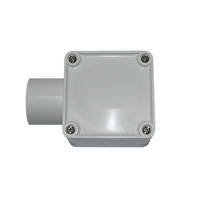
Watch NLS 30425 | 1 Way 32mm Junction Box Grey Heavy Duty video
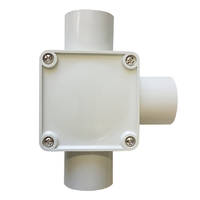
Watch NLS 30427 | 3 Way 32mm Junction Box Grey Heavy Duty video
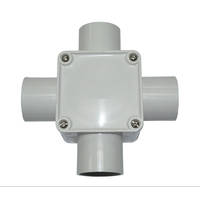
Watch NLS 30428 | 4 Way 32mm Junction Box Grey Heavy Duty video

Small yet robust product and ideal to safely accomodate the joining of three covered 240v mains cables. I used this one in a power supply project I was constructing for my internet modem and router
Great product. Used on an outdoor light to flood. Easy able to connect flex and TPS. Purchase 2 spare for the next problem job. Inclusion of corri connection helpful
Honestly best on the market, they've thought of everything which is reflected in the price. I'm keen to try the ceiling rose Round one net.
Quality products in stock • Fast Australia-wide delivery • Competitive trade pricing
Browse 32mm Conduit Junction Boxes → Get Expert Advice →They are straightforward for trained professionals to install.
Sparky Direct supplies 32mm conduit junction boxes Australia-wide, offering reliable electrical enclosures with convenient delivery.
They are securely packaged and delivered via standard courier services.
Unused products are generally eligible for return according to the seller’s returns policy.
Warranty coverage varies by manufacturer and typically covers defects in materials or workmanship.
Yes, 32mm conduit junction boxes are typically sold as individual components.
Yes, choosing the correct size ensures safe and compliant electrical installations.
Yes, grey junction boxes are commonly used for general-purpose electrical work.
Once installed correctly, they generally require no ongoing maintenance.
Yes, they are often used when upgrading or expanding existing wiring systems.
Yes, they help protect connections from dust, impact, and accidental contact.
They may be concealed or surface-mounted depending on the installation method.
Yes, they help manage and protect multiple or larger cables.
32mm conduit junction boxes are electrical enclosures designed to house cable joints and terminations connected to 32mm conduit.
Yes, they are a standard solution for larger conduit installations.
They provide ample space for larger cable runs and secure electrical connections.
Yes, they are designed to suit standard 32mm conduit and accessories.
Some models are suitable for outdoor use when appropriately rated.
Yes, they are designed for indoor and concealed electrical installations.
Yes, grey is a common colour for 32mm conduit junction boxes.
They are typically made from durable plastic suitable for electrical installations.
Yes, they are commonly used in commercial and light industrial electrical installations.
Yes, they are used in residential installations where larger conduit runs are needed.
Quality 32mm junction boxes are manufactured to meet relevant AS/NZS electrical and safety standards when installed correctly.
They are used where larger conduit is required to manage higher cable volumes or larger conductors.