
Search Results:
Search Results:
Search Results:
Search Results:
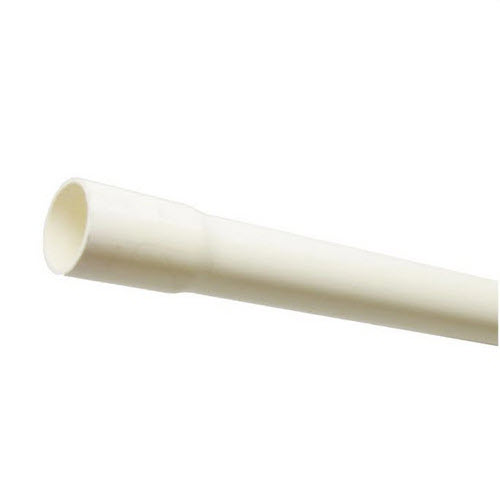
Find the best Rigid Communications Conduit here at Sparky Direct. [ Read More ]
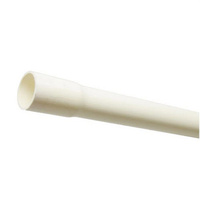
Rigid communications conduit is a straight-walled PVC pipe used to enclose and protect low-voltage signal cabling. It carries no current itself. Its job is to shield fragile data, fibre, and telco cables from crush damage, impact, moisture, and rodent attack. The smooth internal bore lets installers pull long cable runs without snagging or stripping the cable jacket.
The system is modular. Lengths of conduit are joined with solvent-cement couplings, redirected with bends and elbows, and accessed through junction boxes. This creates a sealed, mechanically robust pathway from the network boundary point through to each outlet.
Electrical conduit and communications conduit look similar, but they sit in different parts of the standards regime. Power circuits use orange heavy-duty rigid PVC for safety identification under AS/NZS 3000. Communications conduit is generally white or grey and is sized and certified for signal cable, including the P20 product specified for NBN lead-in. Mixing the two in the same trench or wall cavity is permitted only when separation rules are observed.
Data and fibre cables are sensitive. Excessive bend, crush load, or vibration changes the geometry of the conductor or fibre core and degrades the signal. A rigid pathway holds its shape under load, supports a controlled bend radius, and protects the cable for the full asset life.
Rigid PVC also provides a clean, dry interior. This matters most for fibre splice points and copper terminations, where moisture can corrode connectors and cause intermittent faults. The closed system keeps water, dust, and pests out of the cable run.
Rigid communications conduit is sold in standard nominal diameters. The most common sizes are 20mm, 25mm, 32mm, 40mm, and 50mm. Larger 65mm and 100mm sizes are used in commercial risers and underground infrastructure. Sizing is governed by cable fill rules and the number of bends in the run.
P20 is the white 20mm communications conduit specified by NBN Co for residential lead-in installations. It is supplied with a pre-installed drawstring and is paired with long-radius 90-degree bends to support fibre pulling. Using non-compliant 20mm orange power conduit on an NBN lead-in is a frequent rectification item.
Duty rating defines the conduit's compression resistance. Light duty suits in-wall and ceiling cavity installations with low mechanical risk. Medium duty covers most exposed surface and concealed runs in commercial buildings. Heavy duty is required where the conduit may be subjected to vehicle loads, building movement, or direct burial in trafficable areas.
Match the diameter to the cable count and bend frequency. Match the duty rating to the mechanical environment. Underground civil work generally calls for heavy duty. In-ceiling structured cabling typically uses medium duty 25mm or 32mm. Always check the project specification for required cable fill margins.
Communications conduit is manufactured from rigid unplasticised PVC (uPVC). The compound is selected for dimensional stability, electrical insulation, and resistance to common construction chemicals. Suppliers such as NLS produce a full system of conduit, bends, and accessories certified to the relevant Australian standards.
Standard PVC degrades when exposed to direct sunlight over time. UV-stabilised conduit is formulated to retain its mechanical properties in outdoor applications. It is required for any run that is exposed above ground, including the section between an external wall and the first underground bend.
Compression resistance is the primary differentiator between duty ratings. Heavy duty conduit can withstand vehicle loading when buried at the correct depth. Medium duty is suited to most building applications. Wall thickness, not just diameter, determines the rating.
The interior surface is calendered smooth during extrusion. This reduces the coefficient of friction between the cable jacket and the conduit wall. A smooth bore lets installers pull longer runs with fewer access points and lower pulling tension, which protects fibre and Cat6A cable from damage.
Rigid communications conduit is manufactured and tested to AS/NZS 2053, the Australian and New Zealand standard for non-metallic conduits and fittings. AS/NZS 61386 is the corresponding international harmonised standard. Compliant product carries a printed reference to the standard along with the duty rating.
Although communications cabling is extra-low voltage, AS/NZS 3000:2018 governs separation between LV power and ELV signal pathways. Where conduits run in parallel, minimum separation distances must be maintained. Crossings should be made at right angles wherever possible.
AS/CA S009 is the customer cabling installation standard published by the Communications Alliance. It covers structured cabling, terminations, and the design of pathways between the network boundary and the customer outlet. Pathways using rigid PVC conduit must conform to its sizing and bend radius requirements.
NBN Co publishes specific installation guidelines for residential and multi-dwelling lead-in. P20 conduit, long-radius 90-degree bends, and a continuous drawstring are mandatory for fibre lead-in. Short-radius bends are not permitted on the fibre path.
Compliance note: Only a registered cabler may terminate communications cable to the customer side of the network boundary. Conduit installation is not restricted, but the cable termination at each end is.
Fibre installations require generous bend radii and pull-friendly geometry. Cat6 and Cat6A have looser bend tolerance but higher cable count, which drives diameter selection. Telco copper sits between these two in terms of installation friendliness.
Underground runs need heavy duty conduit and proper bedding. In-wall and ceiling runs typically use medium duty. Surface-mounted runs in plant rooms or data centres often use medium duty with regular saddle support. Outdoor exposed runs need UV-stabilised product.
Consider future excavation risk for buried runs. Consider impact risk in industrial environments. Consider thermal expansion in long surface runs in unconditioned spaces. Each factor influences both the duty rating and the spacing of expansion couplings.
Using orange power conduit for NBN lead-in. Specifying short-radius bends on fibre paths. Undersizing for future cable additions. Mixing duty ratings within a single run. Forgetting UV stability on the exposed transition section.
Residential FTTP work uses 20mm P20 from the property boundary to the network termination device inside the home. Long-radius bends preserve fibre integrity. Drawstrings allow future re-pulling without lifting concrete or excavating.
Commercial fitouts depend on rigid conduit pathways from the comms room to each work area outlet. 25mm and 32mm sizes carry Cat6A bundles between communications cabinets and ceiling drop points. The rigid pathway also supports clean cable management and labelled access.
Industrial installations face mechanical risk, dust, and chemical exposure. Heavy duty rigid conduit shields fibre and copper between control rooms and field equipment. Data cabinets and risers in colocation facilities use larger diameters with high-density fill.
Civil projects use 50mm, 63mm, and 100mm rigid conduit in trenched and direct-buried pathways. Local councils and utility authorities specify the duty rating and burial depth. Concrete encasement is sometimes required for trafficable crossings.
Underground runs need a clean trench with the correct depth for the duty rating. The conduit sits on a sand or fine-soil bedding layer. Backfill should be free of sharp rocks. Marker tape above the run identifies the pathway during future excavation.
Fibre cable has a strict minimum bend radius. Each 90-degree bend in the conduit run adds pulling tension. As a rule of thumb, no more than two 90-degree bends should appear between access points, and bends must be long-radius for fibre.
Couplings and fittings are bonded with PVC conduit glue. Apply cement to both surfaces, push fully home, and hold for the curing period. Underground joints must be fully sealed to prevent water ingress and soil contamination of the cable run.
Every run needs a drawstring, even when the cable is being installed at the same time. The drawstring supports future cable additions and replacement. Junction boxes provide pulling and inspection points on long or complex runs.
Surface-mounted runs are fixed with PVC conduit saddles at regular intervals. Saddle spacing follows the manufacturer specification, typically 1.0 to 1.5 metres. Closer spacing is required at bends and termination points.
Rigid conduit is the default for any fixed installation. It is required for underground runs, exposed surface runs, and any pathway that must protect against compression or impact. It is also preferred for fibre because of the predictable bend geometry.
Flexible corrugated conduit is suited to short connections, awkward routing, and protected in-wall runs where mechanical risk is low. It is not a substitute for rigid product on exposed or buried sections.
| Property | Rigid PVC | Corrugated PVC |
|---|---|---|
| Compression resistance | High to very high | Low to medium |
| Cable pulling friction | Smooth bore, low friction | Ribbed bore, higher friction |
| Bend control | Defined by fittings | User-shaped, less consistent |
| Suitable for direct burial | Yes (with correct duty) | Limited applications |
| Typical use | NBN lead-in, structured cabling, civil | Short in-wall connections |
Flexible conduit is faster to install on short, awkward routes. Rigid conduit takes longer per metre but reduces rework, supports easier re-pulling, and provides longer-term protection. On any structural or buried run, rigid is the lower lifetime-cost option.
Fibre is fragile under bend, crush, and tension load. A rigid pathway with controlled bend radius keeps the cable inside its safe operating geometry for the full installation life. This matters most at building entries, riser turns, and underground transitions.
Smooth bore PVC has roughly half the friction coefficient of corrugated conduit. Lower friction means lower pulling tension, fewer pulling lubricant additions, and less risk of cable jacket damage on long runs.
Mechanical damage is the leading cause of signal loss in installed cabling. Crushed jackets, kinked fibre, and stretched conductors all show up as performance faults. A rigid pathway eliminates most of this risk.
The presence of a drawstring and inspection access turns a closed cable run into an upgradable pathway. New cable can be pulled in without lifting floors or breaking through walls. This is a major reason rigid conduit is specified for new builds with long expected service life.
Substituting corrugated conduit for rigid on a buried or exposed run is a frequent failure point. Corrugated product cannot guarantee compression resistance or smooth pulling, and it is not approved for NBN lead-in.
Too many bends between access points multiplies pulling tension. Short-radius bends on fibre runs cause permanent attenuation. Always plan the pathway to keep within manufacturer pulling limits and the relevant cable bend radius.
A run without a drawstring is single-use. If the original cable fails or needs upgrading, the entire pathway may have to be cut open. Always install a drawstring, even on a "one and done" pull.
Dry-fit joints, partial cement coverage, and unprimed surfaces all create leak points. Underground water ingress shortens the asset life and damages cable terminations. Joint preparation is the single most important quality step.
Pricing depends on diameter, duty rating, and length. 20mm P20 is the most cost-effective per metre, with prices climbing for 25mm, 32mm, and larger civil sizes. Heavy duty product carries a premium over medium duty.
Project supply is cost-effective when the run length is known and bends and accessories can be ordered together. Bulk buying suits ongoing trade buyers and contractors with stock on the truck. The full electrical conduits range supports both purchase patterns.
Non-compliant or grey-market conduit may not carry an AS/NZS 2053 reference. Substandard wall thickness, brittle PVC, and incorrect colour coding can trigger rework on certified jobs. Always check the printed standard reference on the conduit before installation.
Online wholesalers typically carry deeper inventory and longer cut lengths than local merchants, with delivery direct to site. Counter trade suppliers suit same-day pickup. Most contractors use both, depending on lead time.
Sparky Direct stocks the full rigid communications conduit range with fast Australia-wide delivery. Same-day dispatch on in-stock items reduces project risk on tight programmes.
Start from the project specification. Confirm the cable type, the cable count, the burial or exposure condition, and the certification requirements. Each of these maps to a specific diameter and duty rating.
Ordering only conduit and forgetting couplings, bends, and junction boxes is a common cause of return trips. Always order the full system together. Confirm bend radius requirements before placing the order.
Allow 5 to 10 percent over the measured run for cuts and waste. Order glue based on joint count, not run length. Order saddles based on the surface fix spacing, with a margin for awkward sections.
Sparky Direct supplies licensed electricians, registered cablers, and trade buyers across Australia. The full rigid conduits range, including communications, medium duty, and heavy duty product, ships from a single warehouse with consistent stock holding.
Watch 32mm PVC Standard 90 Degree Bend Communication | COMB32-90 video
Watch NLS 30331 | 25mm PVC Standard 90 Degree Bend Communication | COMB25-90 video
Watch NLS 30503 | Telstra & NBN 20mm PVC Long Radius 90 Degree Bend video

The bend has great strength and quality. I bought quite a few. I'll be using them again for sure.
This is a very compact tee and great if space is limited and looks so much better than the bulk inspection tees. Wires are easy to pass through the branch section, however consideration must be given to wire qty and sizing along with the number of through wires due to the minimal area for the radial turn of the branch wire. This tee was perfect for my job and I had no problem using it at all.
This is the second time I am ordering from Sparky and I am satisfied with the prices, the products, the service and the delivery. I used all these products to make a crop protection cage for my backyard crop to protect from birds:)
Quality products in stock • Fast Australia-wide delivery • Competitive trade pricing
Browse Rigid Communications Conduit → Get Expert Advice →Yes, it is a standard product in modern cabling installations.
Sparky Direct supplies rigid communications conduit, offering reliable protection for communication cabling.
No, rigid communications conduit is a pick-up only item.
Unused products are generally eligible for return according to the seller’s returns policy.
Warranty coverage varies by manufacturer and typically covers defects in materials or workmanship.
Yes, rigid communications conduit is typically sold in standard 4-meter straight lengths.
Yes, proper sizing allows for current needs and future cable additions.
Once installed correctly, it generally requires no maintenance.
Yes, it is often installed during renovations to improve cabling access.
Yes, it is commonly used for TV antenna and data cabling.
It is usually concealed within walls, ceilings, or floors.
It is straightforward for licensed professionals to cut and install.
Yes, it keeps communication cabling neat, protected, and separated from power wiring.
Rigid communications conduit is a solid conduit designed specifically to house and protect low-voltage communication cabling.
Yes, it allows new cables to be installed without damaging walls or ceilings.
It helps protect data and communication cables and makes future upgrades easier.
Yes, it provides strong mechanical protection for communication cabling.
Yes, they are available in various diameters to suit different cabling requirements.
Yes, it is primarily designed for indoor and concealed installations.
Yes, it is commonly used in offices, retail spaces, and commercial buildings.
Yes, it is widely used in homes for structured cabling systems.
It is commonly used in residential, commercial, and multi-dwelling buildings.
Quality rigid communications conduit is manufactured to meet relevant AS/NZS electrical and safety standards when installed correctly.
It is typically dedicated to low-voltage services and helps keep communication cables separated from power cabling.
It is commonly used for data, phone, TV, and other communication cables.