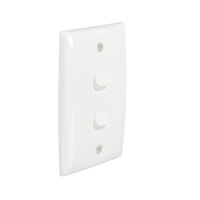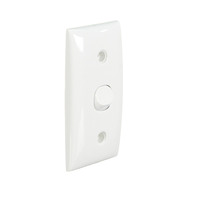

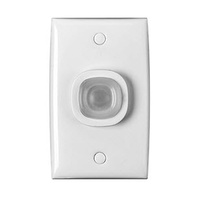

CLIPSAL 31VHWP | 1 Gang IP54 Weatherproof Switch Plate Cover (White) 31VHWP-WE
$21.05
$19.14 ex. GST
Search Results:
Search Results:
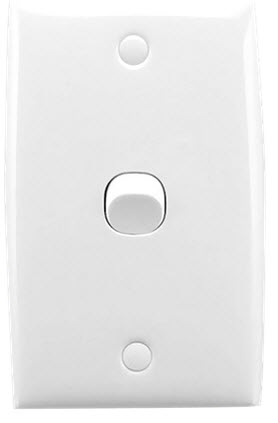
Find the best Clipsal Standard Series Light Switches here at Sparky Direct. [ Read More ]

Clipsal Standard Series light switches are the long-running, value-led range built for everyday switching in Australian homes, units, and light commercial installations. The range covers single, double, multi-gang, two-way, intermediate, dimmer, fan controller, and weatherproof formats with matching plates and switch mechanisms. Licensed electricians specify the range for its proven form factor, RCM compliance, long stock availability, and easy retrofit fitment into existing wall plates.
The Clipsal Standard Series sits at the practical, value-focused end of the broader Clipsal switch family. It is the range electricians reach for when a job calls for proven, RCM-compliant switching without designer-tier styling or premium pricing. The series is common in homes, units, schools, offices, retail spaces, and amenities blocks across Australia.
The range is built around everyday switching applications: lighting circuits, exhaust fans, hot water isolation, cooker isolators, and similar fixed-load tasks. It is not pitched as a designer collection, focusing instead on consistent form factor, broad gang counts, and easy compatibility with familiar Clipsal wall plate systems and coordinated accessories. That makes it a workhorse choice for renovation, maintenance, and volume fit-out work.
Clipsal Standard Series light switches are fixed wall-mounted electrical switches used to control lighting and other suitable electrical loads. They install into standard Australian mounting boxes and pair with matching grids, plates, and dollies.
You will see them in bedrooms, living rooms, hallways, kitchens, offices, garages, and utility areas. Bathrooms outside restricted zones also use them, subject to compliance with AS/NZS 3000 location rules. Common formats include single switches, double and multi-gang plates, two-way and intermediate switches for multi-location control, dimmer mechanisms, fan speed controllers, and weatherproof variants for protected outdoor positions.
Clipsal offers several switch ranges aimed at different needs, with the Standard Series chosen where value, broad availability, and simple replacement compatibility matter more than design upgrades. The Clipsal Iconic range sits above the Standard Series with a slimmer profile, modular skins, and a more design-led look, while Clipsal Saturn and Saturn Zen sit higher again as premium glass-finish products.
For staged upgrades, mixing ranges across a single building is generally avoided because visible inconsistency between plates is the most common reason a customer regrets the choice.
Trade familiarity is a major factor, since sparkies have installed these switches for years and so wiring, removal, and replacement are all quick. National supply through electrical wholesalers means stock is dependable, and matching plates, dollies, and mechanisms remain in production.
For maintenance contractors and renovators, this range covers most everyday calls without sourcing premium parts. For volume fit-out work, the consistent finish and gang options across the range simplify estimating and project ordering.
The Standard Series covers most everyday switching needs, and buyers can identify the right style before drilling into individual catalogue numbers by working through switching function, gang count, dimming, fan control, and outdoor rating.
Single pole switches handle standard lighting control from one position and suit the vast majority of residential lighting points. Double pole switches break both active and neutral conductors where full isolation is required, such as for some hot water systems or appliances. Two-way switches allow one circuit to be controlled from two locations, common in hallways and stairwells. Intermediate switches sit between two two-way switches to extend control to three or more positions.
Confirming wiring and compliance with a licensed electrician is essential before specifying any of these, since selection depends on circuit design rather than just user convenience.
Gang count is the number of switch positions on a single plate. Single gang switches control one light point, while double gang switches commonly handle a room light plus an exhaust fan or two adjacent circuits.
Multi-gang plates (three to six gang) suit lighting banks, hallway control, and small commercial switching positions. Planning future circuits during a renovation often justifies a larger gang count up front, since adding plates later means more wall damage and adjacent plates that may not line up cleanly.
Dimmers and fan controllers look similar but are not interchangeable. Clipsal dimmers are designed for lighting loads, with leading-edge or trailing-edge electronics suited to specific lamp types. Fan speed controllers are rated for inductive fan motor loads.
LED compatibility matters because some LED drivers work only with trailing-edge dimming, and some are not dimmable at all. Checking the lamp driver datasheet against the dimmer's compatible-load specification prevents flicker, buzz, and short product life.
IP-rated weatherproof switches belong in alfresco areas, carports, covered external walls, workshops, and exposed utility positions. Selection must match the exposure level: a switch suitable for a covered patio may not suit a fully exposed external wall.
AS/NZS 3000 sets location requirements that the installing electrician confirms before specification. IP rating, enclosure sealing, and gland or cable entry detail all play a part.
Switch specifications translate directly into safe, reliable performance, with five areas mattering most for buyers: current and voltage rating, load type compatibility, terminal style, mechanical endurance, and finish consistency across a project.
Standard Series switches in the Australian market are typically rated for 250V AC. Current ratings of 10A are common for general lighting circuits, with 16A, 20A, 32A and 35A versions available for higher-load applications such as cookers, hot water isolators, and motor isolators.
The switch rating must match or exceed the circuit and load. Using a 10A switch on a higher-load circuit risks overheating, contact welding, and nuisance failures. Verification of load, circuit protection, and cable sizing remains the electrician's responsibility.
Resistive loads such as incandescent lamps and heaters are straightforward, while inductive loads like fan motors and transformers, along with electronic loads like LED drivers and electronic ballasts, introduce complications. Standard mechanical switches handle most lighting tasks, but dimming and speed control require purpose-built mechanisms.
Incorrect selection shows up as flickering LEDs, buzzing dimmers, overheating fan controllers, and premature switch failure. The right combination of switch mechanism and load type is established at design, not after installation.
Standard Series mechanisms generally use screw terminals, while some newer variants offer push-in connections, and each style has its own conductor size range. The product datasheet specifies the acceptable conductor cross-section and the recommended preparation length.
Termination quality remains a major reliability factor, since loose or under-tightened terminals are a leading cause of nuisance faults, discolouration, and heat damage at the switch position over time.
High-use environments wear switches faster, with schools, corridors, retail floors, amenities blocks, and commercial offices potentially operating the same switch hundreds of times each day. Standard Series mechanisms are rated for tens of thousands of operations, but everyday wear still applies.
Lifecycle value matters more than upfront unit price in these settings. A cheaper imported switch that fails inside two years costs the property owner more than a compliant Clipsal mechanism that runs for a decade.
Buyers researching switches usually weigh the Standard Series against Clipsal Iconic, HPM, and generic imported alternatives, and each has a place. The right choice depends on the project, the budget, and the long-term replacement plan.
Standard Series is familiar, broadly stocked, and well suited to like-for-like replacement and value-driven new work. Clipsal Iconic mechanisms are slimmer, more modular, and pair with skin plates that can be swapped without rewiring. Iconic suits projects with a design brief, while Standard Series suits projects with a budget brief.
For a partial upgrade in an existing Standard Series building, sticking with the Standard Series keeps plates and finishes consistent. For a full renovation, Iconic is worth costing into the comparison.
| Feature | Standard Series | Iconic |
|---|---|---|
| Typical use | Value, replacement, fit-out | New build, renovation, design-led |
| Plate format | Fixed plate and dolly | Skin plates, swappable covers |
| Plate depth | Standard profile | Slimmer profile |
| Price point | Lower | Higher |
| Availability | Very broad, long-running SKUs | Broad and growing |
Clipsal and HPM are both established Australian-market choices with strong distribution, and each has its supporters among electricians. Plate compatibility between brands cannot be assumed: a Clipsal plate will not fit an HPM mechanism, and vice versa. Project consistency is the practical reason most jobs commit to one brand and stay with it.
Other recognised brands include Legrand and PDL, and choosing between them often comes down to local contractor preference, after-sales availability, and the existing fit-out in the building.
Generic imported switches at low price points can look similar to Clipsal mechanisms but often lack RCM certification, traceable testing, or local warranty support, and for licensed installers that creates real accountability risk. For property owners, it can affect insurance outcomes after an incident.
Buying RCM-certified products through an established Australian wholesaler keeps documentation, warranty, and replacement supply available for years after install. Cost difference at the switch level is small compared with the cost of relitigating a non-compliant install later.
A short selection framework helps electricians, contractors, and informed buyers move from product range to specific catalogue numbers. The framework below works for residential, commercial, and retrofit jobs.
Most homes use standard single pole switching for bedrooms, living areas, and laundries, while two-way switching suits stairwells and long hallways. Three-way control with an intermediate switch suits long corridors with three or more entry points.
Dimmers fit living rooms and bedrooms with compatible LED lamps, and fan speed controllers fit ceiling fan positions. Wet-area selection for bathrooms and laundries requires the installing electrician to confirm location zones and IP requirements under AS/NZS 3000.
Offices, schools, retail spaces, amenities blocks, and corridors put switches through heavy daily use. Standard Series mechanisms hold up well in these settings provided the rating matches the load. Maintenance replacement is simplified by the broad availability of matching plates and dollies.
Quantity planning is important for commercial work, since holding a small reserve of project-matched switches helps cover damaged stock, late additions, and warranty replacements without delaying handover.
Retrofit work depends on matching the existing wall plate size, gang count, mounting box depth, and plate system. Older homes may have non-standard mounting positions, surface-mounted conduit, or legacy wall boxes, so confirming the existing Clipsal series before ordering replacement plates avoids a return trip.
Staged upgrades work well in this range. The Standard Series has been stocked long enough that finishes generally match across years of installation, though slight colour drift between very old plates and current stock is possible.
Fixed electrical switch work in Australia must be performed by a licensed electrician. This applies to installation, replacement, and any wiring change at the switch position. The notes below cover product compliance and the limits of buyer responsibility, not how to wire a switch.
Compliant switches sold in Australia carry RCM (Regulatory Compliance Mark) certification and meet the relevant product standards. AS/NZS 3000:2018 sets the installation framework that governs how switches are fitted, isolated, and tested. Compliant product selection supports inspection sign-off, insurance positions, and safe long-term operation.
Buying through an established Australian wholesaler keeps RCM documentation traceable and supports warranty claims if a product fails inside its supported life.
Installing or replacing a fixed light switch involves de-energising the circuit, removing the existing mechanism, terminating conductors correctly, and re-testing before re-energising. Each step has safety implications, and risks include electric shock, fire from poor terminations, incorrect isolation, and non-compliant work that fails inspection.
Important: Retail buyers and homeowners can purchase Clipsal Standard Series switches for their licensed electrician to install. Do not attempt to wire a switch yourself. Penalties and insurance consequences apply in every Australian state and territory for unlicensed electrical work.
The installing electrician is responsible for testing and commissioning after switch installation. This typically includes polarity verification, insulation resistance, continuity, and functional testing of the controlled circuit. Where required, a Certificate of Electrical Safety (or state equivalent) is issued.
For buyers, the practical takeaway is simple: keep the receipt and any compliance documentation supplied with the products, since the electrician will combine that with their testing record to support sign-off and insurance.
The Standard Series is widely stocked across Australia through traditional electrical wholesalers, trade counters, and online electrical suppliers. Buyer choice usually comes down to price, stock visibility, delivery speed, and consistency of finish across an order.
Trade counters work well for small same-day pickups, while online electrical suppliers like Sparky Direct work well when stock visibility, multiple configurations, and delivery to site matter. For multi-day fit-outs, online ordering also makes it easier to consolidate switches, Clipsal power points, and plates into a single delivery.
For licensed electricians running their own jobs, online wholesalers can complement an existing trade account by filling gaps when local stock is short. Sparky Direct is an Australian online electrical wholesaler stocking the Standard Series across gang counts and finishes.
Price varies by switch type, current rating, gang count, finish, and whether the product is a complete switch or a mechanism only. A single 1 gang white switch sits at one end of the price range; a 6 gang switch with brushed aluminium cover plates sits much higher.
"Cheap" is the wrong filter on its own, since lowest-price unknown imports often lack the compliance, warranty, and replacement availability of a genuine Clipsal switch. Value, framed as compliant supply with predictable stock and warranty support, is the more useful filter for trade buyers.
Confirming the exact catalogue number is the single most useful step before ordering. Standard Series catalogue numbers include the series code, gang count, switch rating, and colour suffix. Ordering all visible switches for a project from one supplier in one batch helps maintain colour and finish consistency across the building.
Matching accessories to consider alongside switches include USB power points, Clipsal Classic power points, dimmer mechanisms, and cover plates.
Standard Series switches are durable, but no switch lasts forever. Recognising the early signs of switch failure helps prevent larger problems and supports planned replacement rather than emergency call-outs.
Warning signs in the second group call for a licensed electrician to inspect the position as soon as practical. Continuing to use a switch in that condition is unsafe.
Worn contacts after years of use are normal, while loose or degraded terminals can develop from age, repeated thermal cycling, or initial under-tightening. Incompatible dimmer and LED driver combinations cause flicker, buzz, and switch failure. Moisture ingress in unsuitable locations corrodes contacts and creates leakage paths, and overloaded switches or wrong load-type selection generate excess heat at the contacts.
Switch surfaces stay in service for years with simple cleaning using a non-abrasive cloth. Avoid sprays directly onto switch faces, since liquid can enter the mechanism. In high-use commercial environments, scheduling periodic inspection of switches in corridors and amenities areas catches early wear before failure. Damaged or non-compliant switches are replaced, not repaired in place.
Club Clipsal is Australia's largest electrician community offering trade rewards, business support, and exclusive benefits. When you nominate Sparky Direct as your preferred wholesaler, we automatically apply your Clipsal spend points to your Club Clipsal account daily.
Entry-level offering coaching, mentoring, and training discounts
Unlock exclusive industry tools and networking events
Access Toyota fleet offers and business software discounts
Maximum benefits, including VIP experiences and rewards
1. Sign Up: Create your Club Clipsal account at clipsal.com/club-clipsal or via the iCat mobile app
2. Nominate Sparky Direct: Select Sparky Direct from the wholesaler dropdown menu in your profile
3. Add Email: Enter your Sparky Direct account email address in the membership number field
4. Start Earning: Every dollar spent on Clipsal products earns points automatically
Redeem points from the rewards store, including gift cards, tools, and experiences. Access business summits, product training, and industry networking events. Receive early access to new product launches and special promotions. Connect with fellow electricians via the Club Clipsal community app.
Watch Clipsal C2032VA-WE | 2 Gang Switch 10Amp (Classic Series) | White video
Watch Clipsal 2034VA-WE | 4 Gang Switch 10Amp 2000 Series White video
Watch CLIPSAL 30M | 10Amp Switch Mech (30 Series) 30M-WE video

A must to carry as lot new home have cheapest light switches they maybe not turn on off I find clipsal light dont fall apart and outlast other brands As scene still going after old home been rewired 15 years in bathroom. Going clipsal your fixing the same problem again or giving you a bad name. The same RCD i never scene problem with ever other brands round same price clipsal. had full recalled and sparky got refunded and saw most replaced clipsal. There some old blown colour ones still testing ok 25 later
I bought some replacement covers for a Reno I was doing. The range was comprehensive and the delivery and whole process was incredibly fast and perfectly managed. I ordered at 8.30pm on a Sunday night and had the full delivery dropped off before 2.30pm Monday arvo. A great business to deal with. Excellent!
Used as an alternative to a patch panel inside a comms cupboard. Nice dense mech packing. Some of the really old digitech mechs (cube ones) didn't fit and needed to be modified. Newer mechs were fine. Mech are hard to get out one pressed in. Didn't need the covers. Would have been nice to leave them out.
Quality Clipsal switches in stock • Fast Australia-wide delivery • Competitive trade pricing
Browse Clipsal Standard Series → Get Expert Advice →Yes, they suit a wide range of homes, from new builds to renovations.
You can find Clipsal Standard Series Light Switches at Sparky Direct, offering genuine products and Australia-wide delivery.
Yes, Australian regulations require a licensed electrician to install or replace light switches.
Confirm the required switch type, LED compatibility, wall box suitability, and installation requirements.
Yes, they are available through authorised electrical suppliers and online electrical retailers.
Yes, they are typically supplied with a manufacturer’s warranty covering defects under normal use.
Yes, they are built for long-term reliability in Australian conditions.
Yes, they are a popular choice for rental and investment properties.
Yes, they are available in various switch types and layouts.
They are designed to withstand regular daily use.
Yes, they are frequently installed in bedrooms, living rooms, kitchens, and hallways.
Yes, they are commonly used across multiple rooms for consistent functionality.
Yes, the smooth surface can be wiped clean with a soft, dry cloth.
Clipsal Standard Series light switches are a widely used range of reliable, practical switches designed for everyday use in Australian homes and commercial settings.
Yes, they offer a simple and familiar switching action.
They are known for reliability, ease of use, and widespread availability across Australia.
Yes, installation must be completed by a licensed electrician to ensure safety and compliance.
They typically feature durable plastic faceplates with robust internal electrical components.
Yes, compatible dimmer mechanisms are available and must be selected to suit the lighting load.
Yes, they are compatible with most LED lighting circuits when matched with the correct switching or dimming mechanism.
They are designed to suit standard Australian wall boxes and mounting systems.
Yes, they are also suitable for light commercial environments such as offices and retail spaces.
Yes, they are commonly used in houses, apartments, and townhouses across Australia.
They are typically rated for standard Australian mains voltage of 230–240 volts AC.
Yes, Clipsal Standard Series switches are designed to meet relevant AS/NZS electrical safety and performance standards when installed correctly.