
Search Results:
Search Results:
Search Results:
Search Results:
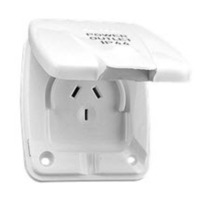
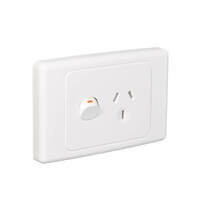
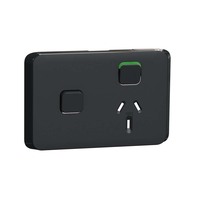
Find the best Clipsal power points here at Sparky Direct. [ Read More ]
Clipsal is one of the most widely specified electrical fitout brands in Australia. Electricians, builders, renovators and facility managers rely on Clipsal across homes, offices, retail tenancies and light commercial projects. The range covers standard, modern, designer, weatherproof, USB, smart and trade-grade options.
A Clipsal power point, also called a GPO or general purpose outlet, is a wall-mounted socket that supplies mains power to a plug. Common Australian terms include power point, double GPO, switched socket outlet and outlet mechanism. All Clipsal residential outlets accept Australian Type I plug configurations and operate at 230V / 50Hz.
Clipsal is an Australian-founded brand that now operates as part of Schneider Electric. Stock is distributed through electrical wholesalers, trade suppliers and online electrical retailers. For contractors, this matters because supply continuity, range consistency and long-term replacement availability all support repeatable project standardisation.
Sparkies often choose Clipsal because of backwards compatibility, familiar fixing dimensions and a broad accessory ecosystem. Older Classic and 2000 Series products line up with modern Iconic and Pro Series accessories in most cases. That consistency reduces rework, simplifies stock holding and supports tidy fitouts across multi-room jobs.
Clipsal does not sell a single power point: the brand offers a family of ranges, each aimed at a different aesthetic, durability and environment profile. Use this section as a decision framework, and match the range to the project before selecting amperage, finish or configuration.
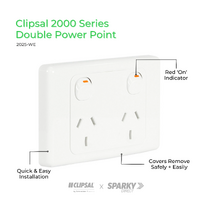
The Clipsal Classic and 2000 Series outlets remain the long-running square-edged residential standard. They suit like-for-like replacements, rental properties, older homes, builder-grade fitouts and general-purpose domestic circuits. Any wiring change must still be completed by a licensed electrician, even when the new outlet is a direct visual match for the old one.
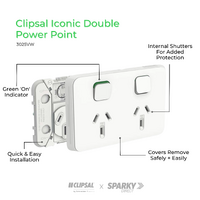
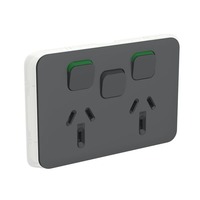
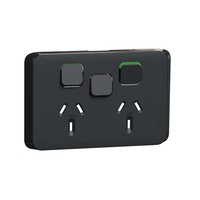
The Clipsal Iconic range uses a modular skin and mechanism system. Skins clip onto a standard grid, which means installers can change colours or finishes without rewiring. Iconic outlets support contemporary finishes, USB modules and smart accessories. The range works well in new builds, renovations and properties where the owner wants a cleaner modern look.
The Clipsal Saturn Zen range targets premium aesthetics. Glass-look plates and designer finishes suit architect-designed homes, boutique accommodation, reception areas and hospitality fitouts. The premium finish does not change the underlying compliance requirement. The circuit, cable size and protective device still need to match the outlet rating.
The Clipsal Pro Series targets commercial durability. Outlets are built for repeated daily plugging and unplugging in retail, education, healthcare, offices and short-stay accommodation. Pro Series helps electricians standardise across multiple rooms or tenancy fitouts where minor product variation creates maintenance headaches later.
The Clipsal 56 Series uses robust IP-rated enclosures designed for outdoor use, workshops, sheds, plant areas and other harsher environments. 56 Series products are not the same as decorative residential plates. Always check IP rating, current rating and the installation location before purchase.
Once the range is settled, the next decision is socket count and plate orientation. Configuration choice depends on the load type, the room and the available wall space, so it should be matched to the application before considering finish or brand range.
A single power point suits fridges, dishwashers, rangehoods, garage door openers and similar fixed single loads. Single outlets can also be the right call in narrow vertical locations or where space behind cabinetry is tight. A single outlet keeps the wall surface clean and removes the temptation to plug a second appliance into a dedicated circuit.
A double power point is the default for most domestic and commercial rooms, with bedrooms, living rooms, offices, retail counters and classrooms typically running double GPOs along general-purpose circuits. A double outlet still shares the circuit capacity, and it should not be treated as an unlimited load point for heaters, kettles and high-draw appliances combined.
A quad power point consolidates four sockets behind one plate, which suits home offices, TV walls, meeting rooms, workstations and entertainment units. A built-in quad outlet often reduces reliance on loose power boards, but total circuit loading still needs to be considered by the installing electrician.
Vertical plates suit narrow walls, cabinetry returns and furniture-adjacent positions. Recessed power points sit slightly behind the wall surface, which gives a cleaner result behind appliances, wall-mounted TVs and joinery. Before specifying recessed outlets, measure appliance clearance and cable bend radius so the plug and lead actually fit.
Australian power points are rated by current, so the outlet, the cable size and the protective device on the switchboard must all match. Selecting the right amperage starts with the appliance, not the wall.
10 amp outlets are the standard Australian socket for most domestic and light commercial appliances. Typical loads include TVs, computers, lamps, chargers, small kitchen appliances and office equipment. A 10A outlet at 230V supplies up to about 2,300W on paper, but sustained load planning belongs to the licensed electrician installing the circuit.
15 amp power points have a noticeably larger earth pin, which physically prevents a 15A plug from being forced into a 10A outlet. Typical 15A loads include some air conditioners, caravan connections, workshop equipment and selected heavy-duty appliances. A 15A outlet needs an appropriately rated circuit, and it cannot simply be swapped onto an undersized 10A circuit without further work.
No: the plugs and sockets are sized differently for a reason, and filing pins, using unsafe adaptors or forcing a plug is dangerous and not compliant. If a 15A appliance needs power in a location with only a 10A outlet, a licensed electrician should assess whether a dedicated 15A circuit is required.
The outlet, the cable and the protective device on the switchboard work as one system, and an outlet rating alone does not make a circuit safe. RCD or RCBO protection is part of every compliant Australian power circuit, and the step-by-step wiring belongs to the electrician, not the homeowner.
Modern outlets do more than supply 230V to appliances, with charging and energy control features now built into the GPO itself. The right specification depends on the device mix, the location and the budget.
Clipsal USB power points integrate USB-A and USB-C charging into a standard outlet, and common locations include bedside tables, kitchen benches, studies, home offices, hotel rooms and accommodation fitouts. USB ports are intended for low-voltage device charging only, and are not designed to power high-draw appliances.
USB-A is the legacy standard and still suits older phones, tablets and accessories, while USB-C is the newer forward-compatible option and powers most current devices. Some Clipsal USB-C outlets support Power Delivery, but not every model does, so check output wattage, number of ports and device requirements before purchase.
Smart power points add remote switching, schedules, energy monitoring and home automation, with suitable use cases including lamps, office equipment, controlled appliances and basic energy management. Smart outlets still need to be Australian-compliant products, and hardwired versions must be installed by a licensed electrician, the same as any other GPO.
Standard power points are not dimmable: dimming is normally handled by a compatible dimmer switch or smart lighting control, not by the GPO. Buyers searching for "dimmable power points" usually want Clipsal dimmers, fan controllers, smart switches or lighting mechanisms instead.
Outlets are a visible part of every room, and finish, range consistency and wall-box compatibility all affect both the final look and the long-term tidiness of a fitout.
Finishes vary by range, with common options including white, black, brushed metal, metallic, glass-look and premium designer finishes. Not every finish appears in every range, so the simplest rule for a clean result is to pick a single range and use it across switches, power points and data outlets in visible rooms.
Mixing brands or ranges may be physically possible in some cases, but it often creates visual mismatch and accessory compatibility issues. Matching mechanisms, faceplates, skins and cover plates within the same range is the safer choice. For contractors, standardisation reduces call-backs and product mix-ups during fitout.
Most Clipsal residential ranges are designed for standard Australian wall boxes and mounting centres. Replacement compatibility should still be checked for older properties, masonry walls, metal mounting brackets and unusually deep accessories. Insulating shrouds are used where metal mounting brackets or exposed terminals need extra protection.
Recessed and low-profile power points solve two problems at once: they look cleaner on the wall, and they free up clearance behind furniture or appliances. Common use cases include wall-mounted TVs, bedside furniture, kitchen joinery, office desks and integrated appliances.
Outdoor and wet areas have their own product category, and standard indoor outlets are not suitable for exposed locations regardless of how protected the wall looks at first glance.
Clipsal weatherproof GPOs belong in patios, alfresco areas, garages, sheds, workshops, pool equipment areas and on exterior walls. Standard indoor power points are not suitable for any of these locations. Hinged lids, seals and sealed enclosures help maintain ingress protection, provided they are installed and closed correctly.
An IP rating describes how well a product resists dust and water, and outdoor Clipsal products typically use IP44, IP53, IP54, IP55 or IP56 depending on the range and intended use. Always check the product rating against the site exposure, because a patio outlet under deep eaves and a poolside outlet are not the same problem.
Outdoor power circuits require appropriate RCD or safety switch protection under Australian wiring requirements. Outlets should be placed away from direct spray, pooling water and obvious mechanical damage, and licensed electrician assessment is recommended for outdoor, wet area, poolside, shed and garage installations.
Power points sit at the point where users touch electrical infrastructure. Australian standards and licensed installation requirements exist for that reason. This section covers the regulatory side at a high level. It does not provide wiring instructions.
AS/NZS 3112 covers plug and socket configurations. AS/NZS 3000 covers electrical installation requirements, often called the Wiring Rules. RCM compliance applies to electrical products sold in Australia. These standards exist so qualified buyers and installers can identify compliant products at a glance.
Yes. Any hardwired installation, replacement, relocation or additional outlet requires a licensed electrician in Australia. DIY electrical work is illegal in every state and territory. It creates serious fire, shock and insurance risks. Faceplate-only changes may be treated differently in some jurisdictions, but users should not access wiring or terminals.
Installation height depends on the application, accessibility, cabinetry layout and site requirements. Kitchens, laundries, bathrooms, outdoor areas and commercial spaces often require specific clearances and additional protection. For kitchen renovations and wet area work, a licensed electrician should confirm placement before joinery or appliances are committed.
Electricians may provide certificates of compliance or electrical safety certificates depending on state requirements. At a high level, testing covers polarity, earth continuity, insulation resistance and RCD function. Compliance records matter for property sales, insurance claims and commercial maintenance handovers.
Research intent often comes down to a simple question: what should go on this wall? This section turns range, configuration and feature decisions into a room-by-room framework. It also covers replacement triggers for older outlets that need attention.
Kitchens combine dedicated appliance outlets and general bench power. Fridges, dishwashers, rangehoods, microwave towers and island benches each have their own placement rules. USB-C power points work well in charging zones. Recessed outlets help where appliance clearance is tight. Clearances from sinks and other wet areas must be verified by a licensed electrician.
Bedrooms and living areas benefit from double GPOs, USB outlets and recessed TV outlets. Coordinated switch plates keep visible walls tidy. Better outlet planning often reduces power-board reliance under desks and behind couches. Range consistency matters in rooms guests actually look at.
Home offices, retail fitouts and commercial workstations often need quad outlets, USB-C charging, surge protection and coordinated data outlets. Pro Series outlets suit areas where staff or the public plug things in repeatedly. For trade buyers fitting out multiple workstations, bulk ordering with consistent model selection and known replacement availability is the practical approach.
Outdoor power, garages, sheds and workshops often require weatherproof products, 15A outlets, 56 Series enclosures, suitable IP ratings and mechanical durability. For high-load workshop tools, EV charging, caravan supply and outdoor cooking zones, an electrician should size the circuit to the actual sustained load.
Older power points can fail in obvious and not-so-obvious ways. Signs that an outlet needs replacement include cracking, discolouration, loose switches, heat marks, buzzing, a burning smell or plugs that fall out easily. Licensed inspection is the correct step. DIY replacement is not.
Clipsal is not the only option on the Australian market. Buyers often compare it with HPM, Legrand, Hager, Trader and various generic alternatives. The right answer depends on the project, the fitout finish and the contractor's standard kit.
All compliant Australian power points must meet the same baseline standards. Range depth, finish options, accessory ecosystems and trade familiarity differ between brands. Legrand and Hager Allure outlets are widely used in their own segments. Sweeping superiority claims about any one brand should be treated with caution.
Total project value covers more than the unit price. Supply consistency, replacement availability, matching plates, mechanical durability and reduced rework all add up. Contractors buying in bulk see the difference first. Homeowners who want to avoid mismatched plates later in a renovation usually see the same point in hindsight.
When buying Clipsal online, match model number, amperage, colour, range and quantity before ordering. Fast Australia-wide delivery and stock availability are practical decision factors, especially for trade buyers running fitouts, renovations and maintenance jobs. Bulk orders for project consistency are common in commercial work.
Club Clipsal is Australia's largest electrician community offering trade rewards, business support, and exclusive benefits. When you nominate Sparky Direct as your preferred wholesaler, we automatically apply your Clipsal spend points to your Club Clipsal account daily.
Entry-level offering coaching, mentoring, and training discounts
Unlock exclusive industry tools and networking events
Access Toyota fleet offers and business software discounts
Maximum benefits, including VIP experiences and rewards
1. Sign Up: Create your Club Clipsal account at clipsal.com/club-clipsal or via the iCat mobile app
2. Nominate Sparky Direct: Select Sparky Direct from the wholesaler dropdown menu in your profile
3. Add Email: Enter your Sparky Direct account email address in the membership number field
4. Start Earning: Every dollar spent on Clipsal products earns points automatically
Redeem points from the rewards store, including gift cards, tools, and experiences. Access business summits, product training, and industry networking events. Receive early access to new product launches and special promotions. Connect with fellow electricians via the Club Clipsal community app.
Watch Clipsal 2025-WE | Double power point GPO 10Amp | White (2000 Series) video
Watch Clipsal Iconic 3025USB2-VW | Double Power Point With Dual 2.1Amp USB Charger | Vivid White video
Watch CLIPSAL SATURN ZEN Z4025-ZW | Double GPO 10Amp 250v | Zen White video

We have been using and specifying Clipsal products for over 30 years, Clipsal have been 100% consistent in terms of the quality over the years and has never disappointed.
Cost effective, easy to install, and has fantastic features! Clipsal has come a long way with their products, and the Iconic line is proof of that. I will not be installing any other brand or styles from heronin, the Iconic is the way to go!
Installed in the study and allows mutiple items to be charged at once. The USB outlets charge quickly. Very happy with purchase.
Quality products in stock • Fast Australia-wide delivery • Competitive trade pricing
Browse Clipsal Power Points → Get Expert Advice →