


Key Operated
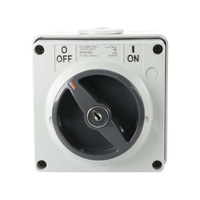
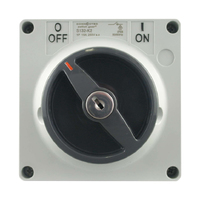
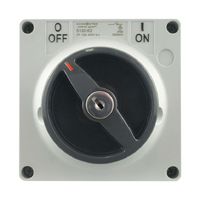
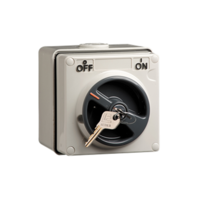
CSG S115-K2 | 15 Amp Isolating Switch Key Operated | 1 Pole 250V AC IP66
$49.45
$44.95 ex. GST
Search Results:
Search Results:
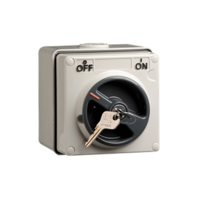
Find the best industrial key-operated switches here at Sparky Direct. [ Read More ]
Industrial key operated switches, sometimes called keylock switches or keyed control switches, use a physical key to operate or authorise a circuit. They are chosen where a standard toggle, rocker or rotary switch does not provide enough access control. The keyed action helps prevent unauthorised, accidental or unsafe switching of lighting, plant, alarms, machinery and public infrastructure.
A key operated switch is an electromechanical control device. The user inserts a matching key into the barrel and rotates it to change the contact state. Common applications include lighting control, plant rooms, control panels, public access areas, schools, lifts, alarms and machinery. The format suits both buyers selecting equipment for a project and licensed electricians installing it on site.
The user inserts the key, the barrel rotates, and the internal contacts open or close. Two basic operating modes apply. Maintained action holds the switch in the selected position after the key is turned. Momentary action springs back to the rest position when the key is released. Contact options include normally open, normally closed, SPST, SPDT, DPST and DPDT, which determine how many circuits the switch can control at once.
A standard switch lets anyone with physical access operate the circuit. A keyed switch limits operation to whoever holds the matching key. This improves control over who can energise, isolate, reset, override or activate a circuit. Typical use cases include school lighting, public toilet exhaust fans, plant room controls, security system arming and maintenance access on factory equipment.
Key operated light switches help stop unauthorised lighting changes in schools, commercial corridors, shared facilities, public buildings and back-of-house spaces. Staff or contractors keep operation under their control while everyday users see only the keyed actuator. A keyed switch does not replace proper circuit protection or formal lockout procedures where those are required by site rules.
Key operated switches are grouped by operating style, security level and installation environment. The right type depends on whether the circuit needs a held position, a brief pulse, multiple modes or extra tamper resistance. Understanding the type makes product selection faster once you start comparing models.
A maintained switch stays in the position the key selected. The user turns the key, walks away, and the circuit holds that state until someone with a key turns it back. This action suits lighting enable, access control, machine mode selection and authorised override. Some models allow key removal in one position only, which is useful when the switch must be left armed or disarmed without the key in place.
A momentary switch makes contact for as long as the key is held against spring pressure. As soon as the key is released, the switch returns to the rest position. This action is used for reset, test, alarm activation, gate release, service call and short-duration override functions. It is not suited to continuous switching, since the operator has to hold the key in position.
Rotary key switches add more than two positions. Common formats are 2-position, 3-position and multi-position, with patterns such as off/on, auto/manual, local/remote, normal/service and run/test. Indexing angle, detent feel and key withdrawal position are useful comparison points between models. Standard light switches generally lack this mode selection capability.
Higher security barrels are used where tampering or copied keys are a risk. Typical sites include public infrastructure, lift controls, vending systems, outdoor enclosures, schools and public amenities. Key coding and master-key arrangements should be confirmed before ordering, especially when one set of keys must serve multiple sites or different access levels.
Some key switches include LED indicators that show contact state at a glance. They are useful in control rooms, plant rooms, low-light switchboards and multi-operator panels. The illumination voltage must match the available control circuit, since indicator LEDs are usually rated for a specific AC or DC supply.
Selecting an industrial key switch is mostly a specification exercise. Contact configuration, voltage, current rating, IP rating, actuator size, key code and mounting style each constrain the shortlist. Working through this checklist before browsing products saves time and helps avoid returns.
The switch rating must meet the requirements of the circuit it controls. AC and DC ratings are quoted separately on most datasheets, since DC switching is more demanding than AC at the same voltage. Where the actual load exceeds the switch rating, the key switch should signal a suitably rated electrical contactor or relay that handles the load.
Normally open contacts close when operated. Normally closed contacts open when operated. Pole count is the number of circuits switched at once. Throw count is the number of stable contact positions. Simple on/off control usually needs SPST or SPDT. Multi-circuit control, such as switching power and a status circuit at the same time, may require DPST or DPDT.
Use momentary action for reset, pulse, release or test functions, where the control signal only needs to occur while the key is held. Use maintained action for mode selection, enable/disable and locked status control, where the position must hold without the key. Return-to-centre and spring-return variants offer a middle ground for some sequence-based control logic.
IP ratings describe protection against dust and moisture. They matter most for public, outdoor, washdown, food processing, coastal and plant room environments. Both the front actuator rating and the rear body or enclosure rating need to suit the install location. A switch with an IP66 front face still needs sealed entry to remain protected at the back of the panel.
Key code management matters for schools, commercial sites, strata, plant rooms and multi-site contractors. Switches can be same-keyed across a project, different-keyed for separation, or master-keyed where one key opens many. Confirm security requirements before bulk ordering, since changing key codes after delivery is rarely practical.
Panel-mounted 22mm formats are common in industrial control stations. Other sizes apply to surface mount, flush mount and bespoke electrical enclosures. Check the datasheet for cut-out size, mounting depth, terminal access and compatibility with the operator panel, switchboard or push-button station the switch will sit in.
Most key switch purchases trace back to a familiar set of real-world scenarios. Mapping use cases helps confirm that the chosen type, action and rating suit the job, and points to which adjacent products may be needed alongside the switch.
In commercial buildings, key operated switches are used for lighting overrides, plant room access, after-hours control, security panels, shared amenities and car park gates. Facility managers use them to restrict control to authorised staff or contractors, while keeping the day-to-day operation simple for tenants and visitors. A keyed switch is often paired with timers, sensors or building management interfaces.
Schools use key operated switches on lighting circuits, hall controls, sports facility power and maintenance areas. The keyed actuator prevents casual tampering, helps reduce energy waste from lights left on, and gives facility staff control over shared spaces. Universities and other public buildings use the same approach for back-of-house plant rooms, restricted lecture spaces and equipment cupboards.
On machinery, key switches commonly handle enable circuits, mode selection, service access and authorised reset. They appear alongside emergency stop buttons and industrial push buttons in control stations. Safety-related functions still need a proper risk assessment. A basic key switch is not a substitute for a safety-rated device where one is required by the machine's safety design.
Public toilets, council facilities, shared laundries, plant enclosures, car parks, gates and external lighting often use tamper-resistant or weather-resistant key switches. The combination of restricted access and a sealed enclosure handles both public interference and exposure to weather. Material choice and IP rating drive the model selection here more than electrical specs alone.
Key operated switches are commonly used for alarm arming and disarming, CCTV activation, door release, gate access and security override functions. Product selection should match the control system voltage and required contact state, since most security systems use low-voltage DC and are sensitive to incorrect contact configurations.
Lift service key switches, transport facility cabinets, maintenance overrides and restricted operation modes all rely on keyed control. Lift and life-safety systems carry their own compliance rules, and any work on them must be done by specialist technicians qualified for those systems. The key switch is one part of a larger compliant assembly.
Industrial sites are tougher on switches than office or retail spaces. Buyers ask about weather, dust, vibration and continuous duty. The answer lies in IP rating, build quality and how the switch sits inside its enclosure.
Weather resistance depends on the IP rating, enclosure design and how the switch is installed. IP65, IP66 and IP67 style ratings cover most outdoor and washdown applications. For exposed installations, the switch is usually mounted inside a weatherproof enclosure rather than relying on the actuator seal alone. Sparky Direct lists IP66 key lockable isolator switches for outdoor and external use.
Heavy-duty models use a robust actuator, vibration-resistant body, higher mechanical endurance, larger terminals and stronger sealing. Typical sites include factories, workshops, processing plants, external switchboards and mechanical services. Long-life models specify mechanical and electrical cycle counts that are easier to compare than vague durability claims. Pair them with industrial-grade weatherproof switches and matching enclosures for full protection.
Australian conditions include coastal corrosion, humidity, dust, heat and UV exposure. Coastal sites need corrosion-resistant materials, UV-stable plastics and sealed bodies. Inland sites with high dust loads need IP-rated front seals and gasketed enclosures. Manufacturer datasheets list material grades and rated environments that should be matched to the actual site exposure.
Comparison questions come up early in most projects. A keyed switch can look like overkill, or like the only sensible choice, depending on who will be near the circuit and what happens if the wrong person operates it.
| Type | Access control | Typical use |
|---|---|---|
| Key operated switch | Restricted to keyholders | Public, school, plant, alarm, machine override |
| Standard toggle switch | Open to all users | Domestic lighting, office circuits, general control |
| Rotary selector switch | Open unless keyed | Mode selection, auto/manual, local/remote |
| Keyed isolation switch | Restricted, isolation rated | Supply isolation for maintenance and safety |
A standard switch mechanism is the right choice where any user can safely operate the circuit, such as a domestic light or a general lighting circuit in an office. A keyed switch is the right choice where operation must be restricted, where tampering is likely, or where unauthorised use creates a safety, security or operational risk.
Rotary selector switches provide mode selection without restricting access. They are widely used for auto/manual and local/remote selection on control panels. Fitting a key to the selector turns it into a keyed multi-position switch, which combines mode selection with restricted access in one device.
A key operated switch usually authorises a control signal or a low-load circuit. A keyed isolation switch is built to disconnect supply for maintenance and safety. The distinction matters: a key switch is not an isolator unless rated as one. Isolation and lockout/tagout requirements should be assessed by a licensed electrician or qualified safety professional, not assumed from the presence of a keyed actuator.
Keyed switches are better for restricted access, public areas, commercial control and safety-sensitive operation. They are not always necessary for ordinary domestic or low-risk switching, where a normal switch is appropriate and far cheaper. The right answer depends on who will use the circuit, what happens if the wrong person operates it, and what the site rules require.
A repeatable selection process keeps key switch purchases consistent across multiple projects. Working through the same six questions every time produces a short, defensible product list.
Identify the controlled circuit or system first. Common categories are lighting, panel control, access control, alarm, machine mode, gate release and public-area override. Confirm whether the switch directly controls a load or only sends a signal to a contactor, relay or building management input. This single decision steers most of the spec.
Select maintained, momentary, spring-return or multi-position based on how the user must interact with the circuit. Maintained holds the state. Momentary creates a pulse. Spring-return suits sequenced control. Multi-position covers mode selection across several states.
Choose normally open or normally closed contacts and the pole count based on fail-safe requirements and control logic. The control diagram and manufacturer datasheet should align before ordering. Fail-safe logic often dictates NC contacts, while signal pulses often use NO. Multi-circuit switching usually drives the move from SPDT to DPDT.
Confirm AC or DC voltage, current rating and switching duty. Where the actual load exceeds the switch rating, plan to use a contactor, relay or interface module operated by the key switch. This keeps the keyed contact under its rated stress and lets the heavy switching happen in a device built for it.
Select indoor, dust-resistant, weather-resistant or vandal-resistant models based on site exposure. Stainless steel, metal bezel and reinforced actuator options are available where extra mechanical strength is needed. The build option should match the worst case the switch will see in service, not the average.
Confirm key code, spare keys, replacement key policy and whether multiple switches need to share a key. This step matters most for schools, strata, commercial maintenance teams and multi-site contractors. Locking yourself out of a bulk order because of an unmanaged key code is an expensive mistake.
Buy from Australian electrical wholesalers that can provide product datasheets, compliance information and warranty support. Avoid unsupported or uncertified imports for fixed electrical installations, since they may not meet AS/NZS standards and can complicate certification of the finished panel or site.
Installation guidance for key switches in Australia is straightforward: this is licensed electrical work. The aim of this section is to help buyers prepare for that work, not to walk anyone through wiring.
Licensed work only: Installation, replacement and modification of fixed electrical wiring in Australia must be carried out by a licensed electrician in line with AS/NZS 3000 and applicable workplace health and safety obligations.
Yes. Fixed electrical wiring in Australia is licensed work. Even low-current control wiring may form part of a fixed electrical installation or a machinery control system, both of which fall under AS/NZS 3000 and WHS obligations. Get a licensed electrician to plan, install and certify the work, then keep the documentation for compliance and future maintenance.
The best preparation is a brief conversation with the electrician before they arrive. Useful information to gather includes the application, the required switching function, the existing wiring, the mounting environment, the panel cut-out, the keying requirements and the manufacturer datasheet. This avoids return trips and helps the electrician choose connectors, gland sizes and accessories before the visit.
Signs of a faulty key switch include a sticking barrel, intermittent operation, a loose actuator, damaged keys, corrosion and unreliable contact action. Isolate the affected equipment and arrange inspection by a licensed electrician. The replacement should match the original contact action, electrical rating, keying and panel cut-out, unless the wider control design is being reviewed.
Key operated switches are not automatically a substitute for lockable isolation or formal lockout/tagout procedures. Machinery, plant and safety-critical circuits need a qualified assessment of isolation and locking requirements. Safety lockout products such as circuit breaker lockouts and lockout tags support a compliant LOTO process where one is required.
Brand selection for industrial control gear is mostly about datasheet support, replacement parts and local stock. Price is only part of the picture. A switch that fails on a remote site is far more expensive than the extra cost of a known brand at the time of order.
Brand selection criteria carry more weight than unsupported rankings. Useful checks include reliability records, datasheet availability, replacement key supply, matching accessories, IP rating, local compliance and stock availability. Industrial switchgear brands stocked at Sparky Direct include NHP Electrical, Clipsal, Sprecher + Schuh, Siemens, Eaton, Connected Switchgear and CABAC.
Budget-friendly switches suit light-duty indoor control, low cycle rates and simple access restriction. Heavy-duty models are justified for public areas, outdoor sites, industrial panels, high-cycle use and harsh environments. Total cost of ownership matters more than purchase price alone, since callouts, downtime and replacement labour can exceed the saving on a cheap switch within one fault cycle.
Contractors ordering for commercial projects, multi-site maintenance, schools, strata upgrades and facility refits often need bulk supply with consistent keying. Confirm the keying strategy and spare key requirements before a bulk purchase, since same-keyed and master-keyed orders are usually built to spec rather than picked from general stock.
Sparky Direct lists key operated switches with product details, brand information and dispatch options visible from the product page. The full range sits in the industrial supplies section, alongside related control gear. Trade pricing, fast Australia-wide dispatch and access to licensed-electrician support are available for project orders. For bespoke key coding or project quantities, contact Sparky Direct before placing the order.
Watch CLIPSAL Isolating Switch 1P 15A 250V Key Operated Grey | 56K2SW115 video
Watch CSG S332-K2 | 32 Amp Isolating Switch Key Operated | 3 Pole 250V AC IP66 video
Watch CSG S232-K2 | 32 Amp Isolating Switch Key Operated | 2 Pole 250V AC IP66 video

I looked in a number of locations for a 32amp Weathproof Isolating Switch with a Key Lock capability, I found this one at Sparky Direct at a very competitive price and with a short delivery time enabling me to purchase two of these switches and have them installed by and Electrician soon after receiving them. Thanks Sparky Direct.
The switch was exactly what I needed. It arrived very quickly for rural NSW. I have bought from Sparky Direct before and I will again. I am very pleased with the quality, price and speed of dispatch.
Great low cost but high quality weather proof start/stop station. NO start NC stop all in a robust easy to use Clipsal base.
Trusted brands • Expert advice • Fast Australia-wide delivery • Trade pricing
Shop Industrial Key Operated Switches → Get Expert Advice →