
Search Results:
Search Results:
Search Results:
Search Results:
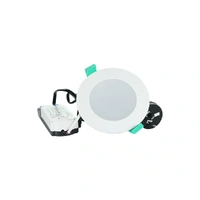
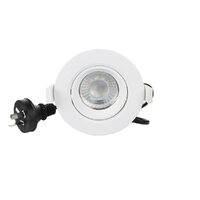
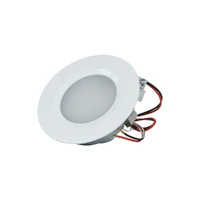
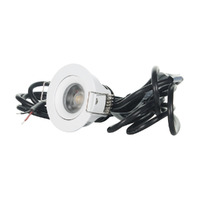
Cool white LED downlights are recessed ceiling fixtures that emit a neutral, clean light, typically rated at 4000 Kelvin (K). Unlike traditional incandescent bulbs that cast a yellow glow, these modern fixtures use solid-state technology to produce illumination that balances warmth with clarity. They are the middle ground of lighting—neither too yellow nor too blue—making them the most versatile choice for modern Australian interiors.
These fixtures sit flush with your ceiling, creating a streamlined look while directing light downward. A standard cool white LED uses approximately 80% less energy than an old halogen bulb while producing the same amount of light. Because they operate at significantly lower temperatures (60-70°C compared to 300°C+ for halogen), they are safer for ceiling cavities and reduce the load on your air conditioning during summer.
Colour temperature is measured in Kelvin (K), a scale that describes the visual appearance of light. It determines whether a room feels cosy, clinical, or energetic. Understanding this scale is crucial because the colour of your light completely changes a room's atmosphere, even when brightness remains the same.
Cool white sits firmly at 4000K. This specific temperature is often described as neutral white. It strips away the yellow warmth found in lower Kelvin ratings but stops short of the harsh blue tones found in higher ratings. This neutrality makes colours appear more accurate and vibrant, which is why 4000K is the standard recommendation for areas where visibility and focus are required.
Choosing the right colour temperature depends on the room's function. Here is how cool white compares to other options:
| Colour Temperature | Kelvin Rating | Best Applications | Atmosphere |
|---|---|---|---|
| Warm White | 3000K | Bedrooms, living rooms, dining areas | Relaxing, intimate, cosy |
| Cool White | 4000K | Kitchens, bathrooms, home offices, laundries | Crisp, neutral, task-focused |
| Daylight | 5000K-6000K | Garages, workshops, commercial retail | Bright, energising, clinical |
If you are unsure which temperature suits your home, tri-colour downlights allow you to switch between warm white, cool white, and daylight settings via a switch on the back of the fitting.
Switching to cool white LEDs offers immediate financial and practical advantages. The most significant benefit is energy efficiency. A typical 10W LED produces the same light output as a 50W halogen. For a home running 20 downlights for 5 hours a day, this switch can deliver substantial savings on electricity bills.
Uses 80% less energy than halogen equivalents. A 10W LED replaces a 50W halogen with identical light output.
Quality LED downlights are rated for 25,000 hours of use, translating to over 12 years in a typical household.
The 4000K cool white spectrum provides exceptional visibility for reading, working, and detailed tasks.
Operating at 60-70°C versus 300°C+ for halogens reduces air conditioning load and fire risk in ceiling cavities.
Cool white (4000K) is the champion of task lighting in residential design. Its neutral tone enhances concentration and visibility without the harshness of daylight globes.
This is the most popular application. Cool white helps you see true colours when preparing food and spotting spills on benchtops. Browse our interior lighting range for kitchen-specific options.
Essential for grooming. A CRI (Colour Rendering Index) of 80+ in cool white ensures makeup and skin tones look natural rather than yellow or washed out. Bathroom installations require an IP65 rating for zones above showers or baths.
High visibility is needed here to spot stains and read clothing labels clearly. Cool white provides the necessary brightness without feeling harsh.
The neutral light promotes alertness and reduces eye strain when looking at screens or documents. Consider dimmable LED downlights to adjust brightness throughout the day. Pair them with a quality LED dimmer for optimal control.
While daylight (5000K) is often used here, cool white is a softer alternative that still provides plenty of brightness for general tasks and vehicle maintenance.
LED stands for Light Emitting Diode. Unlike old bulbs that heat a filament until it glows (wasting energy as heat), LEDs use a semiconductor material to convert electricity directly into light. When current passes through the chip, it releases photons—a process called electroluminescence.
In a cool white downlight, the internal driver converts your home's 240V AC mains power into a low-voltage DC current suitable for the LED chip. The fixture also includes a heat sink—usually metal fins on the back—to dissipate the small amount of heat generated. This thermal management is vital; keeping the electronics cool is what allows the LED to last for decades rather than months.
Choosing the correct fitting involves more than just picking a colour. You need to match the specifications to your room's physical constraints and lighting requirements.
Pay attention to these three numbers on the box:
Modern lighting plans rely on flexibility. Ensure your cool white downlights are dimmable so that you can reduce brightness from 100% to 10% for different moods. Always use a compatible trailing-edge dimmer (LED dimmer) to prevent flickering. The MEDM LED Smart Phase Adaptive Dimmer is our best-selling option with a 4.8-star rating.
For safety, check the IC-F rating (Insulation Contact - F). This rating indicates that the downlight can be safely covered by building insulation. In Australia, where ceiling insulation is standard for energy efficiency, installing non-rated downlights requires leaving gaps in your insulation, which compromises your home's thermal performance. Most modern fittings from brands like SAL and NLS come with this rating as standard.
A successful installation balances aesthetics with technical compliance. Proper planning prevents dark spots and ensures your lighting feels intentional rather than accidental.
To get even coverage, avoid the "Swiss cheese" effect of random holes. Follow a grid pattern, spacing downlights approximately 1.2 to 1.5 metres apart for standard 2.4m ceilings.
How to calculate your needs:
For example, a 20 m² kitchen requiring 300 lm/m² requires 6,000 total lumens. If using 900lm lights, you would need roughly 7 fixtures.
All electrical work must comply with AS/NZS 3000:2018 (The Wiring Rules). This standard specifies safety requirements, including minimum clearances from structural beams and the mandatory use of RCDs (safety switches) on lighting circuits.
In wet areas like bathrooms, you must adhere to zones. Downlights installed directly above a shower or bath usually require an IP65 rating (protection against water jets), whereas general bathroom areas may only require an IP44 rating. Ignoring these zones is a major safety violation.
In Australia, it is illegal to perform your own fixed wiring work. You must hire a licensed electrician to install downlights.
A professional does more than connect wires. They verify the condition of your existing cabling, ensure the circuit isn't overloaded, and provide a Certificate of Compliance (CCW) upon completion. This certificate is essential for your home insurance and warranty claims.
Cool white LED downlights are low-maintenance, but a little care ensures they last the full 25,000 hours.
These are Australia's most trusted tri-colour LED downlight brands. Tri-colour is the smart choice because it keeps your options open. With a single fitting, you can select warm white for a softer, more relaxed feel, cool white for clean, practical task lighting, or daylight for a bright, crisp look that lifts the whole space.
Whether you are matching existing lights, adapting to different rooms, or allowing for future changes, tri-colour gives you flexibility without needing to swap fittings. One downlight, three colour temperatures, set it once, and it just works. All available with fast delivery from Sparky Direct.

The Clipsal TPDL1C3 7W Tri-Colour Dimmable LED Downlight is our best-selling Clipsal option. Australian-made quality with three colour temperature settings (3000K/4000K/5700K) switchable at installation. IC-F rated for insulated ceilings.
View Clipsal Downlight →
The SAL Wave S9065TCWH 8W Tri-Colour LED Dimmable Downlight delivers exceptional value. Features 92mm cut-out, three colour settings, and smooth dimming performance. Perfect for retrofit projects with existing ceiling holes.
View SAL Downlight →
The NLS 20111 10W Tri-Colour LED Dimmable Downlight is Australia's most popular choice with 226 verified reviews. Delivers 900 lumens, three switchable temperatures, and proven reliability. Backed by comprehensive warranty.
View NLS Downlight →Explore our complete range: Clipsal LED Downlights | SAL Downlights | NLS Downlights
Learn more by watching our Clipsal TPDL1C3 | 7W Tri-Colour Dimmable LED Down light Kit | 90mm Hole video
Learn more by watching our SAL WAVE S9065TCWH Tri-Colour LED recessed downlight video
Learn more by watching our NLS 20111 | 10W Tri Colour LED Dimmable White Downlight 900lm | 90MM Hole video
Browse complete installation guides, product comparisons, and technical specifications at Sparky Direct LED Downlights
Great product. Easy DIY replacement for older down lights with improved efficiency.
These clipsal downlights are a very sleak and stylish lighting choice. Initially I was going to install regular light fittings, but I'm so pleased that we choose these instead. I had many compliments on how they look. Quality is great also!
Installed quite a few now replacing outdated lights . Gives great light options especially with dimmer switch installed , also from Sparky Direct.
Trusted brands • Expert advice • Fast Australia-wide delivery • Trade pricing
Shop LED Downlights →Get Expert Advice →Yes, they are commonly used in wet areas where good visibility is important.
Sparky Direct supplies cool white LED downlights Australia-wide, offering bright and practical lighting solutions with convenient delivery.
They are securely packaged and delivered via standard courier services.
Unused products are generally eligible for return according to the seller’s returns policy.
Warranty coverage varies by manufacturer and typically covers defects in materials or workmanship.
They are only available individually.
Yes, choosing the right colour temperature helps achieve the best lighting outcome.
Their higher brightness can help reduce shadows in work areas.
Yes, when correctly selected and spaced, they provide effective general illumination.
In some living areas they may feel bright, which is why they are often used in task-focused spaces.
Yes, they complement modern and minimalist interior designs.
Yes, they are well suited to workspaces that require clear and consistent lighting.
Yes, cool white light can make spaces appear brighter and more open.
Cool white LED downlights produce a bright, clean white light with a crisp appearance suitable for task-focused areas.
Yes, cool white lighting is popular in kitchens due to its clean and practical light output.
They provide clear, bright lighting that enhances visibility and focus.
Yes, both fixed and adjustable options are available to suit different lighting requirements.
Some models are dimmable when paired with compatible dimmers.
Yes, they are available in a range of cut-out sizes, wattages, and designs.
They produce significantly less heat than traditional halogen downlights.
Yes, LED technology provides high brightness with low energy consumption.
Yes, they are widely used in offices, retail spaces, and commercial environments.
Yes, they are commonly used in kitchens, bathrooms, laundries, and work areas within homes.
Quality cool white LED downlights are manufactured to meet relevant AS/NZS electrical and safety standards when installed correctly.
Cool white lighting is typically around 4000K to 5000K on the Kelvin scale.