
Search Results:
Search Results:
Search Results:
Search Results:
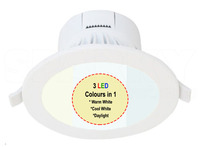
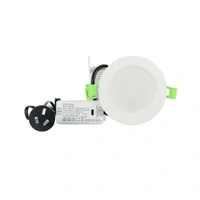
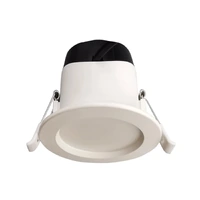
Tri-colour LED downlights are fittings that let you choose between three colour temperatures in one unit: warm white (3000K), neutral white (4000K), and daylight (6000K). A simple switch on the downlight lets you change the colour to suit the room, without needing to replace the fitting. This makes them a flexible, future-proof option for everything from cosy bedrooms to bright work areas, helping you avoid costly rework while getting the right light every time.
Tri-colour LED downlights contain three sets of LED chips, each tuned to a different colour temperature: 3000K (warm white), 4000K (neutral white), and 6000K (cool white/daylight). A small DIP switch on the driver - the component that powers the LED - lets you select which set of chips activates.
The switch is typically accessed during installation, before the fitting is fully installed into the ceiling. Simply flick the switch to your preferred setting, install the downlight, and you're done. The colour stays locked at your chosen temperature until you physically change the switch again.
RGB lights cycle through millions of colours (red, green, and blue) and are designed for decorative or mood lighting. Tri-colour downlights stick to three practical white tones suited for everyday illumination - they're functional, not flashy.
Different rooms demand different lighting. Here's how to match colour temperature to function:
Warm white creates a relaxed, inviting atmosphere perfect for lounging, watching TV, or entertaining. It mimics the soft glow of traditional incandescent bulbs, making spaces feel cosy without being clinical.
Neutral white strikes the balance between warm and cool, providing clear visibility for food prep and cooking without the harshness of daylight tones. It's energising enough for morning coffee but won't feel sterile during dinner.
Cool white or daylight tones are essential for grooming tasks like shaving or applying makeup. They reveal true colours and provide the crisp, clean light needed for precision work. This is where most people get it wrong - warm white in a bathroom makes everything look dull and yellow.
Warm white promotes relaxation and helps signal to your body that it's time to wind down. Cool tones in bedrooms can interfere with sleep patterns by mimicking daylight, so stick to warm tones for better rest.
Neutral white reduces eye strain during long work sessions and keeps you alert without the harshness of daylight tones. It's the Goldilocks option - not too warm to make you drowsy, not too cool to feel sterile.
| Feature | Tri-Colour | Single Colour | RGB |
|---|---|---|---|
| Flexibility | 3 white tones (3000K/4000K/6000K) | 1 fixed tone | Millions of colours |
| Cost | Mid-range | Budget | Premium |
| Complexity | Simple DIP switch | Plug and play | Requires controller/app |
| Best For | Adaptable lighting across rooms | Known preferences, budget builds | Decorative/mood lighting |
| Changing Colour | Requires ceiling access | Not possible | Instant via remote/app |
| Practicality | High - real-world use | High - simplicity | Low - novelty/feature use |
Tri-Colour: You're unsure which tone suits a room, renovating, or want future flexibility.
Single Colour: You know exactly what you want and won't change your mind.
RGB: You're lighting a bar, gaming room, or want decorative effects - not for general illumination.
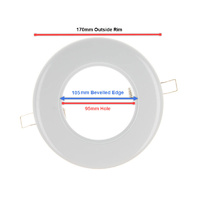
Tri-colour downlights come in 70mm, 90mm, 110mm, and 150mm cut-out sizes. The larger the cut-out, the deeper the fitting body. Shallow ceilings (under 100mm) need 70mm or 90mm options. Standard ceilings (150mm+) can accommodate any size.
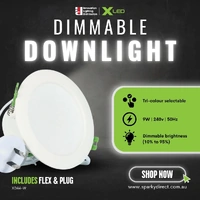
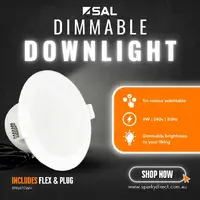
Not all tri-colour downlights are dimmable. If you have existing dimmer switches, confirm the downlight is labelled "dimmable" and check that it's compatible with your dimmer type (trailing-edge dimmers work best with LEDs). Installing non-dimmable downlights on a dimmer circuit causes flickering, buzzing, or early failure.
Looking to add dimming capability? Explore our range of dimmer switches compatible with LED downlights.
Bathrooms, laundries, and outdoor areas require IP44-rated downlights (minimum splash-proof). Standard IP20 downlights are for dry areas only. Installing the wrong rating voids warranties and creates safety hazards.
A common mistake is under-lighting or over-lighting. As a rule of thumb:
Too close creates harsh overlapping light. Too far apart leaves dark patches.
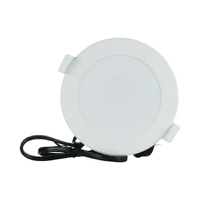
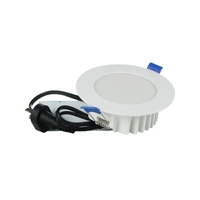
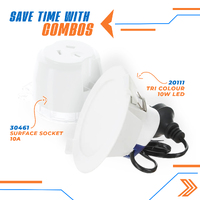
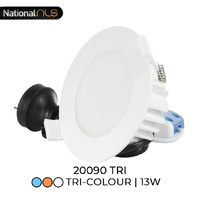
The best-value option on the market. At 10W and 900 lumens, it delivers bright, reliable light at an affordable price. The white trim suits most ceilings, it's dimmable, and the 90mm cut-out fits standard ceiling depths. Perfect for budget-conscious renovations or new builds where you need dozens of downlights without breaking the bank.
View NLS 20111 Tri-Colour LED Downlight
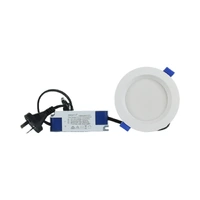
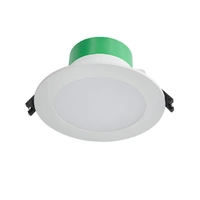
When you want a trusted brand name, Clipsal delivers. It's the premium choice for peace of mind - backed by a household name in Australian electrical products. Electricians and builders trust it for quality and consistency. Worth the investment if you're after reliability over bargain pricing.
View Clipsal TPDL1C3 Tri-Colour LED Downlight
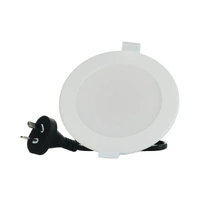
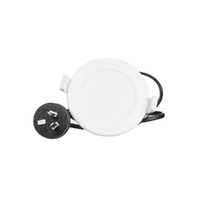
The mid-range sweet spot. SAL sits between budget NLS and premium Clipsal, offering solid build quality without the brand-name markup. At 8W with a 92mm cut-out, it's a versatile all-rounder for most residential applications. Popular with renovators who want better than budget but don't need top-tier.
Affordable, functional, gets the job done. Ideal for rental properties, investment builds, or large-scale projects where cost per unit matters most.
You're paying for the name, the warranty, and the peace of mind. Choose this if you want "set and forget" reliability or you're installing in high-end homes where clients expect premium brands.
The Goldilocks brand - better than budget without premium pricing. Good build quality, decent warranty, and wide availability. Safe choice for most residential projects.
Specialist brands with niche features (shallow depth, specific IP ratings, unique finishes). Useful when you have specific technical requirements that mainstream brands don't cover.
Watts measure power consumption. Lumens measure light output. A 10W downlight producing 900 lumens is brighter than a 13W downlight producing 700 lumens. Always prioritise lumens when comparing brightness - watts tell you running costs, not performance.
CRI measures how accurately colours appear under a light source. A CRI of 80+ is the minimum for residential use - anything lower makes colours look washed out or distorted. For bathrooms, kitchens, and retail spaces, aim for CRI 90+ to reveal true colours.
Most downlights use a 90-120 degree beam angle, which provides even, overlapping coverage when spaced correctly. Narrow beams (30-60 degrees) create spotlighting effects - avoid these for general illumination unless you're highlighting artwork or features.
If your existing switches are dimmers, you MUST buy dimmable downlights. Non-dimmable LEDs on dimmer circuits flicker, buzz, or fail prematurely. Check your switches before ordering.
A 150mm downlight won't fit in a 100mm ceiling cavity. Measure your ceiling depth before choosing the cut-out size. When in doubt, go smaller - 90mm fits most standard residential ceilings.
Don't guess spacing - calculate it. Too few downlights leave dark corners. Too many create glare and waste energy. Follow the spacing guidelines in the Installation Considerations section.
Standard IP20 downlights are NOT suitable for wet areas. Bathrooms, laundries, and outdoor eaves need IP44 minimum. Installing the wrong rating voids warranties and creates electrical hazards.
While connecting downlights to mains power requires a licensed electrician under Australian regulations, you can learn the process involved. Watch our step-by-step guide below to understand how LED recessed downlights are replaced and what's involved in the installation process.
Learn How to Replace a LED Recessed Downlight | Step-by-Step Guide
Under AS/NZS 3000:2018, connecting downlights to fixed wiring must be performed by a licensed electrician. This guide is for educational purposes only. Always engage a qualified professional for electrical installations.
See our best-selling tri-colour LED downlights in action. These videos demonstrate the colour-changing functionality and installation features of each product.
NLS Tri-Colour LED Downlight - Best Value Option
Clipsal Tri-Colour LED Downlight - Premium Quality
SAL Wave Tri-Colour LED Downlight - Mid-Range Choice
Real feedback from electricians and contractors who've purchased tri-colour downlights from Sparky Direct.

Product is exactly what we ordered. Shipping times were unbelievable, we literally got the lights the following morning. Would highly recommended Sparky Direct.
I purchased NLS downlights because my son installed some 12 months ago. They look great when switched on or off, and give good illumination with good colour balance. Big improvement over the halogen downlights they replaced. Great value for money. Items were dispatched and delivered quickly. Thank you.
These lights are awesome! Super bright on D\L mode and a very good upgrade for any condition. Great customer service from Sparky Direct and superfast shipping! I will definitely buy again from these guys best in the business! Well done and keep up the good work.
Trusted brands • Expert advice • Fast Australia-wide delivery • Trade pricing
Shop Tri-Colour Downlights → Get Expert Advice →Yes, they have a similar appearance with added functionality.
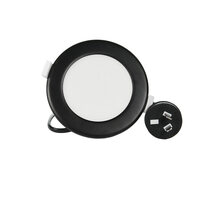
If the light is connected via a standard 3-pin plug and socket, it is classed as an appliance rather than hard-wired electrical work. In this case, changing the colour setting does not involve altering fixed wiring and can usually be done yourself. Make sure the power is switched off, use a stable ladder, and only access the fitting if it is safely reachable. If you are unsure, uncomfortable with heights, or the fitting is difficult to access, it’s best to consult a licensed local electrician.
It is technically possible, but it is generally not recommended. Mixing colour temperatures in the same room can make the lighting feel inconsistent or uncomfortable. In most spaces, using a single consistent colour temperature creates a cleaner, more balanced look. In some cases, such as feature lighting or task areas, a deliberate mix may be used as part of a lighting design.
No. Tri-colour lights do not use more power simply because they offer multiple colour options. They use the same wattage as an equivalent single-colour light, as only one colour temperature operates at a time. Power consumption is determined by the fitting's wattage, not the number of colour options.
Yes, if the fitting is a tri-colour or selectable colour temperature product. These lights let you choose between warm white, cool white, or daylight, either via a small switch on the fitting or via an external control, depending on the model. The colour setting is fixed once selected and cannot be changed automatically. If the switch is accessible (for example, from above the ceiling), the colour can usually be changed later, but access may be limited once installed.
Sparky Direct supplies tri colour LED downlights Australia-wide, offering flexible lighting solutions with convenient delivery.
They are securely packaged and delivered via standard courier services.
Unused products are generally eligible for return according to the seller’s returns policy.
Warranty coverage varies by manufacturer and typically covers defects in materials or workmanship.
They are available individually and in multi-pack options.
Yes, planning helps ensure the chosen colour temperature suits the space and use.
Yes, they are popular in modern and contemporary interior designs.
Quality products provide stable light output when installed with suitable components.
When correctly selected and spaced, they provide effective general illumination.
Yes, flexibility in colour choice helps adapt lighting to future preferences.
Tri colour LED downlights are light fittings that allow selection between three colour temperatures, typically warm white, neutral white, and cool white.
They are ideal for renovations as they allow colour temperature selection to match updated interiors.
Yes, they are suitable for living areas, bedrooms, kitchens, and hallways.
Colour selection is usually set during installation, depending on the model design.
They provide flexibility to change the lighting tone without replacing the fitting.
Some models are dimmable when used with compatible dimmers.
Yes, they are available in various cut-out sizes and wattages to suit different installations.
They produce less heat than halogen downlights, improving safety and efficiency.
Yes, they use LED technology, which is significantly more energy efficient than traditional lighting.
Most tri colour downlights offer warm white, neutral white, and cool white options.
Yes, they are suitable for offices, retail spaces, and hospitality environments where adaptable lighting is required.
Yes, they are commonly used in homes to provide flexible lighting options across different rooms.
Quality tri colour LED downlights are manufactured to meet relevant AS/NZS electrical and safety standards when installed correctly.
They use an inbuilt switch or selector to change the colour temperature during installation or setup.