
Search Results:
Search Results:
Search Results:
Search Results:
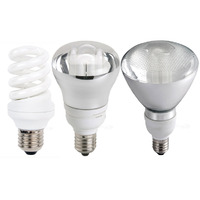
Selecting the correct globe starts with identifying the shape and base type required for the existing fitting. Using the wrong combination means the globe will not fit, may not operate correctly, or may present a safety hazard.
The A60 is the most common shape in Australian households. It suits standard pendant fittings, table lamps, and general-purpose ceiling fixtures. Candle and fancy-round shapes suit decorative fittings where the globe is visible. Reflector and PAR globes direct light in a focused beam, making them suitable for spotlights and directional applications. Tubular globes are used in fan lights and fittings with limited clearance.
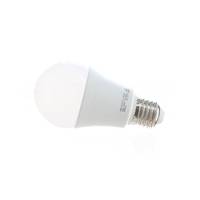
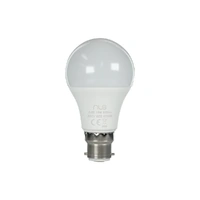
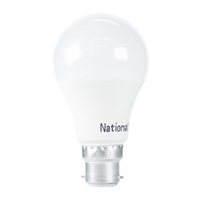
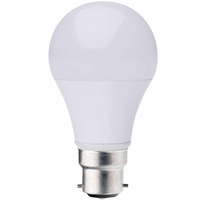
The two most common bases in Australian residential fittings are B22 (bayonet cap) and E27 (Edison screw). Downlights and spotlights typically use GU10 for mains-voltage 240V applications, or GU5.3 (MR16) for 12V low-voltage fittings. Always confirm the base type and operating voltage before purchasing a replacement globe. Installing a 12V globe into a 240V fitting without the appropriate transformer is dangerous.
Voltage check required: MR16 globes operate at 12V and require a compatible transformer or driver. GU10 globes operate directly at 240V. Confirm the operating voltage of the fitting before purchasing a replacement globe. Mismatched voltage will damage the globe and may create a safety hazard.
Size and clearance matter particularly with enclosed fittings. Check the maximum overall length (MOL) of the globe against the fitting cavity before purchasing. Some fittings have strict thermal limits that require globes rated for enclosed use. LED downlights in particular often require specific fire-rated or IC-rated globes for safe operation in insulated ceilings.
Three technical specifications determine how an LED globe performs in a space: lumens (brightness), colour temperature (light appearance), and beam angle (light spread). Specifying all three correctly avoids poor outcomes after installation.
Lumens measure the total light output of a globe. Watts measure energy consumption, not brightness. A 9W LED globe typically produces 600 to 800 lumens, equivalent to a 60W incandescent. When replacing globes, use lumen output as the comparison measure, not wattage.
| Application | Recommended Lumens | Typical LED Wattage |
|---|---|---|
| Bedside lamp or accent lighting | 200 to 400 lm | 3 to 5W |
| Living room general lighting | 400 to 800 lm per globe | 6 to 9W |
| Kitchen task lighting | 700 to 1000 lm per globe | 9 to 12W |
| Garage or workshop | 1000 lm and above | 12W and above |
Colour temperature is measured in Kelvin (K). Lower values produce warmer, more orange-toned light. Higher values produce cooler, bluer light closer to daylight. The right colour temperature depends on the function and mood of the space.
Tri-colour globes let the installer or end user select warm, neutral, or daylight output from a single product. This is particularly useful in residential settings where the same fitting may suit different functions at different times. LED light globes in tri-colour formats are available in tubular, A60, and GU10 profiles.
Beam angle determines how widely or narrowly a globe distributes its light. A wide beam angle (90 to 120 degrees) suits general room lighting. A narrow beam angle (24 to 40 degrees) suits spotlights and display lighting where focused illumination is required. For downlights, a 60-degree beam is standard for residential installations with normal ceiling heights.
For ceiling heights of 2.4 to 2.7 metres, a 60-degree beam angle produces a light pool of approximately 2.7 metres diameter at floor level. For commercial spaces with higher ceilings, a narrower beam angle maintains adequate illumination intensity at floor level. Match the beam angle to the ceiling height and the required light coverage area.
Not all LED globes are dimmable. Connecting a non-dimmable globe to a dimmer circuit causes flickering, buzzing, and early failure of the globe. Always confirm the globe is rated for dimming before installation on a dimmer circuit.
Dimmable LED globes require a compatible leading-edge or trailing-edge dimmer switch. Many older phase-cut dimmers designed for incandescent loads do not work correctly with LED globes. The minimum load rating of the dimmer must also be checked. Some dimmers require a minimum load of 40 to 60 watts. A single 9W LED globe may fall below this threshold, causing instability.
Check the globe manufacturer's compatibility list before specifying a dimmable LED globe with an existing dimmer. Dimmable LED globes are available in A60, GU10, candle, and tubular formats. Dimming performance is best in living rooms and bedrooms where variable light levels improve comfort.
Non-dimmable globes on dimmer circuits: Installing a non-dimmable LED globe on a dimmer switch will cause the globe to flicker and may shorten its lifespan significantly. Some non-dimmable globes will not illuminate at all below full brightness on a dimmer circuit. Always confirm the globe type before installation.
Smart LED globes connect to home automation systems via Wi-Fi, Zigbee, or Bluetooth. They allow control via smartphone app, voice assistant, or automated schedule. Colour-changing smart globes support scene-setting across multiple rooms from a single interface.
Smart globes are used in residential, hospitality, and retail environments where flexible lighting control adds commercial value. Installation is straightforward: smart globes fit standard B22 or E27 fittings and require no additional wiring beyond a standard active-and-neutral circuit.
LED technology delivers measurable reductions in energy consumption and replacement frequency compared to incandescent and halogen alternatives. These advantages compound across multiple fittings and larger installations.
A 9W LED globe produces equivalent brightness to a 60W incandescent. Across a home with 20 fittings operating six hours per day, switching from 60W incandescent to 9W LED reduces lighting energy consumption by approximately 85 percent. At current Australian electricity rates, the annual saving on lighting alone can be substantial.
Commercial and trade fit-outs with high lamp counts see proportionally larger savings. Replacing 50 halogen downlights at 50W each with 10W LED equivalents reduces lighting load from 2.5kW to 500W. This reduces both energy costs and air-conditioning load from heat generated by halogen globes.
Most quality LED globes are rated for 15,000 to 25,000 hours of operation. At six hours per day of use, a globe rated at 25,000 hours lasts approximately 11 years before replacement is required. Incandescent globes typically last 1,000 hours. Halogen globes last 2,000 to 5,000 hours.
Reduced replacement frequency matters most in hard-to-reach fittings. Tall ceiling pendants, high-mounted commercial downlights, and fan-light fittings where globe access requires a ladder all benefit from the extended service life of LED globes.
Quality LED globes carry a higher upfront cost than incandescent or halogen alternatives. The whole-of-life cost comparison strongly favours LED when both energy savings and replacement frequency are included. A globe that costs three times as much but lasts ten times as long and uses one-sixth of the energy pays back rapidly across most usage patterns.
Over 25,000 hours of operation: an incandescent globe costs approximately 25 replacements plus the energy to run them. An LED globe costs one replacement plus a fraction of the energy. The breakeven point for most LED globes is typically less than 12 months at average Australian electricity prices.
LED globes are available across a wide range of profiles and specifications. Selecting the right type for the application avoids performance issues and ensures compatibility with the existing fitting.
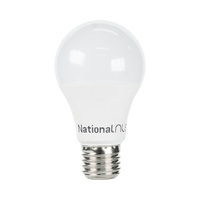
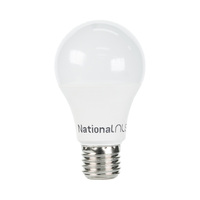
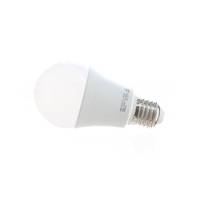
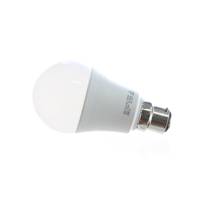
The A60 globe in B22 or E27 base suits the majority of standard residential fittings. These globes are available in 6W, 9W, and 12W outputs across warm white, neutral white, and daylight colour temperatures. Most are non-dimmable; dimmable versions are available at a small premium. Light globes in A60 format are the highest-volume replacement product in the residential market.
Filament-style LED globes replicate the appearance of vintage incandescent globes. The LED filament arrays are visible inside the clear globe, producing a warm, decorative effect suited to exposed pendant fittings and feature lighting. Candle and fancy-round shapes serve similar decorative functions in smaller fittings. Pendant lights and exposed ceiling fittings are the primary applications for these globe styles.
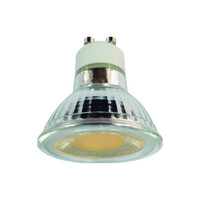
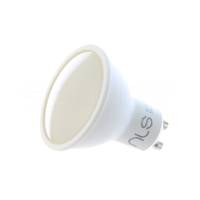
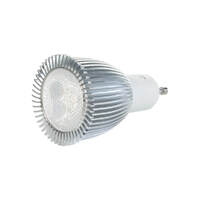
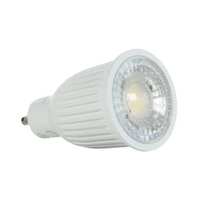
GU10 LED globes suit 240V mains-voltage downlight and spotlight fittings. MR16 LED globes suit 12V low-voltage systems via a compatible transformer. Reflector globes in PAR38 and PAR30 profiles suit larger-format spotlights and exterior floodlight fittings. LED spotlights use reflector globes to produce controlled directional beams.
For tri-colour GU10 options, look for globes where the colour temperature selector is accessible without removing the globe from the fitting. This is important in recessed downlight installations where the fitting canopy is flush to the ceiling.
Appliance globes are rated for use in enclosed, high-temperature environments such as ovens and refrigerators. Standard LED globes are not suitable for appliance use. Tubular globes in T25 and T38 formats suit indicator lights, signage, and niche fittings. Special lamps cover discharge, UV, and other non-standard lamp types for specific applications.
Selecting the correct LED globe requires checking several specifications before purchase. Working through these in order avoids mismatched globes and wasted returns.
Identify the base type (B22, E27, GU10, E14, or GU5.3) and the operating voltage (240V or 12V). Check the fitting for any maximum wattage rating printed on the fitting body or canopy. LED globes draw significantly less power than incandescent globes, so most fittings will accommodate the wattage of the LED replacement without issue.
For enclosed fittings, check whether the globe needs to be rated for enclosed use. Many standard LED globes are designed for open fittings and may overheat when enclosed. Look for globes specifically rated for enclosed or semi-enclosed fixtures. Ceiling lights with enclosed canopies are a common scenario where this check is required.
Higher lumen output suits task areas where accuracy and visibility are important. Lower lumen output suits relaxation spaces where a softer, less intense light is preferred. For rooms with multiple downlights or pendants, calculate the total lumen output of all globes combined and compare this to recommended lux levels for the room type.
Warm white (2700K to 3000K) suits bedrooms, living rooms, and hospitality settings. Neutral white (4000K) suits kitchens, bathrooms, and workspaces where colour accuracy matters. Daylight (5000K to 6500K) suits garages, workshops, and commercial applications. Tri-colour globes allow adjustment after installation, which is useful when the ideal colour temperature is uncertain before installation.
Wide beam angles (90 to 120 degrees) suit general area lighting where even distribution across the room is required. Narrow beam angles (24 to 36 degrees) suit spotlighting, display lighting, and accent applications. For downlight retrofits, match the beam angle of the new globe to the beam angle of the globe being replaced to maintain the same light distribution pattern.
If the circuit has a dimmer switch, select a globe specifically rated for dimming and verify compatibility with the installed dimmer model. If the installation includes or will include home automation, select a smart globe compatible with the chosen automation platform. Non-smart, non-dimmable globes remain the best-value choice for straightforward replacement applications.
LED technology has replaced incandescent and halogen globes across most applications. Understanding the practical differences helps justify specification decisions on retrofit projects.
Incandescent globes convert approximately 5 percent of energy input into visible light. The remaining 95 percent is lost as heat. Halogen globes are marginally more efficient. LED globes convert 30 to 50 percent of energy input into visible light, with the remainder as heat. This efficiency difference is the primary driver of energy savings on retrofit projects.
| Globe Type | Typical Wattage for 800lm | Rated Lifespan | Heat Output |
|---|---|---|---|
| Incandescent | 60W | 1,000 hours | High |
| Halogen | 42 to 52W | 2,000 to 5,000 hours | High |
| LED | 8 to 10W | 15,000 to 25,000 hours | Low |
An LED globe rated at 25,000 hours lasts 25 times longer than a standard incandescent globe. On a typical residential usage pattern of six hours per day, this equates to approximately 11 years between replacements. Halogen globes typically last one to two years at the same usage rate.
Halogen globes reach surface temperatures of 200 to 300 degrees Celsius during operation. LED globes in the same output range reach 50 to 80 degrees Celsius at the base under normal operating conditions. Reduced heat output lowers fire risk, reduces air-conditioning load, and extends the life of lamp holders and fittings over time. Lamp holders in older fittings may show heat damage from halogen globes that LED replacements will not cause.
LED globes are used across residential and commercial settings. The application determines which globe type, output level, and specification is appropriate.
Living rooms typically use A60 globes in pendant or ceiling fittings, with warm white colour temperature and optional dimming. Kitchens benefit from neutral white GU10 downlights with higher lumen output for task lighting over benchtops. Bedrooms suit warm white globes at lower lumen outputs for ambient lighting. Bathrooms require globes rated for damp or wet locations where applicable, particularly for fittings inside the zone specified by AS/NZS 3000.
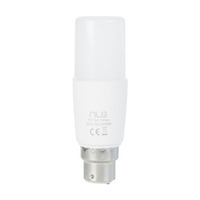
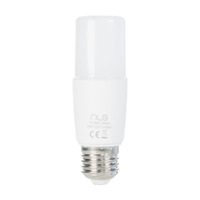
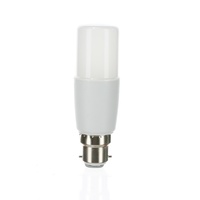
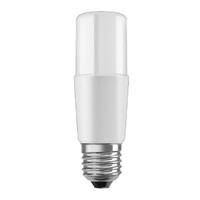
Ceiling fan lights most commonly use B22 tubular globes where the fitting canopy limits globe length. Tri-colour tubular globes are popular for ceiling fan retrofits because they allow the user to adjust colour temperature without changing the globe. Ceiling fan lights often have tight cavity dimensions that limit the globe profiles that will fit.
Office lighting typically uses neutral white (4000K) globes to support visual accuracy and reduce eye fatigue over extended work periods. Retail applications use directional globes in PAR or reflector profiles to highlight products and displays. Hospitality venues typically use warm white globes to create a relaxed atmosphere.
Trade fit-out projects involve replacing large numbers of incandescent or halogen globes with LED equivalents. Specifying consistent colour temperature and lumen output across all fittings produces even illumination throughout the space. Interior lighting products for commercial fit-outs are available in bulk quantities through Sparky Direct.
For industrial and high-bay applications where high lumen output is required, LED highbays and LED floodlights are more appropriate than globe-format LEDs.
Several common errors occur when selecting LED globes for retrofit or new installation projects. Checking each of these before purchase avoids wasted cost and return freight.
B22 and E27 bases look similar in photographs but are not interchangeable. E14 (small Edison screw) and B15 (small bayonet) are smaller versions used in decorative fittings. GU10 and GU5.3 (MR16) are both two-pin bases but operate at different voltages. Always identify the base type physically in the fitting before ordering, rather than estimating from a photograph or memory.
Many residential dimmer switches installed before 2010 are leading-edge dimmers designed for resistive incandescent loads. These dimmers are often incompatible with LED globes. Symptoms include flickering, buzzing from the dimmer, or the globe failing to dim at the lower end of the range. Replacing the dimmer switch with an LED-rated trailing-edge dimmer resolves most compatibility issues.
Choosing a globe based on wattage rather than lumens is the most common brightness error. A 9W LED globe produces similar brightness to a 60W incandescent. A 3W LED globe produces significantly less. Check the lumen output stated on the packaging and compare it to the output of the globe being replaced, not the wattage.
A GU10 downlight globe with a 24-degree beam angle produces a narrow, intense pool of light directly below the fitting. The same globe with a 60-degree beam angle produces a wider, softer distribution suitable for general room lighting. Using a narrow-beam globe for general room lighting leaves areas between fittings in shadow. Check the beam angle specification before purchasing GU10 and directional globes.
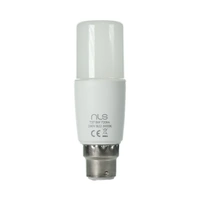
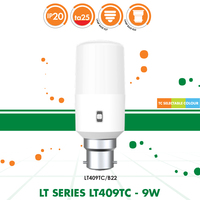
Watch SAL LT409TC-B22D | 9W Dimmable BC LED Lamp | Tri Colour 3K/4K/6K video
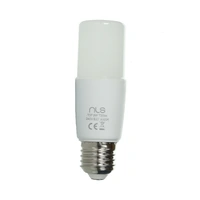
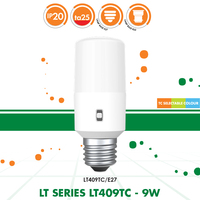
Watch SAL LT409TC-E27 | 9W ES LED Lamp | Tri Colour 3K/4K/6K video
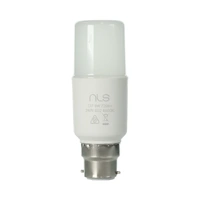
Watch SAL LT409TC-B22 | 9W BC LED Lamp | Tri Colour 3K/4K/6K video

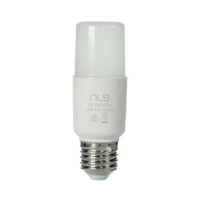
Fantastic - This SAL tubular globe not only fits in my old fan light (saving me replacing it), but does everything I want a globe to do. At 101mm long x 40mm wide, it's the shortest LED tubular bulb I've found. It's also dimmable, can be set to warm or cool white, and gives good light without flickering
To Sparky. I have used SAL globes in the passed and have always been good quality. The new adjustable type are great knowing you can getting the brightnesses just right for fanlight. As once put cover back up, you lost so much brightnesses. So for fanlight with 2 globes 4k is just is right.
Nice light, as stated you can change the intensity of the light by just sliding the switch selector.It has a low electricity demand so cheap to run whilst producing good light. I am very happy with this product . It remains to be seen how long it will last before it requires replacment.
Quality products in stock • Fast Australia-wide delivery • Competitive trade pricing
Browse LED Light Bulbs → Get Expert Advice →Yes, they can be used in a wide range of lamps and fixed light fittings.
Sparky Direct supplies LED light globes Australia-wide, offering efficient and reliable lighting solutions with convenient delivery.
LED light globes are securely packaged and delivered via standard courier services.
Unused products are generally eligible for return according to the seller’s returns policy.
Warranty coverage varies by manufacturer and typically covers defects in materials or workmanship.
LED light globes are available individually.
Yes, choosing the right brightness and colour temperature ensures comfort and efficiency.
Yes, they turn on instantly without warm-up time.
They run cooler than older globe types, but should still be handled carefully.
Can LED light globes be used in outdoor fittings?
Yes, they provide efficient, consistent lighting suitable for work environments.
Yes, options include filament, frosted, and clear decorative designs.
Quality LED globes provide stable light output when installed correctly.
LED light globes are energy-efficient light sources that use light emitting diode technology to produce illumination.
They are designed for long service life compared to traditional globes.
Yes, their lower energy consumption can help reduce lighting-related energy costs.
Yes, they deliver high light output while using significantly less electricity.
Brightness varies by model and is measured in lumens rather than watts.
Some LED globes are dimmable when used with compatible dimmers.
Yes, common options include warm white, cool white, and daylight.
They are available in bases such as B22, E27, E14, GU10, and others.
Yes, they are commonly used in offices, retail spaces, and commercial buildings.
Yes, they are widely used in homes for everyday lighting applications.
Quality LED light globes are manufactured to meet relevant AS/NZS electrical and safety standards.
They use less energy, last longer, and generate less heat than incandescent or halogen globes.