
Search Results:
Search Results:
Search Results:
Search Results:
Standard incandescent and LED globes are not rated for the extreme temperatures found inside ovens, rangehoods, or heat lamp fittings. A standard globe placed in these environments will fail rapidly, often within hours, because its glass envelope and internal components cannot withstand sustained radiant or convective heat.
Special lamps use heat-resistant glass, internal fusing, and specific voltage tolerances to survive continuous high-temperature operation. The glass envelope is thicker and chemically treated compared to a general lighting globe. Internal fusing protects the circuit from the voltage spikes that are common in appliance wiring.
The defining characteristic of a special lamp is its application rating, not its shape, base type, or wattage. Two lamps that look identical may have completely different temperature ratings, making one safe for oven use and the other unsuitable.
When replacing an appliance globe, the temperature rating must meet or exceed the operating environment of the fitting. Purchasing based on physical appearance alone, without confirming this rating, is the most common cause of premature lamp failure.
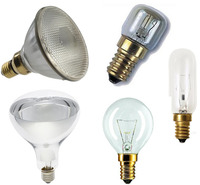
The main types available include oven lamps, rangehood lamps, microwave lamps, pilot lamps, and bathroom heat lamps. Each is engineered for a distinct appliance environment with its own temperature rating, base configuration, and wattage range.
Using the wrong lamp type in a high-heat appliance is a safety hazard. It will also result in premature globe failure, often voiding the appliance warranty. Each application demands a lamp matched to its specific conditions.
General LED light bulbs prioritise lumens and colour temperature. Special lamps prioritise thermal durability and electrical safety. The performance goals are different, and the construction reflects that.
Special lamps for high-heat applications are typically incandescent rather than LED. LED driver circuitry degrades rapidly at sustained temperatures above 100°C, making LED unsuitable for oven and heat lamp environments. The glass envelope on a special lamp is thicker and chemically treated to withstand radiant and convective heat that would destroy a standard globe envelope.
| Feature | Standard Globe | Special / Appliance Lamp |
|---|---|---|
| Primary design goal | Lumens and colour temperature | Thermal durability and electrical safety |
| Temperature rating | Not rated for high heat | Rated to application (up to 300°C for oven) |
| Glass envelope | Standard thickness | Thicker, chemically treated |
| Internal fusing | Not always present | Standard for appliance protection |
| Technology | Incandescent or LED | Predominantly incandescent (LED in some rangehood applications) |
Oven lamps use borosilicate or heat-resistant soda-lime glass that maintains structural integrity at sustained temperatures up to 300°C. This glass composition tolerates the thermal cycling that occurs each time an oven heats up and cools down, without cracking or deforming.
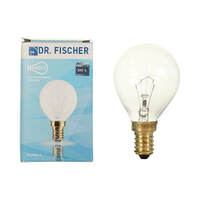
Internal fusing protects the circuit from voltage spikes common in appliance environments. The tubular or fancy round globe shape distributes heat evenly and prevents the thermal stress fractures that cause premature failure in standard globes placed in oven fittings.
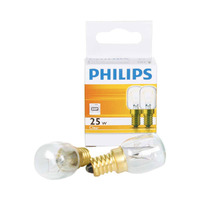
Oven lamps are available from manufacturers including National Light Sources and Philips, both of which supply appliance-rated globes to Australian trade standards.
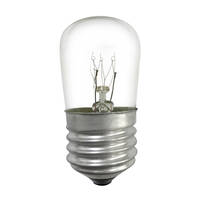
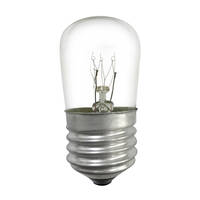
The two most common base types for oven lamps are SES (E14) and ES (E27). The base size is usually stamped inside the lamp socket of the oven. Using an incorrect base type will prevent the lamp from seating correctly and may create an electrical fault.
Both pilot oven lamps (typically 15W) and standard oven lamps (25W to 40W) use the same base types, but differ in wattage and physical dimensions. Always confirm the base type from the existing globe or the appliance manual before purchasing a replacement.
Wattage warning: Never install a higher-wattage lamp than the fitting's rated capacity. Fitting a 40W lamp in a socket rated for 25W creates a fire risk and will void the appliance warranty.
A pilot lamp is a low-wattage indicator globe, typically 15W, used in older oven designs to signal that the appliance is on or at temperature. Standard oven lamps at 25W to 40W provide interior illumination for viewing food during cooking. Both types must carry a 300°C temperature rating to be safe for oven use. The two are not interchangeable despite sharing the same base type in most models.
For appliances requiring a replacement element rather than a globe, see the range of fan forced oven elements and oven fan motors available at Sparky Direct. For thermostat and switching components, the oven thermostat and switch range covers most domestic appliance models.
Rangehood lamps operate in an environment that combines elevated temperatures, grease-laden vapour, and mechanical vibration from the extraction fan motor. This combination degrades standard globes rapidly. A globe that performs well in a pendant fitting will fail within days in a rangehood enclosure.
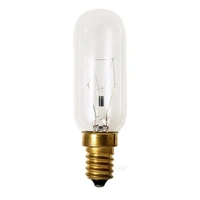
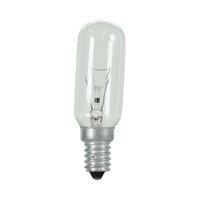
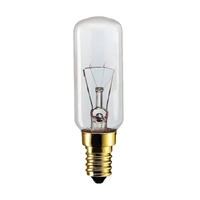
Most rangehood lamps are tubular in shape, in the T25 format, and rated at 240V to 250V to suit the appliance's internal wiring. The T25 designation refers to the 25mm tubular diameter, which fits the compact space inside most domestic rangehood enclosures.
The most common rangehood lamp is the 40W SES (E14) tubular globe, which fits the majority of domestic rangehood models. Some models use a bayonet cap (B22) or Edison screw (E27) base. Always check the existing globe before purchasing, as the base type must be an exact match to the socket.
Wattage directly affects the brightness of the rangehood interior. Replacing a 40W lamp with a lower-wattage globe will reduce visibility over the cooktop, which can affect safe use of the cooking surface. Match the wattage to the original unless the appliance documentation specifies otherwise.
LED filament tubular lamps in T25 format are now available and offer significantly longer service life than incandescent equivalents. Not all rangehood enclosures have adequate ventilation for LED drivers, so confirming the fitting type before switching to LED is essential.
LED rangehood lamps typically operate at 1.5W to 3W, which represents a substantial reduction in energy consumption compared to 40W incandescent versions. Before switching, check the appliance manufacturer's recommendations to avoid compatibility issues and warranty concerns.
Do not touch the glass envelope of a halogen or heat-rated appliance lamp with bare hands. Skin oils deposit on the glass surface and create hot spots during operation, leading to premature failure. Use a clean cloth or the packaging material when fitting a replacement globe.
For the full range of halogen globes including T25 tubular formats, and for discharge lighting options, browse the Sparky Direct globes range.
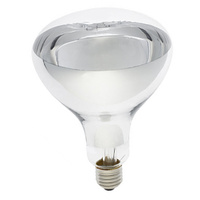
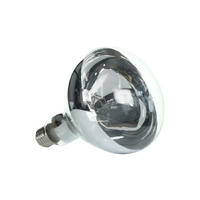
Bathroom heat lamps produce infrared radiation that warms surfaces and people directly, rather than heating the surrounding air. This is why a heat lamp feels warm immediately on the skin, even in a cold room. The heating element is a tungsten filament operating at very high temperatures, enclosed in a hard glass envelope rated for the radiant output.
Common wattages are 275W and 375W. The higher the wattage, the greater the heat output and the larger the area that can be effectively warmed. A 275W lamp is suitable for a standard bathroom; a 375W lamp suits larger spaces or installations where the lamp is mounted at a greater ceiling height.
Heat lamps must only be installed in fittings rated for their wattage. Installing a 375W lamp in a 275W-rated fitting creates a fire risk. The fitting's wattage rating is usually marked on the fitting itself or in the installation documentation.
The lamp must be positioned at the manufacturer's specified distance from surfaces and occupants to prevent burns or material damage. Heat lamps are classified as a fixed appliance in residential settings and must comply with the relevant wiring rules for bathroom zones under AS/NZS 3000:2018.
Installation must be carried out by a licensed electrician. In Queensland and across Australia, connecting fixed appliances in bathroom zones is licensed electrical work. For bathroom heater combination units that include an exhaust fan, the same licensing requirement applies.
Wattage matching is mandatory: Always match the replacement lamp wattage exactly to the existing globe and the fitting's rated capacity. A higher-wattage replacement in a lower-rated fitting is a fire hazard, not a performance upgrade.
The base type for most bathroom heat lamps is ES (E27). Confirm this before purchasing a replacement. The replacement lamp must carry the same wattage and the same ES base. Signs that a heat lamp needs replacing include visible darkening of the glass envelope near the filament and reduced heat output compared to a new lamp of the same wattage.
For multi-lamp bathroom heater units, proactive replacement of all lamps at the same time reduces the inconvenience of sequential failures. All lamps in the fitting will have accrued similar hours of use.
The interior of a microwave oven generates electromagnetic fields that can cause arcing in standard incandescent globes not designed for this environment. Microwave lamps use a nickel cap or a specific glass formulation that resists the effects of microwave radiation on the globe envelope.
Installing a non-rated lamp in a microwave is a safety hazard. It may also damage the appliance's magnetron, which is the component that generates the microwave energy. Magnetron replacement is expensive and often not cost-effective relative to the value of the appliance.
Most domestic microwave ovens use a 15W or 25W lamp with an E17 intermediate screw base, though some models use E14 or B15 bases. The voltage rating is typically 240V to 250V to suit standard Australian household supply. Microwave lamps are available in clear and frosted finishes. The finish affects light diffusion inside the cavity but does not impact heating performance.
The lamp type, wattage, and base size are usually printed on the existing globe or listed in the appliance's user manual. If the manual is unavailable, the appliance model number can be used to cross-reference the correct lamp specification with the manufacturer or a parts supplier.
Aftermarket microwave lamps from reputable manufacturers are compatible with most major appliance brands and meet the same safety standards as original equipment parts. The key is confirming the base type, wattage, and voltage rating before purchasing.
Getting the correct replacement lamp requires confirming five specifications. Each must be matched to the appliance, not estimated based on appearance or general lamp knowledge.
The user manual is the most reliable source for lamp specifications. It will list wattage, base type, and approved replacement part numbers. The existing globe itself often has the wattage, voltage, and base type printed or embossed on the glass or cap.
For discontinued appliances where documentation is unavailable, the base type and physical dimensions of the existing lamp are sufficient to identify a compatible replacement in most cases. Reputable suppliers stock aftermarket equivalents for most common appliance lamp types.
Purchasing a globe based on physical appearance alone, without confirming the temperature rating, is the most frequent error. Assuming all SES-based globes are interchangeable ignores critical differences in temperature rating and wattage between lamp types.
Fitting a higher-wattage globe than the appliance is rated for is a fire risk and will void the appliance warranty. If the correct lamp specification cannot be confirmed, consult the appliance manufacturer or a licensed electrician before purchasing a replacement.
For appliance parts beyond lamps, the oven elements and appliance parts range covers heating elements, fan motors, thermostats, and heated towel rails. For lamp holders and socket components, these are also available at Sparky Direct.
Standard incandescent oven and rangehood lamps have a rated lifespan of approximately 2,000 hours under normal operating conditions. In a domestic oven used for one to two hours daily, this translates to roughly three to five years of service. Bathroom heat lamps are rated for a shorter service life because of the extreme thermal stress of operating continuously at 275W to 375W. Pilot lamps, which operate at low wattage and are often left on for extended periods, typically have a rated lifespan of 1,000 to 2,000 hours.
Voltage fluctuations above the lamp's rated voltage accelerate filament degradation and reduce service life significantly. In areas with unstable supply voltage, appliance lamps may fail more frequently than their rated lifespan would suggest.
Vibration from appliance motors, particularly in rangehoods, causes filament fatigue over time. This is why appliance-rated lamps use more robust filament supports than standard globes. A standard globe installed in a rangehood will fail from vibration fatigue well before its rated hours are reached.
Touching the glass envelope of a halogen or heat lamp with bare hands deposits skin oils that create hot spots on the glass surface during operation, leading to premature failure. Always handle replacement globes using clean cloth or the packaging material.
Visible darkening of the glass envelope near the filament indicates the lamp is nearing end of life. Reduced light or heat output compared to a new lamp of the same wattage is a reliable indicator of filament degradation.
For appliances used daily, proactive replacement on a scheduled basis reduces the inconvenience of unexpected failure during use. For bathroom heat lamps and oven lamps in commercial or high-use settings, scheduling replacement at defined intervals is a straightforward maintenance practice.
For dimmable LED globes in general lighting applications, service life is considerably longer than incandescent. For fluorescent light starters, replacement schedules follow a different set of indicators.
LED components, particularly the driver circuitry, are vulnerable to sustained high temperatures. At temperatures above 100°C, LED drivers degrade rapidly, making LED unsuitable for oven and heat lamp applications. Regulatory exemptions for appliance lamps mean incandescent technology remains legal and commercially available in Australia for these specific applications, unlike general lighting where incandescent has largely been phased out.
The instant-on characteristic of incandescent lamps is also relevant in appliance environments where immediate light output matters. LED lamps can have a brief warm-up period that affects usability in some fittings.
Rangehood lamps are the primary appliance category where LED filament lamps are a proven replacement, provided the fitting has adequate ventilation for the driver. LED T25 tubular lamps at 1.5W to 3W offer substantially longer service life and lower energy consumption than 40W incandescent equivalents in this application.
Pilot lamps in some appliance designs can be replaced with low-wattage LED equivalents if the fitting is not directly exposed to oven heat. As LED thermal management technology improves, the range of appliance applications suitable for LED replacement will expand.
The primary consideration is the operating temperature of the lamp environment. Above 100°C, incandescent remains the only safe option. For rangehood and pilot lamp applications where LED is viable, the longer service life and lower energy consumption of LED provide a meaningful practical benefit.
Confirm LED compatibility with the appliance manufacturer before switching. This avoids warranty issues and ensures that the fitting provides adequate heat dissipation for the LED driver.
For general light globes in standard lighting applications, the full range includes LED light bulbs, halogen globes, and discharge lighting. For fixture-level products, the LED downlights, batten lights, and full lighting range are available online with trade pricing and Australia-wide delivery.
Watch 16380 | Fancy Round Oven Lamp E14 SES 40w 240v | Warm White video
Watch 50w 12v GY6.35 Bi Pin Halogen | 10232 video
Watch LED Lamp Tubular T38 10W 240V B22 5000K 1000lm | NLS 10016 video

The SAL GU10 are a great little globe. We had some older Clipsal round mini fluros which are now not made anymore. Swapped them out in our kitchen to see how they performed. They throw a nice downward type light rather than a spread. Very easy on the eyes. They also have three settings. We run them on the middle one. They are bloody brilliant. Will eventually do the rest of the house. Sparky Direct have the best price on these and highly recommend this light.
Fantastic - This SAL tubular globe not only fits in my old fan light (saving me replacing it), but does everything I want a globe to do. At 101mm long x 40mm wide, it's the shortest LED tubular bulb I've found. It's also dimmable, can be set to warm or cool white, and gives good light without flickering.
To Sparky. I have used SAL globes in the past and have always been good quality. The new adjustable type are great knowing you can get the brightness just right for a fanlight. As once put cover back up, you lost so much brightness. So for fanlight with 2 globes 4k is just right.
Quality products in stock • Fast Australia-wide delivery • Competitive trade pricing
Browse Special Lamps → Get Expert Advice →Replacement depends on the appliance or fitting design and accessibility.
Sparky Direct supplies special lamps Australia-wide, offering reliable solutions for specialised lighting needs with convenient delivery.
Special lamps are securely packaged and delivered via standard courier services.
Unused products are generally eligible for return according to the seller’s returns policy.
Warranty coverage varies by manufacturer and typically covers defects in materials or workmanship.
Yes, special lamps are typically sold individually.
Yes, matching the exact specification ensures safe and correct operation.
Yes, they should be handled according to manufacturer instructions.
Many common special lamps are readily available, though some are application-specific.
Yes, using an incorrect lamp can affect performance or damage the appliance.
Yes, many are specifically designed for ovens, rangehoods, and appliances.
Brightness depends on their intended function rather than room lighting.
Lifespan varies by lamp type and operating conditions.
Special lamps are light sources designed for specific applications that standard light globes are not suitable for.
No, they are designed for specific purposes rather than general illumination.
They are required for applications where standard lighting products would not operate safely or correctly.
No, special lamps must be matched exactly to the appliance or fitting requirements.
Many special lamps are designed to withstand high temperatures or specific operating conditions.
Yes, they are available in various voltages depending on their specific application.
Some special lamps are available in LED versions, depending on application and fitting.
Yes, they are widely used in commercial equipment and industrial applications.
Yes, many special lamps are used in household appliances and fittings.
They are commonly used in appliances, machinery, signage, indicators, and specialised lighting equipment.
Quality special lamps are manufactured to meet relevant AS/NZS electrical and safety standards for their intended use.
They include appliance lamps, oven lamps, microwave lamps, indicator lamps, and specialty discharge or halogen lamps.