
Search Results:
Search Results:
Search Results:
Search Results:
Discharge lamps produce light by passing an electrical current through a gas or vapour inside a sealed arc tube. The arc excites metal salts and gases within the tube, causing electrons to emit visible light as they return to their ground state. Because no filament is involved, discharge lamps are not subject to the same failure modes as incandescent or halogen sources. This makes them well suited to applications where long-running, high-output illumination is required.
HID stands for High-Intensity Discharge. It is the broad category that covers metal halide, high pressure sodium, mercury vapour, and low pressure sodium lamp types. All share the same fundamental operating principle: an electrical arc through a gas-filled tube produces light.
The arc tube is the core component of any discharge lamp. It is constructed from fused quartz or ceramic and contains noble gases and metal salts that vaporise under the heat of the arc to form a high-intensity plasma. Operating pressures inside the arc tube can reach 4 to 20 atmospheres, and internal temperatures can exceed 1,000 degrees Celsius during operation.
The outer glass envelope surrounding the arc tube serves two purposes: it protects the arc tube from physical damage and filters ultraviolet radiation produced during operation. This makes the outer envelope a safety-critical component, not just a protective shell.
Discharge lamps have negative electrical resistance. Without a ballast in the circuit, current would increase uncontrollably and destroy the lamp within seconds. The ballast provides the correct starting voltage to strike the arc and then limits current once the lamp is running at full output.
Two types of ballasts are used with discharge lamps. Magnetic ballasts are robust and well suited to harsh industrial environments, but they are less efficient and produce more heat than their electronic counterparts. Electronic ballasts offer more precise current control, reduce flicker, and extend lamp life through a softer starting cycle. Mismatched control gear is one of the most common causes of premature discharge lamp failure, so matching the ballast to the specific lamp wattage and type is essential.
Important: Each discharge lamp type requires control gear matched to the specific lamp wattage and manufacturer specifications. Never assume a ballast rated for one lamp type is compatible with another. Check the lamp datasheet and ballast specifications before installation.
There are four main types of discharge lamps, each suited to different applications based on light output, colour rendering, and efficiency. Choosing the right type depends on whether colour accuracy, energy efficiency, or operational cost is the priority for the installation.
Metal halide lamps produce light by ionising a mixture of mercury vapour and metal halide compounds. Luminous efficacy ranges from 75 to 100 lumens per watt, and colour rendering index values typically fall between 65 and 90, depending on the lamp variant. This combination of white light and high CRI makes metal halide well suited to retail stores, sports arenas, large auditoriums, and indoor facilities where accurate colour appearance matters.
Lamp life typically ranges from 6,000 to 15,000 hours. Higher-wattage models tend to last longer than lower-wattage versions. Available from Philips, Tungsram, and Eye Lighting, among others.
Probe start lamps use a starting electrode inside the arc tube to initiate the arc. Pulse start lamps use a high-voltage ignitor in the ballast circuit to strike the arc without an internal electrode. Pulse start lamps have faster warm-up times, better lumen maintenance over life, and are the current standard in most new installations. Probe start lamps require a probe-start-compatible ballast and cannot be used with pulse start control gear.
High pressure sodium lamps are among the most efficient discharge sources available, reaching up to 140 lumens per watt. A 400-watt HPS lamp produces approximately 50,000 initial lumens, compared to 40,000 for an equivalent metal halide lamp. This output-per-watt advantage has made HPS the dominant technology for street lighting, warehouses, and outdoor security applications for decades.
HPS lamps produce a characteristic golden-white light with a colour temperature of around 1,900 to 2,100K and a CRI of approximately 20. This low CRI limits their suitability in environments where accurate colour rendering is critical, such as retail or food processing. Where colour rendering is not a factor and maximum efficiency over long operating hours is the priority, HPS remains a cost-effective choice. National Light Sources and CLA supply HPS lamps suited to Australian industrial and outdoor installations.
Mercury vapour lamps were the first commercially available HID sources. They produce a bluish-white light with modest efficiency and are gradually being replaced by more efficient sodium and metal halide alternatives. Mercury vapour lamps are still encountered in existing installations, but they are rarely specified for new projects.
Low pressure sodium lamps are the most efficient of all discharge types, achieving 100 to 183 lumens per watt. The trade-off is a deep monochromatic yellow light with a near-zero CRI, which means colours are rendered in shades of yellow and grey. LPS lamps are used in applications where colour rendering is not required, such as tunnel lighting and some outdoor road applications where minimising light pollution is a priority.
| Lamp Type | Efficacy (lm/W) | CRI | Colour Temp | Typical Use |
|---|---|---|---|---|
| Metal Halide | 75–100 | 65–90 | 3,000–6,500K | Retail, sports, commercial |
| High Pressure Sodium | 90–140 | ~20 | 1,900–2,100K | Street, warehouse, outdoor |
| Mercury Vapour | 30–60 | 40–60 | 3,200–7,000K | Legacy installations |
| Low Pressure Sodium | 100–183 | ~0 | 1,800K (monochromatic) | Tunnels, road lighting |
Discharge lamps are designed for applications where sustained high-intensity illumination over large areas is required. Their high lumen output per fitting reduces the number of luminaires needed to achieve target lux levels, which lowers both installation costs and ongoing maintenance frequency.
Warehouses, factories, and distribution centres benefit from discharge lamps because their high lumen output per fitting reduces the number of luminaires required to achieve target lux levels. Metal halide and HPS lamps are commonly mounted at heights of 6 metres or more, where their concentrated arc source and wide beam distribution cover large floor areas effectively.
The long lamp life of HID sources reduces maintenance frequency in environments where re-lamping at height is costly or operationally disruptive. For high-bay applications, browse the range at Sparky Direct Lighting and Industrial Supplies.
HPS lamps have been the dominant technology for street, road, and car park lighting due to their high efficacy and long operational life in continuous-burn scenarios. Sports field and stadium lighting typically uses metal halide because of its superior colour rendering, which is essential for broadcast television and spectator visibility.
Security and perimeter lighting installations use discharge lamps where consistent, high-output illumination is required throughout the night without frequent cycling. For outdoor applications, outdoor lighting and LED floodlights are available for both new installations and retrofits.
Metal halide lamps have historically been used in indoor horticulture and reef aquariums because of their broad spectral output and high intensity. LED technology has largely replaced them in these applications due to lower energy consumption and longer service life.
Stage and photographic lighting uses specialised metal halide variants rated at 150 to 1,200 watts for their daylight-balanced spectrum. UV-enhanced metal halide variants are used in industrial printing and curing processes where high UV-A output is required. Specialist lamp types are available through Special Lamps at Sparky Direct.
The warm-up and restrike characteristics of discharge lamps are fundamental operating behaviours that affect how and where they are installed. Any installation plan must account for these delays to avoid operational problems.
When first switched on, discharge lamps require a warm-up period of several minutes before reaching full brightness. The arc tube must heat up to vaporise the metal salts and raise internal pressure to operating levels. During warm-up, the lamp produces a fraction of its rated lumen output, starting with a dim or coloured glow before transitioning to its full operating spectrum.
Metal halide lamps typically take 2 to 5 minutes to reach full output. HPS lamps may take 3 to 4 minutes depending on wattage and ambient temperature. This characteristic means discharge lamps are not suitable for applications requiring instant full-brightness illumination.
After being switched off or following a power interruption, a discharge lamp cannot immediately restart. The gases inside the arc tube remain too hot to ionise at normal starting voltages, preventing the arc from re-striking until the tube cools sufficiently. The restrike delay ranges from 5 to 20 minutes depending on lamp type.
This characteristic makes discharge lamps unsuitable for applications requiring instant re-illumination after switching, such as emergency lighting or spaces with frequent on/off cycles. Any installation that may experience power interruptions should include a plan for the restrike delay period.
Metal halide lamps have a restrike delay of 10 to 20 minutes after shutdown. HPS lamps typically restart in 5 to 10 minutes. Mercury vapour lamps fall between these ranges. LPS lamps have the shortest restrike time of the major HID types. Always verify the specific restrike delay with the manufacturer's datasheet for the lamp in use.
Discharge lamps are generally less sensitive to cold ambient temperatures than fluorescent sources, making them suitable for unheated industrial spaces and outdoor installations. Extremely low temperatures can extend the warm-up period and reduce initial lumen output until the arc tube reaches operating temperature.
Luminaire design and enclosure selection should account for thermal management to maintain consistent lamp performance across varying seasonal conditions. In outdoor installations, selecting a luminaire with appropriate IP and IK ratings ensures protection from the elements without restricting the thermal performance of the lamp and ballast.
Key performance metrics for discharge lamps, including lumens per watt, CRI, and colour temperature, determine which lamp type is right for a given application. Understanding these figures is essential for matching the lamp to the lighting design requirements.
Lumens per watt measures how efficiently a lamp converts electrical power into visible light. Higher values indicate greater efficiency. LPS lamps lead at 100 to 183 lm/W, followed by HPS at 90 to 140 lm/W, metal halide at 75 to 100 lm/W, and mercury vapour at 30 to 60 lm/W.
Over 10,000 burning hours, HID lamp lumen output can deteriorate by up to 70%. This lumen depreciation must be accounted for in lighting design: the initial lumen output listed on the datasheet is not the output the lamp will deliver mid-life or at end of life. A well-designed installation will replace lamps based on a planned maintenance schedule before lumen levels fall below the required minimum.
Colour rendering index (CRI) measures how accurately a light source renders colours compared to natural daylight, on a scale of 0 to 100. HPS lamps have a CRI of around 20, meaning colours appear desaturated and distorted under their light. Metal halide lamps typically achieve CRI values of 65 to 90, making them suitable for environments where accurate colour appearance matters.
Colour temperature describes the warmth or coolness of the light output. HPS produces a warm golden tone around 2,000K. Metal halide ranges from 3,000K to 6,500K depending on the lamp variant, allowing the lamp to match a range of application requirements from warm retail lighting to daylight-balanced industrial and sports lighting.
Discharge lamps are available across a wide wattage range, from 18-watt compact metal halide units to 2,000-watt high-bay industrial fittings. Higher wattage lamps produce greater lumen output but require more robust luminaire housings, heavier ballasts, and appropriate electrical infrastructure to support them.
Matching wattage to the mounting height and target lux level is essential to avoid over- or under-lighting a space. A lighting design calculation should be performed for any installation where achieving a specific lux level is a safety or operational requirement. Lamp rated life for discharge sources typically ranges from 6,000 hours for metal halide to 24,000 hours for HPS, depending on the specific lamp and operating cycle.
Comparing discharge lamps to LED alternatives reveals clear trade-offs in upfront investment, running costs, and performance over time. Neither technology is universally superior: the right choice depends on the specific installation, budget, and performance requirements.
In very high-wattage applications, discharge lamps can still offer a lower initial outlay per lumen compared to equivalent LED systems. A 1,000-watt metal halide lamp and ballast installation may have a lower upfront cost than an equivalent LED high-bay, particularly for large-scale industrial installations with many fittings.
Metal halide lamps produce an extremely concentrated point source of light, which is advantageous in optical systems requiring precise beam control, such as searchlights and specialised projection systems. Existing discharge lamp installations with functional luminaires and ballasts can also be maintained cost-effectively through re-lamping, rather than undertaking a full luminaire replacement programme.
LED technology now matches or exceeds the lumen output of most HID sources while consuming significantly less energy. LED systems are rated for 50,000 hours or more, compared to 6,000 to 24,000 hours for discharge lamps. LEDs reach full brightness instantly with no warm-up or restrike delay, making them suitable for applications where discharge lamps cannot be used, such as sensor-activated security lighting or emergency exit illumination.
LED systems eliminate the need for separate ballasts and ignitors. This reduces the number of components that can fail and simplifies maintenance. For new installations, LED high-bays and floodlights are the preferred option in most commercial and industrial applications. Browse the Commercial Floodlights and LED Light Bulbs ranges for LED alternatives.
Direct replacement LED lamps are available for many common discharge lamp bases, including E40 mogul and double-ended RX7s formats, allowing luminaire housings to be retained. Ballast-bypass LED retrofits remove the existing ballast from the circuit entirely, improving energy efficiency and eliminating a common point of failure in ageing installations.
A full luminaire replacement with a purpose-built LED high-bay or floodlight typically delivers the best optical performance and longest service life. This approach is recommended where the existing luminaire is in poor condition, where the beam angle needs to change, or where the installation will benefit from a modern control system. ILD and Atom Lighting offer LED replacement options suited to Australian industrial installations.
Selecting the right discharge lamp requires matching lamp type, wattage, base type, and control gear to the specific installation requirements. Getting any one of these wrong can result in premature lamp failure, reduced performance, or safety hazards.
Metal halide is the preferred choice where colour accuracy, white light, and broad spectrum output are priorities. HPS is the preferred choice where maximum energy efficiency and long operational hours matter more than colour rendering. LPS is reserved for niche applications where near-zero CRI is acceptable and maximum efficacy is the overriding requirement.
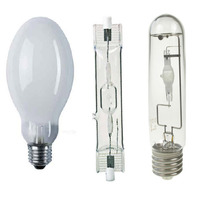
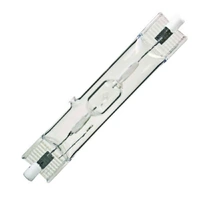
Discharge lamps use a range of base types including E27, E40, RX7s, and PGZ12, each designed for specific luminaire and wattage combinations. The RX7s base, also known as the double-ended base, is used in double-ended metal halide lamps and requires a luminaire designed to accept this format. Using a lamp with an incorrect base type or wattage rating can cause premature lamp failure, ballast damage, or safety hazards.
The term "universal burn position" on a discharge lamp datasheet indicates the lamp can be operated in any orientation: base up, base down, or horizontal. Lamps without this designation must be operated in the specified burning position or the arc tube chemistry will not function correctly, leading to reduced life and possible lamp failure.
Compatibility check: Always verify that the replacement lamp's wattage, base type, lamp type (probe start vs pulse start), and operating position match the luminaire's specifications before installation. Refer to the luminaire label or the original lamp's packaging for these details.
Each discharge lamp type requires control gear matched to the specific lamp wattage and manufacturer specifications. Magnetic ballasts are robust in harsh environments but less efficient. Electronic ballasts offer improved efficiency, reduced flicker, and softer starting that extends lamp life. Mismatched control gear is one of the most common causes of premature discharge lamp failure.
Using the wrong ballast can result in the lamp not striking, operating at incorrect power, overheating, or failing within a short time. Always use a ballast approved by the lamp manufacturer for the specific lamp type. Atco-CMP supplies fluorescent and discharge ballasts compatible with a range of lamp types. For full ballast selection, see the Ballasts category at Sparky Direct.
Safe handling, disposal, and maintenance of discharge lamps requires awareness of the hazardous materials and high operating pressures involved. Discharge lamps are not general waste and must be treated accordingly from first use through to disposal.
All major discharge lamp types contain mercury vapour. Mercury is a hazardous substance requiring careful handling and must not be disposed of in general waste. Metal halide arc tubes operate at internal pressures up to 70 psi and temperatures up to 1,100 degrees Celsius, and a small percentage of lamps nearing end of life have been associated with violent rupture failures.
Always handle discharge lamps with appropriate personal protective equipment. Avoid touching the arc tube with bare hands, as skin oils can cause hot spots that weaken the quartz envelope over time. Ensure lamps are fully cooled before removal from the luminaire. If a lamp breaks, ventilate the area immediately, avoid inhaling any vapour, and clean up the fragments following mercury spill procedures.
A small percentage of metal halide lamps nearing end of life can fail by violent arc tube rupture. For this reason, open luminaires should not be used with metal halide lamps unless the lamp is specifically rated for open-fixture operation. Always use a luminaire with a protective glass or acrylic diffuser when installing metal halide sources in areas where lamp rupture could cause injury or fire.
Discharge lamps are classified as hazardous waste under Australian environmental regulations. They must be disposed of through an approved lamp recycling or hazardous waste collection service. Crushing or landfilling discharge lamps releases mercury into the environment and is prohibited under waste management legislation.
Many lamp manufacturers and electrical wholesalers can direct purchasers to compliant disposal facilities. Some local councils operate periodic hazardous waste collection days that accept fluorescent and discharge lamps. Contact your local council or state environmental authority for the nearest approved disposal point.
A planned maintenance schedule based on the lamp's rated life prevents lumen depreciation from reaching the point where illumination levels fall below required standards before lamps are replaced. For commercial and industrial installations, replacement before the lamp's rated end-of-life point is more cost-effective than reactive replacement after failure.
Group re-lamping replaces all lamps in an installation at the same time. This approach reduces maintenance costs in high-bay and outdoor installations where access is difficult and the cost of repeated individual lamp changes outweighs the cost of replacing lamps that still have some remaining life. Cleaning luminaire reflectors and diffusers at the time of re-lamping restores light output lost to dust accumulation and maintains designed lux levels across the installation.
Signs a discharge lamp is near end of life: Colour cycling (lamp shifts colour during operation), increased warm-up time, failure to reach full brightness, visible darkening of the arc tube ends, or frequent cycling on and off under normal operating conditions. Replace lamps showing these signs before complete failure.
Watch 16380 | Fancy Round Oven Lamp E14 SES 40w 240v | Warm White video
Watch Atco-CMP EC36-40-B2 | Fluorescent Ballast 220/240V 36W video
Watch 50w 12v GY6.35 Bi Pin Halogen | 10232 video

The SAL GU10 are a great little globe. We had some older Clipsal round mini fluros which are now not made anymore. Swapped them out in our kitchen to see how they performed. They throw a nicebdownward type light rarther than a spread. Very easy on the eyes.They also have three settings. We run them on the middle one. They are bloody brilliant. Will eventually do the rest of the house. Sparky Direct have the best price on these and highly recommend this light.
Bought a pair of these on an awesome Sparky Direct special to replace some EBay units which failed after 12 months use. Look to made to a high standard and I'm expecting a long service life. I had some technical questions which I directed to the Australian distributor (ILD) - who answered very quickly and comprehensively. Very happy with the light output and general finish on them. Would definitely buy again.
A fantastic light. Bought one initially to see what it was like. With 3 variations to wattage and colour all within the one light makes for the perfect compromise. Being completely Off-Grid we're focused on energy savings - this tick's that box perfectly. Very happy with the quality and ordering from Sparky Direct again.
Quality products in stock • Fast Australia-wide delivery • Competitive trade pricing
Browse Discharge Lighting → Get Expert Advice →Many discharge lamps require a warm-up period before reaching full brightness.
Sparky Direct supplies discharge lighting products Australia-wide, offering reliable lighting solutions with convenient delivery.
They are securely packaged and delivered via standard courier services.
Unused items are generally eligible for return according to the seller’s returns policy.
Warranty coverage varies by manufacturer and typically covers defects in materials or workmanship.
Yes, discharge lamps and related components are sold individually.
Yes, replacing discharge lighting requires consideration of compatibility and performance.
Yes, it is designed for long operating hours in commercial and industrial settings.
Lamps and control gear may require periodic replacement over time.
Many installations are upgrading to LED for efficiency and maintenance benefits.
Colour rendering varies depending on the lamp type used.
Yes, it has been widely used in warehouses and industrial buildings.
Yes, it has traditionally been used for outdoor and street lighting.
Discharge lighting is a type of lighting that produces light by passing an electrical discharge through a gas or vapour.
Yes, discharge lamps are known for high light output.
It provides strong, wide-area illumination suitable for large indoor and outdoor environments.
Yes, it is still used in existing installations and specific applications, although many are transitioning to LED.
Yes, they are available in high wattages suitable for large-scale lighting applications.
Colour output varies by lamp type, ranging from warm amber tones to bright white light.
Compared to older technologies it is efficient, though LED lighting is now generally more energy efficient.
Yes, discharge lamps typically require ballasts and sometimes ignitors to operate correctly.
Yes, it is widely used in industrial and commercial environments requiring high light output.
Discharge lighting is commonly used in street lighting, warehouses, factories, car parks, and large outdoor areas.
Quality discharge lighting products are manufactured to meet relevant AS/NZS electrical and safety standards when installed correctly.
Common types include metal halide, high pressure sodium, low pressure sodium, and mercury vapour lamps.