
Search Results:
Search Results:
Search Results:
Search Results:
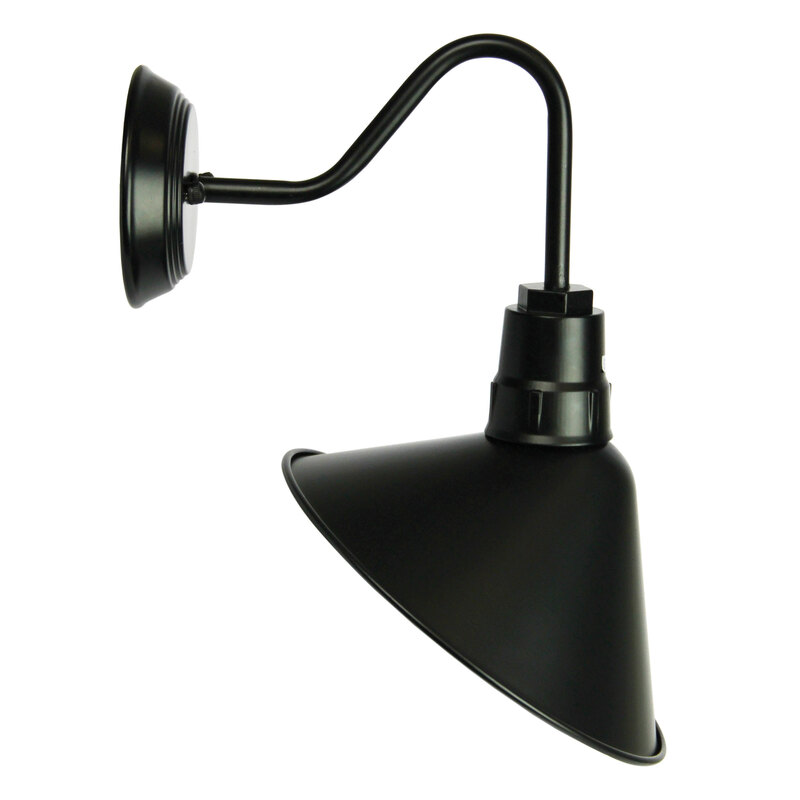
Find the best Interior Wall Lights at Sparky Direct. [ Read More ]
Interior wall lights are fixed lighting fixtures mounted directly to interior walls, designed to provide ambient, task, or accent illumination across residential and commercial spaces. Unlike portable lamps or ceiling-mounted fixtures, wall lights are permanently positioned to deliver consistent, directional light from a mid-wall height, typically between 1.5m and 1.8m from floor level.
What sets wall lights apart from other fixture types is their ability to create a middle layer of light within a room. Interior lighting spans many fixture types from downlights and pendants above to floor lamps below, and wall lights fill the space between. They soften shadows, reduce contrast, and add warmth that overhead lighting alone cannot achieve.
In Australia, wall lights have come a long way from their basic origins. Today they are as much a style choice as a practical one. Homeowners and designers often choose wall lights to give a space character and personality, not just to add light.
Ceiling lights (including downlights, pendants, and chandeliers) provide the primary layer of illumination in most rooms. They deliver broad, even light from above but can create flat, shadowless environments that feel clinical or uninviting when used alone.
Floor lamps and table lamps each have their place in a room. Wall lights sit between them. They are positioned at eye level or slightly above, casting light sideways and at an angle rather than straight down. This creates depth, shadow, and warmth that makes a room feel comfortable and well thought out. In small rooms, wall lights can replace table lamps, freeing up surface space and giving a cleaner, built-in look.
Wall lights used as a secondary light source use less power than running ceiling lights at full brightness. In bedrooms and living rooms, switching to wall lights in the evening can lower energy use without losing comfort.
The interior wall light category spans a wide range of fixture styles, each designed for a different purpose, aesthetic, and room type. Choosing the right type prevents the most common mistakes buyers make: choosing a fixture that looks right in isolation but performs poorly in the space.
Up/down wall lights send light in two directions at once: up toward the ceiling and down toward the floor. This creates two pools of light that frame the fitting and draw the eye to the wall. It works especially well in rooms with features like exposed brick, textured render, timber panels, or high ceilings, where the angled light brings out surface detail that overhead lighting misses.
Available in narrow-beam and wide-beam configurations, up/down lights suit everything from statement hallways and stairwells to open-plan living areas and double-height entry spaces. In contemporary Australian interiors, up/down lights in matte black or brushed brass finishes have become a staple of new builds and renovations.
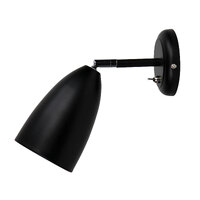
Wall sconces extend from the wall via an arm, bracket, or decorative body. The fixture projects outward from the wall surface, creating visible shadow and depth and allowing light to cast in multiple directions. This projection gives sconces their decorative presence. The three-dimensional form catches the eye and contributes to the character of the room even when switched off. Sconces suit spaces where style is the priority: living rooms, bedrooms, dining areas, and feature hallways.
Flush mount wall lights sit flat against the wall with no arm or body sticking out. This makes them a practical choice for narrow hallways, stairwells, and children's rooms where a protruding fitting would be a hazard. They are also a good option when you want lighting that blends in rather than stands out.
If the fixture is meant to be seen and to contribute to the room's design, choose a sconce. If the fixture is meant to disappear into the wall and simply provide light, choose a flush mount. Narrow hallways, staircases, and children's bedrooms almost always benefit from flush mounts; living rooms, master bedrooms, and dining areas benefit from sconces.
Swing-arm wall lights have a jointed arm that lets you move the light head to where you need it. The most common use is beside the bed for reading. Mounted at the right height, a swing-arm sconce replaces a bedside table lamp, freeing up bench space and allowing you to adjust the light without disturbing a sleeping partner.
Swing-arm lights also work well in home offices, study rooms, and craft rooms where close-up work is common. They come in styles from industrial bare metal to mid-century profiles in brushed brass and matte black. See options from Martec and Atom Lighting for task-focused wall light ranges.
Picture lights are designed to light artwork, photos, and gallery walls. They cast a focused, even beam across a framed piece without creating glare or washing out colours. Modern LED picture lights have high colour accuracy (CRI 90+), which means the colours in the artwork look true to life.
Picture lights should be mounted 150–300mm above the top of the frame, with the light angled to cover the full height of the artwork without spilling onto the surrounding wall. Finish selection matters because the fixture is always visible. Brass and bronze suit traditional interiors, while matte black and brushed nickel suit contemporary gallery-style spaces. Browse picture and decorative wall light options from Oriel Lighting and SAL Lighting.
LED wall washers spread a soft, even wash of light across a broad wall surface, flooding rather than spotlighting. They are particularly effective in long hallways, where a series of evenly spaced fixtures creates a continuous ribbon of light that guides movement through the space. In open-plan living areas, wall washers add a layer of ambient warmth that softens the harshness of overhead LED downlights and makes large rooms feel more intimate.
Vintage and traditional wall lights draw from a long history of decorative design, including Art Deco, Victorian, Federation, Edwardian, and mid-century Modern styles, to deliver fixtures with warmth, character, and a sense of permanence. Key design signatures include ornate metalwork in brass, bronze, or wrought iron; amber, frosted, or hand-blown glass shades; candle-style lamp holders; and decorative backplates with curved or floral detailing.
In Australia, vintage wall lights suit Queenslander homes, Federation terraces, and heritage properties. They work well with dark timber, velvet, linen, and interiors that value warmth and character over a minimal look.
Choosing the right wall light comes down to three things: what the room needs, what lighting is already there, and the style you are going for. Getting all three right makes the end result look and feel natural.
Different rooms have different lighting needs. A wall light that works in a bedroom may be the wrong choice for a hallway or bathroom. In living rooms, dimmable sconces work well when placed to frame a fireplace, artwork, or feature wall. Wall lights should add to the overhead lighting, not replace it. Ceiling lights and pendant lights do the main job; wall lights add warmth and depth at eye level.
Bedrooms need warm, dimmable lights that can go from bright enough for reading to soft enough for winding down. Warm white (2700K) is the most widely recommended option for bedrooms. It supports the body's shift toward sleep better than cooler light tones.
Hallways and staircases prioritise safety and clearance above all else. Flush mount wall lights or slim-profile up/down lights are the practical choice. Bathrooms require IP-rated fixtures capable of withstanding moisture and steam; the most effective placement is beside the mirror at face height, eliminating the unflattering overhead shadows that ceiling-only lighting creates.
Dining rooms benefit from wall lights on the side walls at approximately seated eye level (1.2m–1.5m), complementing an overhead pendant above the table. Home theatres require low-level wall lights positioned along side walls to provide enough ambient light for safe movement without washing out the screen.
Scale is one of the most common mistakes when choosing wall lights. As a starting point, mount lights at 1.5m to 1.8m from the floor in living areas and bedrooms, roughly at eye level when standing. In rooms with ceilings above 2.7m, a standard sconce can look too small. The fix is either to choose a larger fixture or to use a group of smaller ones arranged together.
In small rooms and apartments, slim flush mounts or sconces with upward shades can make the ceiling feel higher without taking over the space. One strong trend in Australian interiors is the use of oversized sconces as statement pieces. These are bold forms in ceramic, plaster, or shaped metal that work almost like art on the wall.
| Finish | Best Suited To | Key Characteristics |
|---|---|---|
| Matte Black | Contemporary, industrial, Japandi | Highly versatile, suits most colour palettes |
| Brushed Brass / Antique Brass | Coastal, Hamptons, quiet luxury, transitional | Warm, rich; complements timber, linen, natural stone |
| Bronze / Oil-Rubbed Bronze | Heritage homes, warm earthy interiors | Bridges traditional and contemporary aesthetics |
| Chrome / Polished Nickel | Minimalist, European, bathroom-focused | Clean, reflective; complements polished hardware |
| Ceramic / Plaster / Natural Materials | Biophilic, organic, warm neutral palettes | Fastest-growing category; texture and warmth |
A home office needs lighting that keeps you focused, reduces eye strain, and looks decent on video calls. Swing-arm wall sconces are a good option for desk lighting. Mount them at desk height and angle them down to light the work surface without shining into your eyes.
Colour temperature matters significantly in a work environment. A neutral white of 3000K–3500K strikes the right balance: warm enough to avoid a clinical feel, but bright enough to maintain alertness during long work sessions. Dimmable wall lights add flexibility. Reduce brightness during video calls and increase it for reading or drafting.
Good placement turns wall lights from a basic addition into a design feature. The difference between a light that looks right and one that looks like an afterthought almost always comes down to where it sits relative to the furniture, the room's features, and the other lights around it.
Most electricians and designers recommend deciding on wall light positions during a build or renovation, before walls are plastered and cables are run. Adding them later is possible, but it costs more and causes more disruption. All hardwired fittings must be installed by a licensed electrician under AS/NZS 3000:2018. For outdoor use, see the outdoor wall lights range. For flexible accent lighting, LED strip lights can be used in cornices and joinery.
Feature wall lighting is one of the most impactful applications of interior wall lights. LED wall washers and up/down lights are the most effective fixture types for this purpose, as their broad, even light distribution covers large surface areas without creating hot spots and uneven patches.
For the best effect, position fixtures 300 to 500mm from the wall and angle the light across the surface at a low angle rather than pointing it straight at the wall. This works especially well on textured surfaces like brick, rough render, timber, and stone, because the angled light picks up every bump and groove and adds depth. For walls with artwork, mount picture lights 150 to 300mm above the frame. Use warm 2700K light to bring out the colours in the artwork.
Consistency Principle: Avoid mixing beam widths on a single feature wall. Keep the spread consistent, whether narrow and dramatic or wide and diffused, for a cohesive result. Mixing narrow and wide beams on the same wall produces an uneven, unresolved appearance.
In 2026, wall lighting in Australia is about more than just function. Buyers are asking what a fixture says about a room and the people in it. Three trends are shaping what sells this year: warm finishes, scene-based lighting control, and a move back toward fixtures that have real physical presence and quality.
Matte black was the go-to finish in Australian wall lighting for most of the early 2020s, but that is changing. Aged brass, unlacquered bronze, and warm champagne gold are now among the fastest-selling finishes, as more buyers move toward warmer, richer colour palettes in their homes.
The change is most noticeable in bedrooms and dining rooms, where matte black can feel too cool and stark. Living finishes like unlacquered brass and bronze are gaining popularity because they develop character over time rather than staying perfectly uniform. Browse options from Dux Lighting and Lighting Factory.
Natural and handmade materials are now mainstream in the Australian wall light market. Hand-thrown ceramic shades, raw plaster, rattan stems, and shaped glass diffusers are showing up across mid-range and premium products. Buyers want lights that look and feel like they were made by hand, not stamped out of a factory.
What is different in 2026 is that these materials are no longer just for feature walls or high-end renovations. Ceramic and plaster wall lights are being used in everyday rooms like hallways, bedrooms, and home offices by buyers who want a home that feels real and lived-in rather than like a showroom. Browse options from Stylux Lighting and EGLO.
Smart lighting control has moved beyond simple dimming. Homeowners are now setting up lighting scenes: saved combinations of wall lights, downlights, and accent lights that change the mood of a room with one tap or a set schedule. Wall lights are a key part of this because they respond so visibly to dimming. Dropping a wall sconce from full brightness to 20% changes how a room feels in a way that ceiling lights alone cannot.
Compatibility with Google Home, Amazon Alexa, and Apple HomeKit is now expected in mid-range and above wall light products. App-based scheduling is widely used to set morning, work, evening, and sleep lighting automatically. For electricians and builders, always check that the LED driver is compatible with the control system before installation. Driver incompatibility is the most common cause of smart lighting problems.
One of the most striking trends in 2026 is the rise of oversized sconces used as a single focal point. Instead of a matching pair either side of a fireplace or bedhead, a single large sconce in ceramic, plaster, or shaped metal is placed on a bare wall. It carries the same visual weight as a painting or sculpture.
This reflects a shift in how Australians are decorating their homes: less matching, less playing it safe, and more confidence in letting one strong piece define a room. The fixtures that work best for this have bold three-dimensional form, visible texture, and a strong outline that reads clearly from across the room. For hallways, stairwells, and living rooms with enough wall space, this is the standout lighting choice of the year.
LED is now the clear choice over incandescent and halogen globes for wall lights, and most of the Australian market has already made the switch. LED wall lights use 75 to 80% less energy than incandescent globes and last 15 to 25 times longer, up to 50,000 hours compared to 1,000 to 2,000 hours for incandescent. Over the life of a fitting, that means much lower energy bills and far fewer globe replacements.
CRI measures how accurately a light source shows colours compared to natural daylight. A score of 100 is perfect. Most good LED globes score between 80 and 95. For spaces where colour matters, such as artwork, bathrooms, dressing rooms, and home offices, aim for CRI 90 or above. For general ambient lighting, CRI 80 is fine.
Colour temperature is measured in Kelvin (K) and tells you how warm or cool a light looks. Warm white (2700K) suits bedrooms, living rooms, and dining areas where you want a relaxed feel. Soft white (3000K) works in living rooms, kitchens, and hallways. Neutral to cool white (3500K to 4000K) suits bathrooms, home offices, and task areas where you need clear, bright light. See the tri-colour LED downlights range for fittings with a switchable colour temperature.
IP (Ingress Protection) ratings show how well a fitting is protected against dust and water. For interior wall lights, IP ratings matter most in bathrooms, laundries, and anywhere the fitting may be exposed to water, steam, or humidity.
Compliance Warning: Fitting a light with the wrong IP rating in a wet area is a safety hazard and breaks Australian electrical regulations. Always check the IP rating before installing in a bathroom or laundry. For IP65-rated options, see the weatherproof LED lights range, which includes moisture-rated fittings suitable for wet indoor areas.
The choice between hardwired and plug-in wall lights comes down to how permanent you want the installation to be, how clean you want the finish to look, and how flexible you need it to be.
Hardwired wall lights connect directly to your home's wiring with no visible cord. This gives the cleanest look, with the fitting appearing to come straight out of the wall. Hardwired lights are the best choice for any permanent installation where appearance matters. In Australia, all hardwired electrical work must be done by a licensed electrician. Unlicensed work is illegal and can void your home insurance.
Plug-in wall lights connect to a standard power point via a cord that can be tidied with cable clips or a cover. They are a good option for renters who cannot make permanent changes, for trying out a position before committing to hardwiring, or in spaces where running new cable is not practical.
Battery-operated wall lights with rechargeable bases are a growing option for feature walls, temporary setups, and spaces where neither hardwired nor plug-in lights work. The best current models run for 8 to 12 hours per charge, making them useful wherever running a cable is not an option.
Flickering is the most common complaint with newly installed LED wall lights. The usual cause is a dimmer switch that is not compatible with LEDs. Older dimmers made for incandescent globes often cause LED lights to flicker or strobe. Swapping the dimmer for an LED-compatible model fixes the problem in most cases. Loose wiring at the fitting or switch can also cause flickering and needs to be checked by a licensed electrician.
Buzzing or humming usually points to a dimmer that does not suit LEDs, or a low-quality LED driver in the globe or fitting. Switching to a quality dimmable LED globe with a matching driver fixes the noise in most cases. If buzzing continues after changing the globe, the dimmer may need replacing. Check the National Light Sources, Mercator Lighting, or Brilliant Lighting product pages for driver compatibility details.
Overheating happens when a globe with a higher wattage than the fitting allows is installed. Every wall light has a maximum wattage rating printed on the fitting or in the product documents. Always use a globe that matches this rating. Using a globe that is too powerful can damage the fitting, ruin the finish, and in serious cases cause a fire.
If the problem is in the wiring itself (flickering that persists after changing the globe and dimmer, burning smells, scorch marks, or a fitting that trips the circuit breaker), call a licensed electrician. In Australia, unlicensed electrical work is illegal under AS/NZS 3000:2018 and voids home insurance. Do not open, inspect, or rewire a hardwired fitting without a licence.
Watch Martec MLXC34512M | Crew 12W Tricolour LED Wall Light | Matt Black video
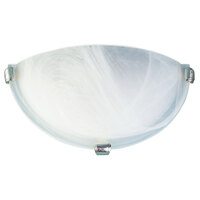
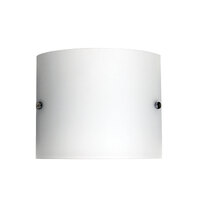
Watch Oriel OL41340BCH | Remo Alabaster Glass Wall Light with Brushed Chrome Clips video
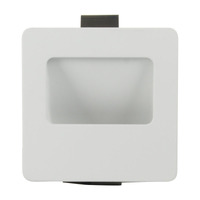
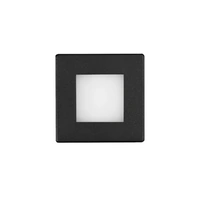
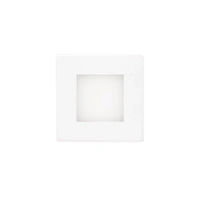
Watch SAL S9311-WH | BROOM 3W LED Recessed Square Wall Light | White video

Having spent 6 months fighting an Ebay Chinese supplier I was, thanks to paypal, able to get a refund. I phoned Sparkie, they assured me they were dimmable and had stock. Placed the order just after lunch and had them on The GC next day — now that was remarkable. Better still they dim and are stable. All up my faith restored; there is such a thing as a dimmable LED. Good job Sparkie!
Very pleased with the replacement LED down lights. The price was very good and the ordering system and prompt delivery service from Sparky Direct was excellent. The new down lights were easy to install and fitted perfectly into the ceiling cut outs. The new fittings are a big improvement on the old silver surrounds and have given the whole house a more modern and sleek look. Thanks again to Sparky Direct for making the replacement process so simple and satisfactory.
Upgrading my Theatre Room lights to the Clipsal 7W Tri-Colour Dimmable LED Downlights was a fantastic decision. Their versatility in color temperature and smooth dimming features have greatly enhanced the lighting ambiance, giving the room a sleek more modern look. Plus, they're energy efficient, which is always a bonus.
Australian-compliant fittings in stock • Fast Australia-wide delivery • Competitive trade pricing
Browse Interior Wall Lights → Get Expert Advice →Yes, they improve visibility and enhance safety while adding style.
Sparky Direct supplies interior wall lights Australia-wide, offering stylish and reliable lighting solutions with convenient delivery.
Interior wall lights are securely packaged and delivered via standard courier services.
Unused products are generally eligible for return according to the seller’s returns policy.
Warranty coverage varies by manufacturer and typically covers defects in materials or workmanship.
Interior wall lights are available individually and as part of coordinated lighting ranges.
Yes, correct placement ensures balanced lighting and the desired visual effect.
They can help reduce harsh glare by spreading light more gently.
Yes, once installed they are simple to operate and enjoy.
Yes, they are often used to accent artwork, textures, or architectural details.
Yes, many designs are specifically created for modern and contemporary homes.
No, they are generally compact and free up floor and surface space.
Yes, they are a popular choice for bedside and reading lighting.
Interior wall lights are lighting fixtures mounted on walls to provide ambient, task, or accent lighting inside a building.
Yes, they are ideal for creating softer, more inviting lighting.
Wall lights add depth, warmth, and layered lighting to a room.
Some interior wall lights are dimmable when used with compatible dimmers.
Yes, options commonly include warm white, cool white, and daylight.
Yes, they are often used to create soft ambient lighting and visual interest.
Yes, styles range from modern and minimalist to classic and decorative designs.
Yes, many interior wall lights use LED technology for energy efficiency and long lifespan.
Yes, they are commonly used in hotels, offices, retail spaces, and hospitality venues.
Yes, they are widely used in homes to enhance lighting design and functionality.
Quality interior wall lights are manufactured to meet relevant AS/NZS electrical and safety standards when installed correctly.
They are commonly used in hallways, bedrooms, living areas, stairwells, and feature walls.