
Search Results:
Search Results:
Search Results:
Search Results:
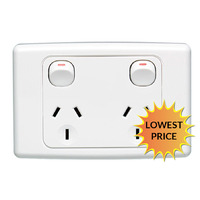
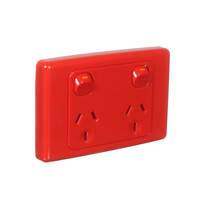
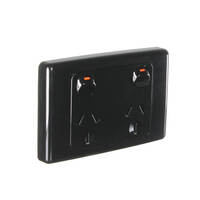
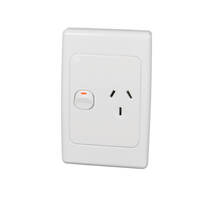
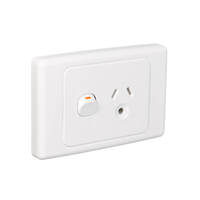
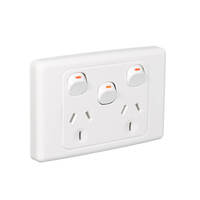
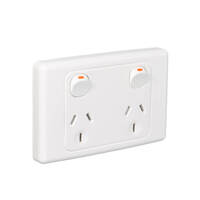
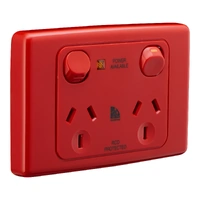
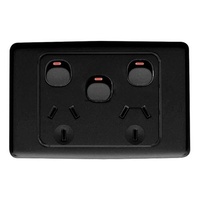
Find the best Clipsal 2000 power points here at Sparky Direct. [ Read More ]

The 2000 Series is a long-running Clipsal range built around a standard 84mm grid plate. Active and neutral conductors land on screw terminals inside the body, while the earth conductor lands on a separate dedicated terminal at the rear of the mechanism. When a plug is inserted, the pins meet sprung brass contacts and complete the circuit to the connected appliance.
The body is moulded from flame-retardant thermoplastic with brass current-carrying parts. Terminals are captive screw type, rated for stranded and solid conductors up to 4mm². The switch mechanism is a rocker action with silver alloy contacts to resist pitting from inductive loads. Compare this against the lighter Clipsal Classic power points which use the same grid but a different plate finish.
The earth pin in an AS/NZS 3112 plug is longer than the active and neutral pins. It makes contact first and breaks contact last, so the appliance chassis is bonded to earth before any current can flow. Clipsal 2000 sockets are dimensioned to enforce this sequence on every insertion.
Internal shutters block the active and neutral apertures until the earth pin pushes a latch out of the way. This prevents a finger, key or hairpin from contacting a live terminal. Shuttering is a mandatory feature of Australian socket outlets sold for general use.
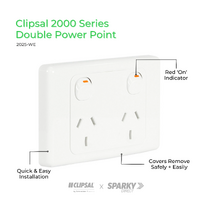
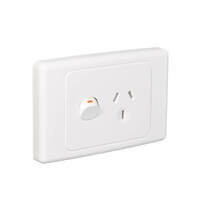
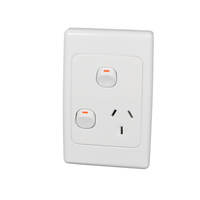
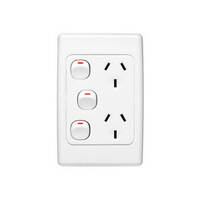
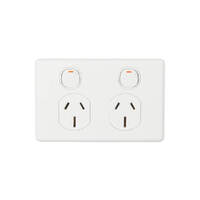
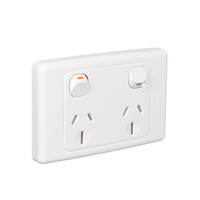
The Clipsal 2000 range covers every common residential socket need, with single, double and quad layouts stocked in both 10A for general use and 15A for higher-load appliances. Browse the single power point range and the larger double power point range at Sparky Direct to compare the standard offerings.
The 2000 grid also accepts a USB charging module for phones and tablets without a wall adapter. See the dedicated USB power points range. For wet areas and exposed walls, swap to a sealed weatherproof GPO rated to IP53 or IP56.
Every Clipsal 2000 outlet ships with the safety features now expected on Australian sockets. The combination of shutters, earth pin priority, quality insulation and properly rated contacts is what separates a genuine brand outlet from a cheap import.
Shutters cover the active and neutral apertures until a three-pin plug is inserted. The mechanism resists single-prong intrusion and is rated to withstand repeated insertion cycles without losing tension. This is the primary defence against child contact with live parts.
Some 2000 Series variants, including the 2025SF surge-protected double, include an internal MOV that clamps voltage spikes from lightning, motor inrush or grid switching events. Surge protection is most useful for sensitive electronics: computers, TVs, audio gear and modern home theatre.
Surge protection inside an outlet does not replace residual current device (RCD) protection at the switchboard. AS/NZS 3000:2018 requires RCD protection on all general-use socket outlets in residential installations. Surge MOVs and RCDs address different fault types and both are needed.
Clipsal uses self-extinguishing thermoplastic for both the body and the faceplate, a material that resists yellowing under UV exposure and does not propagate flame if an internal arc occurs. The plate retains its surface finish under daily use and cleaning, whereas cheap copies often yellow within two to three years of installation.
Outlet placement follows the load and the layout of the room. The wiring rules set the protection requirements, but how many outlets and where they sit is a design decision made during the planning stage of a build or renovation.
The kitchen carries the highest density of fixed and portable appliances in a home, with fridge, oven, microwave, kettle, toaster and dishwasher each needing a dedicated point. Bench-top sockets are commonly mounted at 1100mm for splashback access, and the bench-top power point range is built around this height.
Bedside outlets are the most-used sockets in a home, handling phone chargers, lamps and clock radios. A double point either side of the bed is now standard. Living room layouts should include enough sockets behind the TV unit to retire any extension leads.
Bathroom outlets fall under stricter rules and must sit outside the wet zones defined in AS/NZS 3000 around the bath and shower. Only essential equipment such as heated towel rails and exhaust fans are wired to a fixed point in a bathroom, and RCD protection is mandatory on every circuit serving these locations.
A home office benefits from at least four points for computer, monitor, printer and accessories, and surge-protected variants suit this room because of the sensitive electronics involved. Cable management is improved when sockets sit at desk height rather than at the skirting board.
Outdoor sockets must be in a weatherproof enclosure with the lid closed when the socket is not in use. Garage outlets for power tools and EV charging draw heavy current and should sit on dedicated circuits with appropriate breaker sizing.
Choosing the correct configuration starts with the load and the location, then narrows to finish and feature set. Working through the decisions in order avoids the common mistake of buying outlets that are wrong for the circuit they sit on.
List every device intended for the outlet, including any planned future additions to the room. A safe power-board figure is 2400W on a single 10A point. Anything beyond that, including induction cooktops, ducted aircon and electric heaters, needs a 15A point or its own dedicated circuit back to the switchboard.
AS/NZS 3000 does not dictate a fixed number per room, but industry guidance is one double point per 1.5 to 2 metres of usable wall in living areas. Kitchens and home offices need more than this baseline, while bathrooms are tightly restricted by the wet-zone rules.
General sockets sit at 300mm to 450mm above the floor, while bench-top outlets sit at 1100mm to clear the splashback. Avoid mounting close to heat sources, water outlets or radiators, and ensure the outlet face sits flush with the finished wall surface for a clean installation.
The 2000 Series ships in white as the default, with other finishes available for matching the room scheme. For a more decorative range with metallic and dark plates, the power point covers page lists slim cover options that fit the same grid.
Licensed work only: Installation, alteration or replacement of mains-wired power points is licensed electrical work in every Australian state and territory. The procedure below is a reference for licensed installers and informed homeowners following the work, not a do-it-yourself guide.
Confirm the supply circuit, its current rating and its RCD protection before any other work, then trace the run from the switchboard to the proposed outlet location. Identify any obstacles in the wall cavity such as studs, plumbing, gas pipes or other cabling, and plan the cable route to keep bend radius reasonable and length to a minimum.
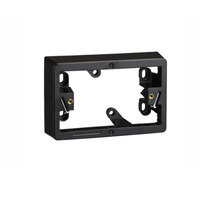
Cut the opening to suit the chosen plaster bracket or wall box, noting that the grid plate fits a standard 84mm horizontal centres pattern. Brackets clip behind the plasterboard and brace the plate against tightening torque so the mechanism sits flat against the wall in service.
Strip the cable sheath back to the box entry and trim individual conductors to the correct length for the terminal layout. Land active on A, neutral on N and earth on the dedicated earth screw, then torque each connection to the value marked on the body. Loose terminations are the leading cause of overheating at outlets and the most common cause of plate discolouration.
Before energising, verify continuity of the earth path, insulation resistance and correct polarity using calibrated test equipment. Energise the circuit and confirm the RCD trip on test, then use a power point tester for a final visual check on each socket.
Seat the mechanism in the wall box without pinching the cables. Tighten the fixing screws evenly so the plate sits flat against the wall. Clean any debris from the plate and confirm the rocker action is smooth.
Power points are wearing components, with plug insertion cycles, heat from connected loads and dust ingress all degrading the contacts and the plastic over time. A short routine inspection catches problems before they become a fire risk or cause nuisance trips on the circuit RCD.
Look for discolouration around the pin entries, scorch marks on the faceplate, or any softening of the plastic. Loose plates that wobble when a plug is pulled out have lost their bracket grip and should be reseated, while cracked plates need full replacement rather than any kind of repair.
Press the RCD test button at the switchboard quarterly to confirm the device still trips. Use a calibrated tester to confirm polarity and earth continuity on each socket annually, and run more frequent checks on outlets in heavy-load locations, such as bench-top points serving kettles and toasters.
Wipe plates with a dry microfibre cloth, and avoid solvents, ammonia-based sprays and abrasive cleaners that can damage the surface finish. Never spray cleaner directly onto a faceplate; moisture ingress into the mechanism causes corrosion. If an outlet gets wet, isolate the circuit, allow it to dry and have it tested before returning it to service.
Outlets that show signs of arc damage, scorching or melted plastic must be replaced. Burning smells from a socket are a sign of imminent failure. Do not attempt internal repair: the outlet body is a sealed assembly and replacement is the only safe path.
How an outlet is used in service determines whether it lasts twenty years or fails in five. The following practices are common sense for any property but worth restating for tenants, new home owners and tradies briefing site staff.
Do not daisy-chain power boards from a single outlet, because a 10A point can safely supply only 2400W in total across the load. Heaters, kettles, irons and air fryers each draw 1500W to 2400W on their own and should not share a board with another high-load device. Heat at the plug face is a warning sign of overload and demands immediate attention.
Never operate an outlet with wet hands, and do not connect an appliance with a damp cord or plug. In bathrooms and laundries, keep the outlet outside the splash zone defined in the wiring rules and ensure the circuit is protected by a current 30mA RCD.
Extension leads are tested to a temporary-use standard and are not a substitute for fixed wiring under any circumstances. If a lead has become permanent in service, the correct fix is to add a fixed outlet at the point of use, run from a circuit with appropriate protection.
Shuttered sockets handle most of the risk, but additional plug-in safety covers are available for outlets that sit at toddler height and see little day-to-day use. Educate children that power points are not toys and supervise young children around any exposed plug or appliance lead.
The 2000 Series ships in white as the dominant finish. The grid is shared with cover plates that swap the visible faceplate without disturbing the mechanism, so a renovation can refresh the look without rewiring.
White is the residential default and matches most interior schemes, while cream is offered for heritage and period settings. Black and metallic plates are available for contemporary interiors that lean on darker palettes, and the grid is shared across these finishes so plates can be mixed within a single installation.
Outlet and switch plates can be mixed on the same grid when the same series is used throughout. Pair 2000 power points with Clipsal 2000 light switches for a consistent grid pattern across every plate in the room.
Picking one finish across the whole property gives a tidy result and simplifies stock for spares. The 2000 grid is interchangeable, so a single bulk order covers every outlet in a new build.
Power points sold for fixed installation in Australia must comply with AS/NZS 3112 (plugs and socket outlets) and be installed under AS/NZS 3000 (the wiring rules). Compliance is verified by RCM marking on the product and by certification of the installation.
AS/NZS 3112 sets the pin dimensions, polarisation, current rating and shuttering requirements for the plug-and-socket system, while AS/NZS 3133 covers the socket outlet body itself. Clipsal 2000 outlets are tested and certified to both standards before sale in Australia, and the RCM tick mark appears on the back of every unit as proof of compliance.
AS/NZS 3000:2018 requires RCD protection on all general-use socket outlets in residential dwellings. The maximum RCD trip current is 30mA with a maximum trip time of 300ms. Outlets in bathrooms, kitchens and outdoor zones have additional placement restrictions.
Installation work must be carried out by a licensed electrician under the jurisdictional licensing scheme. Once complete, the work is certified through a Certificate of Compliance for Electrical Work, which should be retained for insurance and resale purposes for the life of the installation.
The Regulatory Compliance Mark is the tick-in-a-triangle symbol on the back of the outlet, confirming that the product meets the relevant Australian and New Zealand standards. Outlets without an RCM should not be installed in Australia and should not be accepted on a job site by a licensed installer.
The traditional 2000 Series is supplemented by USB-equipped and smart variants. These provide modern features without changing the wall opening or the wiring practice. The Clipsal 2000 grid accepts a USB module in place of an extra switch.
USB-A and USB-C charging ports are built into the plate next to the 240V sockets, with the charger dropping voltage internally and delivering up to 4.8A across two ports. This eliminates the need for separate wall adapters and frees the main sockets for higher-load devices in bedside layouts and dedicated charging stations.
Connected variants accept Wi-Fi or Zigbee control modules for app-driven on and off scheduling, suiting lamp control, holiday lighting routines and basic energy monitoring tasks. Sparky Direct stocks current smart power points alongside the conventional 2000 range, and the two can be mixed within a single installation on shared circuits.
Some smart outlets report instantaneous and historical power draw to a paired app. This data identifies always-on loads that quietly add to a quarterly bill. Routine targets for elimination include set-top boxes left on standby and old game consoles.
Several other brands sit alongside Clipsal on Australian shelves, and each has a place in the market depending on budget and finish requirements. The table below sets out the main differences as a planning guide for selecting between them during a renovation or new build.
| Range | Best For | Finish Options | Price Position |
|---|---|---|---|
| Clipsal 2000 | Residential, light commercial, retrofit | White, cream, limited metallic | Mid |
| Clipsal Iconic | New builds, premium renovations | Wide skin range, dark plates | Premium |
| HPM | General residential, budget builds | White, cream | Entry |
| Legrand Excel Life | Architectural projects | Wide range including metals | Premium |
| Hager Silhouette | Designer projects | Slim metallic plates | Premium |
Sparky Direct stocks all of the above. Browse the broader Clipsal power points category for adjacent ranges, or the parent electrical power points page for every brand. Compare alongside HPM, Legrand, Hager, Tesla and NLS ranges for finish, price and feature set across the broader market.
The 2000 Series occupies the workhorse middle ground of the residential power point market. It is more durable than entry-level imports, more affordable than the premium Iconic and Saturn ranges, and stocked everywhere in Australia. For replacement work, retrofits and rental properties, it is the default choice for licensed installers.
Club Clipsal is Australia's largest electrician community offering trade rewards, business support, and exclusive benefits. When you nominate Sparky Direct as your preferred wholesaler, we automatically apply your Clipsal spend points to your Club Clipsal account daily.
Entry-level offering coaching, mentoring, and training discounts
Unlock exclusive industry tools and networking events
Access Toyota fleet offers and business software discounts
Maximum benefits, including VIP experiences and rewards
1. Sign Up: Create your Club Clipsal account at clipsal.com/club-clipsal or via the iCat mobile app
2. Nominate Sparky Direct: Select Sparky Direct from the wholesaler dropdown menu in your profile
3. Add Email: Enter your Sparky Direct account email address in the membership number field
4. Start Earning: Every dollar spent on Clipsal products earns points automatically
Redeem points from the rewards store, including gift cards, tools, and experiences. Access business summits, product training, and industry networking events. Receive early access to new product launches and special promotions. Connect with fellow electricians via the Club Clipsal community app.
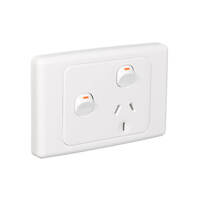
Watch Clipsal 2025-WE | Double power point GPO 10Amp | White (2000 Series) video
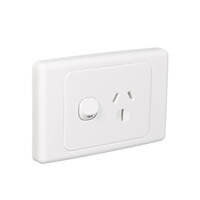
Watch Clipsal 2015-WE | 10Amp Single Power Point White | 2000 Series video
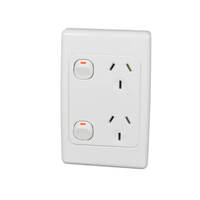
Watch CLIPSAL 2025SF | Surge Protected 10A Double GPO | 2000 Series video

Clipsal are easy to installed, and never problem with them. So with most of the cheap ones on market, if some before has not left much cable to play with. The cable wont fit, because the pins it the rear power point don't line up. So with the great price sparky direct sells them for, why risk your time or having to come back to fix customer problem on your time.
Well constructed, easy to install product. Great longevity in the industry and this is a great example of why. Simple to install and a great choice from the end-user point of view. Has a good finish which blends with most styles and doesn't mark easily. Ideal for fridge, microwave and washing machine locations.
As a first time customer of Sparky Direct I was very satisfied with all aspects of my purchase order. The online process was simple and efficient. The correspondence from them was great and the delivery was well within their specified timeframe, and the goods were well packed.
Quality products in stock • Fast Australia-wide delivery • Competitive trade pricing
Browse Clipsal 2000 Power Points → Get Expert Advice →Yes, they are designed for straightforward everyday operation.
Sparky Direct supplies Clipsal 2000 power points Australia-wide, offering reliable and proven electrical outlets with convenient delivery.
They are securely packaged and delivered via standard courier services.
Unused products are generally eligible for return according to the seller’s returns policy.
Warranty coverage varies by product and manufacturer and typically covers defects in materials or workmanship.
Yes, Clipsal 2000 power points are typically sold as individual units.
Yes, selecting the correct configuration ensures the right functionality.
Yes, they are often used consistently across a property.
Yes, they are wall-mounted and accessible for everyday use.
Yes, smooth surfaces make them easy to wipe clean.
Yes, their simple appearance allows them to blend into most environments.
Yes, they are commonly used in renovations and electrical upgrades.
Yes, they have been a long-standing choice for licensed electricians.
Clipsal 2000 power points are a popular range of electrical outlets known for their simple design and reliable performance in Australian homes and workplaces.
Yes, their neutral design suits both modern builds and older properties.
They offer a trusted and familiar solution with a clean, understated design.
Yes, they are designed to meet current electrical safety and performance requirements.
Yes, they are designed for everyday use and long-term reliability.
Yes, they are designed for standard Australian power plugs.
Yes, they are available in single, double, and switched outlet configurations.
Yes, they are suitable for residential and light commercial applications.
Yes, they are widely used in residential properties.
They are commonly installed in homes, offices, schools, and commercial buildings.
Yes, Clipsal 2000 power points are manufactured to meet relevant AS/NZS electrical and safety standards when installed correctly.
The Clipsal 2000 range is known for its clean appearance, durability, and long-standing use across residential and commercial installations.