
Search Results:
Search Results:
Search Results:
Search Results:
Lockout tagout is a formal method of isolating energy from equipment before anyone works on it. The lockout part is physical: a padlock holds an isolator, valve, or breaker in the safe position so it cannot be switched on. The tagout part is informational: a tag identifies the person who applied the lock, the reason, and the date. The lock stops the hardware. The tag stops the confusion.
LOTO controls every form of energy that can injure a worker during service. Electrical energy at the switchboard is the most obvious. Stored energy sits in capacitors and springs. Pneumatic pressure builds up in compressed air lines, and hydraulic pressure builds up in rams and jacks. Thermal energy stays in hot pipes and surfaces, and gravitational energy lives in raised loads. A single machine often holds several of these at once.
Unexpected energisation and stored energy release are among the most serious causes of workplace injury in industrial settings. LOTO reduces this risk by enforcing a verified zero-energy state before any physical contact with the equipment. The procedure removes reliance on memory, assumption, or verbal communication, which are the three most common failure points in traditional switch-off practices.
Australian tradespeople typically source LOTO equipment from one of two channels. Electrical wholesalers stock LOTO alongside the switchgear, breakers, and isolators it pairs with, which simplifies procurement for electrical contractors. Dedicated safety suppliers carry a wider range of general-industry LOTO devices for valves, pneumatics, and hydraulics. Sparky Direct sits in the wholesaler category, with a LOTO range focused on electrical applications.
A reliable LOTO supplier should stock verified, current-model devices rather than unbranded imports of unknown origin. Padlocks should carry the manufacturer marking and key-code reference. Tags should be readable after weeks on a switchboard. Kits should list every component on the outside of the case. Pricing should be transparent and available without needing to register or request a quote for each line item.
Sites with multiple workers benefit from bulk purchasing, which standardises equipment across the workforce and reduces cost per unit. Pre-assembled lockout kits remove the guesswork for smaller operators, bundling padlocks, hasps, tags, and common lockout devices into a single case. Fast Australia-wide delivery matters for sites that discover a LOTO gap mid-job and need replacements before the next shift.
Electrical energy is the most obvious hazard on an electrical site. It flows whenever a circuit is live. Mechanical energy covers the motion of rotating shafts, belts, and linkages. Stored energy is the one most often missed. Examples include a capacitor holding charge after the power is cut, a spring under tension, or a raised load resting on a cylinder. All three categories must be fully dissipated before work begins.
Hydraulic systems store pressure in sealed lines that remain charged even after the pump stops. Pneumatic systems behave the same way, with compressed air held in accumulators and cylinders. Thermal energy includes hot surfaces, steam lines, and process fluids that stay dangerous long after the heat source is off. Each of these needs its own isolation point, bleed, or cooldown period.
The worst incidents tend to involve energy sources nobody considered. Examples include backfed circuits from a UPS or solar inverter, gravity loads on an elevated platform, and residual pressure in a sealed tank. A thorough LOTO plan identifies every source that could energise the equipment, not just the main supply.
Incomplete isolation is worse than no isolation because it produces a false sense of safety. A worker who believes a machine is dead will put their hands inside it. If any path to energy remains open, the first contact can be fatal. This is why LOTO requires verification as a separate step, not a confirmation of what the isolator label says.
The process begins before any locks go on. The authorised worker reviews the equipment-specific procedure, identifies all energy sources, and notifies affected personnel that a shutdown is about to occur. Running equipment is brought to a controlled stop through its normal operating controls. Rushing this stage is the most common source of LOTO failure.
Each identified energy source is isolated at its designated point. For electrical work, this usually means opening the main switch or circuit breaker that feeds the circuit. For mechanical systems it means closing valves, blocking movement, or releasing stored pressure. Every isolation point must be documented in the procedure.
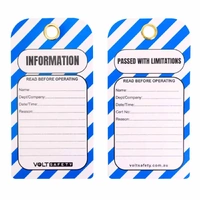
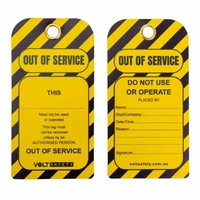
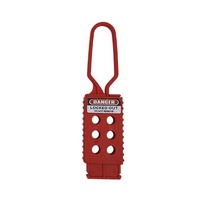
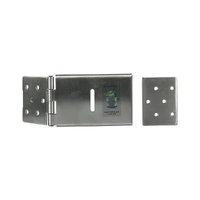
Once the isolation device is in the safe position, a padlock secures it there. Each worker applies their own personal lock; the lock is never shared or held in common. A tag goes on with the lock, identifying the worker, the date, and the reason for the lockout. On multi-worker jobs, every worker adds their lock to a hasp so the isolator cannot be closed until the last worker removes the last lock.
Verification is the step most likely to be skipped, and the most dangerous one to skip. After the locks are on, the worker attempts to start the equipment using its normal controls. Nothing should happen. A voltage tester or multimeter then confirms zero voltage at the point of work. Only after verification does the worker treat the equipment as safe.
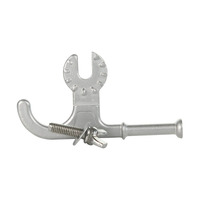
Lockout padlocks are purpose-built for isolation duty, not for security. They are usually keyed differently from each other so a worker's key opens only their own lock. Tags are typically weatherproof and designed to accept handwritten details. Circuit breaker lockout devices clamp onto the toggle to keep the breaker in the off position while the padlock holds the clamp.
Cable lockouts use a flexible cable passed through multiple isolation points, then secured with a single padlock. They suit complex systems where several valves or switches must all be locked simultaneously. Group lock boxes hold the individual keys for each isolator until every worker has removed their personal lock from the box.
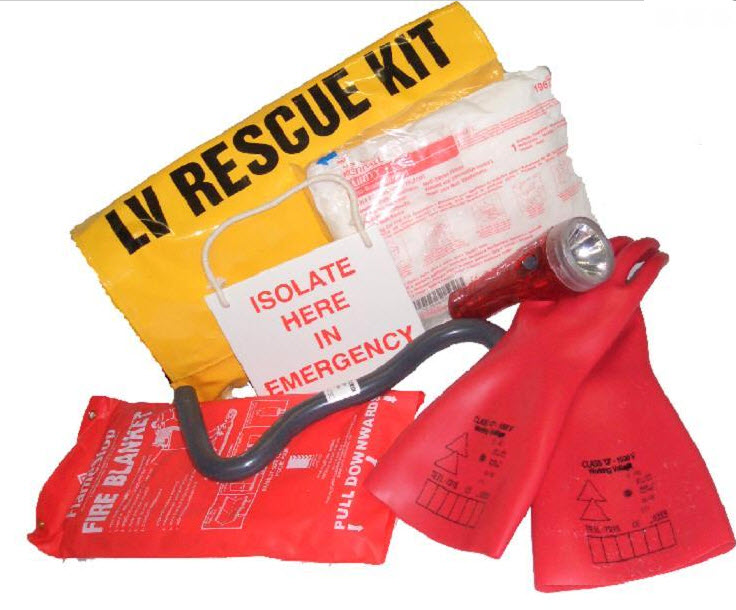
Lockout stations are wall-mounted boards that keep all the site's LOTO equipment in one visible location. Portable kits carry the same equipment in a case for mobile trades. Personal kits contain enough hardware for one worker on one job. Contractor and team kits scale up for multi-worker tasks.
Every isolation point on a site needs a device that physically fits it. A breaker lockout sized for a domestic MCB will not fit an industrial three-phase breaker. A valve lockout for a 25mm gate valve will not fit a 150mm butterfly. The first step in any LOTO program is surveying every isolation point and matching the right device to each one.
Standardisation across a site reduces mistakes. When every worker carries the same padlocks, hasps, and tags, there is no confusion about whose lock is whose or which key fits which device. Keyed-differently padlocks prevent one worker from removing another worker's lock.
LOTO equipment lives in harsh conditions. Padlocks sit on wet switchboards, in dusty plant rooms, and on hot outdoor isolators. Cheap padlocks seize shut or rust apart. Tags fade and become unreadable. Spending on purpose-built equipment from recognised safety brands is the economical choice over the working life of the gear.
Never substitute general-purpose padlocks for rated lockout padlocks. Security padlocks are designed to resist cutting and picking, not to survive daily use on vibrating switchgear. A seized security padlock on a live switchboard creates the opposite problem to the one LOTO is meant to solve.
Generic procedures fail because every machine has its own layout of isolation points, stored energy, and hidden supplies. A written procedure for each piece of equipment tells the worker exactly what to isolate, in what order, and how to verify zero energy. It also stops new workers from improvising on equipment they have not seen before.
| Section | Content |
|---|---|
| Equipment identification | Asset number, location, make and model |
| Energy sources | List of every electrical, mechanical, and stored source |
| Isolation points | Location and type of each isolator, valve, or breaker |
| Shutdown sequence | Order in which isolations must be performed |
| Verification method | How zero energy is confirmed at the point of work |
| Restart sequence | Order in which the equipment is returned to service |
Every modification to the equipment potentially changes the isolation requirements. A new feeder, a retrofitted inverter, or a relocated valve can all invalidate an existing procedure. Procedures should be reviewed whenever the equipment is modified, and at a scheduled interval regardless.
Periodic audits confirm that procedures remain accurate and that workers are following them. Auditors walk through a sample of lockouts on site, compare what the worker does with what the procedure says, and document any deviations. Findings feed back into procedure updates and training.
Authorised workers are the people trained and designated to apply and remove locks. They carry out the isolation, verify zero energy, and do the physical work on the equipment. The authorised worker is personally accountable for every lock they apply.
Affected workers are people who operate or work near the equipment but do not carry out the isolation themselves. They need to know when a lockout is in progress, what it means, and why they must not attempt to start the equipment. Awareness training covers this group.
Supervisors oversee the lockout, confirm procedures are followed, and sign off on the work. Management is responsible for the overall LOTO program: written procedures, training records, equipment supply, and periodic review. The program does not run itself.
Clear accountability prevents the classic LOTO failure: everyone assumed someone else had applied the lock. Named responsibility on each procedure, named workers on each permit, and named signatories on each lockout log close this gap.
LOTO training begins with hazard recognition. Workers learn to identify every form of hazardous energy present on their equipment, including the hidden sources that generic safety induction often misses. Without this foundation, the procedural steps become mechanical and easy to skip.
Classroom training alone does not produce competent workers. Practical application on real equipment, under supervision, is how workers build the muscle memory for correct isolation. This is particularly important for verification, which is the step most often done wrong in the field.
Competency assessment confirms that a worker can carry out the procedure correctly without prompting. It is a pass or fail event, documented and retained. Workers who do not pass receive further training before being authorised.
LOTO skills decay without use. Refresher training at a scheduled interval, typically annually, keeps workers current. Equipment changes, procedure updates, and incident lessons feed into the refresher content so the training stays relevant.
Group lockout applies whenever more than one worker will be inside the isolation at the same time. Every worker must have their own personal lock on the equipment. A single supervisor's lock covering the whole team is not group lockout and does not provide individual protection.
A group lock box is the standard tool for this. The keys for each isolation point go into the box. Every worker then applies their personal lock to the box. The box cannot be opened, and therefore the isolators cannot be closed, until the last personal lock is removed.
On large sites a permit-to-work system usually wraps around group lockout. The permit records who is authorised to enter the isolation, what work is being done, and when the isolation can be released. The permit and the locks work together: neither alone is sufficient on complex jobs.
Premature re-energisation happens when someone removes locks before everyone is out. The group lock box architecture physically prevents this. Tags and permits back it up with written accountability.
The most common cause of LOTO failure is a worker skipping verification because the job is running late. The fix is procedural discipline, not more equipment. Every procedure must treat verification as mandatory, not optional, and supervisors must enforce it.
If the procedure does not clearly identify every isolation point, workers will guess. Guessing leads to incomplete isolation. Drawings, photographs, and physical labelling on the isolator itself all reduce this risk.
New workers often copy what they see more experienced workers do, including the bad habits. A formal training program with assessment, rather than informal mentoring alone, gives every worker the same baseline.
Procedures that differ between similar machines, or between shifts, undermine the whole program. Consistency across comparable equipment makes correct isolation the default and deviation the exception.
Before locks come off, the equipment is inspected. Tools are removed, guards are refitted, and the work area is clear of personnel. The authorised worker walks the equipment and confirms it is ready for energisation.
Each worker removes their own personal lock. This is a fixed rule, not a guideline. A lock is never removed by another person except under a documented emergency lock removal procedure, which requires management authorisation and confirmation that the lock owner is not on site.
Affected workers are notified before the equipment restarts. This is not a formality. Restart is the moment when the equipment becomes dangerous again, and anyone in the vicinity needs to know it is about to happen.
The worker's mental state shifts from cautious (locks on) to complete (job done). Attention drops. This is when forgotten tools get energised, exposed conductors get touched, and guards left open cause injury. A deliberate restart sequence, with a separate verification that the equipment is safe to energise, counteracts this drop in attention.
Under Australian Work Health and Safety legislation, a person conducting a business or undertaking must ensure that plant is isolated from energy sources before maintenance or repair. LOTO is the practical method used to meet that obligation. The relevant electrical installation standard is AS/NZS 3000:2018, commonly known as the Wiring Rules.
Records required for a defensible LOTO program include written procedures for each piece of equipment, training records for each worker, lockout logs showing when procedures were applied, and audit records showing the program is reviewed.
Workplace health and safety regulators audit LOTO programs during routine inspections and after incidents. Auditors look at the paperwork, walk the site, and interview workers. A program that exists only on paper fails this test quickly.
LOTO integrates with permit-to-work, confined space entry, hot work permits, and electrical work permits. None of these systems replaces LOTO; they layer on top of it. A confined space entry, for example, still requires LOTO on the equipment inside the space.
Individual devices suit workers who already have most of the gear and need a specific item. Complete kits suit new workers, new sites, and contractors who move between jobs. A kit covers the common isolation scenarios without the buyer needing to know in advance exactly what will be encountered.
Budget LOTO gear performs acceptably on low-frequency applications and short-term use. Premium gear from established safety brands survives daily site use for years. The cost difference is usually small in absolute terms and disappears quickly when the cheap gear is replaced.
Buying in bulk standardises the site's equipment and reduces the unit cost. A site running ten workers can kit each one with matched equipment and still spend less than buying individually across ten purchases. Standardisation also helps training and spares management.
A standardised system pays back beyond the initial discount. Replacement parts are interchangeable. Training covers one set of equipment rather than five. Auditors can spot deviations more easily. New workers adapt faster. These effects compound over the life of the site.
Electrical trades use LOTO on every service call to a live switchboard. The main switch, sub-circuit breakers, and any upstream isolation all potentially need locking depending on the scope of work. Residential work on a domestic switchboard uses the same principles as industrial work, at smaller scale.
Manufacturing sites run hundreds of isolations a week across conveyors, presses, robotic cells, and process equipment. Standardised LOTO across the plant keeps these operations safe without slowing production. Shift handovers and planned maintenance windows build LOTO into the routine.
HVAC work involves electrical isolation at the isolator switch, refrigerant system isolation, and mechanical blocking of fans and compressors. Pumps require electrical isolation plus valve lockout on the suction and discharge lines. These multi-energy jobs illustrate why procedures must be equipment-specific.
Construction sites and large facilities frequently have multiple trades working on the same equipment at the same time. Group lockout and permit-to-work systems manage this layered risk. Each trade brings its own locks and its own competency to the shared isolation.
Improper LOTO causes electrocution, crush injuries from moving parts, burns from thermal or arc energy, and injuries from stored-energy release. The consequences range from lost-time injury to fatality. Most serious LOTO incidents trace back to verification failure or to missed secondary energy sources.
Verification is the difference between an isolator that is labelled off and an isolation that is proven dead. Testing with a known-good electrical test instrument at the point of work converts a procedural assumption into a measured fact.
Permit-to-work systems control who is authorised to enter a lockout and what work is permitted. The permit references the LOTO procedure; the LOTO procedure isolates the equipment the permit covers. Neither is complete without the other on medium to large jobs.
Individual sites often have their own LOTO rules layered on top of the general standards. Mining sites, oil and gas sites, utility networks, and hospitals all operate under sector-specific requirements. Check the site induction before assuming general LOTO practice is sufficient.
Watch Volt Safety LOCKOUT-KIT-M | Electrical Contractor Lockout Tagout Kit | Medium video
Watch Lockout Kit Personal | Electrical Contractor Lockout Tagout Lock-Kit-P video
Watch Volt Safety LOCK-MCB-UCL1-5 | Mini Circuit Breaker Lockout Universal Small | 5 Pack | Yellow video

This kit offers a great selection of components and comes with a spacious, well-designed bag. The bag includes convenient storage pockets for tags and other accessories, with ample room to accommodate additional items.
Easy company to deal with. Received the items fast and one of the clips was found missing a screw, no questions asked and they shipped a replacement immediately. Highly recommended.
Hate having to use this on those stupid hinged fuses that are almost impossible to grab 50000km in the sky on a windy day, but I’d be lost without it.
Quality products in stock • Fast Australia-wide delivery • Competitive trade pricing
Browse Lockout Tagout Equipment → Get Expert Advice →Yes, lock out is commonly used during routine maintenance, servicing, and repairs.
Sparky Direct supplies lock out equipment Australia-wide, supporting safe isolation practices with reliable delivery.
Lock out equipment is packaged securely and delivered via standard courier services.
Unused lock out equipment is generally eligible for return according to the seller’s returns policy.
Warranty coverage varies by manufacturer and generally covers defects in materials or workmanship.
Lock out devices are available individually or as complete kits depending on workplace needs.
Lock out procedures can be used by apprentices under supervision as part of proper safety training.
Yes, devices should be inspected regularly to ensure they remain functional and undamaged.
Some lock out systems use colour coding to help identify workers, departments, or isolation points.
Yes, workers should be trained in lock out procedures according to workplace safety requirements.
Many lock out devices are suitable for outdoor use, but weather resistance should be checked.
Yes, lock out kits bundle common devices together for convenience and consistent safety practices.
Yes, proper lock out procedures significantly reduce the risk of accidental start-up and injury.
Lock out equipment is used to isolate energy sources and prevent machinery or electrical systems from being accidentally energised during maintenance or servicing.
Lock out devices are designed to be simple and effective when used as part of a trained safety procedure.
Lock out helps prevent serious injury by ensuring equipment cannot be started unexpectedly during work.
Yes, lock out equipment is commonly used in industrial, commercial, and construction environments.
Some lock out tags are reusable, while others are designed for single use depending on the product.
Yes, lock out hasps allow multiple locks to be applied so each worker maintains individual control.
Many lock out padlocks are made from non-conductive materials for electrical safety applications.
Yes, lock out devices are used across electrical, mechanical, hydraulic, and pneumatic systems.
Many lock out devices are designed to support compliance with relevant Australian workplace safety standards and procedures.
Lock out procedures are required when isolating electrical equipment to ensure safety, and must be followed by licensed professionals in line with regulations.
Common devices include padlocks, lock out hasps, circuit breaker locks, plug locks, valve locks, and lock out tags.
Lock out tag out refers to a safety procedure that uses physical locks and warning tags to ensure equipment remains safely isolated while work is being carried out.