


Grid Only
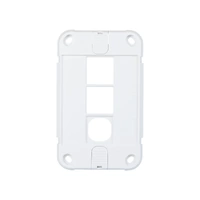
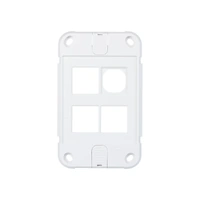
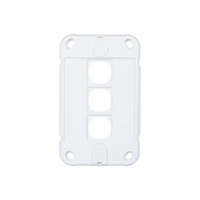
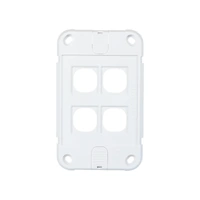
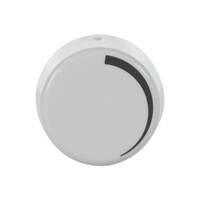
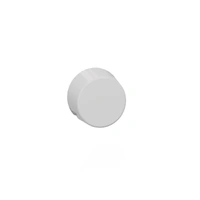
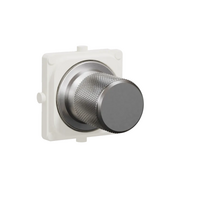
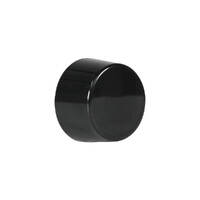
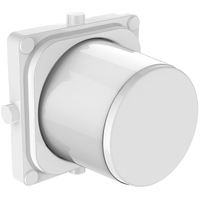
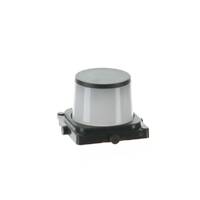
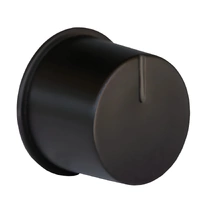
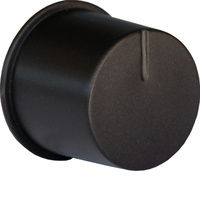
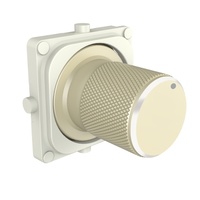
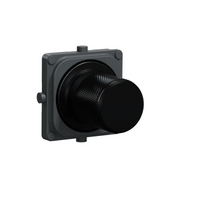
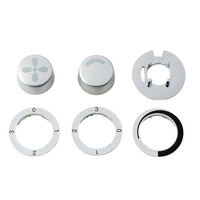
Diginet MEDMGP4G2D2S | MEDM 4G Grid Plate Suits Iconic 40M | 2 Dimmer, 2 Switch Config
$3.82
$3.47 ex. GST
Search Results:
Search Results:
A dimmer switch is a fixed electrical control device used to adjust light output on a compatible lighting circuit. Unlike a standard switch that delivers either full power or no power, a dimmer regulates the voltage waveform reaching the lamp, which the lamp converts to lower light output. The user turns a dial, moves a slider, or presses a button; the dimmer adjusts the waveform internally.
The technical method is phase-cut dimming. The dimmer chops part of each AC waveform cycle, reducing the effective power delivered to the lamp. There are three main approaches: leading-edge (forward phase), trailing-edge (reverse phase), and universal (which adapts to either). The chosen method affects LED compatibility, audible noise, flicker behaviour, and lamp life.
A regular switch is a simple on/off device with no electronics inside. A dimmer carries internal electronics that handle waveform control, minimum and maximum load ratings, and heat management. This makes dimmers more specification-sensitive than standard switches; the right product depends on the lamp type, the connected load, and the dimming technology. Compare with the general light switches category when a standard on/off switch is the right product instead.
Dimmers are specified for comfort, ambience, and lighting control flexibility. The same circuit can support different activities: full output for cleaning or task work, mid output for entertaining, and low output for relaxing or watching a screen. One lighting circuit covers multiple modes without rewiring.
Dimmable lighting suits living rooms, dining rooms, bedrooms, and media rooms where the activity changes through the day. A kitchen island benefits from full output for prep and reduced output for casual dining. A dining room moves from bright at family meals to soft at dinner parties without changing fixtures.
Reducing harsh light improves comfort in bedrooms, bathrooms, hallways, and children's rooms. Open-plan homes benefit from dimming zones independently, so a kitchen at full output does not glare into a relaxed living area beside it. Night-time low-level operation also reduces eye strain when full brightness is not needed.
Dimming can reduce energy use when lights run below full output, but the savings are smaller on LED circuits than older buyers might expect because the baseline wattage is already low. Results vary by lamp type and driver compatibility. Compatible dimmers may help reduce strain on correctly matched lamps; incompatible dimmers can shorten LED life through driver stress.
The Australian dimmer market splits along two axes: the dimming technology (leading-edge, trailing-edge, universal) and the user control style (rotary, slide, push-button, touch, smart). The dimming technology is the safety-critical decision; the control style is the user experience decision. LED compatibility must be confirmed product-by-product, not assumed from the technology label.
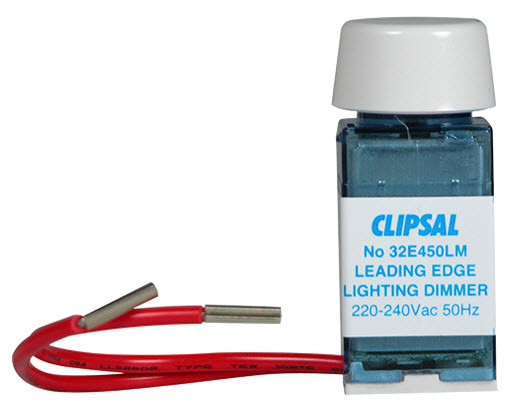
Leading-edge dimmers use forward-phase control. They cut the start of each AC waveform cycle and deliver the rest of the cycle to the lamp. This is the older dimming technology, originally designed for incandescent and halogen loads where the lamp filament smoothed out the chopped waveform.
Many leading-edge dimmers are unsuitable for low-wattage LED circuits unless the manufacturer explicitly confirms compatibility. The chopped waveform can confuse LED drivers, producing flicker, audible buzzing, and limited dimming range. Leading-edge units still have a place on compatible legacy loads, but they are not the default choice for modern LED installations.
Trailing-edge dimmers use reverse-phase control. They cut the end of each AC waveform cycle, which produces a smoother waveform than leading-edge cutting. The result is quieter operation, lower heat output, smoother lamp control, and a lower minimum load.
Trailing-edge dimmers are the preferred choice for most modern LED lighting installations. The reverse-phase waveform suits the electronic drivers used in LED downlights and modern lamps. The trade-off is higher unit cost than basic leading-edge units, but the compatibility advantage typically saves more on callbacks and replacement than the price difference costs.
Universal dimmers detect or support multiple load types. The internal electronics adapt the dimming waveform to suit either legacy incandescent and halogen loads or modern LED loads. This makes universal dimmers useful in mixed installations, uncertain retrofits, and renovation projects where the lamp type may change later.
The caveat is that "universal" does not mean compatible with every lamp or driver. Some LED drivers do not work cleanly on universal dimmers; some legacy loads work better on dedicated leading-edge units. Manufacturer compatibility charts still apply. The Clipsal dimmer range includes universal options alongside dedicated leading-edge and trailing-edge units.
The dimming technology determines what works on the circuit; the control style determines how the user operates the dimmer day to day.
Control style is largely user preference, but it interacts with plate range and mechanism size. A rotary dimmer on a slim modular plate range is typically a different mechanism from a push-button equivalent. Check the plate and mechanism sizes against the rest of the room before ordering, particularly on multi-gang installations. Compare against the broader switch mechanisms range when matching to an existing plate system.
Smart dimmers add app control, scheduling, voice assistant integration, and scene presets to the basic dimming function. They sit alongside standard dimmers on the wall plate but communicate with a hub or directly with the home network.
The main wireless options are Wi-Fi (direct router connection), Zigbee (requires a hub but offers lower power use and better mesh range), and proprietary hub-based systems. Each has trade-offs around setup complexity, response time, and brand lock-in. The Clipsal Iconic Dimmers & Timers range includes Wiser Zigbee dimmers and the matching smart hub; the broader smart light switch range covers dedicated smart products across other brands.
Smart functionality does not remove the need for electrical compliance. The dimmer still needs RCM certification, correct load rating, LED compatibility, and licensed electrician installation. Smart features sit on top of standard dimmer requirements, not in place of them.
"LED compatible" on the dimmer label does not automatically mean compatible with every LED lamp on the market. Compatibility depends on the specific dimmer model, the specific lamp model, and the driver electronics inside the lamp. Get this decision right first; everything else is secondary.
LED lamps use electronic drivers that convert mains AC into the low-voltage DC the LED chip needs. A mismatched dimmer can confuse the driver, causing flicker, audible humming, pulsing, dropout at low levels, limited dimming range, or failure of the lamp to turn off fully. Different LED brands and even different models from the same brand can behave differently on the same dimmer.
The practical compatibility checks:
Every dimmer has a minimum load (below which it cannot reliably dim) and a maximum load (above which it overheats or fails). Low-wattage LED circuits often fall below older dimmer minimum loads; several low-wattage LED downlights may still add up to only a small total. Calculate the total connected wattage by adding the wattage of every lamp on the circuit, then check both ends of the rating range.
Derating applies for multi-gang dimmer plates and enclosed locations where heat builds up. Two dimmers side by side on one plate may need to be derated below their individual maximum ratings; check the manufacturer's multi-gang derating table before specifying.
The LED downlights category lists dimmable products with documented dimmer compatibility per model.
Beyond the single dimmer on a single plate, real installations often combine multiple controls on one wall plate, or control one circuit from multiple locations.
A multi-gang plate carries multiple dimmer or switch mechanisms in one wall plate. Common in living areas, kitchens, media rooms, bedrooms, and commercial spaces where multiple lighting circuits converge at one location. Heat derating and physical space constraints both apply; check the manufacturer's multi-gang specifications before ordering a 4-gang plate with three dimmers and a switch.
Two-way dimming controls one lighting circuit from two locations, common in hallways, staircases, and large rooms with multiple entry points. The setup typically uses one master dimmer and one or more slave (companion) dimmers, with the master holding the dimming electronics and the slaves passing the control signal through. Not all dimmers support multi-way control; check the product specification before assuming a dimmer can be paired with a remote location.
Mixed plates carry switches, dimmers, fan controls, and other mechanisms in the same wall plate. The plate range, the mechanism sizes, and the depth of the wall box all need to match. Some modular ranges accept mixed mechanisms freely; others have layout restrictions. The electrician should confirm plate, mechanism, depth, and compatibility before the order goes in.
This is a safety-critical distinction that catches buyers out. Standard light dimmers should not be used as fan speed controllers. The two products look similar on the wall but handle different load types internally.
Ceiling fans use inductive AC motor loads (or, for DC fans, manufacturer-specific driver electronics). A standard lighting dimmer chops the waveform in a way that suits lamp loads, not motor loads. Using a light dimmer on a fan can cause humming, motor overheating, poor speed response, and premature fan failure.
The correct product for a ceiling fan is a purpose-designed fan speed controller or a compatible smart fan control. The fan speed controllers category lists products specifically rated for fan motor loads. If the search is for "dimmer for ceiling fan", the correct product is a fan controller, not a dimmer.
A five-step decision framework that prioritises compatibility over preference. Most dimmer mistakes come from skipping the first two steps and choosing on appearance or price.
Confirm whether the circuit uses LED, halogen, incandescent, fluorescent, or driver-based fittings. Non-dimmable fittings cannot be made dimmable simply by adding a dimmer; the lamp itself must be a dimmable model. LED downlights often require a manufacturer-approved dimmer model rather than any LED-compatible dimmer. Check the lamp specification before specifying the dimmer.
Add the wattage of every lamp on the circuit. Confirm the total falls between the dimmer's minimum and maximum ratings, with a safe margin below the maximum. Apply derating where multiple dimmers sit together on a multi-gang plate.
Choose trailing-edge for most LED applications. Choose leading-edge for compatible legacy incandescent or halogen loads. Choose universal for mixed or uncertain loads, subject to manufacturer compatibility confirmation. The dimming technology is the safety-critical decision; the control style follows from this choice.
Rotary, slide, push-button, touch, smart, and app-controlled options each suit different installations. Match the dimmer plate range to the rest of the switches across the home or project; mixed plate ranges in adjacent rooms look unplanned. Common Australian plate systems include Clipsal Iconic, Clipsal Saturn, HPM, Trader, Legrand, and Hager Allure.
The selected dimmer must carry RCM certification and be rated for Australian voltage and current. Installation is a licensed electrician task under AS/NZS 3000:2018. Wet area and IP rating considerations apply where the dimmer location is moisture-prone.
Real installations span residential, trade, and light commercial scenarios. The right dimmer type and control style varies by room use.
These rooms benefit most from layered lighting and scene control. A multi-gang dimmer plate can give separate zone control over downlights, pendant lighting, and feature lights. Media rooms in particular benefit from low-output settings that reduce glare on screens without going fully dark.
Comfort and convenience drive the choice in bedrooms and hallways. Low-output settings reduce harsh light at night, and two-way dimming near doorways and beds means the user can adjust output from either location. Children's rooms benefit from dimmers that go very low without flicker for night-light use.
Kitchens combine task lighting (where full output matters) with ambient lighting (where dimming helps). Pendant lighting over an island bench and dining zone is a common dimmer application. Driver compatibility matters here because LED downlights are often the primary kitchen light source; the dimmer must work with the specific downlight model. The Clipsal LED downlights range documents compatible dimmer models per product.
Compliance comes first in wet areas. Dimmers must only be installed where AS/NZS 3000 permits and the product carries suitable IP rating for the location. Standard indoor dimmers are not generally suitable for high-moisture zones unless specifically rated. The licensed electrician should confirm zone classification and IP requirements before specifying the dimmer.
Light commercial installations need product reliability, compatibility documentation, and consistent specification across multiple rooms or sites. Compatibility testing on a sample circuit before the full fit-out reduces the risk of brand or driver issues on a job involving dozens or hundreds of dimmers.
Dimmer installation is fixed electrical work and must be performed by a licensed electrician under AS/NZS 3000:2018. The buyer can plan and select; the wiring is not a DIY task.
Wall-mounted dimmer installation involves fixed wiring, isolation, load matching, terminal connections, and circuit protection considerations. All of these are licensed electrician tasks under Australian wiring rules. The buyer's role is selection and planning:
Wiring diagrams, terminal instructions, and procedural electrical steps are not appropriate here.
AS/NZS 3000:2018 covers fixed wiring installation in Australia and New Zealand. The licensed electrician's role includes checking circuit load, wiring condition, circuit protection, and installation location. State and territory electrical safety requirements apply on top of the wiring rules. Unlicensed installation is not just unsafe; it can void insurance and create liability for the property owner.
Compliant dimmers sold and installed in Australia should carry valid Regulatory Compliance Mark (RCM) certification. Non-compliant imported dimmers (often from online marketplaces) can fail to meet Australian standards, void warranty, and create compliance issues on inspection. Buy from authorised Australian electrical suppliers with genuine product support.
Standard indoor dimmers are not generally suitable for moisture-prone or outdoor locations. Bathrooms, laundries, alfresco areas, and covered outdoor spaces need products rated for the environment. For exposed locations, see the weatherproof switches range. The electrician should confirm whether the planned dimmer is suitable or whether an IP-rated alternative is required.
Online buying for trade and renovation projects works best when the product selection is locked in before order placement. The checks below reduce mid-order substitutions and return shipping.
Pricing varies by technology, brand, and control style:
Exact pricing changes over time and should be checked on the product page before order placement.
The main brands stocked in the Australian trade market include Clipsal, HPM, Trader, Legrand, and Cabac, alongside specialist dimmer brands like Diginet. Each brand carries compatibility documentation, available finishes, warranty terms, and trade availability that vary by product. The Clipsal Iconic range covers modular dimmers with skin-based plate options; the Clipsal Saturn dimmer range sits in the premium tier; Cabac dimmers offer trade-priced options, and Sal dimmers include LED-specific anti-flicker products.
Best value is compatibility, reliability, and avoidance of rework, not lowest unit price. The cheapest incompatible dimmer is more expensive than a correctly specified mid-range product once callbacks, replacement labour, and warranty disputes are factored in. For builders and electricians, consistent range selection and wholesale availability matter more than per-unit savings. Sparky Direct stocks the major Australian dimmer brands including Clipsal, HPM, Legrand, Cabac, and SAL Lighting, with trade-friendly product information, nationwide delivery, and product code accuracy for accurate ordering.
Pre-purchase checks for online dimmer ordering:
Compare across the broader Cabac pushbutton switches and dimmer mechanisms range when matching dimmer mechanisms to specific plate systems.
Diagnostic guidance for common buyer queries. Diagnosis only; actual electrical repair is a licensed electrician task.
Common causes: incompatible dimmer, minimum load issue, non-dimmable LED driver, poor-quality lamp, or wiring fault. The first check is dimmer-to-lamp compatibility against the manufacturer's chart. The second check is total connected load against the dimmer's minimum rating. Persistent flicker after these checks should be assessed by a licensed electrician, who may diagnose a driver problem or a wiring issue.
Buzzing can come from the dimmer itself, the lamp, the driver, or a separate transformer on the circuit. The cause is usually a load mismatch or an incompatible dimming technology (leading-edge on an LED driver designed for trailing-edge, for example). The fix is replacement with a compatible dimmer after the electrician confirms the load type.
Some LED lamps are dimmable but only within a limited range; they may only dim to 30 or 40 percent before cutting off. This is a minimum dimming range limitation of the lamp, not necessarily a fault in the dimmer. Some dimmers have a trim adjustment that sets the minimum output point; the licensed electrician can adjust this where supported. Where the lamp itself has a limited range, a different dimmable lamp or a different dimmer pairing is the solution.
Yes, provided the total load and the lamp types are compatible with the dimmer rating. All fittings on the circuit should be compatible with the selected dimmer; mixed lamp types (LED downlights plus halogen pendants, for example) can create issues even when each lamp is individually compatible. Calculate the total wattage and verify against the dimmer specification before specifying.
Smart dimmers add scheduling, remote control, scenes, and voice integration. They cost more, require a hub or Wi-Fi connection, and add setup complexity. They are better where the project brief includes automation; they are over-specified where the user only needs manual on-off-dim control. Smart features sit on top of standard dimmer requirements; LED compatibility, load rating, and RCM certification all still apply.
Watch MEDM | Led Smart Phase Adaptive Dimmer Mechanism 400w | Diginet video
Watch CLIPSAL 32E450UDM-WE | Universal Dimmer Mechanism 450w video
Watch Clipsal Iconic 41EPBDWCLMZ-VW | Zigbee Wiser Connected Dimmer with ControlLink video

Perfect for LED downlights. Used in both HPM and Osram 800LM (7w & 8w LEDs in a group of four or more) downlights. Goes from full to completely off. Not like the standard dimmers or the LED DETA dimmers from Bunnings these actually dim! They have a green glow when the switch is on that is useful as you can have the lights on but dimmed off. Only negative is the need to be turned up say 10% to restart the LED. Not 100% but it does need to be about the lowest setting. These are the best I've found.
Perfect dimming with no flicker , great doubles as a switch, the basic model also better than clipsal equivalent as can set a minimum dimming level. Trevor's problem with flickering backlight on the dimmer switch itself can be fixed with a $2 capacitor from jaycar (or the $20 clipsal capacitor) put in parallel with the led load. Only happened to me when the dimmer was attached to single LED load and in off state. This gives enough minimum load to run the dimmer switches coloured backlight.
Pairing this Clipsal Universal Dimmer Switch with my 4 x Clipsal 7W LED Downlights for the Theatre Room was a smart move. The dimmer’s precise control and seamless integration with the downlights create the perfect ambiance for movie nights, allowing for smooth brightness adjustments. A must have for any home theatre enthusiasts.
Quality products in stock • Fast Australia-wide delivery • Competitive trade pricing
Browse Dimmer Switches → Get Expert Advice →Yes, LED lights are perfectly acceptable, provided the LED light is dimmable, and the dimmer switch is compatible with the LED bulb. Using a non-compatible dimmer can result in flickering lights or premature bulb failure.
Yes, they are suitable for renovation projects where compatible wiring and wall boxes are present.
Yes, they are built for reliable everyday use in Australian homes.
Yes, they are typically supplied with a manufacturer’s warranty covering defects under normal use.
Yes, they are available through authorised electrical suppliers and online electrical retailers.
Check light compatibility, load rating, dimmer type, and installation requirements.
Yes, Australian regulations require a licensed electrician to install or replace dimmer switches.
You can find Dimmer Switch options at Sparky Direct, offering suitable solutions for Australian lighting applications.
Not all light fixtures are suitable for dimmer switches. It largely depends on the type of light bulb you're using. Incandescent and halogen bulbs work well with most dimmers, but some compact fluorescent lamps (CFLs) and light-emitting diodes (LEDs) require specific dimmers. Always verify the compatibility of your light fixture and the bulb with a dimmer switch before installation.
Quality dimmers operate smoothly and quietly when matched with compatible lighting.
LED lights require specific dimmers designed to handle low electrical loads. Traditional dimmer switches designed for incandescent bulbs often do not work well with LED lights. When purchasing, always look for one that specifies LED compatibility.
You need dimmable light bulbs to utilise a dimmer switch effectively. Not all light bulbs are designed to work with a dimmer switch. Check the bulb packaging or product specifications to ensure it is dimmable.
There are a few situations where it might not be advisable. For example, you shouldn't use dimmers with most motor-driven appliances, like fans or pumps, as the fluctuating voltage can cause damage. Similarly, a non-dimmable bulb with a dimmer switch can shorten bulb life or pose a fire risk. Always check with a qualified electrician if you're unsure whether a dimmer switch suits your situation.
Dimming a non-dimmable LED can result in several problems. The light may flicker or flash; the bulb may burn out prematurely or potentially damage the dimmer switch. Attempting to dim a non-dimmable LED can create a safety hazard, such as an electrical short or even a fire.
Yes, dimmable LEDs use less power when dimmed. It reduces the electricity sent to the bulb, resulting in less energy consumption. This saves energy and extends the lifespan of the LED bulb.
Similar to trying to dim a non-dimmable LED, using a bulb in a dimmable fixture can cause the bulb to fail prematurely or result in flickering light. In more severe scenarios, it can potentially damage the installation and pose a safety risk. Therefore, using a dimmable bulb with a dimmable fixture is always recommended.
The simple fix to this issue is to use the following. Please note that you must use both components in the circuit to have flicker-free lighting.
First, replace the existing dimmer with the SDD400SFI dimmer from SAL and then install these downlights: ECOGEM 10W – S9041TC/WH/SFI
Besides removing flicker during hot water ripple injection events, there are many potential causes of flickering in downlights. Some of the most common reasons are worn or damaged parts of the light fixture, improper wiring, or a lack of insulation. If you notice flickering or a decrease in brightness, it is essential to address the issue immediately.
Yes, installation must be completed by a licensed electrician to meet Australian regulations.
Yes, dimmer switches are designed to meet relevant AS/NZS electrical safety and performance standards when installed correctly.
They are typically rated for standard Australian mains voltage of 230–240 volts AC.
Yes, they are commonly used in Australian homes to control lighting levels.
No, only lights designed to be dimmable and compatible with the selected dimmer type should be used.
Yes, but the dimmer must be specifically designed for LED loads and matched to the correct wattage range.
Yes, common types include rotary, push-button, trailing-edge, and electronic dimmers.
Many are designed to suit standard Australian wall boxes, though depth requirements should be checked.
Yes, as long as the combined load is within the dimmer’s rated capacity.
A dimmer switch is an electrical device that allows you to adjust the brightness of compatible lighting by controlling the power supplied to the light.
A dimmer allows you to adjust light levels to suit different moods, tasks, and times of day.
Yes, reducing light output can lower energy consumption when used appropriately.
Yes, they are designed for simple and intuitive operation.
Dimming lights can help extend the life of compatible light sources.
Yes, they are popular in living rooms for flexible lighting control.
Yes, they are commonly used in bedrooms to create softer lighting.
Yes, they are ideal for adjusting lighting levels during meals or gatherings.