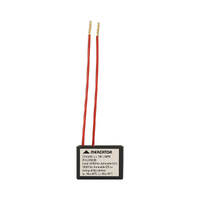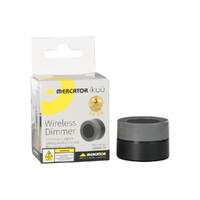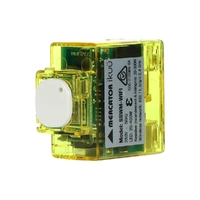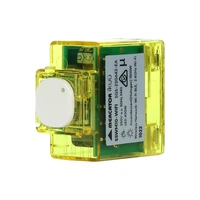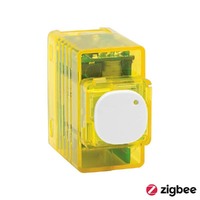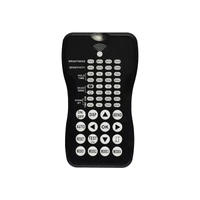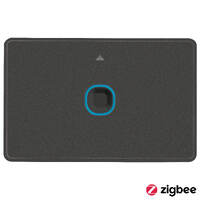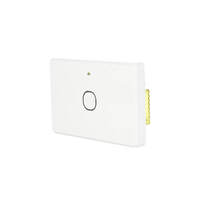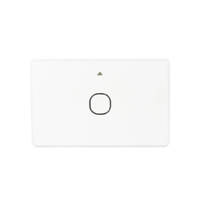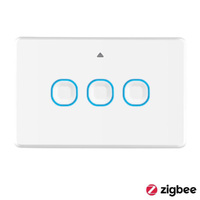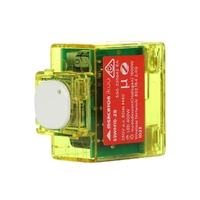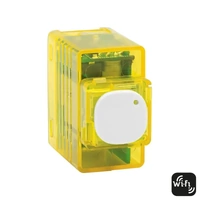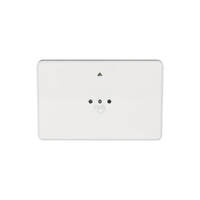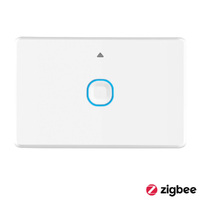

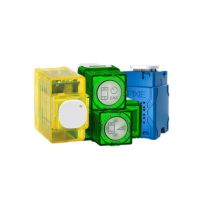


Connected Switch Gear MLCD | Load Correction Device 2-Wire Non-Dimmable | 250V AC
$13.14
$11.95 ex. GST
Search Results:
Search Results:
A smart light switch turns a fixed lighting circuit into something you can control from the wall, a phone, a voice assistant, or a schedule. It sits in place of a standard switch and uses electronic control circuitry plus a wireless module to talk to a router, hub, or app. Because the switch controls the circuit, every lamp on that circuit becomes part of the smart system without changing globes.
Smart switches suit modern light switch upgrades, renovations, and new builds where homeowners and trade buyers want flexible control. Wall control remains available, which matters for households where not everyone uses an app. The connected layer adds remote access, scheduling, scenes, and voice control on top of normal operation.
Compliance reminder: Fixed electrical installation, replacement, or alteration of any mains-wired smart switch in Australia must be completed by a licensed electrician. This applies to retrofits in older homes and new build wiring alike.
Smart light switches accept commands from several sources. Inputs include the physical button on the wall, a mobile app, a paired voice assistant, a schedule inside the app, or a sensor trigger via a smart home hub. The switch then opens or closes the lighting circuit just like a traditional switch, only under software control.
Common connection types include Wi-Fi, Bluetooth, Zigbee, Z-Wave, and Matter-compatible systems. Proprietary platforms like Clipsal Wiser sit on top of these protocols and add their own app experience. The right choice depends on home size, existing smart home ecosystem, and whether a hub is acceptable.
Traditional switches are simple, low-cost, and very reliable. They make sense for back-of-house circuits, basic rooms, and tight budgets. Smart switches add convenience and control: remote operation, scheduling, scenes, and voice commands. They keep wall control intact, so households that mix app users and non-app users still get a usable switch on the wall.
Smart switches make the circuit smart, while smart bulbs make the lamp smart, and each approach suits different jobs around the home.
For Australian renovations with multiple downlights or batten lights per room, a smart switch on the circuit is usually cheaper and more practical than swapping every globe.
Smart switches sit alongside smart power points, sensors, cameras, and connected appliances, with a central hub or platform tying them together. Lighting often becomes the foundation of a smart home because rooms are already wired for it, and adding switches first means scenes, schedules, and automations can grow from a working base.
Smart switches sit in a few clear groups by connection type and user interface, and knowing the differences avoids returns, rework, and incompatibility headaches. Each type has clear strengths for certain home sizes, ecosystems, and budgets.
Wi-Fi smart switches join the home router directly, with no separate hub to buy or hide in a cupboard. They suit smaller homes, entry-level smart lighting, and users who only need basic app or voice control. The trade-off is Wi-Fi network load. A busy 2.4GHz band, weak signal at the switch point, or router limits can affect reliability. Cloud platform stability also matters because most Wi-Fi switches route commands through the maker's cloud.
Zigbee and Z-Wave use low-power mesh networking, where devices on the mesh relay traffic for each other so coverage and reliability improve as more switches join. Both protocols usually need a compatible hub. They suit larger homes, multi-room automation, and premium fitouts where lower latency matters. Many electricians and integrators prefer hub-based ecosystems for big jobs because the mesh stays stable when one device is offline.
Bluetooth offers local control without full network setup, and works well when remote access outside the home is not required and the user wants a simple, app-only experience. Bluetooth-only systems are usually less scalable than Wi-Fi, Zigbee, or Matter, and they often need the user to be on-site or within range to control devices.
Matter is a cross-platform smart home standard built to improve interoperability between Apple Home, Google Home, Amazon Alexa, and Samsung SmartThings. A Matter-supported switch is more likely to keep working across ecosystems if the user changes platforms later. Always check the product listing and manufacturer documentation to confirm Matter support before specifying.
Smart switches come in several user interface styles, and each suits different rooms and design preferences.
Some smart switches act as remote controllers rather than hardwired switching devices. Battery-powered models can mount almost anywhere, while kinetic or battery-free designs harvest energy from the press itself. Wireless accessory switches are useful for two-way control or extra control points in retrofits. Where mains wiring changes are involved, a licensed electrician is still required.
Compatibility is the biggest source of returns and bad installs, and a few checks before purchase save a lot of pain. Most issues fall into four buckets: wiring at the switch point, load type and LED behaviour, platform and ecosystem, and hub requirements.
Many smart switches need a neutral wire at the switch point to power their internal electronics. Older Australian homes often only have the active and switched-active at the switch, so a retrofit may need extra cabling. No-neutral smart switches exist and can fit some retrofits, but they typically have minimum load limits and can fight low-wattage LED loads. A licensed electrician should confirm the wiring at the switch before buying.
Single-pole switching controls a light from one location, while two-way and multi-way circuits control the same light from two or more locations such as staircases, hallways, large bedrooms, and open-plan areas. Smart multi-way circuits often need matching companion modules or wireless accessory switches, and multi-way capability is not automatic on every smart switch listing, so confirm before ordering.
LED drivers and smart switches do not always agree, with flicker, buzzing, ghosting, and dropout at low brightness all common signs of a mismatch. Match the product specifications to the load type and total connected wattage. Dimmable LED globes need a switch or dimmer rated for dimmable LEDs, while non-dimmable LED loads work on standard on/off smart switches but never on dimmers.
Smart dimmers need careful matching to the LED driver and lamp type. Leading-edge versus trailing-edge dimming behaviour affects which drivers are compatible. Quality smart dimmers like the Clipsal Iconic dimmer and timer range and dedicated dimmer switches publish compatibility data. Smart dimmers should not be used to control fans or motor loads unless they are specifically rated for that application.
Choose based on the ecosystem already in use, with Google Home and Alexa being the two highest-demand platforms in Australian homes. Apple Home and Matter-compatible products suit households on Apple devices. Always check whether control is local, cloud-based, hub-based, or app-only, since local control keeps lighting working when the internet drops.
The short answer depends on the protocol:
| Protocol | Hub Required? | Best Suited To |
|---|---|---|
| Wi-Fi | Usually no | Small homes, entry-level smart lighting |
| Zigbee | Usually yes | Larger homes, multi-room automation |
| Z-Wave | Usually yes | Premium smart home installs |
| Bluetooth | Sometimes | Local control, single room |
| Matter | Depends on ecosystem controller | Cross-platform households |
A hub costs more up front but pays back in larger homes through better reliability, lower latency, and richer automation.
The features list on a smart switch listing is long, but only a few features change daily life, and the rest are nice extras. Focus on what the household will actually use.
App control covers basic on/off, dimming, room grouping, and status checking, while remote access matters for outdoor lighting, holiday properties, and lights left on after leaving home. Many users start with this single feature and only later explore automations and scenes.
Voice control suits kitchens, bedrooms, garages, and accessibility scenarios, and hands-free operation is genuinely useful when carrying groceries, holding a child, or recovering from injury. Voice control depends on a compatible smart home platform and correctly paired device names, and naming rooms and circuits clearly avoids "the wrong light came on" frustration.
Schedules cover daily routines like morning lights, after-school porch lighting, evening dimming, and after-hours shutdowns. Sunset and sunrise triggers handle outdoor lighting without manual changes through the year, and trade and commercial users get the most from scheduling in shops, offices, workshops, and shared amenities.
Scenes set a group of lights to specific levels in one tap or one voice command, with common scenes including evening, movie, work, away, cleaning, and security. Scenes shine in open-plan homes and hospitality fitouts where one room blends into the next.
Some smart switches report circuit energy usage, while others only switch. Usage data helps identify waste, particularly on outdoor circuits that run longer than expected, and the accuracy depends on the product, so check the listing if energy monitoring is the main reason for buying.
Smart dimmers improve comfort in bedrooms, living rooms, dining rooms, restaurants, and hospitality spaces, where LED compatibility is the deciding factor: a great dimmer paired with the wrong driver still flickers. A licensed electrician should confirm dimmer and load suitability.
Scheduled or randomised lighting can make a home look occupied during holidays, which is a useful supplement to a proper alarm and camera system rather than a replacement for it. Combine smart lighting with monitored security for the strongest deterrent effect.
The right smart switch depends on the room, the user, and the existing ecosystem, with the right product type usually mattering more than chasing a brand name. Match the product to the job.
Beginners do best with a simple Wi-Fi or app-based smart switch in a single room. Key buying criteria: Australian compliance markings, platform compatibility with Google Home or Alexa, a reliable app with good store ratings, local support, and a clean install path for a licensed electrician.
Google Home users should look for confirmed Google Home or Matter support on the listing, and clear room and circuit naming inside the Google Home app makes voice commands reliable. Start with high-use rooms like the kitchen and entry, then expand.
Alexa works well with both Wi-Fi and Zigbee smart switches via the right skill or hub. Useful Alexa scenarios include entry lighting on a routine, bedroom lamp control by voice, kitchen lights at sunset, garage lights on arrival, and outdoor lighting automation. The Clipsal Wiser range and Mercator Ikuu range both have strong Alexa integration in the Australian market through their respective hubs.
Living rooms, bedrooms, dining areas, and media rooms benefit most from smart dimmers, where comfort lighting matters and dimming saves energy as a side effect. Check LED dimming compatibility and total connected wattage. Quality options include the Clipsal Iconic dimmers and timers and Clipsal Saturn Zen dimmers, mechs and accessories.
Multi-pack and value buying makes sense for whole-home upgrades, but value is more than purchase price. A cheap switch with no Australian compliance, no local warranty, or a wobbly cloud platform is poor value. Compare compliance, warranty, ecosystem stability, and local stock holding before committing to a quantity buy.
Older Australian homes often lack a neutral at the switch, so plan for no-neutral compatible models, retrofit-friendly mechs, and wall plate matching across rooms. Smart switches can be rolled out room by room, starting in the most-used spaces and adding later. A pre-purchase electrical assessment avoids buying products that will not fit the wiring on site.
New builds give the cleanest result because the system can be specified early. Benefits include consistent wall plate style across the home, planned hub or network coverage, neutral availability at every switch point, and capacity for future smart home expansion. Builders, project electricians, and project managers benefit from picking the ecosystem before rough-in.
Offices, retail stores, workshops, warehouses, hospitality venues, and shared amenities all benefit from smart lighting control, with the focus usually on scheduling, zone control, occupancy automation, and cutting after-hours waste. Smart switches are part of a wider energy management approach for small business.
The case for smart switches goes beyond a phone app, with real benefits showing up in lower energy use, better day-to-day convenience, and small safety wins around the home.
Kids' bedrooms, garages, bathrooms, laundries, and offices are common culprits, and app control, schedules, timers, and occupancy sensors all reduce wasted runtime. The savings are modest per circuit but add up across a whole house over a year.
App and voice control help people with limited mobility, recovering from injury, or living with chronic illness, and smart switching complements proper accessibility planning. It pairs well with large dolly switches and other physical accessibility options.
Smart lighting is increasingly expected in renovations, new builds, and premium fitouts, and buyers and tenants now treat connected lighting as basic infrastructure rather than a novelty. Building it into the wiring from day one is the cheapest path.
Hardwired smart switches give cleaner control than a tangle of plug-in timers and smart plugs for fixed lighting circuits. Plug-in smart power points still suit lamps and appliances on power points, where fixed wiring is not needed or not possible.
Smart switches join the mains wiring, so they are not a plug-and-play product. Australian electrical law requires fixed installation to be carried out by a licensed electrician, and the right preparation makes the install fast and the result reliable.
Installing or replacing a fixed light switch in Australia must be done by a licensed electrician, because smart switches connect to live mains wiring. Incorrect installation creates shock risk, fire risk, device failure, and insurance complications, so the legal position is clear: do not DIY this work.
A licensed electrician confirms the wiring at the switch point, neutral availability, the load type, and circuit protection in the switchboard. They also check wall box depth, plate compatibility with the chosen mech, Wi-Fi or hub coverage, and whether the switch suits the room. These checks happen in minutes and prevent expensive rework later.
The most useful spots for smart switches include entry points, kitchens, bedrooms, hallways, outdoor lighting circuits, garages, and home offices, while commercial spaces add reception areas, meeting rooms, and after-hours zones. Group rooms by scene early so the system feels deliberate rather than scattered.
Absent neutral wires at the switch point, incompatible LED drivers, shallow wall boxes, multi-way circuits without companion modules, weak Wi-Fi signal in the room, mixed wall plate styles across the home, and lack of suitable circuit protection. Confirm each with the installing electrician before committing to a quantity buy.
Smart switches sold for fixed installation in Australia must meet AS/NZS 3000 wiring rules and carry the RCM or SAA approval mark, and wireless products need to meet AS/NZS wireless compliance. Buy from reputable Australian electrical suppliers rather than unverified marketplaces to avoid non-compliant imports.
A clear comparison framework turns research into a confident purchase. The four most useful comparisons are smart vs standard, Wi-Fi vs Zigbee vs Z-Wave, smart switches vs smart plugs, and cheap vs reliable.
Standard switches are cheaper, simpler, and almost endlessly reliable, and they are still the right choice for basic circuits where automation adds nothing. Smart switches add convenience, scheduling, voice control, scenes, and energy management at the cost of higher unit price, platform dependency, and a small learning curve.
| Protocol | Hub | Reliability | Scalability | Best Use |
|---|---|---|---|---|
| Wi-Fi | None | Depends on router | Limited by router | Small homes, basic setup |
| Zigbee | Yes | Strong mesh | High | Larger homes, automation |
| Z-Wave | Yes | Strong mesh | High | Premium installs |
Beginners often pick Wi-Fi, while trade buyers running larger jobs usually move to Zigbee or Z-Wave for mesh reliability.
Smart plugs suit portable plug-in appliances and lamps, while smart switches suit fixed lighting circuits, so the two are complementary rather than competing. Stay within the rated load on any smart plug and never overload by chaining multi-boards.
The cheapest products often lack Australian certification, local warranty, written documentation, or platform stability, while a reliable smart switch is judged by compliance, ecosystem stability, support availability, and product depth across the brand. Compare on those criteria, not the lowest line item.
Trade and renovation buyers should look for clear product listings, identifiable model numbers, Australian-focused stock, trade-friendly pricing, and the ability to order related switch mechanisms, wall plates, dimmers, and accessories on one order. The Sparky Direct catalogue covers switch mechanisms, Clipsal Iconic switches and dimmers, and the Clipsal Iconic Wiser smart range alongside related accessories.
Online purchase suits electricians, contractors, builders, renovators, and homeowners, and the right product page and the right supplier choice save time on every job. A few checks before clicking buy avoid mismatched stock on site.
Trade buyers need consistent stock, identifiable model numbers, current certification, and matched ecosystem compatibility. Bulk runs for multiple rooms or multiple sites need reliable supply, so confirm stock holding before quoting completion dates. The Cabac pushbutton switches and dimmer mechanisms range and Clipsal Iconic mechanisms both serve professional install scenarios from established Australian brands such as CABAC and Clipsal.
Homeowners can buy compliant products online but still need a licensed electrician for installation. Before ordering, confirm product suitability with the installing electrician, especially for older homes, multi-way circuits, and dimmable LED loads. Bring the wiring detail to the conversation and the order list follows naturally, whether the brief favours HPM trade fittings, PDL Iconic ranges, or Mercator Lighting Ikuu smart switches.
Bulk buying suits new builds, whole-home upgrades, rental property refreshes, and small business fitouts, where volume discounts and consistent stock holding matter most. Confirm final compatibility on one or two units before committing to a quantity buy across an entire site.
Most post-install issues fall into a few common patterns, and the right diagnostic step depends on the symptom. Anything that requires opening the switch or touching mains wiring is a licensed electrician's job.
Common causes include weak signal at the switch and a 2.4GHz network requirement that the router did not advertise. App setup glitches, router placement too far away, and congestion on the 2.4GHz band also cause failures. Check the manufacturer setup steps and network strength at the switch location before assuming the switch is faulty.
Cloud outages, weak signal, hub distance, firmware updates, and overcrowded Wi-Fi all cause dropouts. Zigbee mesh tends to improve as more devices are added because each device extends the network, and a reboot of the router or hub solves a surprising number of intermittent issues.
Flicker and buzz almost always point to compatibility between the dimmer and the LED driver. A licensed electrician can confirm whether the dimmer suits the lamp, whether the driver is dimmable, and whether the wattage falls within the load range. The fix is usually a compatible dimmer or a different lamp.
Voice assistant problems usually come from account linking, room naming, app permissions, platform compatibility, or hub pairing, and the fix is non-electrical and lives inside the app. Unlink and relink the account if simple checks do not work.
Several conditions are valid upgrade triggers. These include outdated app support, platform changes from the manufacturer, persistent connectivity issues, changed lighting loads after a renovation, and the arrival of new Matter-compatible ecosystems. A licensed electrician should handle the swap.
Club Clipsal is Australia's largest electrician community offering trade rewards, business support, and exclusive benefits. When you nominate Sparky Direct as your preferred wholesaler, we automatically apply your Clipsal spend points to your Club Clipsal account daily.
Entry-level offering coaching, mentoring, and training discounts
Unlock exclusive industry tools and networking events
Access Toyota fleet offers and business software discounts
Maximum benefits, including VIP experiences and rewards
1. Sign Up: Create your Club Clipsal account at clipsal.com/club-clipsal or via the iCat mobile app
2. Nominate Sparky Direct: Select Sparky Direct from the wholesaler dropdown menu in your profile
3. Add Email: Enter your Sparky Direct account email address in the membership number field
4. Start Earning: Every dollar spent on Clipsal products earns points automatically
Redeem points from the rewards store, including gift cards, tools, and experiences. Access business summits, product training, and industry networking events. Receive early access to new product launches and special promotions. Connect with fellow electricians via the Club Clipsal community app.
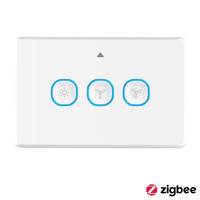
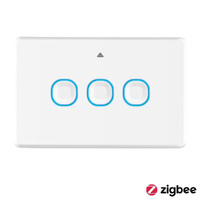
Watch Mercator Ikuu SSW03GN-ZB | Smart Triple Light Switch 10A Requires Neutral | Zigbee video
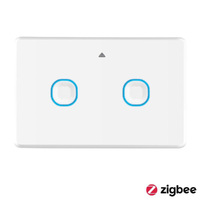
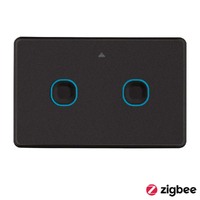
Watch Mercator Ikuu SSW02G | Smart Double Switch | Zigbee video
Watch Clipsal Iconic 41EPBDWCLM-VW | Bluetooth Wiser Push Button LED Dimmer Mechanism, Push Button with BLE and ControlLink, 3-wire video

These Zigbee switches are more reliable than the wifi equivalent and more responsive too. Would never use Wifi switches again after getting Zigbee, but needs a Zigbee hub. Best option is Home Assistant as then you aren't locked into a single brand of Zigbee devices. Just make sure to check whether or not they need a neutral wire to the switch. These are also more cost effective than the Clipsal Iconic Wiser equivalent switches.
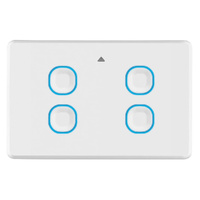
Highly recommend to buy more buttons than you need. Why? - well, there’s four Buttons on this. My son needs only two buttons in his room. The spare two that aren’t wired to anything… We use them to change the colour or brightness of the bulbs!! Instead of now installing 1 or two button switches in the house, we are doing 4 way everywhere! Top left does lights…the other 3 do ‘stuff’
Great unit. Well built. Can definitely see the quality over cheaper units. Works great with Home Assistant. No noise when switching on/off lights. Only negative is the backlights 'bleed through' to other switches that are off and that the unit is fairly wide (51mm) so make sure you have enought space, especially with tiled walls.
Trusted brands • Expert advice • Fast Australia-wide delivery • Trade pricing
Shop Smart Light Switches → Get Expert Advice →Yes, they are designed to be intuitive, with familiar switch operation and optional digital control.
You can find Smart Light Switch options at Sparky Direct, offering suitable solutions for modern Australian homes.
Yes, Australian regulations require a licensed electrician to install or replace smart light switches.
Check system compatibility, LED compatibility, wall box depth, and installation requirements.
Yes, they are available through authorised electrical suppliers and online electrical retailers.
Yes, they are typically supplied with a manufacturer’s warranty covering defects under normal use.
Yes, they are designed to support connected and automated living environments.
Yes, systems can often be expanded or updated as needs change.
Yes, when installed correctly, they are designed for everyday reliable use.
Yes, they are often installed across multiple rooms for consistent control.
Yes, they are popular in modern and newly built homes.
Yes, they are commonly used in living rooms, bedrooms, kitchens, and hallways.
They can assist with better lighting control through scheduling and automation.
A smart light switch is an electrical switch that allows lighting to be controlled electronically, often via apps, automation systems, or connected control platforms, in addition to manual operation.
Yes, most smart switches retain normal manual on and off operation.
They offer greater convenience, flexible control, and the ability to automate lighting.
Yes, installation must be carried out by a licensed electrician to ensure safety and compliance.
Yes, they are also used in light commercial environments such as offices and small retail spaces.
Yes, they are commonly installed in renovations where compatible wiring and wall boxes are available.
Many are designed to suit standard Australian wall boxes, though depth and clearance requirements should be checked.
Yes, most smart light switches are compatible with LED lighting when matched to the correct load type and rating.
Some features may require internet connectivity, while basic switching often works locally depending on the system used.
Yes, they are designed for use in Australian residential properties when compatible wiring and systems are in place.
They are typically rated for standard Australian mains voltage of 230–240 volts AC.
Yes, smart light switches are designed to meet relevant AS/NZS electrical safety and performance standards when installed correctly.