
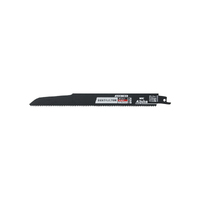

230mm
PRICE DROP
Alpha RDDM2308-25 | Destructor Reciprocating Blade Metal/Timber 230mm | Single Buy
Now $6.59
$5.99 ex. GST
Search Results:
Search Results:
A hacksaw blade is a thin, hardened strip of metal with a serrated cutting edge. It fits into a hacksaw frame under tension and cuts on the forward stroke. Hacksaw blades are consumable: they wear out and need replacing. Choosing the correct blade for the material and thickness makes the difference between a clean, fast cut and a blade that binds, wanders, or breaks.
A hacksaw blade has three main parts: the body, the cutting teeth, and the pin holes at each end. The body is made from hardened steel or a combination of materials depending on blade grade. The teeth are precision-ground and set at a slight angle to create a kerf (cutting channel) slightly wider than the blade body. This clearance prevents binding. Pin holes at each end allow the blade to be tensioned correctly in the frame.
Higher-grade blades use a bimetal construction: a flexible alloy steel body with a high-speed steel (HSS) cutting edge welded along one side. This design combines flexibility with tooth hardness.
Hacksaw blades cut by abrasion across many fine teeth. This differs from cutting discs, which use abrasive particles, and from hole saws or holesaw blades, which cut circular profiles. Hacksaw blades are suited to straight cuts in solid bar, tube, conduit, and sheet material. They do not require power and are precise enough for work where a power tool would be impractical or dangerous.
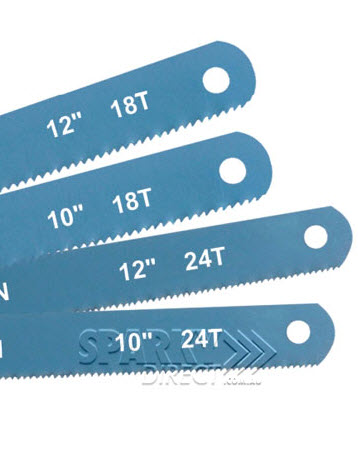
TPI stands for teeth per inch. It is measured along one inch of blade length and determines both cutting speed and finish quality. A low TPI count means fewer, larger teeth: the blade removes more material per stroke and cuts faster, but leaves a rougher finish. A high TPI count means more, smaller teeth: the blade cuts slower but produces a finer finish and is better suited to thin-walled material.
The standard rule is that at least three teeth must be in contact with the workpiece at all times. If fewer teeth are engaged, the blade tends to straddle the material, catch, and break. For most applications:
| Material / Thickness | Recommended TPI | Typical Application |
|---|---|---|
| Mild steel bar, heavy section | 14 TPI | Structural steel, threaded rod |
| General metalwork, medium section | 18 TPI | Solid bar, box section, angle iron |
| Standard pipe, conduit, tubing | 24 TPI | Electrical conduit, copper pipe, EMT |
| Thin-walled tube, sheet metal | 32 TPI | Light gauge steel, thin tube, cable tray |
Using too coarse a blade on thin material is the most common error. When the tooth pitch is larger than the material thickness, individual teeth catch and strip. The blade either breaks or the teeth rip out. Electricians cutting EMT conduit or trunking with a 14 TPI blade will find the blade jams and the cut wanders. For conduit work, 24 TPI is the minimum recommended count. For thin-walled aluminium or steel trunking, 32 TPI gives cleaner results.
Cutting PVC or metal conduit: use 24 TPI. Cutting cable tray or thin metal trunking: use 32 TPI. Cutting threaded rod or earth stakes: use 18 TPI. When in doubt, choose the higher TPI count. A finer blade cuts slower but does not break.
High speed steel blades use HSS throughout the entire blade body. HSS retains hardness at elevated temperatures, which extends tooth life when cutting harder materials such as stainless steel, hardened bolt threads, and spring steel. HSS blades are more brittle than bimetal alternatives. They perform best in rigid frames where the blade is kept under consistent tension and not subject to lateral flex.
Bimetal blades are the trade standard. They combine a flexible alloy steel body with an HSS cutting edge. The body absorbs flex and vibration without cracking, while the teeth stay hard enough to cut stainless, cast iron, and hardened materials. Bimetal blades last significantly longer than carbon steel economy blades and tolerate the varied cutting angles common on a worksite. Brands such as Bordo and Bristol Tool Works supply bimetal hacksaw blades to the Australian trade market.
Carbon steel blades cost less but wear faster. They work adequately for light use on mild steel, aluminium, copper, and PVC. For occasional jobs where a few cuts are needed, a carbon steel blade is cost-effective. For regular trade use, bimetal blades are more economical over time because they last significantly longer per blade.
| Blade Type | Tooth Material | Flexibility | Best Use |
|---|---|---|---|
| Carbon Steel | Carbon steel | Low | Light occasional use |
| High Speed Steel (HSS) | HSS throughout | Low | Hard materials, rigid frame |
| Bimetal | HSS teeth, alloy body | High | Trade use, all materials |
The most common hacksaw blade length in Australia is 300mm (12 inches), which fits standard full-size hacksaw frames. Junior hacksaw frames take 150mm (6 inch) blades. These smaller blades are useful in confined spaces, for cutting inside switchboard enclosures, or for short cuts where a full-size frame cannot be positioned. Some junior frames also accept 130mm blades, so always check frame specifications before ordering.
A hacksaw blade must be tensioned correctly in the frame to cut straight. An under-tensioned blade flexes laterally under load, causing the cut to wander. Most frames tighten via a wing nut or thumb screw at the rear. The blade should feel firm when pressed sideways with a finger but have a small amount of give. Over-tensioning can stress the blade at the pin holes and cause premature breakage.
Hacksaw blades cut on the forward (push) stroke. Install the blade with teeth pointing away from the handle. If teeth face toward the handle, the blade cuts on the pull stroke, which generates less force and increases the chance of the blade buckling. Some blades are bidirectional. Check the blade markings before fitting if you are unsure.
Different materials have different hardness and wall thicknesses. Soft materials such as aluminium and copper cut quickly with almost any blade. Stainless steel, hardened bolt threads, and cast iron require bimetal or HSS blades with fine teeth. PVC conduit and plastic trunking are best cut with a fine-tooth blade (24 to 32 TPI) to avoid chipping the material edge. Selecting the wrong blade for stainless or hardened steel will dull the teeth within a few strokes.
Thin material requires more teeth in contact with the workpiece. As a rule, select a blade where at least three teeth span the full wall thickness of the material. For a 2mm wall tube, this means a tooth spacing of no more than 0.66mm, which corresponds to approximately 32 TPI. For thicker solid bar where finish quality matters less than cutting speed, 18 TPI is practical.
Trade use demands blades that hold up across multiple cuts per day on varied materials. Bimetal blades are the professional choice because they resist breakage under flex and retain sharpness longer. DIY and occasional-use scenarios can be served adequately by carbon steel blades, which are available at lower cost. Sparky Direct supplies trade-grade blades alongside the full range of electrician hand tools stocked for licensed tradespersons.
Electricians use hacksaw blades to cut conduit, threaded rod, earth stakes, cable tray, and metallic enclosures. A 24 TPI bimetal blade handles most of these tasks. Carrying a 32 TPI blade for thin-walled trunking and a 14 or 18 TPI blade for solid bar gives comprehensive coverage without unnecessary blade changes. Consider the full range of hand tools available at Sparky Direct to complement your hacksaw setup.
Cutting speed depends on TPI, blade material, the hardness of the workpiece, and stroke technique. A coarser blade removes more material per stroke but requires more force. A fine blade cuts slower but with less effort per stroke. On a typical electrical job, a 24 TPI bimetal blade will cut through 20mm conduit in under ten strokes with correct technique. Dull blades require significantly more effort for the same result.
Bimetal blades outlast carbon steel blades by a wide margin on hard materials. On mild steel, a quality bimetal blade can complete dozens of cuts before noticeable dulling. On stainless steel, wear is faster regardless of blade type. Signs of a worn blade include increased cutting effort, heat build-up in the workpiece, and a tendency for the cut to wander. Replace blades before they reach the point where excessive force is needed to maintain progress.
A bimetal blade tolerates the flexing that occurs when the cutting angle changes or the frame is repositioned mid-cut. Carbon steel and all-HSS blades are more brittle. They break when the blade is twisted or when the cut pinches (the kerf closes and traps the blade). Breakage is usually sudden and can result in the broken end ejecting from the frame at speed. Bimetal construction reduces this risk substantially.
Finish quality depends primarily on TPI. A 32 TPI blade leaves a smooth, clean edge that requires minimal deburring. An 18 TPI blade leaves a coarser edge with visible saw marks. For conduit where fittings need to seat cleanly, fine-tooth blades and a deburring step after cutting are best practice. For rough cuts where only dimensional accuracy matters, a coarser blade is faster.
Most blade breakage has one of four causes: insufficient tension in the frame, a blade that is too coarse for the material thickness, lateral twisting during the cut, or the blade pinching in the kerf. Check tension first. The blade should be firm in the frame with minimal side movement. If a cut begins to pinch, stop and wedge the kerf open slightly before continuing. Avoid twisting the frame to steer the cut.
Rough cuts result from too coarse a TPI for the material, excessive cutting speed, or a worn blade. Uneven or angled cuts result from inadequate clamping of the workpiece, a blade that is under-tensioned, or applying lateral pressure to steer the cut. Clamp the workpiece securely close to the cut line. Use a guide block or mark a clear line and start the cut with a light back-stroke to establish a groove before applying full forward pressure.
Blade binding occurs when the cut closes (the kerf pinches) due to internal stress in the material, or when the cut deviates and the blade contacts the side of the kerf. Long cuts in thin flat bar are particularly prone to this. Applying a small amount of cutting oil to the blade reduces friction and heat build-up, which lessens the tendency for material to close on the blade.
Teeth strip or break prematurely when the TPI is too coarse for the material wall thickness (fewer than three teeth in contact), when the blade is run against a surface harder than its rated hardness, or when excessive downward pressure is applied. Let the blade do the work. Moderate, consistent pressure produces better results than forcing the cut.
Note on hardened materials: Standard carbon steel blades will not cut case-hardened bolts, hardened chain, or hardened lock bodies. For these materials, a bimetal blade with a cobalt-enriched HSS cutting edge is required. Attempting to cut hardened materials with an unsuitable blade dulls the teeth in seconds.
Economy carbon steel blades have a low unit cost but wear quickly on steel. For a tradie cutting conduit and threaded rod daily, the per-cut cost of carbon steel blades often exceeds that of bimetal alternatives because of the frequency of replacement. Bimetal blades cost more per blade but deliver more cuts before disposal. For trade use, bimetal blades are the more economical choice over any extended period.
Brand quality varies. Well-regarded tool brands available through Sparky Direct include Sterling, Klein Tools, and Major Tech. These suppliers produce blades and cutting tools to consistent tolerances. No-name blades may vary in hardness, tooth pitch accuracy, and tensile strength from batch to batch, which makes their cutting performance unpredictable on the job.
Contractors and electrical firms cutting conduit and metalwork regularly benefit from buying hacksaw blades in packs rather than individually. Bulk packs reduce per-blade cost and ensure blades are always available. Sparky Direct offers trade pricing across its hacksaw blades range. Keeping two TPI counts on hand (one for conduit work, one for solid bar) avoids downtime from incorrect blade selection on site.
Apply steady downward pressure on the forward stroke only. Lift or reduce pressure slightly on the return stroke to prevent the teeth dragging backward across the cut. Use the full length of the blade with each stroke to distribute wear evenly across all teeth rather than loading only the central section. Short, rapid strokes concentrate heat and wear in the middle of the blade and reduce its service life.
Heat dulls cutting edges and can work-harden the material being cut, making subsequent cutting harder. Use a steady, moderate stroke rate rather than fast, aggressive cutting. Pause periodically on long cuts to allow both the blade and workpiece to cool. When cutting aluminium or other materials that tend to load up the gullets between teeth, clear swarf from the blade frequently to maintain cutting efficiency.
Cutting oil or a general-purpose lubricant reduces friction on the blade, extends tooth life, and produces a cleaner finish on metal workpieces. A few drops along the blade before starting a cut is sufficient. Water is adequate for aluminium and can be used when cutting oil is not available. Do not use lubricant on PVC or other plastic materials as it serves no benefit and can contaminate fitting surfaces.
Hacksaw blades are thin and prone to surface rust if stored in damp conditions. Keep blades in their original packaging or in a dry tool roll until use. On sites near coastal environments or in humid Queensland conditions, rust can develop on unprotected blades within days. A light wipe of cutting oil before storage provides adequate protection.
Hacksaw blades are sharp. Handle them carefully when fitting, removing, or transporting. Loose blades in a tool bag can contact other tools and damage or dull the teeth before first use. Store spare blades flat in their packaging or in a dedicated blade holder. Bent or kinked blades should be discarded rather than straightened and reused. A blade that has been permanently bent has stress concentrated at the kink point and is likely to break in use.
Replace a hacksaw blade when you notice any of the following: significantly more effort required to maintain cutting progress, the cut wandering despite good technique, visible chipping or missing teeth, or the blade making a higher-pitched scraping sound rather than the normal cutting sound. Continuing to use a worn blade causes poor-quality cuts, increases the risk of blade breakage, and is less efficient than fitting a fresh blade.
Electricians use hacksaw blades to cut metal conduit, steel flexible conduit, threaded rod for luminaire drops, cable tray, and metallic electrical enclosures. A 24 TPI bimetal blade handles most electrical conduit cuts cleanly. Threaded rod (M10 to M16) requires an 18 TPI blade for practical cutting speed. The broader range of drywall saws and cutting discs available through Sparky Direct supplements hacksaw work where access or material requires a different tool.
Plumbers use hacksaw blades to cut copper, steel, and CPVC pipe. For copper tube up to 15mm, a 32 TPI blade produces a clean, burr-free cut that requires minimal dressing before fitting compression fittings. For steel pipe, 24 TPI is appropriate. Dedicated pipe cutters are faster for round tube, but a hacksaw is essential where a pipe cutter cannot fit and for cuts at angles that pipe cutters cannot achieve.
Builders and maintenance contractors use hacksaw blades to cut bolts to length, remove rusted fixings, cut aluminium extrusions, trim plastic conduit, and modify metalwork that cannot be taken to a power tool. The hacksaw remains essential on any worksite because it requires no power supply, generates no sparks, and can operate in confined spaces where angle grinders or power saws would be impractical. Tools such as cable cutters and drill bits complement hacksaw use across general construction tasks.
On Australian construction and maintenance sites, cutting operations require appropriate PPE. Eye protection (safety glasses or face shield) is mandatory when cutting metal because fine swarf and broken tooth fragments can be ejected at speed. Cut-resistant gloves reduce the risk of lacerations when handling blades or deburring cut edges. Safety footwear is standard on commercial and industrial sites. These requirements align with obligations under Work Health and Safety legislation in each state and territory.
Used hacksaw blades are sharp even when worn. Wrap used blades in cardboard or tape the teeth before disposal to prevent injuries during waste handling. Never discard bare blades into general tool bags or rubbish bins where someone may reach in without seeing them. Follow your employer's or site's waste management procedures for sharps and cutting tools.
Secure the workpiece firmly before cutting. Material that is free to move causes the blade to bind and can result in sudden blade breakage. Work at a stable height where you can apply controlled downward pressure without leaning awkwardly. Keep hands and fingers clear of the cutting line. When cutting overhead or in confined spaces, confirm there is no live electrical equipment in the path of the cut or close to where swarf or a broken blade may travel.
When hacksawing near live or recently deenergised electrical equipment, confirm isolation before commencing work. Metal swarf from cutting can bridge contacts inside enclosures. Blow or vacuum swarf clear before restoring power. This is a standard requirement under safe work method statements for electrical work.
Watch Sparky Direct PC-42 | PVC Conduit Cutters 42mm video
Watch Major Tech CS0360 | Cable Shears (60mm²) video
Watch Re-Load RLHS25 | Hi-Flex Bi-Metal 25mm Cobalt Holesaw | Green video

After owning 1 pair of these snips I have to say that they are as sharp as the teeth of the Black Panther they are named after. A great addition to the tool belt. I bought these to cut roofing iron and they cut it with ease and without the usual cramping in the hand from other less comfortable grips. I also use them for flashing and general tin work - they have never let me down. I would not be without them.
These are the best pliers Clipsal ever produced - nothing beats them for stripping cables when you're fitting-off. The lack of stops mean they slot nicely into your hand and give you a great feel for the cut. The insulation is comfortable and grippy, and they make very quick work of 2.5mm TPS. I've been using these for 15 years and would never use anything else. Buy a pair and you'll never look back.
I've always favoured glowing cable pullers and this one is certainly one of the brightest i've used. As with any phosphorous material it must be exposed to light before use. This one charges much faster than older models i've used, and the glow lasts much longer too. The length is ideal - long enough to pull through a double brick wall without an extension. Sparky Direct got it to me fast and well packaged. Very happy.
Quality products in stock • Fast Australia-wide delivery • Competitive trade pricing
Browse Hacksaw Blades → Get Expert Advice →Blade life depends on material hardness, cutting pressure, and blade quality.
Sparky Direct supplies hacksaw blades Australia-wide, offering reliable cutting solutions for trade and general use.
Hacksaw blades are packaged securely and delivered via standard courier services.
Unused hacksaw blades are generally eligible for return according to the seller’s returns policy.
Warranty coverage varies by manufacturer and generally covers defects in materials or manufacture.
Hacksaw blades are available individually and in multi-pack options.
Hacksaw blades do not require maintenance but should be replaced when worn.
Yes, they are commonly used by apprentices under supervision.
They should be stored dry and protected to prevent rust or damage.
Yes, finer-tooth blades can cut plastic with a smooth finish.
Yes, hacksaw blades are suitable for DIY and general household tasks.
Hacksaw blades are easy to replace by loosening the frame and installing a new blade.
Yes, excessive force or incorrect installation can cause blades to break.
Hacksaw blades are used for cutting metal, plastic, and other hard materials using a hacksaw frame.
Finer tooth counts are better for thinner metals, while coarser teeth suit thicker materials.
Choose a blade based on the material being cut and the required finish.
Most hacksaw blades fit standard hacksaw frames, but compatibility should be checked.
Yes, hacksaw blades are widely used in trade, maintenance, and workshop environments.
Hacksaw blades may be used for cutting conduit or metal components, but electrical work must be performed by a licensed electrician.
Bi-metal blades offer improved flexibility and longer life compared to standard carbon steel blades.
Yes, hacksaw blades are available with different teeth-per-inch counts to suit various materials and cutting needs.
Hacksaw blades are commonly available in standard lengths to suit most hacksaw frames.
Many hacksaw blades are manufactured to meet relevant AS/NZS standards, depending on the product and application.
Hacksaw blades are typically made from high-carbon steel, high-speed steel, or bi-metal materials for durability.
Hacksaw blades are commonly used to cut steel, aluminium, copper, plastic, and thin metal tubing.