
Search Results:
Search Results:
Search Results:
Search Results:
Stud finders fall into three broad categories. Each type uses a different detection method and suits different job requirements. Selecting the right type is the first step toward reliable results.
Magnetic stud finders use a permanent magnet to detect ferrous metal. They respond to the nails or screws that fasten plasterboard sheets to the underlying framing. These tools are simple, require no batteries, and never need calibration.
The limitation is precision. A magnetic finder locates the fastener, not the centre of the stud. In most cases, the fastener sits close enough to the stud centre for practical purposes, but the margin of error is wider than electronic models provide.
Magnetic finders work on timber and metal framing alike, since both use steel fasteners. They are compact, inexpensive, and useful for quick checks on shallow walls. They are not suitable for locating live cables or detecting stud depth.
Electronic stud finders use capacitance sensors to detect changes in wall density. As the tool moves across the surface, it measures how the wall's dielectric constant shifts. A higher density reading indicates a stud behind the surface material.
Most electronic models use edge-detection logic. The tool signals when it crosses the edge of a stud from each direction. The user marks both edges and finds the centre by measurement. This method gives a more precise centre location than magnetic detection.
Edge-detection models require calibration before each scan. The tool must be placed flat against the wall in a known empty area before scanning begins. Skipping this step is the most common cause of false or missed readings.
Multi-scanner models combine stud detection with metal scanning and live AC cable detection in a single unit. These tools use multiple sensor modes and typically include an LCD display that shows detection results in real time.
AC detection works by sensing the electromagnetic field produced by live wiring. This feature helps avoid cables during drilling but is not a substitute for a dedicated voltage tester. AC detection can miss cables running at low current or shielded by conduit.
Multi-scanner models are suited to trade use where a single tool needs to handle varied wall materials and multiple detection requirements. The Major Tech MT300 is an example of this type, with 120mm detection depth and combined scanning modes.
| Type | Detection Method | AC Wire Detection | Best Suited For |
|---|---|---|---|
| Magnetic | Ferrous metal (nails/screws) | No | Quick checks, shallow walls |
| Electronic (edge) | Capacitance/density change | Some models | Precise stud centre location |
| Multi-scanner | Combined: density, metal, AC field | Yes | Trade, renovation, varied walls |
Not all stud finders perform equally on Australian wall construction. These four features determine whether a tool gives reliable results across different wall types and job conditions.
Detection depth is the maximum wall thickness through which the sensor can locate a stud. Budget models typically detect to 19mm, which covers single-layer plasterboard. Mid-range and professional models often reach 38mm to 120mm, allowing detection through double plasterboard, cement sheet, or timber cladding over a standard frame.
Australian walls vary. A standard single-layer plasterboard wall is easy for most sensors. Double-layered or tiled walls require tools rated for deeper detection. Confirm the rated depth before buying if working on non-standard construction.
Live wire detection responds to the AC electromagnetic field produced by mains wiring. This mode activates automatically on most multi-scanner models when the tool is held near the wall. It alerts the user before drilling into a live circuit.
Metal detection identifies non-ferrous materials including copper pipe and aluminium conduit that magnetic sensors cannot find. This feature is useful when routing new cabling through existing walls where services may be present.
Important: AC detection is an alert feature, not a verification method. Always use a calibrated voltage tester to confirm the absence of live wiring before drilling. Stud finder AC detection can miss shielded or low-load circuits.
LCD displays show detection data in graphic form, often as a bar or indicator moving across the screen. This is useful for multi-scanner models where the user needs to distinguish between stud, metal, and live wire alerts simultaneously.
LED indicator models use a simpler signal: a light activates at the stud edge. Combined with an audible beep, this is sufficient for straightforward plasterboard scanning where one detection mode is active at a time.
Audio alerts are standard on most electronic models. The tone pitch or pattern often changes as the sensor moves from empty wall to stud edge. Listening to tone changes alongside watching the display improves accuracy, particularly on walls where readings are marginal.
Most electronic stud finders require calibration at the start of each scanning session. The tool must be held flat against a clear section of wall with no stud behind it. The sensor records the baseline reading for that wall, then compares subsequent readings against it during the scan.
Battery condition affects sensor sensitivity. A low battery can produce weak or erratic readings. Models with a clear battery indicator prevent wasted time on unreliable scans. Replace batteries before starting a job rather than waiting for failure mid-task.
Tool selection depends on the wall type, the task, and the frequency of use. Matching the tool to the job avoids both under-specification (missed studs) and over-spending on capability that the task does not require.
For standard single-layer plasterboard over timber framing, any entry-level electronic stud finder with edge detection performs adequately. For double plasterboard, render over frame, or cement sheet, select a model with a rated detection depth of at least 38mm.
Brick, concrete, and masonry walls present a different challenge. Standard stud finders are not designed for solid masonry. On these walls, locating anchor points requires hammer testing or GPR scanning for embedded services, not a standard capacitance stud finder.
Occasional DIY users who hang picture rails, mount televisions, or install shelving will find a mid-range electronic model adequate. Look for edge detection, an audible alert, and at least 19mm detection depth.
Trade professionals benefit from multi-scanner models with deeper detection, live wire alerts, and metal scanning. These models handle varied wall conditions across different job sites and reduce the need to switch tools when wall construction changes between rooms.
Electricians routinely drill into walls to install outlets, run conduit, and route new circuits. A stud finder with AC detection reduces the risk of cutting through live wiring in an existing wall. The Zircon StudSensor e50 and the Major Tech MT300 are both available through the Sparky Direct stud finder range.
For broader tool requirements on site, the Sparky Direct electrical test equipment range also includes voltage testers and insulation testers suited to electrical installation work.
Buy a stud finder with AC detection even if your primary use is structural location. The cost difference between a basic and a multi-mode model is small. The ability to detect a live circuit before drilling is worth far more than the price difference on any trade job.
Stud finder performance is directly tied to wall construction. Knowing what is behind the surface before scanning improves both accuracy and safety.
Australian residential framing is typically set at either 450mm or 600mm centres. Older homes and some commercial fit-outs use 450mm spacing. Newer residential construction commonly uses 600mm spacing to reduce material cost.
Once the first stud is located, the next can be predicted by measuring the expected spacing in both directions. Always confirm with the tool rather than relying on the spacing assumption alone. Non-structural walls, door frames, and window trimmers create irregular patterns that break the spacing rhythm.
Timber framing is the most common type in Australian residential construction. Electronic stud finders detect timber reliably through standard plasterboard when calibrated correctly.
Metal stud framing is used in commercial, multi-storey, and some contemporary residential builds. Metal studs are thinner than timber equivalents, typically 64mm wide for internal non-load-bearing walls. Most electronic stud finders detect metal framing, but the density differential is lower than with timber, so the edge signal may be less pronounced. Multi-scanner models with a dedicated metal detection mode perform more reliably on light steel framing.
Standard capacitance stud finders are designed for plasterboard and similar lightweight cladding materials. They do not function reliably on brick, concrete block, or rendered masonry surfaces. The uniform density of these materials prevents the sensor from detecting meaningful variation.
On masonry walls, mechanical fixings require anchor bolts or masonry screws rather than stud fixings. Plan drilling locations based on load requirements and use appropriate fixings rated for the anchor material. For locating concealed services in masonry, consult plans or use ground-penetrating radar scanning.
Most inaccurate readings come from technique errors rather than tool failure. Following a consistent process produces reliable results across different wall conditions.
Place the tool flat against the wall in a clear area away from known stud locations. Press and hold the activation button until the display or indicator confirms calibration is complete. Do not move the tool during this step. Movement during calibration corrupts the baseline reading and causes false positives throughout the scan.
Recalibrate when moving to a different wall or after a period of inactivity. Wall materials vary between rooms and between floors. A calibration taken in one location is not reliable in another.
Scan slowly and steadily in one direction across the wall. Move at approximately 25mm per second. Too fast and the sensor may not register the stud edge before the tool passes it. Too slow and the sensor reading can drift off the baseline.
Mark the position where the alert activates. This is the near edge of the stud. Continue scanning until the alert deactivates. Mark this position as the far edge. The stud centre sits halfway between these two marks.
Scan from both directions to confirm. Start a fresh scan from the opposite side of the expected stud and locate both edges again. The midpoint of both scans should agree within a few millimetres. If they differ significantly, recalibrate and repeat.
Mark edge positions lightly with a pencil. Find the centre and mark it clearly. Drive a small test nail or use a probing awl at the centre mark before committing to a drill hole. The awl should meet firm resistance at the stud. If it passes through with minimal resistance, the stud is offset from where the centre was marked.
On walls where cabling is suspected, scan with the AC detection mode before drilling. If the alert activates, investigate the cable path before proceeding. Sparky Direct stocks a range of voltage testers suited to confirming live circuit status before work begins.
Most stud finder problems have straightforward causes. Working through these checks systematically resolves the majority of field issues.
Inconsistent readings are usually caused by one of three things: poor calibration, a low battery, or wall surface interference. Recalibrate first. If readings remain inconsistent, replace the batteries before continuing. Fresh batteries resolve a significant proportion of sensor drift problems.
Wall surface interference occurs when moisture, paint layers, or foil-backed insulation sits between the sensor and the framing material. Foil-backed plasterboard is particularly problematic because the foil creates a consistent capacitance reading across the entire surface, masking the stud location beneath it.
Textured or heavily painted surfaces reduce sensor contact. Hold the tool firmly against the surface with consistent pressure throughout the scan. If the wall surface is significantly textured, use a multi-scanner model with a higher rated detection depth and a metal detection mode as a cross-check.
Double plasterboard layers are common in party walls and in rooms where additional acoustic or fire rating has been applied. A standard 19mm detection depth tool will not penetrate to the framing through double 10mm board. Select a tool rated for at least 38mm detection depth on these walls.
A tool that beeps continuously across the entire wall surface has either calibrated over a stud or is responding to a metallic element embedded in the wall such as a lath, mesh render backing, or conduit. Move to a different starting position for calibration, further from any suspected stud location, and repeat the process.
Metal mesh render backing produces continuous alerts on capacitance sensors. On render walls, a magnetic stud finder may give better results by identifying the fasteners rather than attempting to read density variation through the mesh.
If the tool fails to complete calibration, check the battery first. A battery below operating voltage prevents the sensor from initialising. Replace with fresh batteries of the correct type for the model.
Some tools will not calibrate if held against a stud during the calibration step. Move to a clear section of wall, at least 300mm away from any expected stud, and retry calibration from that position.
Stud finders are used across electrical, fit-out, and installation work wherever drilling or fixing into a wall is required. The trade context determines which features are most important.
Electricians use stud finders to locate framing before drilling cable entry and exit points, cutting back boxes, and routing conduit through cavities. Multi-scanner models with AC detection help identify existing cables in the wall path before drilling begins.
When running new circuits through existing walls, identifying stud positions first reduces the risk of drilling into framing mid-run and helps plan cable routes that avoid unnecessary penetrations. The electrical tools range at Sparky Direct includes complementary products for installation work alongside the stud finder range.
Heavy wall-mounted fixtures must be fixed to structural framing. Television brackets, kitchen cabinets, and switchboard enclosures all require reliable stud location before installation. A missed stud under a loaded bracket creates a safety hazard: plasterboard alone cannot carry sustained dynamic loads.
For switchboard mounting, the fixing point must meet both structural and clearance requirements. Locate the stud first, confirm it is clear of services using AC detection, then select the correct fixing hardware. The Sparky Direct hand tools range includes measuring tapes and marking tools useful alongside stud detection work.
Renovation work frequently involves opening existing walls to relocate services or add new ones. Stud finding before cutting reduces the chance of cutting through framing members that need to stay in place. It also helps plan cut openings that fall between studs, making lining reinstatement straightforward.
During fit-out, locating studs allows secure fixing of service equipment, cable trays, and conduit saddles without relying on the wall lining alone. For conduit and saddle fixing requirements, the Sparky Direct test equipment and general electrician hand tools ranges support the full scope of installation work.
Stud finder pricing in Australia ranges from under $30 for basic magnetic models to over $150 for multi-scanner professional units. The right spending level depends on job frequency and wall complexity.
Budget models (under $50) cover basic edge detection on single-layer plasterboard. They suit occasional DIY use and simple residential tasks. These tools lack deep scan modes and AC detection.
Mid-range models ($50 to $100) add deeper detection, improved display systems, and often a basic AC alert. These cover the majority of residential renovation and light commercial work.
Professional multi-scanner models ($100 and above) offer the deepest detection, multi-mode scanning, and the most reliable AC detection. These are the appropriate choice for trade users working across varied job sites and wall types.
The most important features for trade use are: detection depth, AC detection, and display clarity. A cheaper tool that misses studs or generates false alerts wastes more time than the cost difference between it and a mid-range model.
Check the detection depth specification before purchasing. A model rated at 19mm will underperform on double plasterboard without this being obvious from the price or appearance of the tool.
Contractors equipping multiple crews benefit from standardising on a single stud finder model. Consistent tooling reduces training time and allows batteries and accessories to be shared across the fleet. Contact the Sparky Direct trade team through the contact page to discuss trade account pricing and volume orders.
Stud finder use intersects with electrical safety whenever drilling near existing wiring. Understanding the limits of the tool and the applicable regulations prevents incidents.
Australian Standard AS/NZS 3000:2018 (Wiring Rules) sets out requirements for the protection of electrical wiring installed in buildings. Cables in walls are required to be run in specific zones or protected by conduit where they could be damaged by fixings. However, not all existing wiring follows these routes, particularly in older buildings.
Before drilling into any wall, confirm the AC detection result with a dedicated voltage tester. If any doubt exists about cable routing, expose the area visually before drilling. Do not rely on stud finder AC detection alone as the sole safety check before penetrating a wall.
AC detection works by sensing the electromagnetic field of live mains wiring. It does not detect de-energised cables, cables protected by metal conduit, or cables at low load. It may also produce false positives near fluorescent light fittings, dimmer switches, or other electromagnetic sources in the wall.
Treat an AC alert as a warning to investigate further, not as a precise cable location. Treat the absence of an AC alert as an indication only: it does not guarantee the absence of de-energised or shielded wiring.
In all Australian states and territories, electrical installation work on fixed wiring must be carried out by a licensed electrician. This includes installing new outlets, extending circuits, and connecting new cables to the mains. A stud finder is a locating tool, not a substitute for proper assessment of electrical risk before invasive work.
Unlicensed persons carrying out electrical work risk prosecution under state electrical safety legislation and may void building insurance. The electrical test equipment range at Sparky Direct is supplied to trade and licensed professionals. For questions about applicable regulations, consult the electrical safety regulator in your state or territory.
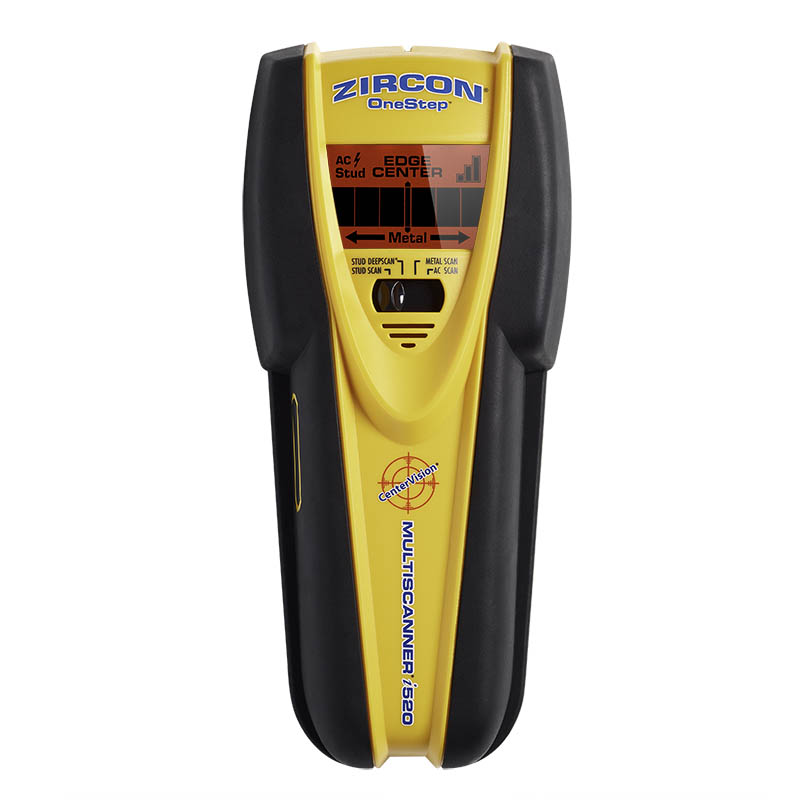
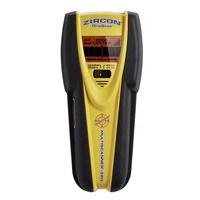
Watch Zircon MultiScanner® i520 OneStep® | Multifunction Stud Finder video
Watch Zircon StudSensor Edge | Stud Finder for Wood or Metal video
Watch Major Tech MT300 | Multi-Function Wall Scanner 120mm Detection video

I bought two different stud finders from the big green and red hardware store and had inconsistent results from both. This Zircon one is easy to use and is clear to read. The audible alert, LCD display and the red light marker on the wall all combine to work much better than anything else I tried.
Review of an excellent stud finder. This unit arrived in excellent time. It provides a clearer image of the centre of the stud. It is superior in many ways one that stood out for me was detection and so separation of steel framing. All in all I would really recommend this unit
Works as it should. Picked up steel framing through 2 layers of 10mm sheets, 1st layer VJ, 2nd Gyprock. Picks up live and dead cavity cabling. Don't even consider going to the big B one stop shop, their's don't work. Excellent quality and value.
Quality products in stock • Fast Australia-wide delivery • Competitive trade pricing
Browse Stud Finders → Get Expert Advice →Yes, stud finders are suitable for DIY tasks such as hanging shelves or pictures.
Sparky Direct supplies stud finders Australia-wide, offering reliable tools for trade and DIY use.
Stud finders are securely packaged and delivered via standard courier services.
Unused stud finders are generally eligible for return according to the seller’s returns policy.
Warranty coverage varies by manufacturer and usually covers defects in materials or workmanship.
Stud finders are typically sold as individual tools.
Stud finders require minimal maintenance beyond battery replacement and safe storage.
Some advanced models can detect metal pipes, but this varies by product.
Yes, they are commonly used during renovations to locate framing before cutting or fixing.
Some stud finders can work through tiles, but performance may be limited.
Yes, stud finders are compact and easy to carry in a tool bag.
False readings can occur if the tool is not calibrated or used correctly.
Performance can vary depending on wall thickness and materials.
A stud finder is used to locate wall studs, joists, and sometimes metal or live wiring behind walls before drilling or fixing.
Most stud finders are easy to use with basic instructions and practice.
Using a stud finder helps avoid drilling into studs, wiring, or pipes and improves fixing accuracy.
Some electronic stud finders require calibration before use, which is usually a simple process.
Stud finders are often used during electrical installation planning, but electrical work must be carried out by a licensed electrician.
Accuracy depends on wall construction, calibration, and correct use of the tool.
Many stud finders can detect both timber and metal studs, depending on the technology used.
Yes, stud finders are commonly used on plasterboard walls to locate timber or metal studs.
Stud finders are not typically covered by AS/NZS electrical standards, but reputable products meet general safety and performance expectations.
Some electronic stud finders can detect live electrical wiring, depending on the model and settings.
Yes, common types include magnetic stud finders and electronic stud finders with multiple detection modes.
Stud finders use sensors to detect changes in wall density or electronic signals to identify studs and other hidden objects.