
Search Results:
Search Results:
Search Results:
Search Results:
Socket outlets cover several product families that share a common purpose: providing a permanent wall connection for an electrical or signal cable. Australian buyers use many names for these products, and the right term often depends on trade habit, brand catalogue or location.
A socket outlet is a fixed connection point installed in a wall, floor box, surface housing or bench top. It supplies power to end devices through a standard Australian three-pin plug, or it carries data, phone or media signals through a matching connector. The product range may include 230V power outlets, low-voltage data and communications outlets, plus the wall plates and mechanisms that make up a clean fit-off.
A power outlet, or GPO, delivers a 230V mains supply to appliances. A data outlet, such as an RJ45 mechanism, carries low-voltage Ethernet signals between a wall plate and a network device. Phone outlets handle the smaller telephony cables, and TV outlets connect coaxial cables for free-to-air or satellite reception.
Power point installation must be completed by a licensed electrician under Australian law. Communications outlet work may also require an appropriately registered cabler, depending on the type of installation. The category page focuses on product selection, not installation.
Outlets appear in almost every type of building. Common applications include kitchens, laundries, bedrooms and living areas in homes, plus offices, schools, hospitals, hospitality fit-outs, workshops, garages and outdoor entertaining areas. Trade buying scenarios often involve bulk packs for new fit-outs, replacement outlets for maintenance jobs, and matching ranges across a multi-room project.
The category covers a wide range of product styles. Each type suits a specific load, environment or design preference, and most major brands offer matching switches, dimmers and data plates within the same range.
Standard 10-amp power points are the most common outlet style in Australian homes and workplaces. A single power point serves a single appliance, while a double power point or GPO provides two switched outlets in one wall plate. Quad power points step this up to four outlets where device density is high.
Selection between single, double and quad outlets depends on device load, available wall space and circuit planning by a licensed electrician. A bedroom may suit a double GPO beside the bed, while a study or AV cabinet often justifies a quad outlet.
The practical difference between 10A and 15A outlets is the larger earth pin on the 15A version. A 15A plug will not fit a 10A socket, which prevents accidental connection of a high-draw appliance to an undersized circuit. 15 amp power points suit air conditioners, welders, caravans, workshop equipment and other selected high-draw appliances.
The appliance rating and the supporting circuit design must be assessed by a licensed electrician. Using an adaptor to make a 15A appliance fit a 10A outlet is not a safe workaround.
Outdoor environments need weatherproof GPOs rated to resist water, dust and UV exposure. Common locations include patios, carports, sheds, outdoor kitchens, pool-adjacent zones and exposed commercial areas. Single weatherproof GPOs handle isolated outdoor circuits, while double weatherproof GPOs serve higher-traffic outdoor areas.
IP ratings guide selection: IP44 suits sheltered outdoor zones, IP55 covers most patio and carport situations, and IP66 protects against heavy water jets in exposed locations. Outdoor and wet-area placement is governed by the Australian Wiring Rules and must be planned by a licensed electrician.
USB power points combine a standard GPO with one or more USB-A or USB-C charging ports. They suit kitchens, bedrooms, hotels, study areas and commercial workstations where devices charge directly from the wall. Buyer considerations include total charging wattage, USB-C Power Delivery support, the number of ports, heat management under load and approved compliance markings.
Integrated USB outlets typically cost more than a standard GPO plus a plug-in charger, but they remove cable clutter and free up a 230V socket for another device. They are most useful in high-traffic charging areas.
Smart power points add remote switching, scheduling and energy monitoring to a permanently installed outlet. Compatibility factors include Wi-Fi or Zigbee support, app ecosystem, load rating and RCM compliance.
Compared to a plug-in smart adaptor, an integrated smart outlet looks cleaner, supports a higher current rating and stays compliant with Australian product requirements. Choose smart outlets where the control or visibility actually changes how the space is used.
Slimline power points sit closer to the wall than traditional faceplates. They suit modern fit-outs, renovations and tight wall spaces such as kitchen splashbacks, furniture-adjacent positions and bench top installations.
Horizontal outlets place the sockets side by side, while vertical outlets stack them top to bottom. The choice depends on plug direction, wall space, splashback layout and the orientation used across the rest of the switchgear. Bench top power points and pop up power outlets serve island benches and similar applications.
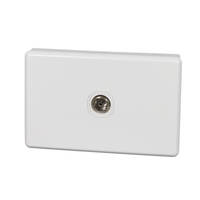
RJ45 ethernet wall sockets handle Cat 5e, Cat 6 and Cat 6A structured cabling for office workstations, NBN-adjacent setups and AV installations. TV outlets terminate coaxial cable for free-to-air and satellite feeds, and combined wall plates carry data, phone and TV connectors on a single faceplate.
Matching the outlet mechanism, wall plate and supporting cabling within the same brand range delivers a consistent look across a project. Patch leads and cable management products complete the data cabling fit-off.
Socket outlet selection in Australia happens against a backdrop of strict product compliance and installation rules. This section explains the buyer-relevant compliance points without straying into installation territory.
AS/NZS 3112 covers plugs and socket outlets used in Australia. Compliant products carry the Regulatory Compliance Mark, support correct plug compatibility, and meet the safety requirements for legal sale and use. Reputable sourcing matters: counterfeit or non-compliant outlets may fit a wall but fail under real-world load conditions.
Placement rules, circuit protection requirements, wet-area clearances, RCD protection and load calculations sit under AS/NZS 3000, the Australian Wiring Rules, plus relevant state and territory requirements. Socket outlet installation, replacement, relocation and repair must be completed by a licensed electrician where required by law.
This page is a product selection guide, not a DIY installation guide. Reach out to a qualified electrician for placement advice and project planning.
Incorrect installation creates real risks: electric shock, overheating, nuisance tripping, equipment damage and insurance issues if a fault leads to property damage. Licensed electricians assess circuit capacity, earthing, polarity, RCD protection, load requirements and compliant placement before signing off a job.
Trade customers ordering for repeatable installs benefit from outlets with consistent fit and finish, familiar wiring terminals and reliable mechanical retention on the plug pins.
Some outlets and circuits include integrated RCD protection or safety switch functionality. An RCD reduces electric shock risk by tripping the circuit when it detects current leaking to earth. It does not replace the role of a circuit breaker for overload and short-circuit protection.
Discuss RCD-protected circuits or integrated safety switch options with a licensed electrician when planning kitchen, bathroom, laundry, outdoor or workshop areas.
Picking the right outlet involves matching the product to the load, the environment, the installation method and the wider project style. The points below cover the decisions most often raised by trade customers and informed retail buyers.
Begin with the device or appliance the outlet will serve. Consider appliance type, expected load, indoor or outdoor location, the number of devices, and how often the outlet sees use. A kitchen island feeding small appliances has different needs to a workshop bench feeding power tools or a study desk supporting a home office.
Choose outlet ratings and circuit arrangements with a licensed electrician rather than guessing from appearance alone. A high-traffic charging station may also need surge protection or dedicated USB ports.
For most general use, a 10A double GPO is the standard pick. A 15A outlet on a correctly designed circuit suits welders, large air conditioners and similar high-draw equipment. Industrial sites may require higher-rated outlets such as industrial outlets in 3-pin, 4-pin or 5-pin configurations rated IP66.
Flush-mount outlets recess into the wall for a clean interior look. Surface sockets mount on top of the wall surface and suit sheds, garages, workshops, concrete walls, retrofit work and conduit-based installations. Mounting style affects appearance, durability, cable management and installation planning.
Allow for the right mounting blocks, conduit fittings and cable management accessories where the install runs in conduit or surface trunking.
Finishes range from classic white through matt black, brushed aluminium, gloss and slimline metallics. Electricians and builders often match outlet ranges across switches, dimmers, data plates and TV points so the wall finish stays consistent. Horizontal versus vertical orientation matters where wall space is tight, such as narrow splashbacks or behind furniture.
Recognised Australian electrical brands include Clipsal by Schneider Electric, HPM, Hager, Legrand and PDL. Range consistency matters: the Clipsal Iconic Power Points range pairs with matching Iconic switches and dimmers so a renovation runs the same look across every wall.
Other ranges available include Hager Allure power points, Hager Silhouette power points, Legrand HPM Excel power points, Clipsal Classic Power Points, Connected Switchgear power points and NLS Classic Style power points. Trade familiarity reduces install errors and simplifies long-term maintenance.
Bulk packs make sense on multi-unit fit-outs, commercial projects and maintenance contracts. They reduce per-unit cost, lock in consistency across a project and lower the chance of running out mid-job. Homeowners replacing a single room of outlets often prefer smaller quantities so they can match the existing wall plates.
Outlet choice changes with location. Each room or project type carries its own load profile, finish expectations and compliance considerations.
A kitchen fit-out balances appliance loads, bench top access and visual consistency. Bench outlets sit close to small appliances such as kettles, toasters and stand mixers. Island benches often use pop-up outlets that sit flush when not in use. USB charging supports phones and tablets without dedicated chargers blocking the bench. Slimline faceplates suit narrow splashbacks where a standard plate would crowd the tile line.
Outlet quantity, placement and distance from sinks or wet areas must be assessed against Australian requirements by a licensed electrician.
A productive home office runs computers, monitors, routers, printers and chargers from clean, well-placed outlets. Double GPOs at each desk position avoid the overloaded powerboard problem. USB-C points support modern laptops with high-wattage charging needs. Data outlets and patch leads complete the wired network for stable video calls and large file transfers.
Commercial fit-outs reward repeatable specification. Contractors pick a product range and run it across every workstation, meeting room and breakout area. Coordination between power and data points keeps the wall finish clean. Durability matters where mechanisms cycle thousands of times across a building lifetime.
Outdoor zones need weatherproof outlets sized to the exposure level. A covered patio may suit IP55 outlets, while a fully exposed pool deck or boat ramp often calls for IP66 housings. Typical uses include outdoor entertaining, garden tools, garage workbenches and trade equipment in shed workshops.
Wet-area placement, RCD protection and outdoor cable routes require licensed electrical assessment.
Replacement work covers old, discoloured, cracked or loose outlets and dated finishes that no longer match a refreshed interior. Homeowners can prepare by checking the existing outlet style, colour, brand range preference and whether they want upgrades such as USB ports, slimline faceplates or weatherproof options. The replacement itself should be handled by a licensed electrician, not as a DIY job.
Side-by-side comparisons help buyers weigh up cost, function and finish. The points below cover the choices most often discussed at the trade counter and online.
| Factor | Standard Outlet | Smart Outlet |
|---|---|---|
| Cost | Lower | Higher per outlet |
| Control | Wall switch only | App, schedule, voice assistant |
| Energy monitoring | None | Often included |
| Reliability | Long service life | Depends on ecosystem support |
| Best use | General-purpose loads | Lighting circuits, hot water timers, energy tracking |
Standard outlets remain the right pick for the bulk of a residential or commercial fit-out. Smart outlets pay off where remote control, scheduling or energy visibility delivers real value.
A standard GPO plus a plug-in USB charger costs less upfront. An integrated USB power point removes the charger from the bench, frees one of the 230V sockets for another appliance and supports modern USB-C Power Delivery. Bedrooms, kitchens, offices, hotels and study areas usually benefit most from integrated USB outlets.
A 10A outlet handles general-purpose appliances and accepts the standard three-pin plug. A 15A outlet uses a larger earth pin and accepts only a 15A plug, which prevents undersized circuits from running oversized loads. Welders, large air conditioners and some workshop equipment need the 15A outlet on a correctly designed circuit. The two outlet types are not interchangeable through adaptors.
Slimline outlets sit flatter against the wall and suit modern interiors, splashbacks and tight wall spaces. Standard power points cost less per unit and offer a wider catalogue of accessories. Large projects often choose a standard trade range for cost, while feature walls and renovations lean toward slimline finishes.
Weatherproof outlets carry hinged covers, sealed gaskets and housings designed for exposure to water, dust and UV. Indoor outlets lack these features and should never substitute for outdoor use, even in semi-covered locations. Always match the IP rating to the actual exposure level.
Outlet pricing varies with brand, function and pack size. This section covers the practical factors that shape value for both trade and retail buyers.
Pricing reflects brand, outlet type, current rating, IP rating, finish quality, USB or smart integration, and pack size. A basic double GPO costs less than a USB-C, smart or weatherproof outlet because the simpler product carries fewer components and less in-built electronics. Value sits in correct product selection and consistent availability across a project, not in chasing the lowest possible per-unit price.
Bulk packs of double GPOs suit electricians fitting out new builds, builders running renovation projects, property maintenance teams and commercial site managers. Benefits include consistency across rooms, fewer product substitutions mid-job and simpler project ordering. Compare prices across pack sizes rather than per single unit, since bulk pricing rarely scales linearly.
Electricians look for outlets that are familiar to install, compatible with standard accessories, easy to reorder and available in matching ranges. Stock depth, product traceability, pack options, recognised brands and clear product information all matter for repeat installs. Sparky Direct stocks the major Australian electrical brands plus a broad selection of trade-aligned ranges.
Before ordering online, check the brand, amperage, configuration, mounting style, colour, IP rating, compliance markings, pack quantity and delivery timing. Compare similar products by reading the product specifications rather than relying on the listing image alone. The internal links across this page point to the relevant product ranges for kitchens, offices, outdoor spaces and commercial projects.
Outlets wear out over time. Spotting the early signs helps owners and facilities teams plan replacement before a fault creates a safety issue.
Warning signs include looseness in the wall, cracked faceplates, scorch marks, buzzing or crackling sounds, a burning smell, intermittent power loss, warm or hot outlets and poor plug retention. Any of these symptoms calls for a licensed electrician to inspect the outlet and the circuit behind it.
Safety note: Stop using a suspect outlet immediately. Do not open the outlet or attempt live testing. Contact a licensed electrician for inspection.
Common causes include age, repeated plug insertion, heat damage from sustained high loads, weakened contact tension, UV exposure on outdoor units, mechanical damage and overloaded circuits. Visible damage may indicate a safety issue, not just a cosmetic one, and should be assessed by a professional.
Safe replacement involves two steps: choosing a compliant modern replacement product, and engaging a licensed electrician to complete the install. Homeowners can prepare by checking the existing outlet style, colour, brand range preference and whether they want to add USB ports, slimline finishes or weatherproof options at the same time. Step-by-step wiring instructions sit outside the scope of this page for safety and legal reasons.
Club Clipsal is Australia's largest electrician community offering trade rewards, business support, and exclusive benefits. When you nominate Sparky Direct as your preferred wholesaler, we automatically apply your Clipsal spend points to your Club Clipsal account daily.
Entry-level offering coaching, mentoring, and training discounts
Unlock exclusive industry tools and networking events
Access Toyota fleet offers and business software discounts
Maximum benefits, including VIP experiences and rewards
1. Sign Up: Create your Club Clipsal account at clipsal.com/club-clipsal or via the iCat mobile app
2. Nominate Sparky Direct: Select Sparky Direct from the wholesaler dropdown menu in your profile
3. Add Email: Enter your Sparky Direct account email address in the membership number field
4. Start Earning: Every dollar spent on Clipsal products earns points automatically
Redeem points from the rewards store, including gift cards, tools, and experiences. Access business summits, product training, and industry networking events. Receive early access to new product launches and special promotions. Connect with fellow electricians via the Club Clipsal community app.
Watch Clipsal Iconic 3025XA-VW | 10 Amp Double Power Point Extra Switch | Vivid White video
Watch CLIPSAL SATURN 4025USBC-PW | 10A Double Power Point C/W USB | Pure White video
Watch CLIPSAL Iconic O3015-XW | Single Weatherproof Power Point 10amp | White | IP54 video

Excellent choice for the carport power point. Needed a power outlet for the carport to plug the car accessories etc into. This unit is cheap to purchase but a quality product. Switches have that expensive feel about them and it looks great on the wall. Fully weatherproof will withstand anything the south Queensland weather system throws up to it.
I ordered 2x of these Clipsal Iconic 3025USBAC-VW | Twin Socket Switched Horizontal 1xEx2 USB Charger A+C outlets for the kitchen area to make it easier to charge our devices without having to plug in the ugly and bulky USB adapters. The items were despatched quickly and arrived within a few days, were well packed and were quick to install. Happy to buy again from Sparky Direct when I need more electrical items.
These matte black power points are stylish yet simple in design. Everything feels like good quality, the switch mech has a solid click and the cover locks in tight. Yet to install these but I look forward to that day!
Quality products in stock • Fast Australia-wide delivery • Competitive trade pricing
Browse Socket Outlets → Get Expert Advice →