
Search Results:
Search Results:
Search Results:
Search Results:
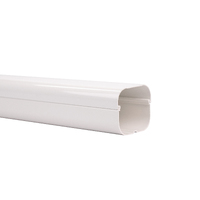
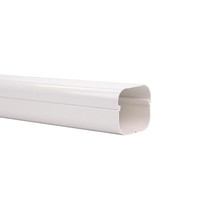
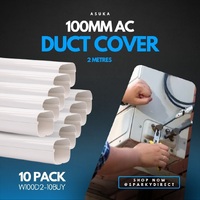
A 100mm AC duct cover acts as both a protective and finishing component over 100mm duct openings, air conditioning pipework penetrations, ventilation outlets, and similar duct terminations. The cover keeps exposed pipework looking tidy while reducing exposure to weather, insects, debris, and moisture. It is widely used by electricians, air conditioning installers, builders, maintenance teams, and informed home renovators.
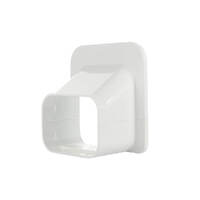
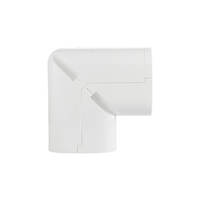
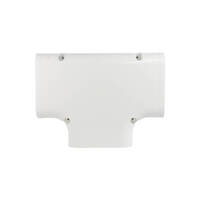
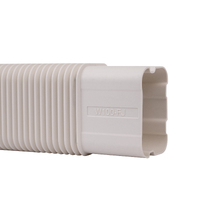
Typical applications include split system air conditioning pipework, ventilation duct exits, exhaust outlets, and general duct-covering jobs where the size and installation context match. Browse the full range of air conditioning ducting and capping for compatible joiners, bends, and wall caps.
A duct cover serves three core functions on most residential and light commercial sites:
The same general area of the wall can host several different fittings, and the names overlap in everyday trade conversation. A duct cover usually refers to a section, joiner, or shroud that conceals pipework or ducting along its length. A duct vent or grille is built to pass air through, often with louvres or a screen. A wall cap is the outdoor termination piece at the duct exit, frequently with a damper or hooded louvre. An AC pipe cover is the specific term used when the cover wraps split system refrigerant lines, drain hose, and control cable.
Terminology can vary by trade, supplier, and application. Always check diameter, shape, mounting style, weather exposure, and airflow needs before ordering, rather than relying on the product name alone.
The 100mm size suits a wide range of residential and light commercial jobs:
For exhaust applications, also see exhaust fan accessories for compatible ducting parts.
100mm is one of the most common residential sizes for AC duct cover applications. It carries larger pipe bundles and ducting without crowding the cover. 80mm suits smaller penetrations or lower-volume service runs, while 75mm and 99mm variants also appear on the market. Always check the actual duct or pipe outside diameter, then match the cover spigot or sleeve before ordering.
The two sizes are not interchangeable, and most installs need one or the other rather than a mix.
| Feature | 100mm Cover | 80mm Cover |
|---|---|---|
| Typical use | Larger duct openings, multi-line AC bundles, higher airflow | Smaller AC pipework, compact ducting, single-line runs |
| Internal clearance | More room for insulation thickness and drain line | Tight clearance, suited to slimmer pipework |
| Wall opening size | Hides larger cut-outs and old fixing marks | Best with smaller, neater penetrations |
| Visual footprint | Bolder presence on the wall | Lower visual impact on narrow walls |
If a smaller size is needed, see the 80mm AC duct cover range for matching components.
Pick a 100mm cover where the duct, pipe bundle, or termination requires the larger opening. It is also the right choice when replacing an existing 100mm cover, since the wall opening is already cut for that fitting. Larger covers can also help conceal rough wall cuts, old fixing marks, or wider service penetrations from previous installs.
Avoid oversizing where the penetration is much smaller, since the cover can look bulky and may be harder to seal neatly against the wall. Do not assume 100mm is universal for every split system or every brand of ducting. Check product dimensions, wall opening size, pipework clearance, and the manufacturer requirements before ordering.
Material choice affects durability, weather resistance, and finished appearance. PVC, UV-stabilised plastic, ABS, polypropylene, aluminium, galvanised steel, and stainless steel all appear in the market. Australian conditions, including UV, coastal air, humidity, and Queensland outdoor exposure, should guide the decision more than price alone.
PVC and similar plastics are common in residential duct and AC cover applications. They are low cost, light, and easy to install. UV-stabilised covers are the better choice for external walls exposed to Australian sun. Standard indoor-grade plastics can become brittle, yellow, or crack faster outdoors, especially on west-facing walls.
Most 100mm AC duct covers sold for split system work use UV-stabilised plastic as the default. Always confirm the UV rating with the supplier or product datasheet before installing outside.
Paint suitability depends on the material, surface preparation, paint compatibility, and whether the cover is exposed to UV or heat. Light scuff sanding and a plastic-primer system are usually needed for plastic covers. Painting may affect finish, weathering, or warranty, so check the manufacturer guidance before applying any topcoat. For perimeter touch-ups, see relevant silicone adhesives and sealants.
ABS can offer stronger impact resistance than basic PVC, which helps in higher-traffic locations. Polypropylene may suit humid, laundry, bathroom, or cleaning-product exposure where chemical resistance matters. Both materials are useful where a balance of durability, low weight, and neat finish is required.
Metal covers suit higher heat exposure, harsher commercial settings, and installs needing extra impact resistance. Aluminium is light and corrosion resistant, but should be matched with compatible fixings to avoid galvanic issues. Stainless steel is preferred in coastal, marine, high-humidity, or premium visible installs where corrosion resistance and appearance matter most.
External duct covers carry a harder workload than internal ones, facing sun, rain, wind-driven debris, insects, and dust over years of service. The right material, UV rating, and perimeter seal make the difference between a cover that lasts a decade and one that fails inside a season.
Some 100mm duct covers are UV-stabilised, but not all are built for permanent outdoor exposure. Always check the product material, UV rating, and supplier specifications before installing outdoors. UV-stabilised products are strongly recommended for Queensland, northern Australia, coastal homes, and west-facing walls where afternoon sun is harshest.
External covers should shed rain, resist UV, and seal neatly against the wall surface. A flexible exterior-grade sealant bead may be needed around the flange, depending on the product design and substrate. Wall caps or louvred covers suit jobs where airflow, backdraught control, or hooded weather protection is part of the spec.
Covers can reduce insect, spider, gecko, dust, and leaf entry where the design includes a suitable grille, louvre, damper, or screen. A cover on its own does not correct poor sealing, incorrect duct termination, or damaged wall penetrations. External covers should be inspected from time to time for cracks, warping, loose fixings, and failed seals.
Airflow performance matters in some applications and barely matters in others. For split system AC pipework covers, the cover is mostly cosmetic and protective. For bathroom, laundry, rangehood, and dryer ventilation, airflow rating, damper behaviour, and louvre design all influence how well the system actually works.
Airflow rating becomes important for bathroom exhaust, laundry exhaust, rangehood, dryer, and active ventilation applications. Restricted covers increase back pressure, reduce extraction performance, and may shorten fan life. For AC pipework covers used only to conceal service penetrations, airflow rating is less critical than fit, protection, and finish. Ventilation specialists such as Fantech publish airflow data for their products to help match a cover or wall cap to the right extraction duty.
A backdraught damper helps stop outside air, insects, and odours from moving back through the duct when the fan is off. Integrated dampers simplify installation, while separate inline dampers may suit access or servicing needs. Dampers should move freely; inspect the damper if airflow seems weak or if rattling occurs in wind.
Fixed louvres are simple, durable, and well-suited to many outdoor terminations, while adjustable louvres allow airflow direction to be changed for internal wall or ceiling vents. On exposed external walls, downward-facing fixed louvres help shed rain while still permitting air movement.
Getting the measurements right before purchase avoids return visits and wasted product. The guidance below is non-invasive and safe to use before any drilling or fixing is carried out.
Measure the duct diameter, pipework bundle, insulation thickness, and wall opening before placing an order. Confirm whether the cover is designed to fit inside a 100mm duct, over a 100mm duct, or over a wall penetration. Check the cover face size as well as the spigot, sleeve, or internal opening size.
The visible cover should be large enough to conceal the wall cut-out, fixing holes, and any old marks from a previous cover. Oversized faceplates can help tidy uneven holes, but may look bulky if the surrounding area is tight. Consider nearby corners, downpipes, outdoor units, conduits, or wall features before choosing a larger cover.
Spigot-style covers insert into or align with ducting, while slip-fit or surface covers sit over the duct or pipework. Wall thickness, reveal depth, insulation, and pipe bend radius can all affect how the cover sits. A quick dry-fit before final fixing usually catches any clearance issue.
Choosing the best 100mm AC duct cover for a home installation means matching product specifications to the application. The pre-purchase checks below cover most residential and light commercial decisions.
Pair the chosen cover with the right air conditioning accessories for a clean, complete installation.
The guidance below stays at a high level. Refrigerant work, fixed wiring, and split system installs must be carried out by an appropriately licensed trade. This protects the user, the warranty, and the equipment.
Simple cover replacement over an existing non-electrical duct penetration can often be handled by a competent tradesperson or maintenance worker. Any work involving fixed electrical wiring, refrigerant pipework, air conditioning equipment, switchboards, or concealed services must be completed by an appropriately licensed electrician or qualified air conditioning and refrigeration technician. In rental, commercial, strata, or warranty-sensitive settings, installation should be completed by a suitably qualified trade.
The substrate should be clean, stable, and suitable for the chosen fixing method. Common substrates include plasterboard, fibre cement, brick, render, and masonry. The fixing method depends on substrate, product weight, exposure, and whether the cover needs to be removable for future maintenance. For masonry walls, see masonry drill bits and anchor screws in the appropriate diameter.
External installs may need a neat perimeter seal to stop water ingress and air leakage. Use sealants compatible with both the wall material and the cover material. Poor sealing can allow moisture into wall cavities, creating long-term staining, mould, or corrosion issues that are far costlier to fix than the original install.
Safety first: Before drilling or fixing covers, check for concealed electrical cables, plumbing, refrigerant lines, and structural elements. Do not drill blindly into walls or close to air conditioning pipework. If the service location is uncertain, engage a licensed electrician or relevant trade to scan and verify the area first.
Eye protection is essential for any drilling or cutting work, so see the range of safety goggles before starting on site.
Most residential split systems run their refrigerant lines, drain hose, and control cable through a wall to an outdoor compressor unit. A duct cover keeps that pipe bundle neat, protected, and shielded from UV. The 100mm size handles many standard residential pipe bundles, though it is not the right size for every system.
A 100mm cover may suit jobs where the pipe bundle, insulation, drain, and wall penetration require that size. Not every split system uses the same penetration or cover size. Check the existing cover, wall opening, pipe bundle size, and installer recommendations before ordering replacement parts. For full pipe bundle replacement, see air conditioning pair coil.
They are not fully universal, since fit depends on pipework layout, cover depth, faceplate shape, fixing method, and whether the cover is designed for AC pipework or general ventilation ducting. For warranty and compliance reasons, split system pipework and refrigerant-related work should be handled by a qualified installer.
A well-matched cover lifts the finished look of outdoor wall penetrations. UV-resistant material helps prevent cracking and yellowing on exposed external walls. A neat cover also reduces callback risk where rough openings or exposed insulation would otherwise be visible from the driveway or garden. Outdoor units may also benefit from air conditioner wall brackets and air conditioning slabs for a clean ground or wall mount.
100mm covers are usually small, light, and easy to ship Australia-wide. Online ordering suits buyers who need a specific size, finish, or material that is not on the shelf at the local counter. Sparky Direct dispatches from Brisbane, with clear pricing and stock visibility for trade and DIY buyers.
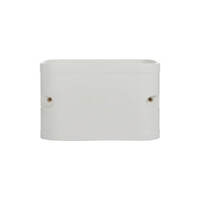
100mm AC duct covers can be sourced from electrical wholesalers, air conditioning suppliers, building suppliers, and online electrical retailers. For Brisbane, Queensland, and regional Australian buyers, online ordering is useful when local counters do not hold the exact size, finish, or material. Sparky Direct is a practical source for electricians, AC installers, contractors, and maintenance buyers needing clear pricing and dispatch visibility. Common stocked brands include Asuka and Complete Air for AC duct cover sections, joiners, and wall caps.
Bulk orders suit air conditioning installers, builders, property maintenance teams, schools, aged care facilities, and commercial fit-out contractors. Standardising on common sizes such as 80mm and 100mm helps cut van stock complexity and speeds up call-outs. Buying in contractor quantities can reduce per-unit cost and help avoid job delays when a regular size runs short.
Low-cost covers may be acceptable for short-term or sheltered indoor use. Material quality matters far more for external and high-UV applications. Durable covers should be assessed on UV rating, wall fit, material thickness, weather resistance, and fixing quality. For exposed installs, the lowest unit price is rarely the best value when early cracking or warping leads to a return visit.
Duct covers are low-maintenance, but they are not zero-maintenance. A short visual check now and then will catch most issues early, before water gets behind the cover or pests find a way in.
Internal covers can be checked during routine cleaning or filter maintenance, perhaps twice a year. External covers benefit from more frequent inspection in coastal, high-UV, storm-prone, or high-humidity environments. Look for cracks, looseness, blocked louvres, stuck dampers, damaged mesh, and failed sealant beads around the perimeter.
Clean accessible surfaces with mild soapy water and a soft cloth or brush. Avoid abrasive cleaners that scratch plastic and shorten the life of UV-stabilised surfaces. Grease-heavy rangehood or kitchen exhaust applications usually need more frequent cleaning than bathroom or AC pipework covers.
Replace covers that are cracked, yellowed, warped, brittle, loose, or no longer sealing properly. Louvred or damper-style covers should be replaced if the louvre or flap no longer opens and closes correctly. Moisture staining, draughts, rattling, pest entry, or weak airflow may all point to a poor-fitting or failed cover that has reached the end of its life.
Watch 100mm AC Duct Cover Plastic 2m | 1 Buy | Air Conditioning Duct | Asuka W100D2 video
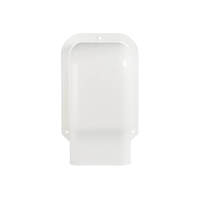
Watch 100mm Wall Cap AC Duct Cover | Air Conditioning Duct | Asuka W100WC video
Watch 100mm Universal Flexible Joiner AC Duct Cover | Air Conditioning | Asuka W100FJ video

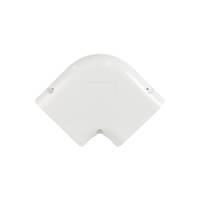
I used these bends to replace the rubbish ones that another popular online wholesaler sold me. They are far superior
Great being to buy everything in one shop. There prices are great. Highly recommend.
I have previously ordered Ducting online and it was damaged more times than i care to think of, Thanks Guys We will use you again
Quality products in stock • Fast Australia-wide delivery • Competitive trade pricing
Browse 100mm AC Duct Cover → Get Expert Advice →