


AC Cable
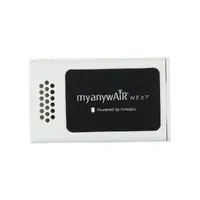
Fujitsu UTY-NXT-CAB | Anywair Wi-Fi Adaptor ii Cable For Non KMTC/TD Models | Lifestyle Range
$30.80
$28.00 ex. GST
Search Results:
Search Results:
Find the best Fujitsu Split System Air Conditioners here at Sparky Direct. [ Read More ]
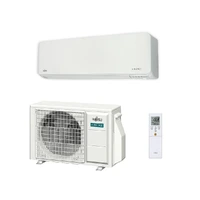
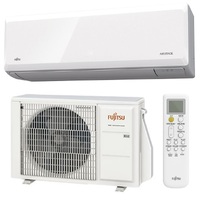
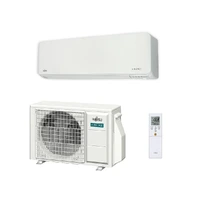
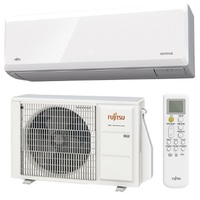
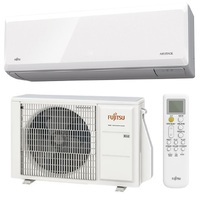
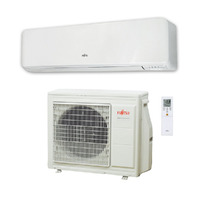
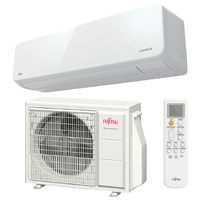
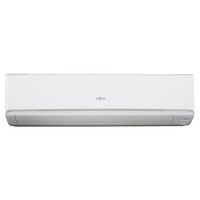
A split system separates the cooling hardware into two units. The indoor head sits on a wall and pushes conditioned air into the room. The outdoor unit holds the compressor and condenser, which release heat to the outside air. Copper refrigerant pipes connect the two units through a wall penetration.
This design moves the noisiest part of the system outside. It also lets one outdoor unit serve a single room (single split) or several rooms (multi-split) without ductwork.
The unit moves heat rather than creating cold. A compressor pumps refrigerant through a closed loop. In the indoor head, the refrigerant absorbs heat from room air and turns to gas. The outdoor unit then compresses the gas, releases the heat outside, and the cycle repeats.
In reverse cycle mode the loop runs in the opposite direction. Heat is pulled from outside air and released indoors, which makes the same unit work as a heater in winter.
The indoor unit holds the evaporator coil, fan, filters and electronic controls. The outdoor unit contains the compressor, condenser coil and a second fan. Pair coil copper pipes carry refrigerant between the two units, and a small drain line carries condensate water away from the indoor head.
| Type | Cooling Capacity | Noise Level | Installation | Best For |
|---|---|---|---|---|
| Split System | 2.5kW to 9kW+ | Low (indoor) | Licensed install | Permanent room cooling |
| Window/Wall Mount | 2kW to 6kW | Medium | DIY possible | Renters, single rooms |
| Portable | 2kW to 4kW | High | Plug and play | Short-term use |
Split systems run quieter, cool larger spaces, and use less energy per kilowatt than the alternatives. They cost more upfront and need a licensed installer. View the window and wall mount range for situations where a split is not practical.
Fujitsu General has sold air conditioners in Australia for more than 50 years. The brand sits in the top tier of the residential split system market alongside Daikin and Mitsubishi Electric. Fujitsu units are designed and tested for Australian climate conditions, including high humidity and extended cooling seasons.
Brisbane, the Sunshine Coast and the Gold Coast see long cooling seasons with sustained high humidity. Fujitsu inverter systems handle these conditions by adjusting compressor speed continuously, which keeps the indoor coil cold enough to remove moisture even when the room temperature is near setpoint. Consistent dehumidification is the difference between a comfortable room and a cold, clammy one.
Fujitsu split systems are typically rated for a 10 to 15 year service life when serviced annually. Customer reviews on the Sparky Direct site consistently praise the build quality, quiet operation, and the price-to-performance balance against competitor brands. Verified buyer feedback appears further down this page in the reviews section.
Compared to Daikin split systems, Fujitsu generally offers better value at the entry level with similar inverter performance. Compared to Mitsubishi Electric models, Fujitsu has stronger heating performance in mild Queensland winters. Haier units sit at a lower price point with shorter expected lifespans.
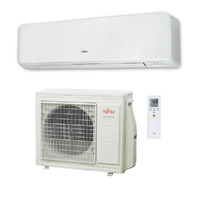
The Classic and Classic Plus series are the entry-level Lifestyle Range models. Capacities run from 2.5kW (suited to bedrooms up to 25 square metres) through to 8.0kW for larger living areas. Both series include reverse cycle heating, R32 refrigerant, and a 5-year manufacturer parts and labour warranty when installed by a licensed technician.
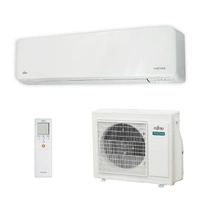
The Designer series uses a slimline indoor head with a flat front panel and recessed louvres. The unit visually blends into modern interiors better than the rounded Classic profile. Performance specifications mirror the Classic series at equivalent capacities.
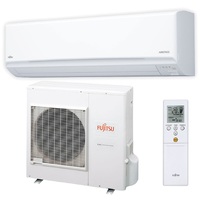
High wall units in 7.1kW, 8.5kW and 9.0kW capacities suit open-plan living areas, large lounges, and spaces with high ceilings. These models include extended airflow throw, three-direction airflow control, and stronger dehumidification capacity.
The AOTG-KMTA series outdoor units pair with KMTC indoor heads. These higher-capacity inverter systems target whole-of-floor cooling in larger Queensland homes, where a single 9.0kW unit can serve an open kitchen, dining and living space.
A single split runs one indoor head from one outdoor unit. Multi-split systems run up to five indoor heads from a single outdoor unit, which suits homes where roof space, balcony space, or strata rules limit how many outdoor units you can install. Multi-split is more expensive per kilowatt but can save space and reduce visual clutter.
Sizing matters more than brand. An undersized unit runs constantly and never reaches setpoint. An oversized unit cools quickly, then short-cycles, which leaves the room humid and the compressor stressed. Both extremes shorten equipment life and raise running costs.
The standard rule of thumb for Australian conditions is 100 to 150 watts of cooling capacity per square metre of floor area. A 4kW unit suits a room of around 25 to 35 square metres under this calculation. Adjust upward for west-facing rooms, high ceilings, large windows, or poor insulation.
Queensland sits in climate zones 1 and 2 under the Australian Building Codes Board classification. These zones see higher humidity and longer cooling seasons than southern states. Add 10 to 20 percent to the standard sizing calculation for sustained subtropical performance.
The most common error is choosing a unit by price first and capacity second. The next most common is calculating capacity for cooling only, then finding the unit underperforms as a heater in winter. Reverse cycle heating capacity is usually 10 to 20 percent higher than the cooling rating for Fujitsu models, but cold-climate heating performance still depends on outdoor temperature.
An inverter compressor varies its speed continuously, rather than switching fully on or fully off. The result is steadier room temperature, less power draw on long runs, and quieter operation. Every current Fujitsu split system uses inverter technology.
Indoor sound pressure on the smaller Lifestyle Range units measures around 21 dB(A) at low fan speed. That sits below typical bedroom background noise. The outdoor unit produces 47 to 54 dB(A) depending on capacity, which is relevant if the unit faces a neighbour's bedroom window.
Fujitsu's FGLair app pairs with the optional Anywair Wi-Fi adaptor to control the unit from a smartphone. Functions include scheduling, remote on/off, temperature setting, and energy use monitoring. The adaptor is an add-on accessory, not standard inclusion.
Standard filters trap dust, pet hair, and larger particulates. Higher-tier models include apple-catechin filters and ion deodorising filters that target odours and finer particles. Filter cleaning every two to four weeks during heavy use keeps airflow and filtration consistent.
Auto-clean function runs the indoor coil through a drying cycle after each cooling session. Drying the coil prevents mould growth, which is the main cause of bad smells from older split systems. The cycle adds about 10 minutes to each run.
The Australian Energy Rating label shows separate star ratings for cooling and heating. More stars mean more efficient operation. Fujitsu Lifestyle Range units typically rate 3 to 4.5 stars for cooling and 3.5 to 5 stars for heating, depending on capacity.
Inverter units run at part-load most of the time, which uses 30 to 40 percent less energy than equivalent non-inverter units. All current Fujitsu split systems are inverter models. Older non-inverter systems (typically pre-2012) cycle on and off at full power, which spikes peak demand and shortens compressor life.
A 4kW Fujitsu unit running 8 hours per day in Brisbane summer conditions uses around 3 to 5 kWh per day. At current South East Queensland electricity rates, that runs to roughly $0.90 to $1.50 per day. Annual cooling cost for a single bedroom unit typically sits between $80 and $150 over the cooling season.
Each degree below 24°C in cooling mode adds roughly 5 to 10 percent to running cost. Setting the unit to 24°C instead of 21°C can cut power use by 15 to 30 percent across a season, with no comfort loss for most occupants.
Cool only the rooms in use. Close doors to unused areas. Run the unit on auto fan rather than manually selecting high speed. These three behavioural changes typically deliver more savings than upgrading to a higher star rating.
Licensed installation is mandatory. Australian law requires that anyone installing, decommissioning or servicing refrigerant-handling equipment hold an ARCtick licence. DIY installation voids the manufacturer warranty and may breach insurance terms.
Refrigerant gases are regulated under the Ozone Protection and Synthetic Greenhouse Gas Management Act. Only ARCtick-licensed technicians can legally handle R32 or R410A refrigerant. The licensing requirement protects both the installer and the homeowner from refrigerant exposure and improper system commissioning.
Standard back-to-back install (indoor unit on a wall directly opposite the outdoor unit, with less than 3 metres of pipe run) costs $700 to $1200 in most Australian capital cities. Add $100 to $300 for each extra metre of pipe run, mounting brackets, or non-standard wiring requirements.
The installer mounts the indoor bracket and outdoor unit, runs the refrigerant pipes through a wall penetration, and seals the entry point. The system is then vacuum tested with an air conditioning vacuum pump to remove moisture and air, refrigerant is released into the loop, and the system is commissioned. Total time is typically 3 to 5 hours for a standard install.
Fujitsu warranty terms require professional installation by an ARCtick-licensed installer, plus annual servicing records. Keep installation paperwork and receipts. The unit must also be installed to AS/NZS 3000 wiring rules and AS/NZS 5149 refrigeration safety standards.
A reverse cycle unit pumps refrigerant in the opposite direction during heating. Instead of moving heat from inside to outside, it pulls heat from outside air and releases it indoors. The system can extract usable heat from outdoor temperatures as low as -7°C, though efficiency drops at the lower end of this range.
Reverse cycle systems deliver around 3 to 4 kilowatts of heat per kilowatt of electricity consumed. By comparison, electric resistance heaters deliver 1 kilowatt of heat per kilowatt of electricity. Gas heating sits between the two on running cost, depending on local gas prices. Reverse cycle is the lowest-cost heating method available in most parts of Australia.
Brisbane winters rarely fall below 5°C overnight, which is well within Fujitsu's efficient operating range. A 4kW unit will heat a typical 30 square metre room from 12°C to 22°C in 15 to 20 minutes during winter conditions. Frost defrost cycles, common in colder states, are rarely triggered in coastal Queensland.
Choose a unit with a higher heating rating (relative to its cooling rating) if you live in the Granite Belt, the Darling Downs, or any inland Queensland location with overnight winter temperatures below 0°C. Standard Brisbane and coastal models are sized primarily for cooling and may underperform as heaters in cold inland climates.
Clean the indoor filters every two weeks during heavy use, or monthly in light use. Pull the filter out, vacuum loose dust, then rinse under cool water and air dry before refitting. A blocked filter reduces airflow and forces the compressor to work harder, which raises running cost.
Annual service should include indoor coil cleaning, outdoor coil cleaning, drain line flush, refrigerant pressure check, and electrical terminal inspection. Servicing typically costs $150 to $250 per unit. Keep receipts to maintain warranty cover.
Water dripping from the indoor unit usually means a blocked drain line. Reduced airflow points to filter or coil cleaning needed. Loud rattling from the outdoor unit suggests fan blade or compressor mount issues. Error codes on the wall remote should be referenced against the Fujitsu service manual or reported to a technician.
The biggest enemy of split system longevity in Queensland is salt and humidity corrosion on the outdoor coil. Coastal homes within 5 kilometres of the surf benefit from quarterly coil rinses with fresh water. Maintenance supplies including coil cleaners are stocked at Sparky Direct.
The four criteria that matter most are: capacity match to room size, energy star rating, indoor sound level, and reverse cycle heating capability. Wi-Fi control, air filtration tier, and self-cleaning are useful additions but should not drive the primary buying decision.
The 2.5kW ASTG09KMTD suits bedrooms and home offices up to 25 square metres. Quiet operation and low capacity mean low running cost on extended overnight use.
The 8.0kW and 9.0kW models in the High Wall series cover open-plan kitchen, dining and living combinations up to 80 square metres. Three-direction louvre control distributes airflow evenly across wide spaces.
| Tier | Star Rating | Sound Level | Wi-Fi | Filtration |
|---|---|---|---|---|
| Classic | 3 to 3.5 stars | 23 to 28 dB(A) | Optional add-on | Standard dust filter |
| Classic Plus | 3.5 to 4 stars | 21 to 26 dB(A) | Optional add-on | Apple catechin filter |
| Designer | 4 to 4.5 stars | 21 to 24 dB(A) | Optional add-on | Ion deodorising filter |
Total cost over 10 years includes: purchase price, installation, annual service ($1500 to $2500 over 10 years), annual electricity cost ($150 to $400 depending on use), and replacement at end of life. A premium unit that runs 30 percent more efficiently can recover the price difference within 5 to 7 years on a heavy-use installation.
Entry-level 2.5kW Lifestyle Range Classic models sit at the bottom of the Fujitsu price ladder. These units offer reverse cycle, R32 refrigerant, and a 5-year warranty at the lowest entry point in the brand.
Fujitsu rarely sits in the sub-$1000 bracket. For that price band, the Haier brand range or budget tiers from other brands typically apply. The trade-off is shorter expected lifespan and lower star ratings.
Capacity is the largest driver: a 9kW unit costs roughly twice the equivalent 2.5kW model from the same series. Star rating, designer styling, and bundled Wi-Fi accessories add 10 to 25 percent on top of the base capacity price.
Trade pricing through electrical wholesalers typically sits 15 to 30 percent below retail chains for the same unit. The trade channel does not include installation: this is quoted separately by the licensed installer.
Sparky Direct stocks the current Fujitsu Lifestyle Range, Classic, Classic Plus and Designer series. Stock is updated daily and most units ship from the warehouse within 24 hours. Bulk trade pricing is available on multi-unit orders for installers.
List the rooms you need to cool, the hours per day each room is occupied, and the occupants per room. Match capacity to floor area, then layer in features (Wi-Fi, premium filtration) only for rooms where the feature delivers real value.
Multi-split makes sense when outdoor unit space is limited (apartment balconies, narrow side passages, strata roof restrictions). Multiple single splits make sense when each room has different runtime patterns, since a multi-split runs the outdoor unit whenever any indoor head is active.
1. Choosing capacity by price rather than room size. 2. Forgetting to factor in installation cost. 3. Skipping the annual service to save money. 4. Buying the cheapest brand for a 10-year purchase. 5. Installing the outdoor unit in direct afternoon sun, which cuts efficiency by 10 to 15 percent.
Most Fujitsu split systems run on a single-phase 230V dedicated circuit. Higher capacity units (above 7kW) may require a switchboard upgrade if existing circuits are at capacity. Discuss circuit availability with the installer before purchase to avoid surprise upgrade costs.
Watch Fujitsu UTY-NXT-BOX | Lifestyle Range Anywair Wi-Fi Adaptor ii video
Watch Fujitsu UTY-NXT-CAB | Anywair Wi-Fi Adaptor ii Cable For Non KMTC/TD Models | Lifestyle Range video
Watch Sauermann SI30 | Mini Air Conditioning Condensate Pump 20L/H video

Great way to control my Fujitsu aircon with my phone from anywhere. Easy to instal and setup. I can be lazy and not have to go upstairs to turn on or off. Far easier control interface on the phone than the remote which came with the ac, especially for any timing functions. Sparky Direct has the best price when compared to all other sources.
My model air conditioner didn't come with the USB cable required so please investigate this if before you purchase so you get them both. Installation of the cable was very tricky. This module is amazing though. It works instantly from anywhere, monitoring temperature and much more. Highly reccomend.
Easy to install and integrates with home assistant via the sensibo app. Wish they were a bit cheaper and could be controlled in HA locally without a cloud account/internet, but the function seems to be reliable enough via the sensibo integration in the meantime.
Quality products in stock • Fast Australia-wide delivery • Competitive trade pricing
Browse Fujitsu Split Systems → Get Expert Advice →Yes. Fujitsu split system air conditioners help remove excess moisture from the air during cooling, improving indoor comfort in humid conditions.
Fujitsu Split System Air Conditioners are available through Sparky Direct, offering access to genuine products.
Delivery options depend on the supplier and location, with metropolitan and regional delivery commonly available across Australia.
Yes, subject to building rules, outdoor unit placement, and approval requirements. Installation must be assessed by a licensed installer.
Yes. Fujitsu split system air conditioners typically come with a manufacturer’s warranty when installed and operated in accordance with Australian guidelines.
Key considerations include room size, required capacity, energy efficiency, noise levels, and ensuring professional installation is available.
Yes. Reverse-cycle Fujitsu split system air conditioners provide both heating and cooling, making them a practical all-season solution for Australian homes.
Energy usage depends on unit size, efficiency rating, thermostat settings, and usage patterns. Inverter technology helps reduce unnecessary power consumption.
With correct installation, regular servicing, and normal residential use, a Fujitsu split system air conditioner can provide many years of reliable operation.
Some Fujitsu split system models support optional Wi-Fi control, allowing operation via smartphone apps depending on the specific model.
Larger capacity Fujitsu split system air conditioners can be suitable for open-plan spaces, provided the unit is correctly sized for the total area.
Yes. Many Fujitsu split system models are designed specifically for quiet, efficient operation, making them well suited to sleeping areas.
Routine servicing is generally recommended every 12 months, or more frequently in dusty or high-use environments, to maintain efficiency and reliability.
A Fujitsu split system air conditioner consists of an indoor unit and an outdoor unit connected by refrigerant pipework, designed to efficiently heat or cool individual rooms or defined spaces.
Most Fujitsu split systems come with intuitive remote controls and clear settings for temperature, fan speed, and operating modes.
Yes. Fujitsu split system air conditioners are known for low noise operation, making them suitable for bedrooms, living areas, and home offices.
Yes. Installation must be carried out by a licensed refrigeration and electrical professional to ensure safety, performance, and compliance with Australian regulations.
Many current Fujitsu split system air conditioners use R32 refrigerant, which has a lower global warming potential compared to older refrigerants.
Smaller residential Fujitsu split systems typically run on single-phase power, while larger capacity models may require specific electrical provisions assessed by a licensed electrician.
Yes. Fujitsu split system air conditioners are reverse-cycle units, meaning they provide both heating in winter and cooling in summer.
Most modern Fujitsu split system air conditioners use inverter technology, which adjusts compressor speed to maintain consistent temperatures while reducing energy consumption.
The suitable room size depends on the unit’s kilowatt capacity, ceiling height, insulation, window size, and heat load. A qualified installer can help select the correct capacity.
Energy ratings vary by model and capacity, with many Fujitsu split systems offering high star ratings for both cooling and heating efficiency under Australian energy labelling requirements.
Fujitsu split system air conditioners supplied in Australia are designed to meet applicable AS/NZS electrical and safety standards when installed by a licensed professional.
Yes. Fujitsu split system air conditioners are designed and tested to perform reliably in Australian climates, including hot summers and cooler winter conditions.