
Search Results:
Search Results:
Search Results:
Search Results:
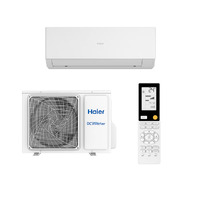
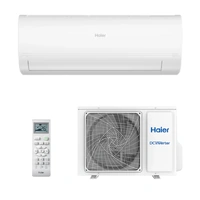
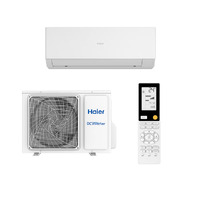
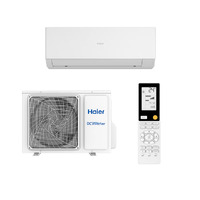
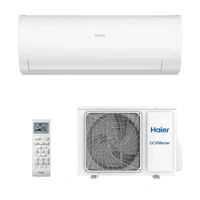
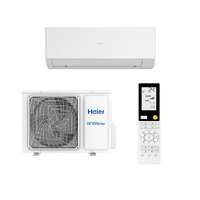
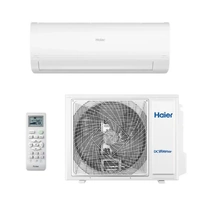
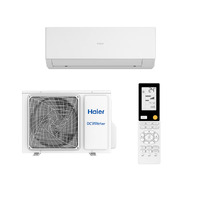
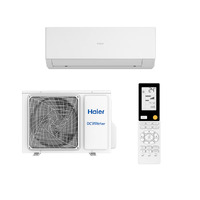
Find the best Haier Split System Air Conditioning here at Sparky Direct. [ Read More ]
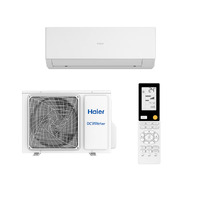
A Haier split system is a reverse-cycle air conditioner. The noisy mechanical parts (compressor, condenser fan) sit in the outdoor unit. A quieter indoor head delivers conditioned air into the room. Haier is a global appliance manufacturer headquartered in Qingdao, China, and its air conditioning range is widely sold across Australia through electrical wholesalers.
Every Haier split system on the Australian market is reverse-cycle, meaning a single unit handles both cooling in summer and heating in winter. The refrigerant cycle reverses direction on a four-way valve to switch between the two modes.
A split system moves heat rather than creating it. In cooling mode, refrigerant absorbs heat from indoor air as it evaporates in the indoor coil. It then carries that heat outside and releases it through the outdoor condenser. In heating mode, the cycle reverses: the outdoor unit extracts ambient heat from outside air (even at low temperatures) and transfers it indoors.
The compressor in the outdoor unit drives the cycle. Inverter-driven compressors, which every current Haier split system uses, vary their speed continuously to match demand, rather than cycling on and off like older fixed-speed units.
| System Type | Best For | Typical Capacity | Key Limitation |
|---|---|---|---|
| Wall split system | Single room, open plan | 2.0 to 9.0 kW | One room per head |
| Window/wall mount | Rentals, quick retrofits | 2.0 to 6.0 kW | Noise, less efficient |
| Portable | Temporary cooling | 2.0 to 4.5 kW | Exhaust hose, low efficiency |
| Ducted | Whole-house climate control | 10 to 24 kW | High install cost, ceiling space |
| Cassette split system | Commercial, large rooms | 5.0 to 14.0 kW | Requires ceiling cavity |
For most Australian households, a wall-mounted split system remains the best balance of cost, efficiency, and comfort for single rooms and modest open-plan areas.
Haier competes in the mid-value tier. It undercuts premium brands like Mitsubishi Electric and Daikin on price. Feature sets on smaller units are comparable: inverter control, Wi-Fi, and low noise ratings at the indoor head. For cost-sensitive homeowners, investment properties, and secondary rooms like kids' bedrooms or studies, Haier often lands at the price-performance sweet spot.
| Brand | Tier | Typical Strength | Typical Trade-Off |
|---|---|---|---|
| Haier | Value | Price, Wi-Fi included | Shorter feature list on larger units |
| Mitsubishi Electric | Premium | Efficiency, filtration, reliability | Highest purchase price |
| Daikin | Premium | Efficiency, dehumidification | Mid-high purchase price |
| Fujitsu | Premium-mid | Quiet operation, R32 range | Mid purchase price |
| Rinnai | Mid | Warranty, local support | Smaller model range |
| Gree | Value | Price, large capacity range | Lower brand recognition |
Premium brands typically hold a small efficiency edge, measured in seasonal ZERL/AEER ratings. They are the first choice for primary living zones that run for many hours a day. Value-tier units like Haier make strong sense for rooms used less often, where payback on higher efficiency becomes slower.
Haier split systems see heavy use in bedrooms, home offices, granny flats, converted garages, and rental properties. The smaller 2.5 kW and 3.5 kW units are the most popular sizes. Landlords often specify Haier in unfurnished rentals because the unit ticks the tenant-expected boxes (reverse cycle, inverter, remote control, Wi-Fi on newer models) at a manageable install cost.
Australia's climate rewards flexible, room-by-room cooling. Rather than cooling a whole house when only one or two rooms are in use, split systems let occupants target the zones they actually occupy. Combined with the country's high summer peak loads and generally good insulation standards on newer homes, split systems are the most cost-effective cooling option for the majority of dwellings.
Haier's wall split range is segmented broadly into three tiers. Entry-level units focus on cost and core functionality. Mid-range adds Wi-Fi, quieter operation, and better efficiency. Higher-tier units add smart features like occupancy sensing, finer airflow control, and more energy-star stars.
For bedrooms up to 25 square metres and small offices, a 2.5 kW unit is usually the right size. The Haier AS25QCEHRA-SET is a common 2.5 kW reverse-cycle choice, with inverter compressor, Wi-Fi control via the hOn app, and quiet operation at low fan speeds. Small units like this run efficiently at low loads, which matters in rooms that need only gentle temperature management overnight.
Open-plan living and dining zones typically need 5.0 kW to 7.1 kW of cooling, depending on floor area, ceiling height, and glazing. Haier's mid-range wall splits cover this span. Above 50 square metres, a single large wall head may struggle to distribute air evenly. Costing a ducted or multi-head layout against one big split system makes sense at that point.
Popular current Haier models include the 2.5 kW AS25QCEHRA-SET for small rooms, the 5.0 kW tier for large bedrooms and small living rooms, and the 7.1 kW and above tier for open-plan family zones. Model codes change across seasons. Confirm the current code on the product listing before quoting a customer. For the live Haier range, see the Haier split system category.
A 20 square metre bedroom with average ceiling height (2.4 m) and standard insulation will usually be well-served by a 2.5 kW unit. If the room faces west, has large glass, or sits under an uninsulated roof, step up to 3.5 kW. For southern-facing rooms with good shading, 2.0 kW may be sufficient in milder regions.
The kilowatt rating on a split system describes the output of heating or cooling the unit can deliver, not the electricity it consumes. A 2.5 kW cooling unit typically draws about 0.7 kW of electrical power at rated conditions, giving an energy efficiency ratio (EER) around 3.5. Haier split systems publish both cooling and heating capacity; the heating number is usually slightly higher because reverse-cycle units are efficient at heat transfer.
Use these capacity-to-room-size rules of thumb as a starting point, then adjust for orientation, insulation, and glazing:
Floor area is only part of the calculation. Ceiling height above 2.7 m, poor ceiling insulation, west or north exposure, and large unshaded windows all increase heat load. A room with vaulted ceilings and big glass might need 30 to 50 percent more capacity than its floor area suggests. Poorly sealed doors and drafty windows further increase the demand.
Queensland's climate runs hotter and more humid than southern states, so sizing for cooling dominates. In Brisbane, Townsville, and coastal Queensland, lean toward the upper end of the sizing range for any given room. Humidity also matters: larger units run at lower fan speeds longer, which removes more moisture from the air than a smaller unit cycling at high speed.
Oversizing is the most frequent error. A unit that is too large will reach setpoint quickly, switch to low-power mode, and fail to dehumidify properly. The room ends up cool but clammy. Undersizing has the opposite problem: the unit runs at full output continuously, struggles in peak heat, and may never reach setpoint on extreme days.
Every current Haier wall split uses an inverter-driven compressor. Instead of switching on at full power and off at setpoint, the inverter ramps the compressor speed up and down to match the room's current heat load. This reduces peak current draw, eliminates the temperature swings of fixed-speed units, and cuts overall power consumption by 30 to 40 percent versus older non-inverter systems.
Wi-Fi control is standard on current Haier models via the hOn smartphone app. The app allows remote on/off, temperature and mode changes, scheduling, and basic usage monitoring. For rental properties, it lets landlords pre-cool between tenants or confirm a unit is off. The system connects to a home 2.4 GHz Wi-Fi network; 5 GHz-only networks are not compatible.
Wi-Fi setup tip: If Wi-Fi pairing fails, the most common cause is a dual-band router broadcasting a single SSID on both 2.4 GHz and 5 GHz. Temporarily disable the 5 GHz band during pairing, or create a dedicated 2.4 GHz SSID for IoT devices.
Indoor head noise on Haier wall splits typically sits between 22 and 45 dB(A) depending on fan speed and capacity. Bedroom-sized units on low speed approach the noise floor of a quiet library. Outdoor condensers run between 45 and 55 dB(A), so placement matters. Keep the outdoor unit away from neighbours' bedroom windows. Use an air conditioner wall bracket or AC slab on anti-vibration mounts.
Current Haier models offer multi-directional airflow, auto-swing louvres, and a sleep mode that gently raises or lowers setpoint over several hours to match the body's overnight temperature profile. Some higher-tier models include self-cleaning functions that briefly freeze and then defrost the evaporator coil to dislodge dust.
Australia uses a Zoned Energy Rating Label (ZERL) for air conditioners, which replaced the older single-climate star rating in 2019. The label shows separate cooling and heating stars for hot, average, and cold climate zones. More stars means better efficiency in that zone. A unit with four cooling stars in the hot zone will have a higher Annual Energy Efficiency Ratio (AEER) than one with three stars.
For Haier's range, the most efficient units typically have three to four stars in the hot zone. Buyers in Queensland and the Northern Territory should weight their decision toward the hot-zone cooling stars rather than overall headline figures.
At a typical residential electricity price of 30 cents per kWh, a 2.5 kW Haier split system draws around 0.7 kW during normal cooling. That costs about 21 cents per hour to run. Over a summer of evening-only use (4 hours per night for 90 days), total cooling cost lands around $75 to $100. Heating costs in winter are similar at typical run times.
| Capacity | Typical Cooling Draw | Cost Per Hour (30c/kWh) | Seasonal Cost (estimate) |
|---|---|---|---|
| 2.5 kW | 0.7 kW | 21 cents | $75 to $100 |
| 3.5 kW | 1.0 kW | 30 cents | $110 to $140 |
| 5.0 kW | 1.5 kW | 45 cents | $160 to $200 |
| 7.1 kW | 2.1 kW | 63 cents | $225 to $285 |
Set-and-forget users who leave the system at 18°C in summer or 28°C in winter pay roughly twice what temperature-conscious users pay. Every degree closer to outdoor temperature cuts running cost by around 10 percent. Using the timer and sleep functions, rather than leaving units on overnight, produces the largest single saving for most households.
Split system installation must be carried out by a licensed electrician for electrical connections and by a refrigerant handling licence (ARCtick) holder for the refrigerant work. Australian Standards AS/NZS 3000 and AS/NZS 5149 govern the electrical and refrigeration aspects. DIY installation voids warranty, breaches the Ozone Protection and Synthetic Greenhouse Gas Management Act 1989 for refrigerant work, and can create serious safety and insurance issues.
Compliance reminder: Handling refrigerant without an ARCtick licence is a federal offence in Australia, with penalties up to $100,000 for individuals. All installation, commissioning, and decommissioning work involving refrigerant must be performed by a licensed technician.
Standard back-to-back installations (indoor and outdoor units on the same wall, 2 metres of pair coil) typically cost $800 to $1,400 in most Australian cities. Costs rise for pipe runs above 3 metres, multi-storey installations, difficult access, hard-to-drill wall types, or concrete penetrations. Electrical sub-circuit work, if required, adds further labour and materials.
An air conditioner installation kit bundles pair coil, drain hose, and cabling. These are consumables on every job. Keeping a stock of ducting and capping for cable protection saves return trips for tidy external finishing work.
A standard single-head install usually takes 3 to 5 hours. The sequence runs: site survey, wall penetration, outdoor unit mounting, pair coil and cable routing, indoor head mounting, electrical connection, evacuation, refrigerant charge verification, and commissioning. Commissioning includes verifying cooling and heating modes, checking drain flow, and testing the remote and Wi-Fi setup.
The main user maintenance task is cleaning the air filters behind the front grille of the indoor unit, every 2 to 4 weeks during heavy use. Blocked filters are the single biggest cause of weak airflow, poor cooling, and eventual coil fouling. Filters pop out, rinse under a tap, air-dry, and reinstall in under 10 minutes.
Beyond routine filter cleaning, a professional service every 12 to 24 months covers full coil cleaning, drain-line flushing, refrigerant pressure checks, and electrical terminal inspection. Heavily-used units in dusty or coastal locations benefit from annual servicing. Servicing that includes an indoor coil bio-clean prevents the musty odour that develops when biofilm grows on wet coils.
| Symptom | Likely Cause | Action |
|---|---|---|
| Weak airflow | Dirty filters, blocked outdoor coil | Clean filters, clear outdoor coil of debris |
| Water dripping indoors | Blocked drain line | Flush drain, check line fall |
| Not cooling | Low refrigerant, faulty sensor | Call licensed technician |
| Error code on display | Various system faults | Check manual for code, call technician |
| Musty smell | Biofilm on evaporator coil | Professional coil clean |
| Unit short-cycles | Oversized unit, faulty sensor | Verify sizing, test room sensor |
A well-installed and regularly-maintained Haier split system should deliver 10 to 15 years of reliable service. Units that fail earlier almost always share a common cause: poor installation, neglected filter cleaning, or refrigerant leaks left unchecked for too long. Running the system in fan-only mode for 15 minutes at the end of each cooling session helps dry the coil and reduces biofilm growth.
Haier wall splits are among the more affordable branded options in the Australian market. Typical trade pricing sits roughly 20 to 35 percent below equivalent Mitsubishi Electric or Daikin units. Prices vary with capacity: small 2.5 kW units are the entry point, with 5.0 kW mid-range units and 7.1 kW plus sizes at the top end.
For the lowest per-kilowatt cost, 2.5 kW units typically deliver the best headline price. They suit bedrooms and studies and represent the bulk of Haier sales volume. For larger rooms, 5.0 kW units often offer the best dollar-per-kilowatt ratio in the Haier range.
The decision between a value-tier Haier and a premium brand comes down to run hours. A unit running 6 or more hours daily in a primary living zone recoups the premium for a higher-efficiency unit within 4 to 7 years via lower power bills. A unit in a guest bedroom running 100 hours a year will never recoup that premium. Match brand tier to actual use pattern.
Electrical trade wholesalers like Sparky Direct typically price units 10 to 25 percent below big-box retailers on the same model. Trade suppliers also carry the matching accessories, pair coil, and installation tools in one order, avoiding multi-vendor shipping. For electricians buying for a job, this efficiency matters as much as the headline price.
Start with accurate room measurements, then consider orientation, glazing, and insulation quality. For standard residential rooms, the sizing table in the Choosing the Right Size section above is a strong starting point. For unusual spaces like converted attics, sunrooms, or heavily-glazed extensions, a qualified installer or a heat load calculator tool will give a more accurate figure.
Most wall split systems up to 7.1 kW run on a dedicated 10 amp 240 V circuit. Units above 7.1 kW, or multi-head systems, may require a 15 or 20 amp circuit. Confirm circuit availability before purchase: adding a new circuit adds $300 to $600 to the project, depending on switchboard location and meter box condition. Plan outdoor unit placement with consideration for solar hot water tanks, TV aerials, clotheslines, and neighbour proximity.
Sparky Direct stocks the current Haier wall split range for Australia-wide delivery. Most metropolitan orders placed before midday ship same day. For installers with a job booked in the next 48 hours, confirming stock availability before ordering saves on-site delays. Regional delivery timeframes vary, so check the product listing for expected arrival windows.
Watch Daikin FTXV25WVMA-KIT | 2.5KW Reverse Cycle Split System Air conditioner R32 video
Watch Mitsubishi Electric Air Conditioner Split System 2.5 KW Cooling - 3.2 Kw Heating | MSZ-AP25VGD video
Watch Rinnai HSNRA80 | 8.0 KW Reverse Cycle Split System Air conditioner | R410A video

Our electrician installed it in our son's bedroom, and it cools the room incredibly quickly. The timer function is perfect for turning the air conditioner off at night. It's super quiet and packed with extra features. Haier Aircon—an absolute winner!
After receiving good advice and help on line from Sparkys. I selected the Mitsubishi 5kw split system. Once installed, I cannot believe how quiet and perfect the replacement unit has been for my home. Highly recommend it and considering the same system for my adjacent studio apartment.
I have installed several brands of Split systems, The Rinnai not only is it extremely quiet it brings the room to temperature very fast. The price is amazing for the quality system.
Quality products in stock • Fast Australia-wide delivery • Competitive trade pricing
Browse Haier Split Systems → Get Expert Advice →Yes. During cooling operation, Haier split system air conditioners help reduce excess indoor humidity, improving comfort.
Haier split system air conditioning is available from Sparky Direct, offering access to genuine products.
Delivery availability depends on the supplier and location, with options commonly available across metropolitan and regional Australia.
Yes, subject to building approvals, outdoor unit placement, and assessment by a licensed installer.
Yes. Haier split system air conditioners are supplied with a manufacturer’s warranty when installed and used in accordance with Australian guidelines.
Consider room size, required capacity, energy efficiency, noise levels, and ensuring installation by licensed professionals.
Yes. Reverse-cycle Haier split systems provide effective heating and cooling throughout the year.
Electricity usage depends on unit size, efficiency rating, thermostat settings, and usage habits. Inverter technology helps minimise unnecessary energy use.
With proper installation and regular maintenance, a Haier split system air conditioner can provide reliable performance for many years.
Some Haier split system models offer optional Wi-Fi control, allowing remote operation via compatible smartphone applications.
Larger capacity Haier split systems can be suitable for open-plan spaces when correctly sized.
Yes. Quiet operation and stable temperature control make Haier split systems suitable for sleeping areas.
Routine servicing is generally recommended every 12 months, or more frequently in high-use or dusty environments.
Haier split system air conditioning uses an indoor unit and an outdoor unit connected by refrigerant pipework to provide heating and cooling for individual rooms or defined spaces.
Most Haier models include simple remote controls with clear temperature, fan speed, and mode settings.
Yes. Haier split systems are designed for low noise operation, making them suitable for bedrooms, living areas, and study spaces.
Yes. Installation must be carried out by licensed refrigeration and electrical professionals to ensure safety, performance, and compliance.
Many modern Haier split system models use R32 refrigerant, which has a lower global warming potential than older refrigerants.
Many residential Haier split systems operate on single-phase power, while larger capacity models may require specific electrical assessment by a licensed electrician.
Yes. Haier split system air conditioners are reverse-cycle units, providing cooling in summer and heating in winter.
Yes. Most Haier split system air conditioners use inverter technology to adjust compressor speed and reduce energy consumption.
Correct sizing depends on room size, insulation, ceiling height, window exposure, and heat load. A qualified installer can recommend an appropriate capacity.
Energy efficiency varies by model and capacity, with many Haier split systems offering competitive star ratings under Australian energy labelling requirements.
Haier split system air conditioners supplied in Australia are designed to meet applicable AS/NZS electrical and safety standards when installed by licensed professionals.
Yes. Haier split system air conditioners are designed to operate reliably in Australian climates, including hot summers and cooler winter conditions.