
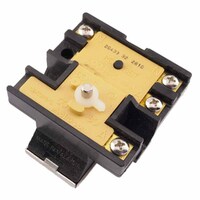

Cookson Controls 20433-3-1 | Hotwater Thermostat Adjustable Universal 50-70 Deg | WIM2
$19.80
$18.00 ex. GST
Search Results:
Search Results:
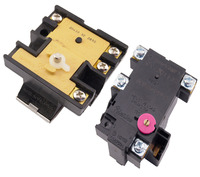
Find the best hot water thermostats here at Sparky Direct. [ Read More ]
A hot water thermostat is a bi-metallic or capillary-type switching device fitted inside the access panel of an electric storage hot water unit. It measures the temperature of the stored water and completes or breaks the electrical circuit to the heating element. Most residential electric systems use a single thermostat controlling one or two elements. The thermostat set point determines the temperature at which heating stops. Without a working thermostat, the element runs continuously or not at all.
Standard set points for domestic storage systems run from 60°C to 70°C. Most universal thermostats are adjustable within that range. Fixed-temperature thermostats are calibrated at the factory and are not user-adjustable.
The thermostat controls energy consumption by cycling the element on and off to maintain the set temperature. A thermostat that sticks open causes the element to run non-stop, wasting energy and potentially overheating the tank. A thermostat stuck closed means no heat reaches the water at all. Both failures present problems for occupants and, in the overheating case, present safety risks.
Most electric hot water units also include a separate high-limit thermostat, sometimes called a thermal cutout or safety thermostat. This device is wired in series with the main thermostat and trips at temperatures around 80-85°C as a backup. Once tripped, it must be manually reset by pressing a button accessible from the element cover.
Electric storage systems use a bi-metallic disk thermostat directly bonded to the tank wall. Gas systems use a gas combination valve with an integrated thermostat, which is a very different component. Heat pump systems use electronic temperature sensors feeding a control board, not a mechanical thermostat. This guide focuses primarily on electric storage thermostats, as these are the most commonly replaced by trade electricians.
Most electric hot water thermostats use a bi-metallic sensing disk pressed against the outer wall of the tank. As water temperature rises, heat conducts through the tank wall and into the disk. The disk bends at a set temperature, physically pushing open a set of electrical contacts. When water cools below the lower threshold, the disk returns to its original shape and the contacts close, allowing current to flow to the element again.
Some models use a capillary bulb sensor inserted directly into the water. The bulb contains a fluid that expands with heat and actuates a switch. These are common in older or larger commercial units.
A thermostat does not switch at a single precise temperature. It has a differential, the range between switch-off and switch-on temperatures. A thermostat set to 65°C might cut out at 65°C and reconnect at 60°C. This differential prevents the element from cycling on and off too rapidly. Narrower differentials suit systems where temperature consistency matters. Wider differentials reduce switching frequency and can extend contact life.
The thermostat connects in series with the hot water element. Current flows from the power supply through the thermostat contacts and into the element. When the contacts open, the circuit breaks and the element stops drawing power. Systems with two elements typically use separate thermostats for each, with the upper thermostat taking priority to heat the top of the tank first.
Australian health guidelines and plumbing codes recommend storing hot water at 60°C minimum. At this temperature, Legionella bacteria cannot survive. Most thermostats for domestic use are set or adjustable to between 60°C and 70°C. Running at 65°C provides a safety margin above the minimum threshold without causing excessive energy consumption or scalding risk at the outlet.
Minimum storage temperature: 60°C (Legionella control, per health guidelines)
Recommended storage temperature: 60-65°C (balances safety and energy efficiency)
Maximum recommended storage: 70°C (above this, scalding risk at untempered outlets increases significantly)
High-limit trip point: Typically 80-85°C (safety thermostat only, requires manual reset)
Legionella pneumophila, the bacterium responsible for Legionnaires' disease, survives and multiplies between 20°C and 50°C. Storage at 60°C or above kills it rapidly. Systems that run too cool, because of a failed thermostat set too low or incorrectly adjusted, present a genuine health risk. Thermostats should never be deliberately set below 60°C in domestic or commercial storage systems.
AS/NZS 3500 (Plumbing and Drainage) requires tempering valves on hot water outlets in most residential installations. A tempering valve mixes cold water with hot at the outlet to deliver water at around 50°C to taps. This means the storage temperature can be set high enough for Legionella control without scalding risk at the tap. The thermostat controls storage temperature; the tempering valve controls delivery temperature. They are separate components with different roles.
Compliance note: Hot water system repairs involving electrical components must be carried out by a licensed electrician in all Australian states and territories. Plumbing connections, including tempering valves, require a licensed plumber. Never adjust thermostat settings without understanding the system's tempering valve arrangement.
This is the most common type for residential replacement work. The thermostat is a compact unit with a sensing face, two or four electrical terminals, and a temperature adjustment dial or fixed calibration. Universal models like the ST12-70 suit most domestic electric storage units and feature quick-connect terminals. They are designed to be direct drop-in replacements for OEM thermostats across common brands.
Gas hot water systems use a gas combination valve that integrates thermostat sensing, gas pressure regulation, and pilot flame control into a single assembly. These are not interchangeable with electric thermostats and require gas fitting licence work for replacement. Faults in gas combination valves usually present as pilot light failures, inconsistent temperature, or complete loss of hot water.
Heat pump hot water systems use electronic sensors and a control board to manage temperature. These components are system-specific and must be sourced from the manufacturer or authorised service agent. Faults typically trigger error codes on the control panel. General-purpose replacement thermostats do not apply to heat pump systems.
The high-limit or thermal cutout thermostat is wired in series upstream of the main thermostat. It trips at a fixed temperature, usually 80-85°C, and must be manually reset after tripping. Repeated tripping indicates a fault in the main thermostat, an undersized element, or a loss of water flow. Replacing the high-limit thermostat without addressing the root cause will not fix the underlying problem.
The first step when sourcing a replacement thermostat is identifying the hot water system brand and model. Many Australian systems use standardised thermostats, and a universal type will fit most units from common manufacturers. Check the existing thermostat for any part number stamped on the body. If the original is no longer available, a universal model with the same temperature range and terminal configuration is usually an acceptable alternative.
Electric hot water thermostats in Australia operate at 240V AC. The contact rating (amperage) must match or exceed the current drawn by the element. A 2400W element at 240V draws 10A. A thermostat rated at 10A or 15A suits this load. Using an underrated thermostat causes contact burning and premature failure. Check the thermostat's rated current on the product label or specification sheet before fitting.
Temperature range must cover the system's intended set point. Most domestic thermostats are rated 50-70°C or 60-80°C. Some adjustable models are labelled with a dial range in degrees. Fixed models are marked with their set point.
Original equipment manufacturer (OEM) thermostats are made to the specifications of a specific system brand. Aftermarket thermostats, including universal types, are designed to fit multiple brands. Both can be appropriate depending on availability and system age. For systems still under manufacturer warranty, check whether aftermarket parts void the warranty before fitting.
Most residential hot water thermostats are installed inside a sealed access panel and do not require a high ingress protection rating. Where systems are installed outdoors, in plant rooms with high humidity, or in locations exposed to water ingress, check that the thermostat and its housing provide adequate environmental protection. Consult the system manufacturer's specifications if in doubt.
A quality thermostat holds its set point within a few degrees across thousands of switching cycles. Cheaper thermostats may drift over time, causing the actual water temperature to creep above or below the set point. Accuracy matters for both safety and energy use. A thermostat that trips too early wastes heating cycles. One that trips too late allows water to overheat.
A hot water thermostat may switch on and off several times per day. Over a 10-year service life, that adds up to tens of thousands of switching cycles. Contact quality, spring tension, and sensing element durability all affect lifespan. Look for products with published electrical endurance ratings where available.
The thermostat contacts must handle the full inrush and running current of the element. Standard domestic elements run at 1800W, 2400W, or 3600W. A 3600W element at 240V draws 15A. The thermostat must be rated at or above this figure. Always confirm the element wattage before selecting a replacement thermostat. Sparky Direct stocks both Dur-alloy hot water elements and Incoloy hot water elements if element replacement is also required.
Thermostats sold in Australia should carry the Regulatory Compliance Mark (RCM), formerly the C-Tick or A-Tick mark. This indicates the product has been assessed against relevant Australian electrical standards.
The most common complaint is complete loss of hot water. Possible causes include a failed thermostat, a failed element, a tripped high-limit thermostat, or loss of supply power. Start by checking the circuit breaker and any isolating switch at the unit. If power is present at the unit, test the thermostat and element separately using a multimeter before replacing either component.
If hot water at the tap is excessively hot, the thermostat may be stuck in the closed position, allowing continuous heating. This is a safety issue. Shut off power to the unit and do not use hot water outlets until the fault is diagnosed and repaired. Check the tempering valve as well. A failed tempering valve can deliver scalding water to taps even when the thermostat is functioning correctly.
Water temperature that varies significantly between uses may indicate a thermostat with a drifting set point, a partial contact failure, or scale build-up between the sensing face and the tank wall. Clean the tank mounting surface and ensure the thermostat is seated firmly against the tank before concluding the thermostat is at fault.
A high-limit thermostat that trips repeatedly indicates a problem beyond the safety thermostat itself. Common causes include a main thermostat stuck closed, an element that is too large for the tank, reduced water flow through the system, or incorrect thermostat positioning. Replacing the high-limit thermostat alone will not solve this. Diagnose and fix the underlying cause first.
Before touching any component inside a hot water unit, switch off the circuit breaker feeding the system and verify isolation with a voltage tester. Lock out the breaker if required by your site or employer procedures. Allow the thermostat access panel to be removed safely. Do not assume the unit is de-energised simply because no hot water is being produced.
Safety first: Hot water system repairs must be carried out by a licensed electrician in Australia. All states and territories require electrical work on fixed wiring to be done by a licensed professional. Isolation and lockout procedures apply before any component testing or replacement.
With the system isolated and the thermostat disconnected from the circuit, set the multimeter to continuity or resistance mode. Place the probes across the thermostat terminals. At room temperature, a functioning thermostat should show continuity (closed contacts). If the thermostat shows open contacts at room temperature, the contacts have failed or the device has tripped. Allow it to cool fully before testing again. No continuity at any temperature confirms a failed thermostat.
Test the element by placing the probes across its terminals. A reading of open circuit (no continuity) confirms a failed element. A reading consistent with the expected resistance for the element's wattage confirms it is intact.
Test both components separately. A failed thermostat with a good element requires thermostat replacement only. A good thermostat with a failed element requires element replacement. Both components failing simultaneously is less common but possible in systems that have overheated severely. If replacing the thermostat does not restore hot water, test the element before assuming the replacement thermostat is also faulty.
If both the thermostat and element test as good but the system still does not produce hot water, check the incoming supply voltage, the isolating switch, and the wiring connections to both components. Corrosion at terminals is common in humid environments and can cause intermittent faults that pass a static continuity test. Wiring faults of this kind require further investigation by a licensed electrician.
Each switching cycle causes a small amount of arcing at the thermostat contacts. Over time, arcing deposits carbon on the contact surfaces and causes pitting. Heavily pitted contacts have higher resistance and may fail to carry the full load current. This leads to partial heating, erratic behaviour, or complete failure. High-current applications, such as 3600W elements, accelerate contact wear.
In hard water areas, calcium and magnesium deposits can build up between the thermostat sensing face and the tank wall. This scale acts as an insulator, slowing heat transfer to the sensor. The thermostat then runs longer than it should before detecting that the water has reached temperature. The result is water that is hotter than the set point and accelerated wear on the element and contacts.
The element access cavity in a hot water unit is a warm, humid environment. Thermostats in poorly sealed or outdoor installations are exposed to condensation and airborne moisture. Corrosion on terminals or the thermostat body can cause intermittent connection faults or mechanical failure of the adjustment mechanism.
A thermostat set or calibrated too high runs the element at higher temperatures than designed. Over time, this thermal stress degrades the bi-metallic sensing element and shortens the thermostat's service life. High-limit thermostat trips that are repeatedly reset without addressing the cause also place thermal stress on all components in the circuit.
Replacing a hot water thermostat involves working on fixed electrical wiring and a 240V circuit. This is licensed electrical work in all Australian states and territories. A licensed electrician must carry out the replacement. Homeowners cannot legally replace these components themselves. Unlicensed electrical work also voids home and contents insurance cover for any resulting damage or injury.
Isolate the hot water circuit at the switchboard before removing the element cover. Verify isolation with a voltage tester at the element terminals before touching any wiring. Where required by site safety procedures, apply a lockout device to the circuit breaker. The water supply to the tank does not need to be shut off for thermostat replacement, but confirm this with the system's installation manual.
Photograph the original wiring configuration before disconnecting any terminals. Thermostat terminal markings vary between models. Connect the line conductor (active) to the correct terminal on the replacement thermostat. Incorrect wiring can cause the thermostat to operate in reverse, connect the element to the wrong phase, or bypass the high-limit safety thermostat. Confirm connections against the wiring diagram supplied with the replacement unit.
Ensure the thermostat sensing face is seated flush against the tank wall. Any gap reduces heat transfer accuracy. Use the original mounting clip or bracket to secure the thermostat in position. Reinstall the access panel cover and insulation before restoring power.
After restoring power, allow the system to heat fully. Use a calibrated thermometer or thermal sensor at a hot water outlet to verify the delivery temperature is within expected range. Allow time for the tempering valve to stabilise. Check that the system cycles off once it reaches set point and does not overheat. Record the commissioning check for compliance and warranty purposes.
Universal electric storage thermostats are the most affordable option. They are off-the-shelf components stocked by electrical wholesalers and supplied at trade pricing. Gas combination valves and heat pump electronic sensors are system-specific and significantly more expensive. For electric storage systems, thermostat replacement is a low-cost repair compared to full system replacement.
Labour for a straightforward thermostat replacement is typically one to two hours for a licensed electrician. Costs vary by location and trade. Systems with difficult access, corroded terminals, or wiring that needs remediation will take longer. Quoting on site is recommended where access or system condition is uncertain.
Thermostat replacement is worth doing when the tank and element are in serviceable condition. A system with a failing element, extensive corrosion inside the tank, or a tank that is more than 10-15 years old may be better replaced as a unit. Check the element condition at the same time as the thermostat. Replacing both components together saves a return visit if the element fails soon after.
A correctly functioning thermostat avoids unnecessary element run time and keeps heating costs predictable. A thermostat that sticks closed causes the element to run continuously. At 2400W, an element running continuously for 24 hours uses 57.6 kWh of electricity. At standard residential rates, that is a significant cost before the fault is even noticed. Prompt diagnosis and replacement is cost-effective.
Sediment accumulates at the base of hot water tanks over time. In hard water areas, calcium scale can build up rapidly. Annual tank flushing via the drain valve removes loose sediment and reduces scale on the element and tank wall. Reduced scale between the thermostat sensing face and the tank wall improves temperature accuracy and reduces overheating risk.
Inspect the element access cover and thermostat wiring connections during any maintenance visit. Check for corrosion at terminals, cracked or brittle insulation on conductors, and any signs of water ingress into the cavity. Address minor issues before they become component failures. The safety switch serving the hot water circuit should also be tested regularly as part of general electrical maintenance.
If the system produces noticeably cooler or hotter water than usual, investigate promptly. Temperature drift is often an early sign of thermostat degradation. A calibrated thermometer check at the tap provides a quick baseline. Significant deviation from the expected delivery temperature warrants further inspection.
Hot water thermostats have a finite service life. In systems approaching 10 years of age, proactive thermostat replacement during a service visit can prevent unexpected failures. Combining thermostat and element replacement in a single visit is efficient and ensures both components start fresh. The total part cost is modest compared to the inconvenience of a cold water fault.
The majority of hot water thermostat replacements in Australia occur in residential electric storage systems. These units are common in homes without access to natural gas and in regions where off-peak electricity tariffs make electric storage economical. Universal thermostats suit most residential systems. Stocking a universal 60-70°C model covers the majority of service calls without needing system-specific parts on hand.
Gas hot water system thermostats form part of the gas combination valve assembly and are not field-serviceable as stand-alone components in the same way as electric thermostats. Electricians working on gas system faults related to the electrical ignition or control circuit should liaise with a licensed gas fitter for any work on the gas valve assembly itself.
Commercial hot water systems often operate at higher storage temperatures (65-70°C) and use larger elements (3600W or twin elements). Thermostats for commercial units must be rated for the full element load. Some commercial systems use industrial-grade thermostats with higher current ratings and more robust contact assemblies than residential types. Confirm specifications before ordering for commercial applications.
AS/NZS 3000:2018 (the Australian Wiring Rules) governs the electrical installation of hot water systems, including the circuit design, conductor sizing, isolation arrangements, and connection methods. All wiring associated with the hot water unit must comply with these requirements. Replacement work must not compromise existing compliant installations. Where the existing wiring is found to be non-compliant during a service visit, it must be rectified as part of the work.
AS/NZS 3500 (Plumbing and Drainage) covers the installation and maintenance of hot water systems from a plumbing perspective, including the requirements for tempering valves, pressure and temperature relief valves, and system isolation. Electricians replacing thermostats should be aware of these requirements as they relate to system safety, even though the plumbing work itself requires a licensed plumber.
Water stored at 65-70°C causes scalding within seconds at untempered outlets. Pressure and temperature relief (PTR) valves are required on all electric storage hot water units. These valves discharge if tank pressure or temperature exceeds safe limits. Check that the PTR valve is operational and not blocked during any service visit. A blocked PTR valve is a serious safety hazard. Report any valve defects to the building owner and arrange rectification.
All electrical work on hot water systems in Australia requires a licensed electrician. In some states, the licensed electrician must also hold a specific hot water system or restricted electrical work endorsement. Check the licensing requirements in the relevant state or territory before undertaking this type of work. Unlicensed work creates liability for the person doing it and may invalidate the property owner's insurance.
Watch Universal Hot Water Thermostat ST12-70 | 60-70deg universal - Quick fit video
Watch Cookson Controls 20433-3-1 | Hotwater Thermostat Adjustable Universal 50-70 Deg | WIM2 video
Watch Hotwater Element Duraloy 1800W | HWDS-18 video

Needed a thermostat in a hurry! This part was super easy to locate on the well organised Website. The part was the cheapest in the range I was looking for. Easy and quick checkout and delivered at my doorstep within days. Very happy and the part was perfect for my needs.
The service and price point from Sparky Direct will certainly mean I will make them the exclusive place to purchase my electrical supplies. And as the name says, the Universal thermostat is indeed a universal fit. Excellent product.
The electric boosted solar HWS units have few "moving parts". The thermostat is likely the hardest working. When out of town, its is good to have a simple reliable universal solution on hand.
Quality products in stock • Fast Australia-wide delivery • Competitive trade pricing
Browse Hot Water Thermostats → Get Expert Advice →This can occur if the thermostat is malfunctioning or incorrectly calibrated and should be checked by a licensed professional.
Sparky Direct supplies a range of hot water thermostats with fast Australia-wide delivery.
Yes, installation and replacement should always be performed by a licensed electrician to ensure compliance with safety and legal requirements.
Most quality thermostats include a manufacturer’s warranty, which varies by brand and supplier.
Yes, thermostats and heating elements are often sold as separate components, though compatibility is essential.
Check your hot water system’s brand, model, voltage, and temperature requirements to ensure compatibility.
Replacement is usually considered when temperature control becomes unreliable or during major system servicing.
Yes, if it overheats or remains hot, it can lead to unnecessary energy use.
Yes, thermostat performance influences how quickly the system reheats water after use.
Some thermostats are adjustable, but any adjustment or inspection should be carried out by a licensed electrician.
Minor variation can be normal, but frequent or large changes may indicate an issue with the thermostat or heating element.
Yes, mineral buildup and sediment inside the system can affect overall performance and may contribute to premature component wear.
Lifespan varies, but many thermostats last several years depending on water quality, usage, and operating conditions.
A hot water thermostat is a temperature-control device that regulates the temperature of the water in a storage hot water system by switching the heating element on and off.
Yes, if the thermostat is faulty or incorrectly set, it may not heat water to the correct temperature or may shut off too early.
Common signs include water that is too hot, not hot enough, inconsistent temperatures, or running out of hot water quickly.
While primarily a control component, it contributes to overall system safety when used alongside other safety devices such as thermal cut-outs and tempering valves.
The thermostat helps prevent overheating by cutting power to the heating element once the set temperature is reached.
Most electric hot water thermostats are designed for standard Australian mains voltage, typically 240V, but specifications should always be checked.
No, thermostats vary by brand, voltage, temperature range, mounting style, and system compatibility.
Yes, a correctly operating thermostat helps maintain stable water temperatures and prevents unnecessary heating, which can reduce energy consumption.
Single thermostat systems control one heating zone, while dual thermostat systems manage separate upper and lower heating elements for improved efficiency and recovery time.
Most electric storage hot water systems use one or more thermostats to control heating and protect against overheating.
Hot water thermostats are generally designed to comply with relevant AS/NZS electrical and safety standards, depending on the appliance and application.
Storage hot water systems are typically set to at least 60°C to reduce the risk of bacteria growth, in line with common Australian health and plumbing guidance.