
Search Results:
Search Results:
Search Results:
Search Results:
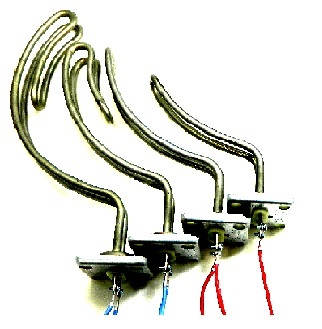
Find the best hot water Incoloy elements here at Sparky Direct. [ Read More ]
A hot water element is the heating component inside an electric storage water heater. It consists of a resistance wire inside a protective metal sheath, sealed and immersed in water. When energised, the wire heats up and transfers heat through the sheath into the surrounding water.
Incoloy elements use an Incoloy alloy sheath instead of copper or stainless steel. This changes how the element responds to corrosive water, mineral deposits, and high operating temperatures. The sheath material determines how long the element lasts and which conditions it can tolerate.
Incoloy is a registered alloy family developed by Special Metals Corporation. The most common grade used in heating elements is Incoloy 800, which contains approximately 32% nickel, 21% chromium, and the remainder iron. Some variants also include small amounts of titanium and aluminium.
The nickel and chromium content gives Incoloy its key properties: resistance to oxidation at elevated temperatures, and resistance to corrosion in both acidic and alkaline environments. These properties make it suitable for continuous immersion in water that would corrode copper within months.
Most Australian residential electric hot water systems use a single immersion element, mounted either horizontally or at an angle through the side or base of the tank. The element heats the stored water to a set temperature, typically controlled by a thermostat. See the hot water thermostat range for compatible controls.
Commercial systems often use larger elements or multiple elements to meet higher demand. Incoloy is commonly specified in these applications because of its durability and resistance to the water quality variations found in larger plumbing networks.
The internal resistance wire is typically made from a nickel-chromium alloy (nichrome). When current passes through it, electrical resistance converts energy to heat. The amount of heat produced depends on the wattage rating of the element and the duration of operation.
The resistance wire is packed in magnesium oxide (MgO) powder inside the metal sheath. MgO is an excellent electrical insulator and thermal conductor. It keeps the wire electrically isolated while allowing efficient heat transfer outward through the sheath wall.
Heat travels from the resistance wire outward through the MgO fill, then through the Incoloy sheath wall, and finally into the surrounding water. The thinness of the sheath wall and the thermal conductivity of Incoloy both influence how quickly and efficiently heat transfers to the water.
Incoloy conducts heat well at operating temperatures. It also maintains structural integrity at those temperatures, which prevents the sheath from softening, distorting, or cracking over time.
The element itself has no temperature sensing capability. A separate thermostat, mounted on the outside of the tank, controls when the element switches on and off. The thermostat reads tank temperature and opens the circuit when the set temperature is reached.
Most residential systems use a bi-metallic thermostat with a safety cut-out. If water temperature exceeds safe limits, the cut-out trips and must be manually reset. An element that appears dead may simply have a tripped cut-out rather than a failed element.
Copper corrodes in water with low pH, high chloride content, or aggressive mineral chemistry. Incoloy resists these conditions because its chromium content forms a passive oxide layer on the surface. This layer regenerates when damaged, providing ongoing protection.
In areas with acidic bore water or desalinated supply, copper elements can pit and fail within one to two years. Incoloy elements in the same conditions typically achieve five to ten years of service life, making them a practical choice where water quality is poor.
Incoloy retains its mechanical strength at the operating temperatures used in hot water systems, which typically range from 60 to 75 degrees Celsius. Copper softens more readily at sustained high temperatures, increasing the risk of sheath deformation under long operating cycles.
For solar-boosted systems where the element operates intermittently to top up a tank that may already be warm, Incoloy handles the thermal cycling well without developing the stress cracks that affect copper in similar conditions.
Australian water quality varies significantly by region. Coastal areas have elevated chloride levels. Hard water areas in inland Queensland, Western Australia, and South Australia carry dissolved calcium and magnesium that deposit as scale on element surfaces. Bore water supplies can include iron, sulphur, and organic compounds.
Incoloy performs across this range of conditions better than copper. It does not corrode readily in chloride-rich water, and while it does accumulate scale in hard water areas, the base metal resists pitting beneath scale deposits in ways that copper does not.
Incoloy is the preferred material for hard water areas, coastal environments, bore water supplies, and commercial systems with variable water quality. Copper elements remain suitable for soft, neutral water conditions in areas with consistent municipal supply. When in doubt about local water chemistry, Incoloy is the lower-risk choice for long-term reliability.
Copper is the most common and lowest-cost element material. It heats quickly, transfers heat efficiently, and performs well in areas with soft, neutral-pH water. Its weaknesses are corrosion in acidic or chloride-rich water, and reduced mechanical strength at sustained high temperatures.
Incoloy costs more upfront but outlasts copper significantly in difficult water conditions. For a system located in a hard water area or near the coast, the extended service life of Incoloy typically justifies the higher purchase price.
View the Dur-alloy hot water elements range for an alternative to both copper and standard Incoloy options.
Stainless steel elements offer good corrosion resistance and are harder than copper. They are used in some commercial and industrial applications. However, stainless steel has lower thermal conductivity than Incoloy, which can result in slightly slower heat transfer at equivalent wattage ratings.
Incoloy generally outperforms stainless steel in oxidation resistance at elevated temperatures, particularly in the 600 to 900 degree Celsius range that the internal resistance wire operates at. This makes Incoloy more reliable under sustained high-load conditions.
Titanium elements are used in the most aggressive water conditions, including seawater applications, high-chloride industrial cooling systems, and some desalination installations. Titanium resists virtually all forms of aqueous corrosion but is significantly more expensive than Incoloy.
For the majority of Australian residential and commercial hot water applications, Incoloy provides sufficient corrosion resistance without the cost premium of titanium. Titanium becomes relevant in marine applications, extreme industrial environments, or where water chemistry testing indicates conditions beyond Incoloy's range.
| Water Condition | Copper | Incoloy | Titanium |
|---|---|---|---|
| Soft, neutral municipal supply | Suitable | Suitable | Suitable (excess cost) |
| Hard water (inland areas) | Reduced life | Preferred | Suitable |
| Coastal / high chloride | Not recommended | Preferred | Suitable |
| Acidic bore water | Not recommended | Preferred | Suitable |
| Marine / seawater | Not suitable | Marginal | Preferred |
Hard water carries dissolved calcium and magnesium bicarbonates. When heated, these convert to calcium carbonate, which deposits as limescale on element surfaces. Scale reduces heat transfer efficiency and can cause localised overheating, which accelerates element failure.
Incoloy tolerates scale build-up better than copper because the base metal resists the electrochemical attack that occurs at the interface between scale deposits and the element surface. Regular flushing extends element life further by reducing scale accumulation.
Coastal water supplies and properties near marine environments carry elevated chloride levels. Chloride ions penetrate passive oxide layers on copper, causing pitting corrosion that is concentrated, rapid, and often invisible until a leak or failure occurs.
Incoloy's higher nickel and chromium content makes its passive layer more resistant to chloride attack. Properties within two kilometres of the coast, or those using bore water with high chloride readings, should use Incoloy as a matter of course.
Systems that cycle frequently, or that operate at higher temperatures to meet large household or commercial demand, generate more thermal stress in the element sheath. Incoloy handles this cycling better than copper because its mechanical properties change less with temperature variation.
For commercial systems serving apartments, motels, schools, or aged care facilities, Incoloy reduces replacement frequency and the associated labour cost. The total cost of ownership over a five-year period is typically lower than copper, even accounting for the higher unit cost.
Where a hot water system is installed in a location that is difficult or expensive to access, extending the element service life has direct cost and convenience benefits. Incoloy is the appropriate material choice for systems mounted in roof spaces, plant rooms, or remote locations where unplanned maintenance is disruptive.
Australian residential hot water elements operate on 240V AC single phase. The wattage rating, typically 1800W, 2400W, or 3600W, determines how much electrical power the element draws and how quickly it heats the water. Three-phase commercial elements operate at different voltages and are not interchangeable with single-phase residential units.
The wattage stamped on the element or its packaging is measured at the rated voltage. Operating at lower voltages reduces actual output proportionally, which can result in recovery times longer than expected if there is a supply voltage issue.
Replacement elements should match the original wattage unless a deliberate upgrade or downgrade is being made with full knowledge of the thermal implications. Undersizing reduces recovery rate; oversizing stresses the tank and thermostat for no practical benefit in most residential applications.
As a general guide: 1800W suits smaller tanks of 25 to 50 litres; 2400W covers the 80 to 160 litre range most common in Australian homes; 3600W is used in larger residential or small commercial systems from 250 litres upward. Always verify against the tank data plate before ordering.
Installing a higher-wattage element than specified can overload the circuit breaker protecting the circuit. It may also damage the tank's glass lining or thermostat if the element produces more heat than the system design accounts for. Always check the circuit rating and the existing element wattage before selecting a replacement.
Wiring connections must also be suitable for the current draw of the element. A 3600W element at 240V draws 15 amps. The cable, connections, and isolating switch must all be rated for this load.
Electrical compliance: Hot water element replacement involves live electrical work and connection to a fixed wiring circuit. This work must be carried out by a licensed electrician. In Australia, unlicensed electrical work is illegal under state electrical safety legislation and voids insurance.
A higher-wattage element heats water faster but draws more current during operation. A lower-wattage element draws less current but takes longer to recover after a hot water draw. In off-peak tariff systems, recovery time matters less because the element only runs during off-peak periods regardless of wattage.
Replacing a failed element with the original wattage maintains the system's designed energy profile. Upgrading to a higher wattage does not inherently improve energy efficiency; it changes the rate of heating, not the total energy required to heat a given volume of water.
Most hot water elements sold for the Australian market use BSP (British Standard Pipe) threads. The 1.75-inch BSP thread is the most common size used in residential storage systems. Some commercial units use larger thread sizes. Thread pitch and diameter must match the tank boss exactly to achieve a watertight seal.
Metric threads are used in some imported or industrial units. If the existing element has metric threads, BSP replacements will not seal correctly regardless of how similar the physical dimensions appear. Confirm the thread standard before ordering a replacement.
Screw-in elements thread directly into a boss fitting welded or moulded into the tank wall. They are the most common type in Australian residential storage systems. Flange-mount elements use a bolt pattern around a flat plate and are more common in commercial tanks, calorifiers, and some older industrial units.
These two types are not interchangeable. Always identify the mount type by inspecting the existing installation or the tank documentation before ordering. The product listings on the appliance parts page specify mount type for each element.
Element length determines how deep the heating surface extends into the tank. Using an element that is too short may reduce heat transfer efficiency. Using one that is too long can cause contact with the opposite tank wall, which creates localised overheating and stress damage.
Immersion depth should match the original element. Tank manufacturer documentation specifies the correct element length for each model. This information is also available from Sparky Direct's product team for common tank brands.
Most Australian hot water brands use standardised BSP thread bosses and common element dimensions. Many Incoloy elements are cross-compatible across brands for the same thread size and wattage.
Always confirm compatibility by checking the existing element's specifications against the product data sheet. Where the tank model is known, compatibility can be verified against the manufacturer's parts documentation or Sparky Direct's technical support.
Before ordering a replacement, collect the following information from the failed element or the tank data plate: wattage, voltage, thread size, thread type (BSP or metric), element length, and mount type (screw-in or flange). These five parameters determine which replacement is correct.
The existing element's markings are the most reliable source. Failing that, the tank model number on the data plate can be used to look up the original specification. Data plates are typically located on the tank casing near the thermostat access panel.
Tank model numbers follow manufacturer-specific formats. Rheem model numbers are typically a numerical sequence on a label on the tank casing. Dux and Vulcan use similar labelling conventions. If the label is damaged or missing, the tank's physical dimensions and the location and size of the element boss can help narrow down the compatible element range.
Residential replacement is usually straightforward: match the failed element's specifications and select Incoloy if the local water conditions are challenging, or if the customer wants a longer service life. Commercial selection requires more consideration of duty cycle, water chemistry, and system pressure.
For commercial systems, consult the tank manufacturer's specification or contact Sparky Direct's trade team for guidance. Using an undersized element in a high-demand commercial system accelerates failure through continuous full-load operation without recovery periods.
Upgrading from copper to Incoloy during a replacement is worth considering in these situations: the system has already had one or more element failures; the property is in a hard water or coastal area; the tank is difficult to access; or the customer is seeking to reduce maintenance call-backs. The incremental cost over copper is modest relative to the value of reduced return visits.
Incoloy element lifespan depends on water chemistry, operating temperature, and cycle frequency. In neutral municipal water, lifespans of eight to twelve years are achievable. In hard or aggressive water conditions, five to eight years is a more realistic expectation. Copper elements in the same hard water conditions often fail within two to four years.
Heat transfer efficiency depends on sheath wall thickness, the quality of the MgO fill, and the surface condition of the element. Scale build-up on the outer surface acts as insulation, reducing heat transfer and causing the element to run hotter than designed. This shortens service life.
Incoloy's thermal conductivity is lower than copper but adequate for hot water heating applications. The difference in heating performance between Incoloy and copper elements of the same wattage is negligible under normal operating conditions.
No element material prevents scale formation in hard water areas. Scale deposits when calcium and magnesium carbonate precipitate onto the hot surface of the element. The rate of deposition depends on water hardness, operating temperature, and cycle frequency.
Incoloy resists the secondary damage that scale can cause: pitting and corrosion beneath deposits, cracking from thermal stress at scale-covered hot spots, and accelerated oxidation. Regular system flushing reduces scale accumulation and extends element life regardless of the material used.
Elements from established suppliers carry product warranties that cover manufacturing defects. The Wilson Elements range is one of the most widely used in Australian trade applications, with a track record for consistent quality and dimensional accuracy across standard sizes.
Slow heating is not always caused by element failure. Scale build-up reduces heat transfer, causing longer recovery times without the element itself being faulty. A tripped thermostat cut-out also stops heating entirely without triggering an electrical fault. Check and reset the cut-out before assuming the element has failed.
If the element tests as electrically sound but heating is slow, scale build-up or a faulty thermostat is the more likely cause. Test the thermostat separately using a multimeter to confirm it is cycling correctly.
Intermittent hot and cold water from the tap, or water that starts hot and turns cold rapidly, may indicate a thermostat fault rather than an element fault. The thermostat may be failing to maintain the correct set temperature, or the set point may have drifted. Test the thermostat with a multimeter before condemning the element.
Repeated tripping of the circuit breaker protecting the hot water system circuit indicates either an overload, a ground fault in the element, or a wiring fault. An element with degraded MgO insulation can develop leakage current to the sheath, which causes nuisance tripping on RCDs (safety switches). Test the element's insulation resistance with a megohmmeter (insulation resistance tester) to check for leakage.
Use appropriate electrical safety equipment when investigating faults in live systems.
Visual inspection of a removed element reveals its condition. Heavy white or grey scale deposits indicate a hard water environment and suggest flushing intervals should be shortened. Pitting or darkening of the sheath surface indicates corrosion attack. Cracks, splits, or perforations in the sheath mean the element must be replaced immediately.
All testing must be carried out with the system isolated from the electrical supply. Isolate at the switchboard and verify isolation with a voltage tester before touching any terminals. The element and tank body remain electrically live until the circuit is confirmed dead.
Continuity and resistance testing uses a digital multimeter set to the resistance (ohms) function. Expected resistance values can be calculated from the element's wattage and voltage rating using Ohm's law: R = V squared divided by P. For a 2400W, 240V element, expected resistance is approximately 24 ohms. Significant deviation from this value indicates a fault.
An open circuit reading (OL or infinite resistance) on the multimeter across the element terminals indicates the resistance wire has burned through. This is the most common failure mode. The element must be replaced. Zero or near-zero resistance indicates a short circuit within the element, which also requires replacement.
After isolating the supply, disconnect the thermostat wiring and test the element independently. If the element tests correct and the thermostat fails its own continuity test, the thermostat is the fault. Testing each component separately avoids unnecessary replacement of a serviceable part. Compatible thermostats are available in the hot water thermostat category.
Repeated element failures in a short period, unexplained RCD tripping, or evidence of tank corrosion visible through the element boss opening may indicate broader system faults. In these cases, further inspection of the tank, anode, pressure relief valve, and wiring should be completed before installing a new element.
Scale on the element surface insulates the sheath from the water. The element runs progressively hotter as scale accumulates. Eventually, the internal temperature exceeds the MgO insulation's operating range, causing the resistance wire to burn out. Elements in unmaintained hard water systems fail faster than those in regularly flushed systems.
The sacrificial anode in a hot water tank protects the tank lining by corroding preferentially. When the anode is depleted, the tank and its components, including the element, are exposed to corrosive attack. An element in a tank with a dead anode will corrode faster than the same element in a maintained tank.
Checking and replacing the sacrificial anode on schedule is one of the most effective ways to extend element life.
A thermostat that fails to open the circuit at the set temperature allows the element to run continuously. This drives water temperature above normal operating range and causes the safety cut-out to trip. Repeated cycling of the cut-out causes thermal stress in the element. A thermostat that allows the element to overheat can cause premature element failure independent of water quality.
Sediment settling on the element surface has a similar insulating effect to scale. In tanks with silty bore water or ageing tank linings, sediment can coat the element and cause localised overheating. Flushing the tank periodically removes accumulated sediment and helps maintain heat transfer efficiency.
Before removing an element, the electrical supply to the hot water circuit must be isolated at the switchboard. The circuit must be verified dead using a voltage tester. The cold water inlet must be closed, and the pressure in the tank must be relieved through the pressure relief valve or a hot tap before the element is removed.
Failing to relieve pressure before removing the element can cause hot water to discharge suddenly from the element boss. This is a scalding hazard. Always relieve pressure before breaking the thread seal.
The element seals against the tank boss using a fibre or rubber washer. This washer must be replaced whenever the element is changed. Reusing an old washer risks leaks after installation. Thread sealant should be used on the thread engagement in addition to the face seal washer, following the manufacturer's recommendations for the tank type.
Wiring terminals must be clean, tight, and free of corrosion. Cable sheaths and insulation must be intact. Any damaged wiring must be replaced before energising the system.
The tank must be fully refilled and air-purged before the element is energised. Running an element dry causes immediate and irreversible failure. Open a hot water tap until steady water flow without air confirms the tank is full. Only then reconnect the electrical supply and restore power at the switchboard.
Hot water element replacement involves connection and disconnection of a fixed wiring circuit. This is electrical work as defined under state and territory electrical safety legislation. It must be performed by a licensed electrician. In all Australian states and territories, unlicensed electrical work carries substantial fines and is not covered by insurance or warranty claims.
Incoloy elements typically cost 30 to 60% more than equivalent copper elements. In neutral water conditions, this premium may not be recovered through extended service life. In hard water, coastal, or bore water environments, the cost difference is recovered within the first replacement cycle that copper would have required but Incoloy avoids.
A copper element that fails after two years and costs half as much as an Incoloy element provides poor value if Incoloy would have lasted six years. The comparison should account for the element cost, the labour cost of replacement, and any disruption cost to the building occupant. When all three factors are included, Incoloy is the better value in most difficult water conditions.
Sparky Direct supplies trade quantities of Incoloy elements with fast dispatch to electricians and plumbers across Australia. The Incoloy elements range is stocked in standard sizes to suit the most common residential and commercial tanks. Ordering online provides same-day dispatch on in-stock items. Contact Sparky Direct for pricing on bulk or standing order supply.
For property managers, facility managers, and service contractors who maintain multiple hot water systems, the extended service life of Incoloy translates directly to fewer emergency callouts, lower parts consumption, and more predictable maintenance scheduling. This is a measurable cost reduction over a portfolio of properties.
The primary maintenance intervention for extending element life in hard water areas is periodic tank flushing. Opening the tank's drain valve and allowing water to flow through removes sediment and partially dislodges loose scale from internal surfaces. The frequency depends on water hardness: quarterly flushing is appropriate in very hard water areas; annually is sufficient in moderate hardness conditions.
Annual inspection of the tank should include checking the pressure relief valve operation, inspecting accessible wiring and connections for deterioration, and verifying the thermostat set point. Flushing at the same interval maintains water quality inside the tank. These tasks do not require draining the entire system and can be completed in under an hour.
The magnesium sacrificial anode inside a glass-lined steel tank protects the tank interior by corroding preferentially to the steel and Incoloy surfaces. When the anode is depleted, corrosive attack shifts to the tank lining, the element, and the tank body. Replacing the anode on the manufacturer's recommended schedule (typically every five years, or three years in aggressive water) protects the element and extends overall system life.
Recovery time is the most useful performance indicator for a hot water system. If the system takes noticeably longer to reheat after a draw, scale build-up or element degradation is the likely cause. Monitoring recovery time does not require testing equipment. Building occupants or facilities staff can identify the trend through normal use patterns. Acting on early performance degradation avoids sudden failure at an inconvenient time.
The most common application for Incoloy elements in Australia is replacement in residential electric storage hot water systems from 80 to 315 litres. Incoloy is specified at the replacement stage when the original copper element has failed and the property has a history of early element failures, or when the installer is recommending a longer-service-life option to the homeowner.
Standard residential replacement elements are available in 1800W and 2400W ratings. The 2400W size covers the majority of installations. The 1800W covers smaller boosted solar systems and under-bench units.
Commercial applications include motels, apartment buildings, aged care facilities, schools, and industrial sites. These systems typically use larger tanks with 3600W or higher element ratings. Incoloy is standard specification in most commercial contexts because the cost of unplanned failure and emergency replacement is disproportionately high compared to the modest upfront cost difference.
Industrial applications such as process heating, chemical plant utilities, and food service equipment may use Incoloy elements in custom configurations. For non-standard commercial and industrial requirements, contact Sparky Direct's trade team for availability.
Systems that provide hot water to multiple dwellings or a high-occupancy building operate under continuous or near-continuous load. The element has limited recovery periods and runs at or near full wattage for extended durations. Under these conditions, the thermal durability of Incoloy over copper becomes most apparent. Incoloy withstands sustained high-temperature operation without the progressive softening and stress failure that affects copper under similar duty cycles.
Incoloy hot water elements are available from electrical wholesalers, plumbing suppliers, and online trade suppliers. Online purchasing from Sparky Direct offers price transparency, stock availability by SKU, and direct delivery to site or depot. This suits both one-off residential replacements and bulk trade purchasing.
Trade counter purchasing suits same-day needs, but availability of specific sizes varies. Sparky Direct maintains stock of standard sizes including 1800W, 2400W, and 3600W Incoloy elements with fast Australia-wide despatch.
A reliable supplier for trade elements should carry stock (not drop-ship from a third party), provide accurate product specifications including thread size and element length, and have a return policy that covers manufacturing defects. Sparky Direct supplies Wilson Elements products, a brand with a long history of quality and dimensional consistency in the Australian market.
Sparky Direct offers same-day despatch on in-stock orders placed before the daily cut-off. Delivery covers all Australian states and territories. Trade accounts are available for contractors who require regular supply. The Incoloy element range is listed with full specifications to support accurate ordering without requiring a counter quote.
Related products also available at Sparky Direct include hot water thermostats, Dur-alloy hot water elements, heated towel rails, and underfloor heating products.
All electrical wiring work associated with hot water element replacement must comply with AS/NZS 3000:2018, the Australian and New Zealand Wiring Rules. This standard governs cable selection, circuit protection, earthing, and connection practices. Compliance is a legal requirement and forms the basis of certification issued after licensed electrical work.
Hot water systems are permanently connected to the building's electrical supply. The risk of electric shock is present whenever the circuit is live. Isolation at the switchboard before any work begins is not optional. Lock-out procedures should be used on commercial sites to prevent accidental re-energisation while work is in progress. Lock-out equipment is available at Sparky Direct for trade users.
Hot water tanks operate under mains water pressure and at temperatures up to 75 degrees Celsius. Removing an element from a pressurised, hot tank without first isolating the cold water supply and relieving pressure risks sudden discharge of scalding water. Always verify that pressure has been relieved before breaking the element thread seal.
The pressure relief valve on a hot water tank is a safety device, not a routine isolation point. If the relief valve is seized or faulty, it must be replaced before the system is returned to service. Do not bypass or cap a relief valve under any circumstances.
Correct element installation includes: using the right thread sealant and a new fibre washer; tightening to the specified torque to avoid over-stressing the tank boss; ensuring terminal connections are secure and correctly rated; and verifying the tank is full before re-energising. Shortcuts in any of these steps create either immediate or deferred failure risks that affect the property and its occupants.
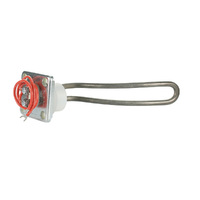
Watch Hotwater Element Incoloy 1800W | HWIS-18 video
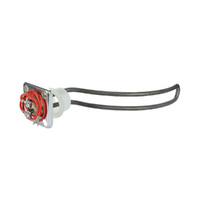
Watch Hotwater Element Incoloy 2400W | HWIS-24 video
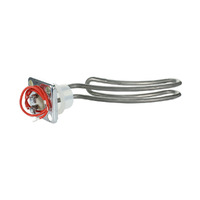
Watch Hotwater Element Incoloy 3600W | HWIS-36 video

Needed a thermostat in a hurry! This part was super easy to locate on the well organised Website. The part was the cheapest in the range I was looking for. Easy and quick checkout and delivered at my doorstep within days. Very happy and the part was perfect for my needs.
Hot water system failed, l checked it, the element was blown, ordered a replacement same day, picked it up next morning, system was hot enough to shower that day, easy! Great service and price was even better, really happy with result
No, they are designed to heat water without altering taste or quality when used in compliant hot water systems.
Hot Water Incoloy Elements are available from Sparky Direct, offering access to a wide range of compatible options for Australian hot water systems. With Australia-wide shipping available.
There are options suitable for domestic use and light commercial applications, depending on rating and design.
Warranty periods vary by manufacturer and cover manufacturing defects when installed and used correctly.
Yes, they are typically sold as individual components to suit specific system requirements.
Check your system’s brand, model, kilowatt rating and power supply, and confirm compatibility before purchasing. All product details are available on the Sparky Direct website.
Replacement should always be carried out by a licensed electrician in accordance with local regulations.
Yes, some scale buildup is normal in many Australian water supplies, even with corrosion-resistant materials.
Yes, when installed in a compatible tank designed for the environment and location.
No, they operate silently as part of the electric storage hot water system.
Heating speed is determined by the kilowatt rating and tank size, not just the material of the element.
They may reduce the frequency of element replacement in some areas, but regular system checks are still recommended.
They generally offer improved corrosion resistance compared to standard copper elements, particularly in challenging water conditions.
Hot water Incoloy elements are electric heating elements made from a nickel–iron–chromium alloy designed for use in electric storage hot water systems, offering good resistance to corrosion and scaling.
Common signs include no hot water, slow recovery time, or the circuit breaker tripping when the system operates.
Service life varies with water quality and usage, but many last several years when correctly matched to the system and maintained.
Most Incoloy elements are supplied as the heating element only, with thermostats selected separately to suit the specific hot water unit.
Yes, they are commonly used in off-peak electric storage systems, provided the element rating matches the system requirements.
Some Incoloy elements are designed for single-phase power, while others suit three-phase systems. The correct option depends on the electrical supply and heater rating.
Compatibility depends on the hot water system design. Always check the heater manufacturer’s recommendations before selecting an element.
They offer better resistance to scale than basic copper elements, but in very hard or aggressive water conditions, alternative materials may be specified by the system manufacturer.
Common ratings include 1.8 kW, 2.4 kW, 3.6 kW and 4.8 kW, selected to match the tank size, power supply and manufacturer specifications.
Incoloy elements used in Australia are typically manufactured to meet relevant electrical safety and hot water system requirements, with alignment to applicable AS/NZS standards depending on the heater design.
Yes, Incoloy elements are commonly used in Australian electric storage hot water systems and are compatible with many standard residential and light commercial units.
Incoloy is an alloy developed to withstand high temperatures and aggressive water conditions, making it suitable for many Australian water supplies where durability is important.