
Search Results:
Search Results:
Search Results:
Search Results:
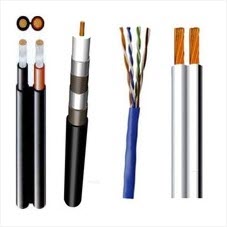
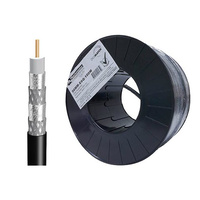
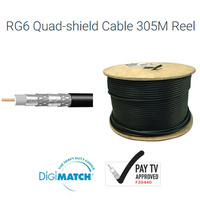
A coaxial cable contains four concentric layers built around a central axis. The innermost layer is a solid copper or copper-clad steel conductor. Surrounding that sits a dielectric insulator, usually solid or foamed polyethylene. A metallic shield (foil, braid, or both) wraps the dielectric, and an outer PVC or polyethylene jacket protects the assembly from physical damage and weather.
Signals travel along the centre conductor as alternating current at radio frequencies. The shield acts as the return path and as an electromagnetic barrier. Because the conductor and shield share the same axis, the electromagnetic field stays contained within the dielectric, which is what allows high-frequency signals to propagate cleanly over long runs.
The concentric geometry creates a controlled-impedance transmission line. External electromagnetic noise hits the outer shield and is bled to earth rather than reaching the centre conductor. At the same time, the signal inside is prevented from radiating outward. This two-way isolation is the reason coax outperforms unshielded cables for RF applications.
Coax is found behind almost every Australian TV outlet, in Foxtel and satellite installations, on free-to-air antenna downleads, and across CCTV camera runs. It also carries broadband signals on hybrid fibre-coaxial networks, and serves as the standard interconnect for two-way radios, ham radio equipment, and commercial RF systems.
At RF frequencies, current concentrates near the surface of the conductor (the skin effect). This is why solid copper centre cores outperform copper-clad steel for higher frequencies: the surface conductivity directly affects signal strength. Foamed dielectrics reduce loss further by lowering the cable's velocity factor.
The dielectric maintains constant spacing between the centre conductor and the shield. Any deformation changes impedance and creates reflections. Shielding stops external interference from coupling onto the signal path. Quality cables use foil plus braid for a denser barrier against electromagnetic noise.
Impedance is the cable's characteristic opposition to alternating current. 75 ohm coax is optimised for video and broadcast signals, where low signal loss matters most. 50 ohm coax handles power-carrying RF applications such as two-way radio and amateur transmission. Mismatched impedance causes signal reflections and reduced performance.
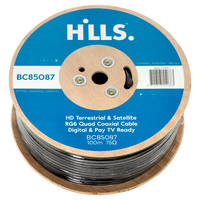
Standard dual-shield cable uses one foil layer and one braid. Quad shield adds a second foil and second braid for around 90 percent more rejection of interference. In environments with mobile signals, fluorescent lighting, or nearby power cabling, quad shield is the safer choice for clean reception.
RG6 is the modern standard for Australian residential TV, satellite, and antenna work. It uses an 18 AWG centre conductor and a thicker dielectric than RG59. RG59 is older, thinner, and now mostly limited to short-run CCTV applications. RG11 is heavier-gauge cable used for very long trunk runs where lower attenuation justifies the cost and reduced flexibility.
| Cable Type | Centre Conductor | Typical Use | Maximum Practical Run |
|---|---|---|---|
| RG59 | 20 or 22 AWG | Short CCTV runs, legacy installations | Around 30 metres |
| RG6 | 18 AWG | TV antenna, satellite, residential broadband | Around 50 metres |
| RG11 | 14 AWG | Long trunk runs, distribution systems | Up to 150 metres |
75 ohm coax (RG6, RG59, RG11) is the choice for any video, broadcast, or satellite installation in Australia. 50 ohm coax handles transmission applications such as CB radio, amateur radio, and Wi-Fi antennas. Always confirm the equipment specification before selecting cable, because the two systems are not interchangeable.
Solid copper centre conductors carry both DC power and RF signal, making them essential for satellite installations that power LNB equipment over the cable. Copper-clad steel handles RF only, costs less, and performs adequately for free-to-air TV runs but cannot pass DC current reliably.
Standard shielding (foil plus braid) suits most metropolitan free-to-air antenna installations. Quad shield (two foils plus two braids) is recommended for satellite, MATV, and any environment with strong electromagnetic interference. The cost difference is small relative to the cost of returning to redo a poor installation.
Cable choice scales with run length. Under 20 metres, standard RG6 dual shield handles most domestic situations. Between 20 and 50 metres, step up to RG6 quad shield. Beyond 50 metres, consider RG11 or add an inline amplifier. Always factor in signal loss through splitters, which add 3 to 8 dB per output.
Indoor coax uses a standard PVC jacket suitable for wall-cavity and ceiling runs. Outdoor cable uses a UV-stabilised polyethylene jacket rated for direct sunlight, with a flooded gel core in some grades to block water migration. Using indoor cable outside leads to jacket cracking within 2 to 3 years.
Three mistakes account for most callbacks: choosing copper-clad steel for satellite installations, using dual shield in high-interference areas, and running indoor-rated cable through external roof spaces. Each of these is cheaper at point of purchase but costs significantly more once the second visit is factored in.
Attenuation is the gradual reduction of signal strength along a cable run, measured in decibels per 100 metres. RG6 typically loses around 6 dB per 100 metres at 100 MHz, rising to over 20 dB per 100 metres at 1 GHz. Longer runs and higher frequencies both increase loss.
Higher-frequency signals attenuate faster than lower ones. A satellite signal at 2 GHz loses far more strength per metre than a UHF TV signal at 600 MHz. This is why long satellite runs need either heavier-gauge cable, an in-line amplifier, or a closer LNB position.
Quality variables include conductor purity, shield density, dielectric uniformity, and jacket consistency. Cheap cables often have a sparse braid (40 percent coverage instead of 90) and a copper-clad steel conductor instead of solid copper. The result is poorer reception and reduced longevity.
If signal margin is below 10 dB at the receiving end, upgrade. The simplest path is RG6 dual shield to RG6 quad shield, then to RG11 for runs above 50 metres. An inline distribution amplifier may be more cost-effective than recabling, particularly when wall penetrations make replacement difficult.
F-type is the standard connector for Australian TV, satellite, and antenna work. Termination is the single biggest cause of poor signal: a sloppy strip, a stray braid wire, or a loose centre pin can cost 6 to 10 dB. Use a dedicated coaxial stripper and either a crimp or compression connector for repeatable results. PAL connectors remain in legacy installations.
A purpose-built coaxial stripper sets the cut depth so the centre conductor, dielectric, and shield are all exposed to the correct length on every termination. A crimp tool sized for F-type connectors completes a consistent join in seconds. Browse TV and data tools for the full installation kit range.
Coaxial cable should never be bent tighter than 10 times its outer diameter. Tight bends deform the dielectric, change the impedance at that point, and create signal reflections. Use proper cable management hardware to maintain gentle curves through wall plates and conduit bends.
Run coaxial cable at least 300 mm clear of mains TPS cable, and cross at right angles where they must intersect. AS/NZS 3000:2018 segregation requirements apply to communications cabling. Quad shield reduces the consequences of poor separation but does not eliminate them entirely.
Use a TV signal finder at the antenna end and a meter at each outlet. Confirm signal strength is above 50 dBuV and signal-to-noise ratio is above 25 dB for digital TV. For satellite, confirm both signal strength and signal quality on the LNB before final fix-off.
Free-to-air TV remains the largest single use of coax in Australia. A typical installation runs RG6 from a roof-mounted antenna down to a central distribution point, then out to TV outlets in each room. Foxtel and satellite use the same cable type with solid copper centre.
Some Australian premises receive NBN over hybrid fibre-coaxial connections, terminating at a coaxial wall outlet. Cable internet via the legacy Optus and Telstra HFC networks also uses coax. Quality of the in-house wiring directly affects throughput on these connections.
Analogue CCTV used RG59 with a separate power core. HD-over-coax systems (HD-TVI, AHD, HD-CVI) typically run on RG6 for better signal margin at higher resolutions. Modern IP cameras have largely shifted to Cat6 or fibre, but coax remains common in retrofits and long single-camera runs.
Two-way radio, amateur radio, marine VHF, and Wi-Fi antenna feedlines all use 50 ohm coax. The cable type depends on frequency and run length: RG58 for short patches, LMR-400 or equivalent for fixed antenna installations, and lower-loss varieties at microwave frequencies.
Ethernet (Cat5e, Cat6) carries digital data using twisted pairs and is the default for IP networking. Coax carries RF and is the default for video distribution and broadcast signals. Ethernet wins on data throughput; coax wins on RF signal integrity and on running DC alongside the signal for powered equipment.
Fibre carries vastly more data over far greater distances with no electromagnetic interference. Coax is significantly cheaper, easier to terminate in the field, and does not require specialised splicing equipment. Fibre is the long-haul backbone choice; coax is the practical last-link for most TV and CCTV applications.
Coax is the better choice for any RF-based installation: TV antennas, satellite, CCTV with analogue or HD-over-coax cameras, and radio communications. It also wins where DC power needs to travel alongside the signal, such as antenna pre-amplifiers and satellite LNBs.
Coax is not the right tool for high-speed local data networking. Throughput, latency, and topology constraints all favour Cat6 or fibre for general LAN applications. Where mixed needs exist, install both: coax for video, twisted pair for data.
Indoor cable uses a standard PVC jacket. Outdoor cable uses a UV-stabilised polyethylene jacket, often with a gel-flooded core to block water ingress along the cable. The conductor and shield are usually identical between the two, the difference is entirely in jacket compound and water protection.
Australian UV exposure is severe. Standard PVC jackets become brittle and crack within 2 to 3 years of direct sun. Outdoor-rated polyethylene typically lasts 15 to 20 years. Moisture migration along the cable is the second failure mode: any breach in the jacket lets water track inside, corroding the braid and centre conductor.
Where cable runs across roof tiles, through foot-traffic areas, or in conduit with sharp bends, mechanical protection extends service life. Use saddle clips at 600 mm spacing on external runs and rated cable duct through accessible areas.
Coax does not need scheduled maintenance, but a visual inspection every 5 years catches jacket damage before water ingress causes signal loss. Check connector seals at antenna and dish penetrations, and confirm self-amalgamating tape weatherproofing is intact at all outdoor joins.
Coaxial cable pricing reflects cable specification more than brand. Standard RG6 dual shield sits at the low end. RG6 quad shield with solid copper sits in the middle. RG11 and specialty low-loss cables sit at the top. Bulk reels (100 m and 305 m) deliver the lowest cost per metre.
For multi-outlet installations, buy a 100 m or 305 m reel and terminate to length. For single-room jobs, pre-cut lengths from cable cuts deliver a working length without the leftover offcut. Bulk reels typically save 30 to 50 percent per metre over short pre-cut runs.
Bargain coax cuts cost in three places: copper-clad steel instead of solid copper, sparse braid (under 50 percent coverage), and thin or non-UV jacket. Quality cable uses solid copper, dense quad shield (around 90 percent coverage), and tested-rated jacket compounds. The difference shows up in signal margin and in service life.
Hardware retailers stock a limited range at consumer pricing. Trade suppliers stock specifications by reel and brand, with pricing scaled for installation volumes. For more than one or two outlets, trade pricing on a full reel is significantly cheaper than equivalent retail packs.
Sparky Direct dispatches in-stock coaxial cable orders the same business day for nationwide delivery. Standard reels ship from local stock; specialty grades and longer reels may carry an additional lead time depending on supplier inventory.
Start with the equipment specification. Satellite installations need solid copper for DC pass-through. Long antenna downleads need quad shield to manage interference. CCTV needs the cable type matched to camera signal format. Reading the receiver or camera datasheet first prevents wrong-cable callbacks.
Avoid these recurring errors: buying copper-clad steel cable for a satellite installation that needs DC power up the line. Ordering indoor PVC cable for an outdoor downlead. Choosing dual shield in a high-interference urban environment. Underestimating run length, so the reel falls short on the day of installation.
Measure each run twice and add 15 percent for vertical drops, terminations, and unexpected detours. For multi-outlet jobs, draw a star topology from the central distribution point rather than daisy-chaining: short, direct runs deliver better signal balance and easier fault-finding.
Sparky Direct supplies trade and DIY customers with Matchmaster and Hills coaxial cable, plus Klein Tools termination kits and complete antenna installation kits. Orders ship Australia-wide with trade pricing applied at checkout for account holders.
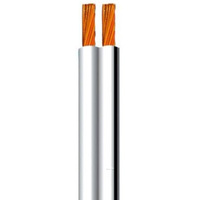
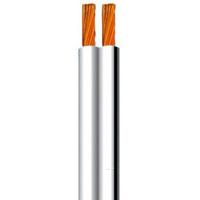
Watch Coaxial Cable Rg6 Quad Shield 20m Cut | 06MM-E6Q-20mtr video
Watch MATCHMASTER 08MM-ST05 | Coax Stripper Tool For RG59, RG6, RG11 Cable video
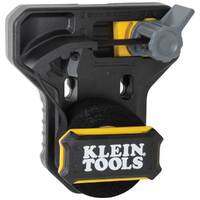
Watch Klein Tools VDV026-211 | Coax Cable Installation Kit with Zip Pouch | Red & Yellow video

Prompt notification of pick up. And friendly and professional service upon arrival. Thanks, will definately shop again and spread the word.
Best Coax strippers on the market. I’ve used many of different brands. These are the best. Easy to use. great product.
As described, easy to use and much cheaper than Bunnings. Australia Post is the weak link in the chain, but if it’s not urgent, all good.
Quality products in stock • Fast Australia-wide delivery • Competitive trade pricing
Browse Coaxial Cable → Get Expert Advice →All cables experience some signal loss, but correct cable type and quality help minimise this over typical residential distances.
Coaxial cable is available from Sparky Direct, offering access to quality cabling products with Australia-wide delivery.
Delivery options depend on the supplier and location, with availability across metropolitan and regional Australia.
Yes. Coaxial cable is suitable for new installations, renovations, and system upgrades.
Warranty coverage depends on the manufacturer and supplier, with conditions applying to correct use.
Consider cable type, shielding quality, length, indoor or outdoor rating, and installer recommendations.
Yes. Coaxial cable remains widely used for broadcast and RF applications despite the growth of data cabling.
Yes. Older or damaged coaxial cable may reduce signal quality and may need replacement.
Yes. Coaxial cable is commonly used in apartments for shared or individual antenna systems.
The cable itself does not require maintenance but may be checked during system servicing or signal troubleshooting.
Yes. Coaxial cable is often installed or replaced during home renovations and upgrades.
Yes. Quality coaxial cable is designed to withstand regular use and environmental conditions when correctly rated.
Yes. Coaxial cable is commonly concealed within walls, ceilings, or conduits for a neat finish.
Coaxial cable is an electrical cable with a central conductor, insulating layer, metallic shielding, and outer sheath, designed to carry signal transmissions with minimal interference.
Coaxial cable is flexible enough for installation through walls and ceilings when installed by trained professionals.
Coaxial cable provides stable signal quality and strong resistance to interference, making it suitable for TV reception.
Yes. Installation should be carried out by licensed communications or electrical professionals to ensure compliance and performance.
Yes. Coaxial cables are available in a range of lengths to suit various installation requirements.
Yes. Coaxial cable is still widely used for RF and video signals, while Cat5 and Cat6 cables are used for data networking.
Yes. Modern coaxial cables such as RG6 are suitable for high-definition and digital signal transmission.
Yes. Higher-quality shielding helps reduce signal interference and improves overall transmission reliability.
Yes. Specific coaxial cables are rated for indoor use, while others are designed with UV-resistant sheaths for outdoor installations.
Common types include RG6 and RG59, with differences in thickness, shielding, and signal performance depending on application.
Quality coaxial cable supplied in Australia is manufactured to meet relevant AS/NZS electrical and communications standards when installed correctly.
Coaxial cable is commonly used for TV antennas, satellite systems, CCTV, broadband connections, and radio frequency applications.