
Search Results:
Search Results:
Search Results:
Search Results:
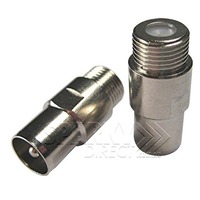
Find the best TV cable & coaxial connectors here at Sparky Direct. [ Read More ]
This category covers the products used to connect, terminate, adapt, and distribute coaxial TV and RF signals. Connector quality directly affects signal reliability, digital TV performance, satellite reception, and long-term installation durability. The range suits professional installers, antenna technicians, electricians, and informed home renovators upgrading or maintaining TV connections.
Coaxial cable is a shielded cable built from a centre conductor, a dielectric insulator, a metallic shield, and an outer jacket. It carries free-to-air TV, antenna feeds, satellite, MATV, CCTV, and general RF distribution signals. Coax used for TV and video runs at 75 ohm impedance, which is the standard for these systems.
Connectors terminate the coaxial cable and create the physical and electrical interface between the cable and the next device. That device might be a wall plate, splitter, amplifier, antenna, set-top box, or TV. The common families are F-type, PAL or Belling-Lee, BNC, joiners, adaptors, and wall plate mechanisms. Poor connector fit, incorrect cable size, or damaged shielding can cause pixelation, dropouts, low signal level, and interference.
A connector must match the cable type, the cable diameter, the termination method, and the application environment. Impedance continuity, shielding continuity, corrosion resistance, and moisture protection all affect long-term performance. A cheap or mismatched connector can undermine an otherwise good antenna or cabling installation.
Most modern Australian TV, satellite, CCTV, and distribution work uses one of three coax types. The right choice depends on the run length, the signal type, and the level of interference in the environment.
| Cable Type | Typical Use | Matching Connector |
|---|---|---|
| RG6 | Digital TV, antenna, satellite, residential distribution | RG6 F-type crimp or compression |
| RG59 | Legacy CCTV, AV, short runs | RG59-sized connectors (not interchangeable with RG6) |
| RG11 | Long runs, MATV backbones, commercial distribution | RG11-sized connectors and tools |
RG6 is the most common coaxial cable for digital TV, antenna feeds, satellite, and residential distribution work. It is available in dual shield, tri shield, and quad shield variants. Quad shield is generally preferred for new work and for environments with high interference. RG6 pairs with RG6-sized F-type crimp and compression connectors.
RG59 is thinner than RG6 and is generally suited to shorter runs or older CCTV and AV systems. RG59 connectors differ in size from RG6 connectors and should not be substituted. RG59 still has a place when maintaining older installations or matching legacy equipment.
RG11 is a thicker, lower-loss cable used for longer runs, larger properties, MATV backbones, and commercial distribution. It requires RG11-sized connectors and a compatible tool set due to its larger diameter and stiffer construction. RG11 is rarely necessary for short home patching or a standard domestic TV point.
Dual shield, tri shield, and quad shield describe how many layers of foil and braid wrap the centre conductor. More shielding reduces interference ingress from nearby noise sources. Cable size and conductor quality affect attenuation, which is the signal loss measured over distance. Outdoor, high-interference, commercial, and satellite work generally benefits from higher-shielded coax.
F-type is the dominant connector family for current TV and satellite work in Australia. Sparky Direct stocks F-type crimp connectors, compression connectors, screw-on adaptors, joiners, and wall plate mechanisms from Matchmaster and Clipsal.
F-type connectors are used at antenna outlets, splitters, amplifiers, satellite systems, Foxtel-style installations, MATV systems, and modern TV outlets. The cable centre conductor forms the centre pin in many F-type terminations. F-type connectors are available in sizes matched to RG6, RG59, and RG11, so the size must be selected to suit the cable.
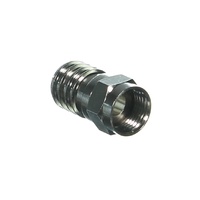
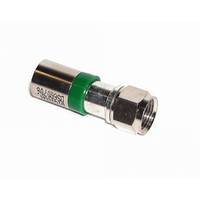
Crimp connectors are common, affordable, and fast to install when paired with the correct crimping tool. Compression connectors offer stronger mechanical retention and better environmental sealing, which is why they are preferred for outdoor terminations, satellite downleads, and professional-grade work. Choose based on the job: crimp for fast indoor patching, compression for outdoor, satellite, commercial, or hard-to-access locations.
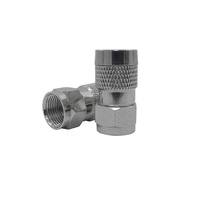
F-81 female-to-female joiners, F-type adaptors, splitters, wall plate mechanisms, and pre-made fly leads handle the rest of the system. Every join or splitter introduces some signal loss. Use only what the design requires, and choose quality fittings to avoid stacking losses on marginal signals.
Coax is only part of the picture in a modern home or commercial fitout. Many jobs also need data and phone outlets running alongside TV cabling.
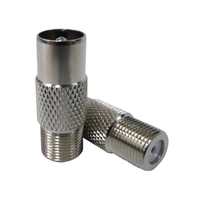
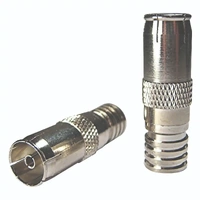
PAL or Belling-Lee connectors are push-in connectors found on older TVs, wall plates, and fly leads. F-type generally offers stronger retention and better shielding continuity, but PAL remains convenient for connecting to legacy equipment. F-type to PAL adaptors are available to bridge modern coaxial cabling to older devices.
BNC connectors are bayonet-locking fittings used in CCTV, professional video, testing equipment, and some RF applications. For video systems, the 75 ohm BNC variant is the correct choice. CCTV installations may use RG59, RG6, or adaptors depending on the camera and equipment specification.
RJ45 connectors are used for Ethernet and data cabling, not for coaxial TV. Cat6 suits most home and office networks where standard gigabit speeds are sufficient. Cat6a supports higher bandwidth over longer distances when installed correctly, making it the better pick for 10G runs or longer pathway lengths. Match the RJ45 plugs, keystone jacks, wall plates, and patch leads to the network requirement. Test gear like network testers helps verify each run before sign-off.
Common phone and data accessories include RJ11 and RJ12 phone sockets, RJ45 data jacks, Clipsal Iconic mechanisms, wall plates, and adaptors. Legacy phone sockets and modern data outlets look similar but are not interchangeable. Plan the wall plate system around the cabling category, the room layout, and the receiving equipment.
The connector selection process is the same on every job: confirm the cable, confirm the equipment, then confirm the environment.
Gold plating helps resist corrosion on exposed contact surfaces and can be worthwhile in coastal or humid environments. It does not, on its own, improve signal quality if the connector is poorly made or incorrectly installed. Correct impedance, shielding continuity, mechanical fit, and termination quality are more important than plating. Choose connectors suited to the application rather than buying on finish claims alone.
Good tooling is the difference between a clean termination and a callback. The right stripper, crimper, compression tool, and tester each play a role.
A coax stripper prepares the outer jacket, shield, dielectric, and centre conductor to the correct length for the connector. Clean preparation reduces shorts, exposed braid issues, and inconsistent signal performance. The cut and strip lengths vary by connector family, so check the connector data sheet before setting up the tool.
RG6 crimp tools and compression tools are the two main families, with matching die sizes for the connector being used. BNC crimp tools follow the same logic. Tool and connector compatibility is critical, since a mismatch causes weak retention, loose centre pins, and unreliable shielding.
Continuity testers, cable identifiers, coax testers, and TV signal finders help identify shorts, open circuits, weak signal, splitter loss, and incorrect terminations before handover. Electricians, AV installers, antenna technicians, and maintenance teams all benefit from testing each outlet rather than relying on the TV picture as proof of a good install.
Connectors are only one part of the distribution chain, and the rest of the system needs the right components to perform reliably. Splitters and amplifiers, wall plates, and accessories complete the install.
Splitters, taps, amplifiers, and F-type joiners take a single feed and distribute it to multiple outlets. Splitting always reduces the level at each outlet, and larger installations may need amplification to maintain a usable signal. Match the splitter frequency range to the application: free-to-air TV, satellite, MATV, or broadband.
Signal boosters compensate for long cable runs, multiple outlets, weak antenna signals, or losses through distribution. A booster cannot fix a poorly aligned antenna, water-damaged cable, an incorrect connector, or a bad termination. Diagnose the root cause first, then add amplification only if it is needed.
TV antenna wall plates, F-type wall plates, PAL wall plates, combined TV and data plates, and Clipsal Iconic mechanisms cover most renovation needs. Wall plate selection should match the cable type, the connector type, the wall plate range, and the room fitout. Home cinemas, apartments, offices, and multi-room TV setups all have specific needs that the right plate system can handle.
Even the best connectors and cable cannot rescue a poorly planned install, because routing, terminations, and compliance all matter to the final signal at the outlet.
Loose connectors, damaged coax, the wrong cable type, poor shielding, water ingress, excessive splitter loss, old PAL connectors, and antenna faults all cause signal issues. Digital TV problems often show as pixelation, audio dropouts, missing channels, or total signal loss. Start by checking each connector condition and termination, then engage a qualified installer for fixed cabling or antenna repairs.
Coaxial and data cables should be routed to minimise interference, sharp bends, crushing, and proximity to electrical noise sources. Tight bends and damaged shielding affect performance. Plan cable paths during fitout, and rely on professional installation for fixed cabling work.
Fixed telecommunications and data cabling in Australia may require a registered cabler, depending on the work type. Electrical work and work near mains wiring must be completed by appropriately licensed professionals. Always check the current local requirements and use compliant components suited to Australian installations.
Safety note: Work involving fixed cabling, building entries, or any contact with mains wiring should be left to licensed electricians or registered cablers. This category page covers product selection, not on-site installation instructions.
Sparky Direct supplies TV, coax, data, and phone accessories nationwide, with fast dispatch and online ordering for trade and informed buyers.
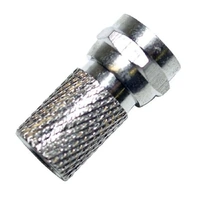
Before ordering, confirm the cable type, connector type, termination method, indoor or outdoor rating, pack quantity, brand, tool compatibility, and equipment compatibility. For RG6 products, confirm whether the connector is for crimp, compression, twist-on, or wall plate use. For adaptors, confirm the gender, the impedance, and whether the adaptor is F-type, PAL, BNC, RCA, RJ45, or phone-related.
Bulk F-type connectors, RG6 connectors, wall plates, RJ45 connectors, data jacks, patch leads, and phone or data accessories suit electricians, antenna installers, AV contractors, maintenance teams, and builders managing multiple fitoffs. Standardising on a connector system and a matching tool set reduces errors across jobs and simplifies stock on the van.
When comparing suppliers, the practical criteria are product range, stock visibility, fast dispatch, online ordering, pack quantities, trusted brands, specification clarity, and delivery. Sparky Direct is a convenient online option for TV, coax, data, and phone accessories where the products match the job requirement. Compare landed cost, availability, product compatibility, and delivery speed against the local counter.
Use this checklist on the next job to keep selection consistent and avoid common errors.
Adaptors are useful for connecting legacy equipment, temporary patching, and matching a wall plate to a device input. Re-terminating with the correct connector is often the better choice for permanent installations where signal quality matters. Avoid long chains of adaptors, because each connection point adds loss and adds another possible fault location in the run.
If the install will be inspected or signed off, choose compression connectors at outdoor and roof entry points, F-type crimp for clean indoor terminations, and matched wall plate mechanisms for renovation work. Internal links above point to the relevant product groups.
Club Clipsal is Australia's largest electrician community offering trade rewards, business support, and exclusive benefits. When you nominate Sparky Direct as your preferred wholesaler, we automatically apply your Clipsal spend points to your Club Clipsal account daily.
Entry-level offering coaching, mentoring, and training discounts
Unlock exclusive industry tools and networking events
Access Toyota fleet offers and business software discounts
Maximum benefits, including VIP experiences and rewards
1. Sign Up: Create your Club Clipsal account at clipsal.com/club-clipsal or via the iCat mobile app
2. Nominate Sparky Direct: Select Sparky Direct from the wholesaler dropdown menu in your profile
3. Add Email: Enter your Sparky Direct account email address in the membership number field
4. Start Earning: Every dollar spent on Clipsal products earns points automatically
Redeem points from the rewards store, including gift cards, tools, and experiences. Access business summits, product training, and industry networking events. Receive early access to new product launches and special promotions. Connect with fellow electricians via the Club Clipsal community app.
Watch MATCHMASTER 08MM-F6M | Connector RG6 Crimp video
Watch CLIPSAL 30PFM | Mech F Type White (30 Series) 30PFMWE video
Watch MATCHMASTER 07MM-ES04 | 4 Way All Ports Splitter F Type video

Received my Matchmaster 01MM-SA100 Log Periodic Digital TV Antenna VHF/UHF 9 Element antenna as advertised. Installed this unit myself in about 40 minutes replacing old with new, f type fittings supplied made the process easy as I already have the cable cutting tool and crimper to complete the installation. Completed wiring, tightened clamp nuts, used a tv signal finder app from Google Play turned on tv and checked picture quality, made minor adjustments and the antenna works beautifully. Would highly recommend this product from if you live inner city and have good tv reception. The price from Sparky Direct was also a no brainer. PD - happy viewer.
Installed cheaper unbranded splitter and resulted in poor signal. Installed Matchmaster splitter and no signal issues anymore. Premium product that does the job. Highly recommended.
The modular design of the Clipsal iconic range allows you to recycle switch backing plates and covers clipping things like fan switches and tv outlets into them as you upgrade and change things in your home.
Trusted brands • Expert advice • Fast Australia-wide delivery • Trade pricing
Shop TV Cable Connectors → Get Expert Advice →