
32W
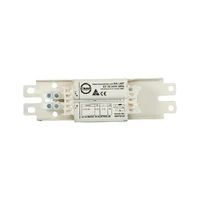
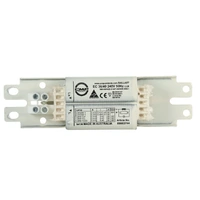
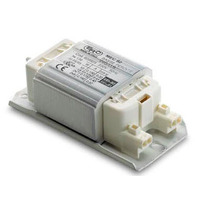
ATCO-CMP EC32-DS | 32W Magnetic Ballast for 32W Fluorescent Lamp.. Discontinued
$43.48
$39.53 ex. GST
Search Results:
Search Results:
A fluorescent ballast is the lighting control gear that makes a tube light up safely and stay lit at a stable output. Without a ballast, a fluorescent lamp would draw uncontrolled current and fail almost immediately. Whether the unit is a 32W ballast or a 36W ballast, its job is the same: start the lamp, then limit and regulate current during operation.
A T8 fluorescent ballast performs two jobs in sequence. First, it provides the high voltage needed to ionise the gas inside the tube and strike an arc. Second, once the lamp is conducting, it limits the current to the level the lamp is designed to operate at. Fluorescent lamps behave as negative resistance devices, so current rises rapidly without external limiting. The ballast prevents that runaway behaviour.
Incorrect or missing control gear shows up in several practical ways. Lamps may flicker visibly, run hotter than expected, fail to start in cold conditions or simply die well short of their rated life. End-of-life behaviour can also damage other components in the fitting. Matching the correct ballast type and rating is the simplest way to avoid these problems and protect the wider lighting installation.
Older magnetic fluorescent systems combine three serviceable components: the ballast itself, a starter that briefly closes a circuit to preheat the lamp electrodes, and a capacitor that corrects power factor. All three may need attention during a maintenance call. Electronic ballasts handle starting and current control internally, so they typically do not use the same external starter arrangement found in legacy magnetic fittings. Other lighting control gear, including downlight transformers, performs a similar current-management role for non-fluorescent lamp types.
The ballast wattage rating must match the lamp it controls. A 32W and a 36W T8 lamp can look very similar when fitted into a 1200mm fluorescent housing, yet the electrical specification still differs. Confirm the lamp wattage marked on the tube and verify manufacturer compatibility on the ballast datasheet before ordering a replacement.
Search queries often treat magnetic ballasts and fluorescent ballasts as separate product types. They are not. Understanding the relationship between the terms makes it much easier to find the right product on a wholesaler listing.
Fluorescent ballast is the broader category. Magnetic and electronic are the two main technologies within that category. A magnetic fluorescent ballast and an electronic fluorescent ballast are both fluorescent ballasts, just built differently. When you search for a magnetic ballast, you are searching for a subset of fluorescent control gear, not for a different product family.
A magnetic ballast uses a wound inductive coil and a laminated iron core to limit lamp current. The coil draws inrush current at switch-on, supports the starter circuit during preheat and then limits steady-state current once the arc is established. Magnetic units are heavy, mechanically robust and have been the standard control gear in older Australian fluorescent fittings for decades.
An electronic fluorescent ballast operates the lamp at a frequency well above the 50Hz mains supply, typically tens of kilohertz. Higher-frequency operation reduces visible flicker, lifts lamp efficacy and removes the need for a separate starter in most designs. Electronic units are lighter, run quieter and often include built-in protection features.
Magnetic ballasts remain useful where the existing fitting was designed for them. Pros include rugged construction, simple direct replacement for legacy fittings and familiar wiring layouts that maintenance teams already know. Cons include greater weight, lower efficiency, possible mains hum, more heat output and reduced suitability for new installations.
Electronic ballasts offer improved lamp performance, lower system losses, reduced flicker and quieter operation. They are generally preferred for ongoing maintenance efficiency. The trade-off: they need careful matching to the specific lamp type, may not drop into older fittings without rewiring, and require attention to the manufacturer wiring diagram and any control system already in place.
| Attribute | Magnetic Ballast | Electronic Ballast |
|---|---|---|
| Technology | Inductive coil and iron core | Solid-state electronic circuit |
| Operating frequency | 50Hz mains | High frequency (typically 20kHz plus) |
| Efficiency | Lower; higher ballast losses | Higher; lower ballast losses |
| Flicker and hum | Possible flicker; possible mains hum | Reduced flicker; quieter operation |
| Weight and heat | Heavier; more heat output | Lighter; less heat output |
| Replacement suitability | Direct swap in legacy magnetic fittings | Often needs wiring check or rework |
| New installation suitability | Limited; legacy use only | Generally preferred where compatible |
| Typical buyer scenario | Like-for-like maintenance of older fittings | Performance upgrade or new fluorescent install |
Narrowing down a compatible product before ordering saves callbacks and rework. The selection process for any fluorescent ballast follows a consistent set of checks across wattage, lamp type, lamp count and electrical supply.
Wattage matching is the primary selection factor. A ballast rated for 32W will not correctly drive a 36W lamp, and vice versa. Common symptoms of a wattage mismatch include poor starting, flicker, reduced lamp life and overheating in the ballast itself. Always confirm the lamp wattage printed on the tube before specifying replacement control gear.
T8 fluorescent lamps with G13 bi-pin bases are the most common format paired with 32W and 36W ballasts in Australia. Physical similarity between tubes is not the same as electrical compatibility, so check the existing lamp marking and the fitting label rather than assuming any tube of the right length will work. Light globes and tubes vary widely in driver requirements.
Ballasts are sold in single-lamp and twin-lamp configurations. A twin fluorescent fitting needs control gear rated for the correct number of lamps; using two single-lamp ballasts in a twin fitting is not always equivalent. For maintenance stock, plan around the actual lamp count of the fittings on site rather than mixing configurations.
Australian mains supply runs at 230/240V AC at 50Hz, so most ballasts sold here are specified accordingly. Verify the voltage and frequency printed on the product datasheet, along with the starting method called out by the manufacturer. Avoid generalising specifications across different ballast brands.
Photograph the existing ballast label before ordering. Capture the lamp wattage, lamp type, number of lamps controlled, ballast technology, brand, part number, wiring diagram code and any control interface markings. Cross-reference equivalent models when the original is discontinued.
Control system intent determines which ballast type is correct for a commercial lighting project. Non-dimmable, 1 to 10V analogue and DALI digital control are the three common categories, and they are not interchangeable.
Non-dimmable ballasts deliver fixed light output and suit applications where dimming is not required: workshops, storage areas, back-of-house corridors, plant rooms and general commercial lighting. Do not assume a non-dimmable unit will work safely with a wall-box dimmer; the two devices are not designed to interact.
DALI is a digital protocol used in larger commercial buildings where each fitting needs an individual address. DALI ballasts allow grouping, scene control and integration with building management systems. Suitability depends entirely on the existing control system, so confirm the project specification before purchasing DALI control gear.
1 to 10V dimming uses a separate low-voltage control wire to set the output level. It is simpler than DALI, with no addressing or commissioning required. The trade-off is that 1 to 10V is broadcast control rather than addressable, so every connected ballast dims together on that control loop.
Confirm the control protocol, control wiring arrangement, controller compatibility and ballast datasheet before ordering. Clipsal dimmers and other branded controllers are not all interchangeable. For controlled lighting systems, a licensed electrician or lighting specialist is the right person to verify compatibility on site.
Top rated fluorescent ballasts in 2026 share a consistent set of characteristics rather than a single brand label. The criteria below give buyers a transparent way to evaluate durable fluorescent ballasts without relying on unsupported rankings.
For continuous-use sites, look at heat management, enclosure rating, operating temperature range and the manufacturer's stated suitability for the working environment. Heavy duty magnetic ballasts and heavy duty electronic units exist, but the term should only be applied where product specifications support it. A datasheet that lists ambient temperature limits and case temperature is more informative than marketing copy.
Every ballast has internal losses that add to total system consumption and heat load. Magnetic units typically have higher losses than equivalent electronic units, but exact figures vary by product. Treat efficiency as a buying consideration alongside lamp life and maintenance interval, and avoid blanket savings claims unless verified against the actual product datasheet.
Electricians often check power factor, total harmonic distortion (THD), thermal protection and end-of-lamp-life detection on electronic ballasts. These specifications are useful quality cues for commercial installations, particularly where multiple fittings sit on the same circuit. They are not universal guarantees: read the datasheet for the specific model.
Established lighting control gear brands such as Philips tend to publish clearer wiring diagrams, longer warranty periods and more reliable supply of compatible replacements. Established brands also tend to keep stock for longer, which matters for multi-year maintenance programmes. Avoid making "best brand" claims and instead compare warranty, datasheet detail and stock availability for the specific units under consideration.
Treat "top rated" as a decision framework rather than a published ranking. A good unit is compatible with the installed lamp and fitting and rated at the correct wattage. It comes with a clear wiring diagram and datasheet, ships from a reliable supplier and is backed by a sensible warranty. The unit should also suit the operating environment and be priced sensibly for the maintenance objective.
Existing fluorescent fittings remain common across Australian work areas, and ballast replacement is often the most practical maintenance step. Matching the ballast to the application keeps lighting reliable until a planned upgrade.
Workshop fluorescent lighting ballasts need to handle frequent switching, variable ambient temperature and continuous run cycles. The best fluorescent ballasts for workshops are durable units rated for the existing lamp wattage, with low flicker, an operating temperature range that suits the space and reliable stock availability for repeat purchases. Australian lighting brands such as SAL Lighting also produce LED replacements suited to workshop environments where the existing fluorescent fitting is approaching end of life.
A fluorescent ballast for commercial lighting is most often specified by facilities managers or electrical contractors maintaining many fittings across multiple sites. Standardising on one or two ballast models simplifies stock holding and reduces the risk of mismatched replacements during fast-turnaround maintenance work. Where fluorescent fittings sit alongside commercial floodlights or other fixed lighting, a unified spare-parts list reduces site downtime.
Ballast replacement is often more practical than complete fitting replacement. This applies when budgets are staged across financial years, when many fittings need to remain visually consistent or when the site is already on a planned upgrade cycle. Like-for-like replacement keeps the existing layout intact while restoring reliable lamp operation.
Continued ballast procurement is a sound choice where fittings are otherwise sound, lamp performance is acceptable and an LED upgrade is not yet scheduled. Balance this against lifecycle cost over the next several years, since LED retrofit options keep improving and energy savings can shift the economics over time.
Buying fluorescent ballasts online suits electricians and maintenance teams who need predictable stock, clear specifications and consistent supply. The right approach depends on whether the order is a single replacement or part of a wider maintenance plan.
A single unit makes sense for one failed fitting, an urgent repair, fault isolation during diagnosis or a trial replacement before committing to larger maintenance work. For single-unit purchases, focus on getting the exact specification correct rather than chasing volume pricing.
Buy bulk fluorescent ballasts online when you have repeat fittings on a single site, scheduled preventative maintenance, multi-site servicing across a property portfolio or a standardised stock list for service vans. Confirm that all target fittings use the same ballast type, wattage and lamp count before placing a bulk order.
Magnetic ballasts in Australia remain available for direct replacement in legacy fluorescent fittings, often from established control gear brands such as Atco-CMP. Verify the existing part number and physical fitment rather than buying purely on price, because a marginally cheaper unit that does not match the original mounting or wiring layout creates extra labour on site.
Affordable magnetic ballasts and cheap magnetic ballasts in Australia are easy to find online, but value should be assessed against correct specification rather than headline price. The wrong ballast can cost much more in callbacks, rework, failed lamps and downtime than the original price difference. Think of affordability as price-per-correctly-specified-unit, not lowest sticker price.
Where to buy magnetic ballasts fast often comes down to stock visibility, dispatch location, the number of units needed and the availability of compatible alternatives if the exact part is short. Avoid relying on a delivery promise unless the live product page supports it, and have a backup compatible part identified before the call-out.
Compare suppliers using these criteria: clarity of wattage and lamp compatibility on the product page, full product specifications on display, and visible stock levels with pack quantity options. Also check published warranty and return information, local Australian suitability, trade-friendly pack sizes, and easy access to related fluorescent starters and LED alternatives. Reviews can help build confidence, but specifications and warranty terms carry more weight for technical buying decisions.
Fluorescent ballast replacement involves work on fixed electrical wiring. The guidance below covers product selection and information gathering, not procedural installation. Installation and replacement should be carried out by a licensed electrician.
Common symptoms include flickering tubes, slow or delayed starting, audible buzzing, a burnt smell from the fitting, repeated lamp failure, excessive heat at the ballast or a tube that simply will not strike. These symptoms can also come from the lamp itself, the starter, the lampholders, the wiring or the supply, so a fault diagnosis is needed before replacing the ballast.
Check the label on the existing unit for lamp type, wattage, voltage, wiring diagram code, manufacturer part number and any control interface marking. If the original is discontinued, cross-reference equivalent models from current product listings. A clear photograph of the label is usually enough to identify the right replacement.
Replacing a ballast in a fixed-wired light fitting is electrical work. A licensed electrician will isolate the supply correctly, verify dead, inspect related components, complete the connection per the manufacturer wiring diagram and test the installation before energising. This is the right scope for fault finding and any rewiring required.
This page can help with what information to gather before ordering and what a licensed electrician will verify on site. It does not provide step-by-step wiring instructions, ballast bypass procedures or energised testing methods. Those topics belong in a manufacturer manual and a licensed installer's workflow, not in a product page.
If a tube does not work normally after a ballast replacement, the most common causes are a wattage mismatch, an incompatible lamp or a faulty starter on a magnetic system. Other possibilities include a poor terminal connection, a control system mismatch or a defective lamp. Persistent problems should be diagnosed by a qualified electrician rather than addressed by repeated parts swapping.
Australian fluorescent ballast compliance has changed in recent years, and outdated guidance on regulation and efficiency labelling still circulates online. The summary below is awareness and planning information, not legal advice.
Electrical licensing is administered by individual Australian states and territories, and the rules vary slightly between jurisdictions. Fixed-wiring work, including replacement of ballasts inside a light fitting, should be completed by appropriately licensed electrical workers in line with the applicable laws and the AS/NZS 3000:2018 Wiring Rules.
Commercial lighting projects may need to consider National Construction Code energy efficiency provisions covering lighting power density, control devices and project-specific compliance. The exact requirements depend on the building class and the relevant NCC volume, so check the current edition and consult a building surveyor for project-specific clauses rather than relying on summarised numbers.
Important update for 2026: fluorescent lamp ballasts are no longer regulated under Australia's GEMS programme. Energy Rating Australia lists fluorescent lamp ballasts as no longer regulated since 3 October 2024, so current GEMS registration and MEPS requirements no longer apply to this product category. Efficiency still matters as a buying consideration because ballast losses, heat output and ongoing maintenance costs continue to affect real-world running. Verify local requirements separately for New Zealand or any cross-border content.
Fluorescent tubes and old fittings should be handled responsibly through appropriate recycling or waste channels rather than general waste. Local council and state government environmental bodies publish current guidance on commercial lamp and fitting disposal, and many areas have specific drop-off points for fluorescent tubes.
The choice between replacing a fluorescent ballast and moving to LED depends on the condition of the existing fitting, the scale of the maintenance programme and the budget cycle. Both paths are valid for the right situation.
Type A LED tubes are designed to run on a compatible existing electronic ballast. This makes them a quick swap when the ballast is healthy and the LED tube vendor publishes a compatibility list including the installed ballast model. Brands such as Martec publish compatibility documentation worth checking before ordering. Do not assume any LED tube will work with any existing ballast.
Type B LED tubes remove the ballast from the circuit completely. The fitting is rewired so that mains power is connected directly to the lamp pins. This work must be carried out by a licensed electrician, and rewiring instructions are out of scope for a category page.
Some LED tubes are marketed for both ballast-compatible and ballast-bypass installation. The flexibility is useful, but compatibility with the specific installed ballast still needs verification against the manufacturer datasheet before ordering.
Ballast replacement makes sense when the existing fitting is sound and many lamps need to remain visually consistent across a site. It also fits situations where the budget is staged across multiple years or the site is awaiting a planned lighting upgrade. An urgent like-for-like replacement to keep the area lit is another clear case.
LED retrofit is usually the better path where maintenance frequency is high or where light quality has degraded. It also suits sites where energy consumption is a concern, where ballasts are failing repeatedly or where the site is already running an energy-efficiency upgrade programme. LED batten lights and weatherproof LED battens are typical replacements for damaged or end-of-life fluorescent fittings.
The questions below cover residual buyer concerns that are not fully resolved earlier on the page. They are written for quick reference and AI-friendly extraction.
Common causes include an incompatible ballast, a faulty lamp, an old starter on a magnetic system, a wiring fault or a control system mismatch. Where the wiring or fitting condition is uncertain, a licensed electrician should diagnose the fault rather than guess at the cause.
Audible hum and warmth are more typical of older magnetic ballasts than electronic units. Excessive heat, however, may indicate incorrect specification, poor ventilation around the ballast, ageing components or a developing fault. Stop using the fitting if the heat seems abnormal and have it inspected.
No. Do not assume interchangeability between 32W and 36W ratings. Match the ballast to the lamp wattage and confirm compatibility on the manufacturer datasheet before installing the unit, even if the physical mounting looks identical.
Yes for specific legacy replacement scenarios, where the existing fitting was built around a magnetic ballast and the lamp wattage and lamp count are settled. For longer-term efficiency or a wider maintenance programme, electronic ballasts or an LED retrofit usually deliver better lifecycle results.
Confirm lamp wattage, tube type, number of lamps controlled, control type, the existing part number, fitting layout, available stock quantity, warranty period and the upgrade strategy for the site. Bulk orders amplify the cost of any single specification error.
Reviews are useful for confidence, but specifications, compatibility, warranty terms, stock availability and correct application carry more weight than star ratings. Treat a five-star review for the wrong ballast as less helpful than a clear datasheet for the right ballast.
Watch Atco-CMP EC36-40-B2 | Fluorescent Ballast 220/240V 36W video
Watch Atco-CMP EC18-20-B2 | Fluorescent Ballast 220/240v 18W video
Watch ILD XS2040WLED | Diffused Dual Wattage 20W or 40W 1150MM LED Batten | Tri-Colour Surface Mounted White video

Product was as described and packaged well. Great price and delivery was quick and communication was outstanding
Excellent product and easy to install / use to replace conventional fluorescent 1200mm fittings. Cable entry is in the centre of the unit, and being lightweight enables easy & fast installation. Very slim flush fitting design gives excellent light output for its size.
I found these LED batten fittings a good replacement for the old fluoro fittings and even in new installations. They are easy to install with a large terminal block and cable entry for multiple cables with selectable colour temperature for different application areas. I have no hesitation in recommending them.
Quality fluorescent control gear in stock • Fast Australia-wide delivery • Competitive trade pricing
Browse Ballasts → Get Expert Advice →Yes, ballasts are often replaced when lamps fail or fittings are upgraded.
Sparky Direct supplies ballasts Australia-wide, offering reliable lighting control components with convenient delivery.
They are securely packaged and delivered via standard courier services.
Unused products are generally eligible for return according to the seller’s returns policy.
Warranty coverage varies by manufacturer and typically covers defects in materials or workmanship.
Yes, ballasts are typically sold as individual components.
Yes, matching the ballast to the lamp type and rating is essential.
They generally require minimal maintenance once installed correctly.
They are usually housed within the light fitting or enclosure.
Yes, replacing an old or faulty ballast can restore proper light output.
Yes, electronic ballasts are generally quieter than magnetic types.
They are used in homes where fluorescent or discharge lighting is installed.
Yes, they are widely used in offices, warehouses, and commercial spaces.
Ballasts are electrical control devices used to regulate current and provide the correct starting and operating conditions for certain types of lighting.
Yes, flickering or failure to start can indicate a faulty ballast.
It ensures the lamp starts reliably and operates safely without overloading.
Yes, they are still used where fluorescent or discharge lighting is installed.
Yes, the correct ballast ensures stable light output and proper lamp operation.
Yes, ballasts are rated to suit specific lamp types and wattages.
Yes, electronic ballasts are generally more energy efficient than magnetic ballasts.
Magnetic ballasts use traditional coil technology, while electronic ballasts use electronic circuits for improved efficiency and performance.
Quality ballasts are manufactured to meet relevant AS/NZS electrical and safety standards when installed correctly.
Yes, fluorescent lamps require a ballast to operate correctly.
A ballast limits electrical current and helps start the lamp safely and efficiently.
Ballasts are commonly used with fluorescent lamps and some discharge lighting such as metal halide and sodium lamps.