
Search Results:
Search Results:
Search Results:
Search Results:
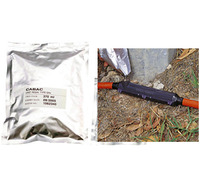
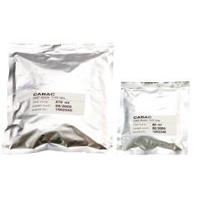
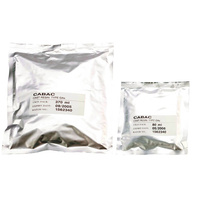
A cast resin joint kit is a complete cable jointing system designed for permanent, sealed connections. Each kit contains a transparent or opaque plastic shell, a two-part liquid resin in pre-measured sachets, and the connectors needed to bond the conductors. The electrician makes the electrical connection, closes the shell around the joint, then mixes and pours the resin. As it cures, the resin fills every void and forms a solid, waterproof block.
The kit relies on three things working together: a sound mechanical and electrical connection between conductors, a sealed enclosure, and a chemically stable resin. Once cured, the resin locks the joint in place and isolates it from the surrounding environment. There are no air pockets, no moisture paths, and no movement.
Underground and outdoor cable joints face constant attack from water, soil acidity, root growth, and ground movement. A bare twisted connection or a basic taped joint cannot survive these conditions. A cast resin joint provides a sealed, mechanically strong connection that meets the durability needs of buried and exposed installations.
Open connections (twist-and-tape, basic crimps, exposed terminal blocks) are not rated for direct burial or wet locations. They allow water to wick along strands, leading to corrosion, insulation breakdown, and eventual fault. A cast resin kit removes that risk by encapsulating the joint completely. Adjacent options include gel connectors for smaller splices and heat shrink tubing for above-ground termination.
Once mixed, the two-part resin flows into the shell and surrounds every wire, connector, and exposed conductor. It fills the gaps between strands and bonds to the cable insulation. As the chemical reaction completes, the liquid hardens into a rigid block that holds the joint in fixed position.
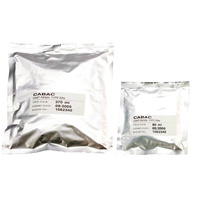
Resin only performs when mixed in the correct ratio. The two-pack sachets are sized to give the right blend when combined fully. Underdone mixing leaves soft spots that may never fully harden. Overworked mixing introduces air bubbles. Follow the manufacturer instructions in every kit.
A correctly cured resin block has no internal voids and bonds chemically to the cable jacket. Water cannot find a path along the conductor strands or between the resin and the cable. This is why cast resin kits are preferred for direct burial, pit installations, and any joint that may sit in water for long periods.
The most common application is repairing or extending a buried cable. When a cable is cut, damaged, or needs to reach further than its original run, a cast resin kit allows a permanent, sealed joint that can be re-buried with confidence. This applies to feeder cables, garden lighting circuits, pump cables, and submains.
Cast resin joints are used across low voltage distribution work, including domestic submains, commercial subcircuits, and street lighting feeds. They suit single-core and multi-core cables in both copper and aluminium. Cable types commonly jointed include orange circular cables and SDI cable.
Industrial sites use cast resin kits for cable repairs in plant rooms, switch yards, and outdoor machinery feeds. Commercial work uses them for car park lighting circuits, signage feeds, and any cable that runs through wet or buried sections. The sealed joint suits environments where fault repair is expensive and access is limited.
When a joint will be re-buried directly in soil, sand, or gravel, a cast resin kit is the standard solution. It also handles cable pits, irrigation control runs, and outdoor joints exposed to rain or sprinklers. Pair the joint with underground electrical warning tape above the run for future excavation safety.
Start with the cable: outer diameter, number of cores, and conductor material. Most kits accept both copper and aluminium when paired with the correct connectors. Aluminium joints generally require connectors with a sealing compound to prevent oxidation at the terminal.
Joint kits carry voltage ratings, typically up to 1 kV for low voltage work. Confirm the kit rating matches your supply class. Most distribution and domestic submain joints fall well within standard low voltage kit ratings.
Some installations sit in highly acidic soils, agricultural runoff, or saline coastal ground. Confirm the resin chemistry suits the local conditions. The CABAC GAM range and similar resin systems are formulated for general direct burial across typical Australian soils.
Heat shrink kits use heat-activated tubing and adhesive linings to seal the joint. They are faster on site but rely on a heat source (gas torch or hot air gun). Cast resin kits need no flame, just clean mixing. Heat shrink is often preferred for above-ground or accessible joints, while cast resin remains the go-to for direct burial.
Tape joints (self-fusing or vinyl) are quick but offer limited mechanical strength and do not pass long-term immersion testing. Gel-based options like the Gelbox connector range handle smaller splices in damp locations. Cast resin remains the strongest, longest-lasting option for serious buried joints.
Cast resin is permanent. Once cured, you cannot reopen the joint without cutting the cable and starting again. Gelbox and similar gel-filled systems are re-enterable, allowing future modification. Choose based on whether the joint is likely to need rework.
| Method | Best Use | Limitations |
|---|---|---|
| Cast resin | Direct burial, permanent joints, wet pits | Not re-enterable, longer cure time |
| Heat shrink | Above-ground, accessible joints | Needs heat source, less submersion-rated |
| Gel-filled | Small splices, damp locations | Limited cable size range |
| Self-fusing tape | Termination protection, light sealing | Not for buried joints |
Strip the outer sheath back far enough to expose all cores. Remove individual conductor insulation only as much as needed for the connector. Clean the cable jacket where the resin will bond. Any oil, dirt, or moisture on the jacket reduces resin adhesion.
Position the cable ends in the shell so the connectors sit centrally. Ensure cable strain is taken before the resin is poured. The shell will not hold cable position once the resin is in, so secure the cable run with cable ties or temporary supports during cure.
Cure times vary with ambient temperature. In warm conditions, initial set may be 30 to 60 minutes, with full cure within several hours. Cold weather extends both. Do not energise the circuit until full cure is reached. Do not back-fill the trench while the resin is still soft.
Site tip: Mix the resin only when you are ready to pour. Once the parts are combined the chemical reaction starts immediately, and pot life is short. Have everything in position first.
The cured resin block forms a continuous seal around the joint. Submersion, ground water, irrigation runoff, and acidic soil have no path into the connection. This is the primary reason cast resin remains the trade default for buried joints.
The hardened block also resists ground movement, root pressure, and accidental knocks during back-filling. The conductors stay in their connectors, and the connectors stay in the shell, regardless of what happens around the joint.
The trade-off is that the joint cannot be opened. If a fault develops or the cable needs to be modified, the only option is to cut the cable and install a new joint. Plan accordingly: do not use cast resin for any connection that may need to be reworked.
The most common installation errors are insufficient mixing, pouring at the wrong temperature, and energising before full cure. Each can compromise the seal or weaken the bond, leading to early joint failure. Read the instructions in each kit before starting.
Cast resin joints must provide insulation equal to or better than the original cable. Resin systems are formulated with high dielectric strength to meet the demands of low voltage distribution work. Match the kit rating to the supply voltage.
Standard test regimes for buried joint kits include water immersion, thermal cycling, and mechanical impact. Quality kits from reputable suppliers carry certification that confirms suitability for direct burial. Sparky Direct stocks resin kits sourced from established trade brands.
Joint reliability depends as much on installation as on product quality. A well-chosen kit, correctly mixed and given full cure time, will outlast many cable runs. Poor preparation, contaminated cable, or rushed cure are the usual causes of early failure.
Cable joints in fixed wiring installations must meet the relevant clauses of AS/NZS 3000:2018 (the Wiring Rules). Underground cable installations are covered in further detail by AS/NZS 3008.1.1 for cable selection and AS/NZS 3008.1.2 for installation. Only licensed electricians may carry out fixed wiring work in Australia.
Joint kits are sized by overall cable diameter, not just conductor cross-section. Always check the OD range printed on the kit. The CABAC GTA1 kit, for example, accepts cables in the 7 to 22 mm OD range. Measure the cable, including its outer sheath, before ordering.
Armoured cable joints typically need a kit large enough to accommodate the gland or armour clamp inside the shell. Unarmoured cable joints need only enough room for the conductors and connectors. Check the kit specification before ordering for armoured runs.
Some kits are designed for single-core cables only, others for multi-core. Multi-core kits include enough internal volume for the additional connectors and the necessary spacing between conductors. Confirm the core count rating matches your cable.
Pair the kit with the right ancillaries: cable lugs for terminations, cable glands for shell entry where required, and conduit junction boxes for transitions between buried and surface runs.
Pricing reflects kit size, brand, and resin volume. Small kits for domestic garden lighting cable can be picked up for modest cost. Larger industrial kits with high resin volume sit higher on the price scale. The price per joint is small compared with the cost of digging up a failed buried connection.
Trade buyers running multiple jointing jobs can save through bulk purchase. Individual kits suit one-off repairs and small contractor jobs. Order individually when sizing is uncertain; order in bulk when the same kit is in repeat use.
Generic low-cost kits exist, but the resin chemistry and shell quality vary widely. A kit that fails after two years in the ground costs far more than the saving on initial purchase. Stick with established brands like CABAC for serious underground jointing work.
Trade suppliers carry the kit sizes and brands electricians actually need. Retail hardware stores typically stock only entry-level options. Sparky Direct supplies trade-grade cast resin joint kits alongside the connectors, glands, and tape needed to complete the job.
Stocked kits ship from Sparky Direct warehouses across Australia. For trade orders placed during business hours, dispatch is typically same day, with delivery times depending on destination.
Confirm three things before ordering: cable OD, conductor material and size, and installation environment. With those known, the kit selection becomes straightforward. If the joint sits in a wet pit or directly in soil, cast resin is the correct choice.
If the work is in winter or a cold location, allow extra cure time. If the cable is in flowing water or a flooded pit, divert or pump out before pouring. The resin will not cure in a submerged shell.
Sparky Direct stocks cast resin joint kits and the full supporting range of cable connectors, electrical tape, and other jointing accessories. Trade pricing applies on registered trade accounts, with Australia-wide delivery available.
Watch Wago 207-1372 | Size 1 Gelbox Inline Connection For 221 Series Max 4mm² Connectors | 4 Pack video
Watch Wago 221-412 | 4mm² 2-Way Compact Splicing Connector | Jar of 100 video
Watch NITTO NO.15 | BUTYL Rubber Tape Self-Fusing video

Website made it easy to select the correct pack regarding volume. Easy to use with included instructions. Cabac is an excellent brandname with very good properties. End result will last the distance.
I used WAGO two terminal connectors to go from fixed 1 mm2 building wiring to 0.75 mm stranded wiring when installing pre-wired down-lights. I found traditional screw connectors where not satisfactory in this use case. Using two terminal WAGO connectors allowed 1 mm2 building wiring to connect to 0.75 mm2 stranded wire quickly with an positive and non damaging connection. Small enough to fit in a standard J-box, quick and easy to use. Bill retired electrician.
I have been using this tape for years to protect coaxial cable terminations and connectors on external amateur band antennas of many types. I have found it to be excellent at preventing water, dust and corrosion etc from entering these terminations. I find the tape is easy to apply, good value and appears to be virtually unaffected by the elements including UV.
Quality products in stock • Fast Australia-wide delivery • Competitive trade pricing
Browse Cast Resin Joint Kits → Get Expert Advice →Yes. They are resistant to water, chemicals, and temperature variations common in outdoor installations.
Cast resin joint kits are available from Sparky Direct, offering access to compliant electrical jointing solutions with Australia-wide delivery.
Delivery options depend on the supplier and location, with availability across metropolitan and regional Australia.
Yes. They are suitable for new cable installations, repairs, and upgrades.
Warranty coverage depends on the manufacturer and supplier, with conditions applying to correct installation.
Consider cable size, number of cores, installation environment, and electrician recommendations.
They are suitable for wet environments once installed, but installation conditions should follow manufacturer guidance.
Yes. When installed by licensed electricians using compliant kits, they provide a safe jointing solution.
Yes. The solid resin enclosure helps absorb vibration and movement.
Yes. They are used in residential, commercial, and light industrial applications.
No routine maintenance is required once the resin has cured and the joint is sealed.
In underground installations, they are concealed once buried.
Yes. They are often used for cable repairs and jointing in existing installations.
Cast resin joint kits are cable jointing systems that use a liquid resin to encapsulate and protect electrical cable joints once cured.
Yes. When correctly installed, they are designed to provide long service life.
They provide durable, long-term protection against moisture, soil conditions, and mechanical stress.
Yes. Installation must be carried out by licensed electricians to ensure safety and compliance.
Yes. Kits are available in different sizes to suit various cable diameters and joint types.
Yes. The hardened resin helps protect the joint from physical damage and vibration.
Once cured, the resin forms a sealed enclosure that provides strong protection against moisture ingress.
Cast resin joint kits are available for use with low-voltage power cables of various sizes and configurations.
Yes. They are suitable for both indoor and outdoor environments when installed as specified.
Yes. Cast resin joint kits are widely used for underground cable jointing applications.
Quality cast resin joint kits supplied in Australia are designed to meet relevant AS/NZS electrical and safety requirements when installed correctly.
They are commonly used for underground, outdoor, and harsh-environment cable joints where moisture protection and mechanical strength are required.