

QTY 1
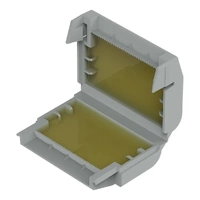
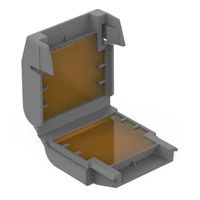
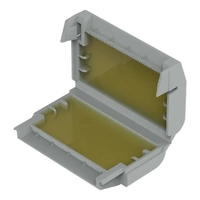
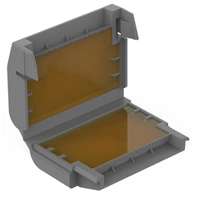
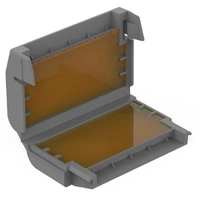
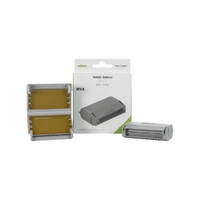
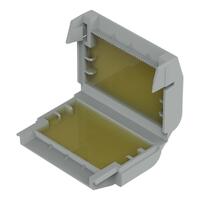
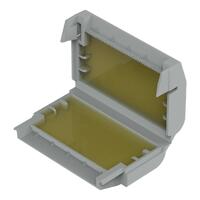
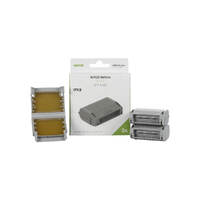
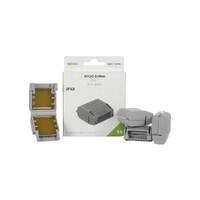
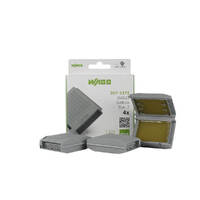
Wago 207-1331Single | Size 1 Gelbox For 4mm² Wago 221 Connectors | Single Buy
$8.82
$8.02 ex. GST
Search Results:
Search Results:
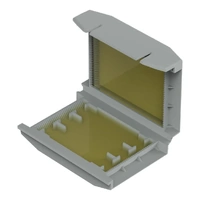
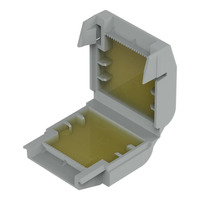
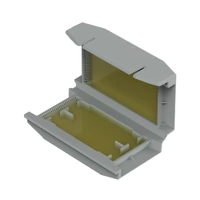
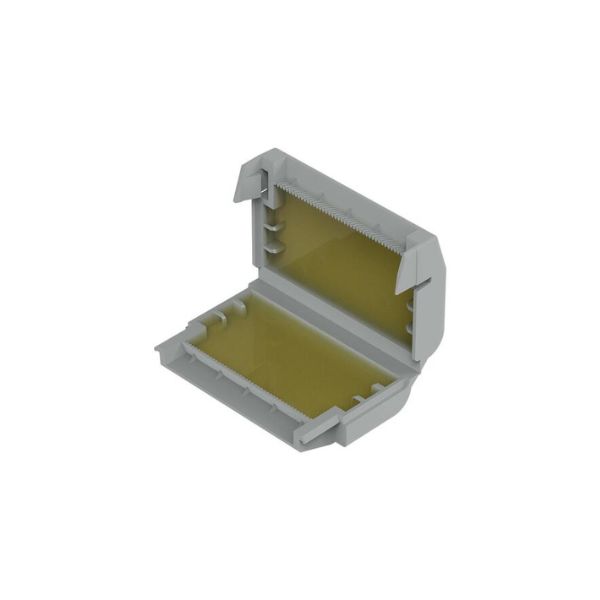
A Wago Gelbox is a two-part plastic shell pre-filled with dielectric gel. The electrician makes the joint first using a Wago 221 lever-clamp splicing connector. The assembled connector then drops into the lower half of the Gelbox. Closing the lid pushes gel around every exposed conductor and clamp. The result is a sealed joint that resists water and dust ingress. There is no mixing, no curing time, and no waiting before backfilling or commissioning.
The Gelbox is the housing, not the conductor termination itself. The actual electrical connection is made by a 221 series lever connector, which uses a stainless steel spring clamp rather than a screw to grip the wire. The Gelbox then provides the IP68 environmental seal around that proven joint. This split design is why one Gelbox size suits many wire combinations: the 221 connector handles the electrical job, and the Gelbox handles the waterproofing.
The gel inside a Wago Gelbox is a silicone-based dielectric compound that stays soft indefinitely. When the lid closes, gel is forced into every void around the conductor entry points, the connector body, and the inserted wires. Because the gel never cures, the joint can flex with thermal cycling without cracking. If a wire needs to be replaced, the Gelbox can be opened and the gel re-flows into any new gaps.
Spring-clamp termination delivers consistent contact pressure regardless of who installed it. Gel sealing handles the environmental side. Together, they remove the two failure modes that plague outdoor joints. The first is a loose screw connection that overheats. The second is a porous resin or tape seal that lets moisture creep in over years. The Gelbox is rated for repeated immersion. A connection in a buried garden lighting circuit or a pump pit performs the same on day 3,000 as on day one.
Outdoor and below-ground joints fail in predictable ways. Water tracks along stranded conductors, oxidation grows on copper exposed to air, and screws back off under thermal stress. Each failure mode shows up months or years after install, often as a tripped RCD or an intermittent fault that takes hours to locate. Gelbox addresses all three at once.
The IP68 rating on Wago Gelbox housings covers continuous submersion, not just splash resistance. That matters in Australian conditions where a "well-drained" garden bed becomes a swamp after a heavy summer storm, and where pool equipment pits collect water that sits for days. Dust ingress is equally relevant in rural and industrial sites where fine particulate can wick into a poorly sealed enclosure and create a tracking path between conductors.
Resin pour kits work but require mixing, careful pouring, and a wait period before the joint can be moved. Heat shrink solder sleeves need a heat source, work poorly on damp wire, and produce inconsistent results in windy conditions. Self-amalgamating tape relies on installer technique and ages badly in UV. Gelbox replaces all three with a connector that any qualified electrician can install identically every time.
AS/NZS 3000:2018 requires that connections in damp situations be enclosed and protected against the ingress of moisture. The Wago 221 series carries Australian RCM certification, and the Gelbox housings are independently tested to IP68. Used together, they form a compliant connection method for the wet locations the Wiring Rules describe, including underground and direct-buried installations where local rules permit them.
The Gelbox range is built around the 207 product family. Each size matches a specific group of 221 series connectors, and each shape suits a particular jointing layout. Picking the right one is mostly a question of how many conductors you are joining and whether the joint is straight-through or branched.
Inline format Gelboxes such as the 207-1372 are designed for straight conductor runs where two cables need to meet and continue in the same direction. Garden lighting spurs, irrigation cable extensions, and submersible pump leads are typical use cases. The shape keeps the joint slim, so it fits inside narrow conduit junctions or directly buried with minimal overcut.
For three-way and five-way joints, the Gelbox sits over a 221-413 or 221-415 lever connector. The internal volume of the Size 2 Gelbox accommodates the extra bulk of a multi-pole connector while still allowing the gel to flow around every conductor entry. This configuration suits T-offs, branch circuits, and multi-fixture lighting loops.
The 773 series push-wire connector is an older Wago format used mainly with solid-core conductors. Some Gelbox sizes were originally designed around 773 dimensions, and many electricians still keep both connector types on the van. If working with solid-core building wire, check the Gelbox spec sheet to confirm the housing matches the 773 footprint, then follow the same lid-close-and-seal procedure.
The 221 series is the modern lever-clamp connector that handles both solid and stranded conductors from 0.2mm² up to 6mm² depending on the model. Pairing 221 connectors with the matching Gelbox is the most common approach today, because the lever action makes the joint repeatable and the Gelbox seals it without curing time. The 887-952 splicing kit pairs naturally with these housings for service van stocking.
Specification sheets for Wago Gelbox products list the housing ratings independently of the 221 connector inside. The complete jointed assembly inherits the more conservative figure on each axis: voltage from the 221 connector, current from the conductor and connector pair, and ingress protection from the Gelbox. Always read both data sheets before specifying a joint for a high-stress application.
IP68 means the enclosure is dust-tight and rated for continuous immersion at a depth and duration defined by the manufacturer. For Wago Gelbox products this typically means submersion at low pressure, which covers buried installations, pool equipment pits, and irrigation valve boxes. Always check the depth and duration figures on the specific product code: deeper or longer submersion may need a different enclosure strategy.
The 221 series lever connectors typically carry a 450V AC rating. Current ratings vary by conductor size: generally 32A on 4mm² and 41A on 6mm² models. Because the Gelbox does not carry current, its electrical envelope is governed entirely by the 221 connector inside. For a full-current 6mm² joint, pair a 221-612 or 221-613 with a Size 2 or larger Gelbox. Confirm both ratings on the spec sheet.
Operating temperature ranges for Wago Gelbox housings cover most Australian conditions. That includes cold soil through to hot rooftop solar enclosures. Thermal cycling is where the gel earns its place. Because it never cures, repeated expansion and contraction does not crack the seal. Cured resin pours are far less forgiving in this respect. Long-life solar and lighting installations benefit directly from this property.
Several methods exist for sealing electrical joints in wet areas. Each has its place. The comparison below sets Gelbox against the three most common alternatives so you can pick the right tool for the job rather than defaulting to whatever is on the van.
| Method | Install Time | Cure Required | Reusable | Typical Use |
|---|---|---|---|---|
| Wago Gelbox | Under 1 minute | None | Yes (within reason) | Buried, submerged, outdoor |
| Resin pour kit | 10 to 20 minutes | Hours | No | Permanent buried joints |
| Heat shrink solder sleeve | 3 to 5 minutes | None (heat needed) | No | Above-ground sealed joints |
| Junction box plus screw connectors | 5 to 10 minutes | None | Yes | Above-ground accessible joints |
Resin kits remain a fully compliant solution for permanent buried joints, but they take time and are messy if a kit cracks during transport. Gelbox skips the mixing, the timer, and the cleanup. The trade-off is that a Gelbox joint is intended to be opened later if needed, while a properly poured resin joint is meant to be permanent. For service work where a joint may be revisited, Gelbox wins. For a one-time HV terminal that should never be opened, resin still has a place.
Solder sleeves rely on a heat gun and a steady hand. They produce a tidy finish on the right conductor sizes, but they do not tolerate damp installation conditions and they cannot easily be redone if the first attempt is uneven. A Gelbox seals the same joint without a heat source, which matters on wet building sites and in confined enclosures where a heat gun is awkward or unsafe.
A weatherproof junction box with traditional screw connectors works for above-ground installations where the box can be inspected. Underground, even an IP66-rated box can fill with water over time if conduit seals fail. Gelbox seals the joint itself, so a flooded enclosure does not turn into a flooded conductor termination. Many electricians now use both: a junction box for mechanical protection and routing, with Gelboxes inside it for the actual joints.
Picking a Gelbox is mostly a question of matching three things. The 221 connector inside, the conductor size and type, and the physical layout of the joint. Get those right and the rest of the spec sheet usually takes care of itself.
Wago 221 lever connectors come in several conductor capacities. The 4mm² range covers most lighting and general-purpose joints. The 6mm² range handles higher-current sub-mains and solar feeds. Match the Gelbox size to the connector. A Size 1 inline Gelbox suits a 221-2411 inline connector. A Size 2 Gelbox suits standard 221-412, 221-413, or 221-415 connectors. The larger Gelbox formats suit the 221-612 and 221-613 6mm² connectors.
Underground irrigation valve boxes, pool plant pits, and direct-buried garden lighting feeds all want a Gelbox sized to bury cleanly with the cable. Above-ground outdoor joints in damp but accessible locations can use the same Gelbox or step down a size if space is tight. Inside a sealed plant room where the joint is dry but high-vibration, the Gelbox still helps by stabilising the connector and isolating it from condensation.
Two-pole inline joints use a 221-2411 inside a Size 1 Gelbox. Three-pole branch joints use a 221-413 inside a Size 2 Gelbox. Five-pole joints use a 221-415 in the same Size 2 housing. If the joint needs more than five conductors, run a second Gelbox in parallel rather than overcrowding a single housing. Gel needs room to flow around every conductor for the seal to work properly.
The Gelbox itself is straightforward, but a properly sealed joint depends on the prep work before the connector ever touches the housing. The steps below cover the common installation in a buried or outdoor location.
Strip length is critical. Too short and the spring clamp grips insulation rather than copper. Too long and bare conductor projects past the connector body, increasing the risk of a flashover inside the Gelbox. Use a quality wire stripper calibrated for the conductor size, not a knife. Each 221 connector is moulded with a strip-length gauge on the side: line the cable up against it and cut.
Open the lever fully, push the conductor in until it bottoms out, then close the lever in one firm motion. Stranded conductors should not need pre-twisting. After closing, give each conductor a sharp tug. A properly seated wire will not move. If a conductor pulls free, lift the lever, check the strip length, and try again. Never seal a joint that failed the tug test.
The most common error is closing the Gelbox lid before the connector is fully seated in the lower half. The lid will click, but the gel will not surround the joint properly and a moisture path will remain. Always confirm the connector is sitting flat in the bottom shell before pressing the lid. Other common errors include re-using a Gelbox after a wire has been pulled out (the gel may have voids). Another is using insulation-displacement quick connect terminals inside a Gelbox not rated for them.
Gelbox connectors show up across residential, commercial, and infrastructure work. The common thread is wet or buried locations where a fast, repeatable, IP68 joint is preferable to a poured or shrunk seal.
Garden lighting cable joints, irrigation controller spurs, pool pump and pool light extensions, and feeds to outdoor power points all benefit from Gelbox terminations. The seal stands up to lawn watering, heavy rain, and direct burial for shallow runs. For deeper or higher-stress runs, the Gelbox typically sits inside a buried large junction box for mechanical protection.
External façade lighting, car park bollards, signage feeds, and HVAC condensate pump connections all involve joints in damp locations. Gelbox installations cut the time per joint dramatically compared with resin kits, which matters on shutdowns where the building is being commissioned to a tight schedule. Underground feeds beneath driveways, served by appropriately sized conduit junction boxes, often use Gelboxes for the actual conductor terminations.
Solar PV cable runs sit in elevated rooftop temperatures and full UV exposure. Gelboxes rated for outdoor solar use seal DC string joints without the heat work of a solder sleeve. Pump stations, irrigation pivots, and rural infrastructure all use buried orange circular cables with Gelbox-sealed branch joints. The reason is the same in every case. Any joint underground needs to stay water-tight for decades, not weeks.
Compliance for Gelbox installations rests on three pillars. The standard the connector is tested to. The certification mark that proves it meets that standard. And the Wiring Rules that govern where it can be used.
AS/NZS 3000:2018, the Wiring Rules, requires that every electrical connection be enclosed and protected from mechanical damage. It also requires that connections in wet situations be specifically rated for those conditions. Gelbox housings paired with 221 series connectors satisfy both clauses. Always confirm with your local supply authority for any state-specific overlays on direct-buried installations.
The Regulatory Compliance Mark (RCM) on a Wago product confirms it has been tested and registered for sale in Australia. Wago 221 connectors and the Gelbox housings carry the relevant marking. When ordering, look for the RCM tick on the packaging and the product page. Anything sold without it should be treated as non-compliant for installed work.
A Gelbox connection is still an electrical termination. It must be made by a licensed electrician and falls within the scope of mandatory inspection on jobs where inspection applies. The fact that the joint installs in seconds does not change the licensing requirement. Document buried Gelbox locations on the as-built drawings so future service work can find them without excavating blind.
Field reports on Gelbox installations now go back well over a decade. The dominant failure modes electricians see in wet-area joints, namely water ingress and screw back-off, simply do not appear on properly installed Gelbox terminations. The few failures that do appear almost always trace back to the install rather than the product.
The Gelbox housing is moulded from a UV-stabilised polymer rated for direct sunlight exposure. On rooftop and façade installations, the housing will discolour over years but the seal performance does not degrade. For installations exposed to extreme UV, locating the Gelbox inside a junction box adds a layer of protection at minimal extra cost.
Spring-clamp connectors handle vibration substantially better than screw connectors, because there is no thread to back off as the joint cycles. The gel provides additional damping by surrounding the connector body. Pump installations, irrigation pivots, and rooftop solar all benefit from this combination.
Because the gel never cures, the Gelbox seal is essentially set-and-forget. Periodic visual inspection is still good practice on accessible installations, particularly to check that the lid has not been mechanically damaged. On buried installations, a Megger test on the circuit during routine inspections is the most practical way to confirm the joint is still doing its job.
Most Gelbox failures are install errors rather than product faults. The list below covers the most frequent mistakes and how to avoid them.
The 221 connector body is moulded with a clear conductor capacity range. Going under or over that range produces an unreliable joint. Solid and stranded conductors within the rated range work equally well. Tinned conductors are also accepted, but flexible class 5 or 6 conductors below the minimum cross-section may need ferrules to seat correctly.
Gel is what makes the joint waterproof. If the lid does not fully close, gel cannot fully surround the connector. Always check that both side latches have engaged with an audible click. If the lid feels resistant, lift it, reseat the connector inside the lower shell, and try again rather than forcing the lid down.
The Gelbox is rated as a system together with the 221 connector. Dropping a different connector inside, even one that fits, breaks the system rating and may not seal correctly. If a 773 or other connector type is required, use the Gelbox specifically designed for that connector, or choose a different sealing method.
Genuine Wago Gelbox stock is widely available through Australian electrical wholesalers. The key buying decisions are size selection, pack size, and whether to source kits or individual components.
Sparky Direct stocks the full Australian Gelbox range, including Size 1 inline housings and Size 2 standard housings, in trade pack sizes. Online ordering with fast Australia-wide delivery suits both single-job purchases and routine van restocking. The associated Wago electrical connector range sits alongside the Gelbox listings, so a complete jointing solution can be ordered together.
Cheap, unbranded gel-filled connectors do appear on auction sites and some discount channels. They typically lack RCM certification and have not been tested to the IP68 rating they may claim. For a connection that must last and that may be inspected by a regulator or insurer, the few extra dollars for a genuine Wago product is the easy decision. Generic connectors also tend to use lower-grade gel that hardens over time, defeating the original purpose.
For solar installations, broadacre irrigation, and large landscape lighting jobs, bulk Gelbox pack pricing can substantially reduce the per-joint cost. Trade pack sizes typically come in fours, with multi-pack options for the most popular sizes. When pricing a job, work out the joint count up front and order one full size up. Gelbox housings have a long shelf life. Any leftover stock will get used on the next job.
When a Gelbox-terminated circuit gives trouble, the cause is usually one of three things. A poor 221 connector joint inside. A compromised Gelbox seal. Or the wrong product specified for the application.
Safety first: Always isolate the circuit and verify dead before opening any Gelbox. Even a connection that has been buried for years can carry voltage if the upstream isolation is incomplete.
Symptoms: warm Gelbox housing, intermittent operation, RCD trips on inrush. Likely cause: 221 connector lever not fully closed, or a conductor inserted with the spring clamp gripping insulation. Open the Gelbox, lift the offending lever, check the strip length, reseat the conductor, close the lever, tug-test, and re-seal. The Gelbox itself is reusable for one or two such interventions before the gel needs replacing.
Symptoms: insulation resistance drops over time, RCD nuisance trips after rain. Likely cause: lid not fully latched, mechanical damage to the housing, or a joint that has shifted in the soil. Excavate carefully, inspect the housing for cracks, and replace any compromised Gelbox with a new unit. Do not attempt to repair a cracked housing with tape or sealant: the IP68 rating depends on the moulded housing.
Symptoms: connector will not fully insert, or the Gelbox lid will not close. Likely cause: wrong size Gelbox for the connector specified, or wrong 221 series for the conductor size. Confirm the part numbers against the spec sheet, replace mismatched components, and re-make the joint with the correct combination.
Watch Wago 207-1372 | Size 1 Gelbox Inline Connection For 221 Series Max 4mm² Connectors | 4 Pack video
Watch Wago 207-1332 | Size 2 Gelbox For 4mm² Wago 221 Connectors | 4 Pack video
Watch Wago 887-952 | 4mm² Splicing Connector Set | L-BOXX Mini - 221 Series video

I used WAGO two terminal connectors to go from fixed 1 mm2 building wiring to 0.75 mm stranded wiring when installing pre-wired down-lights. I found traditional screw connectors where not satisfactory in this use case. Using two terminal WAGO connectors allowed 1 mm2 building wiring to connect to 0.75 mm2 stranded wire quickly with an positive and non damaging connection. Small enough to fit in a standard J-box, quick and easy to use.
Couldn't wait to receive these little buggers, they arrived real quick under the Xmas delivery load and I was able to utilise them instead of the old BP connectors and they were much easier to use in tight situations, great invention.
Brilliant idea and quality as well. Fast and effective terminations, a marine electricians best friend, no more BP connectors for me. I used them on both AC and DC terminations.
Quality products in stock • Fast Australia-wide delivery • Competitive trade pricing
Browse Wago Gelbox Connectors → Get Expert Advice →Yes, the gel protects conductors from moisture and corrosion over time.
Sparky Direct supplies gelbox connectors Australia-wide, offering durable and moisture-resistant connection solutions with convenient delivery.
Gelbox connectors are securely packaged and delivered via standard courier services.
Unused products are generally eligible for return according to the seller’s returns policy.
Warranty coverage varies by manufacturer and typically covers defects in materials or workmanship.
Yes, gelbox connectors are typically sold individually or in packs.
Yes, selecting the correct size ensures proper sealing and reliable performance.
Yes, they are commonly used when modifying or extending existing outdoor cabling.
Yes, they are designed to fit neatly within cable trenches or enclosures.
Yes, their sealed design helps minimise future connection issues.
Yes, they are commonly used in outdoor and garden lighting installations.
Quality gelbox connectors are designed for long-lasting performance in harsh conditions.
They are straightforward for licensed professionals to install correctly.
Gelbox connectors are sealed electrical connection boxes filled with protective gel to safeguard cable joints from moisture, dust, and corrosion.
Yes, they are widely used where reliable outdoor or underground connections are required.
They offer superior protection against moisture and environmental exposure.
Yes, they are used in residential, commercial, and light industrial applications.
Most gelbox connectors are designed for single-use applications once sealed.
Yes, the internal gel provides insulation and protects the connection from contaminants.
They are designed to provide a high level of moisture resistance once sealed correctly.
They are commonly used with low-voltage power, lighting, data, and communication cables.
Some gelbox connectors are suitable for underground installations when rated and installed as specified by the manufacturer.
Yes, they are specifically designed for outdoor applications where environmental protection is required.
Quality gelbox connectors are manufactured to meet relevant AS/NZS electrical and safety standards when installed correctly.
They are used to join and protect electrical or low-voltage cable connections in exposed or harsh environments.