
Search Results:
Search Results:
Search Results:
Search Results:
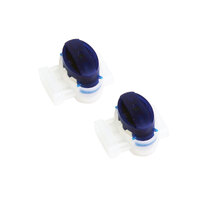
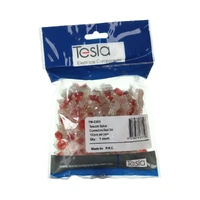
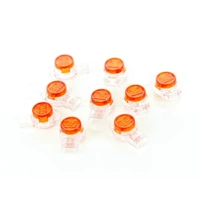
A gel connector is a small plastic housing pre-filled with a soft dielectric silicone gel. The conductors are stripped, inserted into the connector, and either crimped, screwed, or push-locked into place. As the contacts close, the gel flows around every exposed strand and surface, displacing air and water and forming a permanent seal that does not cure or harden over time.
The connector itself is a single-use device. The housing locks shut after the wires are inserted, preventing the gel from leaking out and protecting the contact area. Most gel connectors carry a high IP rating and are rated for direct burial or submersion at low voltage.
The gel is electrically insulating and hydrophobic. When the connector closes, the gel is compressed around the wires and into every void. Because the gel never sets, it accommodates thermal expansion, vibration, and minor cable movement without cracking or losing its seal. Water cannot reach the metal contact, which prevents oxidation and the high-resistance failures that follow.
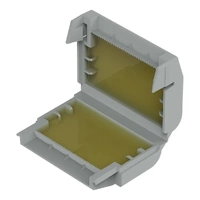
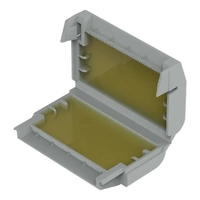
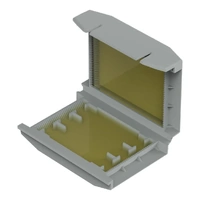
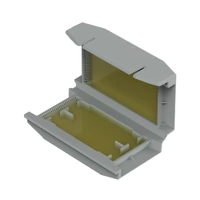
A gel connector has three working parts. The housing is a rigid polymer shell that supports the gel and the contact mechanism. The gel fills the internal cavity and bonds to the wire insulation as the connector closes. The conductor ports accept the stripped wire ends and align them with the contact, which may be a sliding screw, an insulation displacement blade, or a spring-clamp lever.
Standard electrical connectors are designed for indoor, dry environments. Once a join is exposed to rain, soil moisture, condensation, or chemical run-off, corrosion begins at the copper surface and resistance climbs. Resistance produces heat, heat accelerates corrosion, and the joint fails. Gel connectors break that cycle by sealing the contact at the moment of installation.
The hydrophobic gel keeps water away from the bare copper. Even when the connector sits in standing water or wet soil, the seal remains stable for the rated life of the product. This is the primary reason landscape installers, solar installers, and irrigation contractors specify gel connectors over screw or BP connectors for any join below grade or outside an enclosure.
A non-sealed connector in a wet area requires self-amalgamating tape, heat-shrink with adhesive lining, a sealed junction box, or a potting compound. Each of those steps adds time and risks failure if the install is rushed. A gel connector replaces the entire stack with a single click.
AS/NZS 3000:2018 requires that all electrical connections be mechanically secure, electrically continuous, and protected from the operating environment. In wet, buried, or submerged locations, gel connectors meet the environmental protection requirement directly when used within their voltage and current ratings.
Every gel connector carries a defined voltage, current, and conductor size range. Operating outside any of these limits compromises the seal and the contact.
Most gel connectors are rated for low voltage applications, commonly up to 450V AC and current ratings between 6A and 32A depending on the contact type and conductor size. Always check the printed rating on the connector body or the manufacturer datasheet before use.
Typical operating ranges fall between minus 40°C and plus 90°C for the connector and the gel. The non-curing gel handles repeated thermal cycling without separating from the wire insulation, which matters for outdoor installations exposed to summer heat and overnight cooling.
| IP Rating | Protection Level | Typical Use Case |
|---|---|---|
| IP44 | Splash water from any direction | Sheltered outdoor splices, sub-roof, semi-enclosed cabinets |
| IP67 | Temporary submersion to 1 metre | Surface garden lighting, exposed outdoor splices |
| IP68 | Continuous submersion at specified depth | Direct burial, in-ground irrigation, pond and pool periphery |
An IP44 connector buried in damp soil will eventually fail. IP68 is the minimum for direct burial or any installation that could sit in standing water. Confirm the rating before purchase, not after installation.
Wire nuts (twist-on connectors) are not approved for general use under AS/NZS 3000 in Australia, and they offer no environmental protection. Gel connectors meet the environmental requirement and are suitable for compliant installations within their voltage and current limits.
Adhesive-lined heat shrink and solder sleeves create a sealed splice but require a heat gun and skilled application. A poorly shrunk sleeve can leave voids that admit water. Gel connectors achieve the same seal with no tools, no heat, and no operator variability.
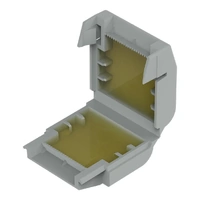
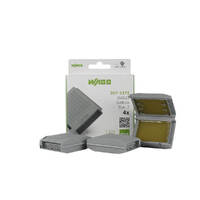
An IP-rated junction box gives you future access to the splice and supports multiple terminations in one location. A gel connector seals a single splice with a smaller footprint and lower cost. The two are often used together: a Gelbox or gel-filled connector inside a sealed enclosure for installations that need both physical protection and a watertight join. Sparky Direct stocks WAGO connectors that pair directly with Gelbox housings for this approach.
Every gel connector specifies a conductor cross-section range, usually expressed in mm². Check whether the connector accepts solid, stranded, or both types. Push-in gel connectors are often more restrictive on stranded conductors than lever-action versions.
Underground runs need IP68 and a connector rated for direct burial. Above-ground outdoor splices in a sheltered location can use IP44 or IP67. Wet areas inside a building, such as bathrooms or laundries, generally need IP67 as a minimum. Connectors from the Sparky Direct range cover the full IP spectrum.
Look for the RCM mark on the packaging or the connector body. The mark confirms the product has been declared compliant with the relevant Australian electrical safety standards. Avoid no-name imports without RCM, regardless of price.
Each gel connector specifies a strip length, typically between 10mm and 14mm. Too short and the contact will not bite; too long and bare copper sits outside the gel chamber. Use a quality wire stripper and check the first few connections against the gauge marked on the connector. Pair this with reliable TPS cable sized correctly for the load.
Push the stripped conductor fully home. With lever-action units, close the lever firmly. With push-in units, tug the wire gently to confirm it has locked. With screw-clamp gel connectors, torque to the manufacturer specification. The gel will visibly compress and surround the wire entry. That visual cue confirms the seal has formed.
For buried installations, route the cable so the connector sits below the frost line and above any low point that could collect water. Bed the connector in clean sand or backfill, not rubble. Mark the splice location on the as-installed drawing for future fault finding.
Always isolate first: Confirm the circuit is dead with a tested voltage indicator before stripping any conductor. AS/NZS 3000 requires verified isolation as the first step of any work on a wired circuit.
Low-voltage outdoor lighting circuits run buried cable to spike and bollard fittings. Gel connectors are the standard splice method because they sit in soil that drains slowly after rain.
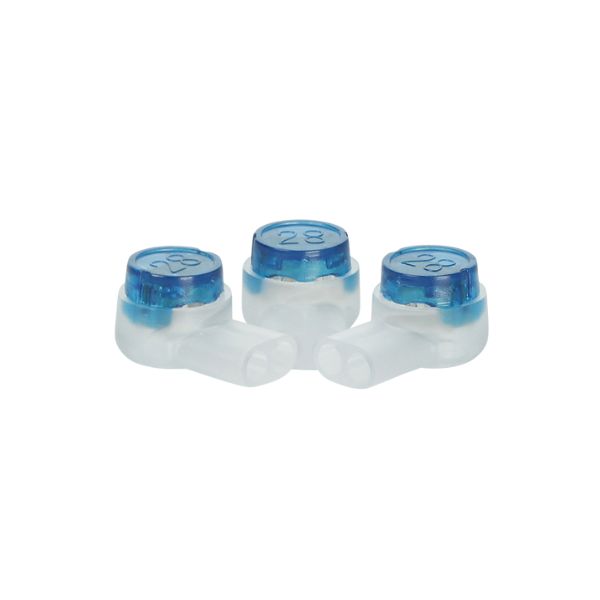
Telecom installers use 2-wire gel connectors for street furniture, pillar joins, and underground splices on copper pairs. Data and phone accessories often include gel connectors as part of the standard splice kit.
Roof-mounted PV strings and battery feeds run through environments with daily UV exposure and heat. Gel connectors are used at non-MC4 splice points and at sensor cabling for performance monitoring. Solar cables and solar accessories are commonly paired with gel-sealed connections at the array.
The connector housing is made from a UV-stabilised polymer rated for outdoor service. The internal gel is shielded from direct UV by the housing, so its properties remain stable across years of exposure.
The gel resists fresh water, salt water, weak acids and alkalis, and most fertilisers and herbicides found in landscape settings. Strong solvents and continuous exposure to fuel or oil can degrade the housing over time, so site selection matters.
Because the gel does not cure, it does not become brittle with age. Field data from manufacturers shows seal integrity of 20 years or more for properly installed gel connectors in buried low-voltage applications.
The mechanical contact, whether spring lever, push-in, or screw, holds the wire under constant pressure. The gel keeps oxygen and moisture away, so the contact surface stays bright and the resistance stays low for the life of the install.
Vibration from traffic, thermal cycling, and minor cable movement all act on a buried splice. The non-curing gel absorbs that movement without losing seal contact, which is why these connectors outlast taped or heat-shrunk alternatives in field conditions.
Gel connectors are not suitable for high-voltage distribution work, mains service entry, or any application above their rated voltage. Use mains-rated BP connectors or appropriate distribution hardware for those circuits.
Stripping too much insulation leaves bare copper outside the gel chamber, which becomes the failure point. Stripping too little leaves insulation under the contact, which raises resistance. Match the strip length to the connector specification every time.
Cheap connectors sold without an RCM mark or a clear voltage and current rating should not be installed on any compliant circuit in Australia. The cost saving disappears the first time a join fails.
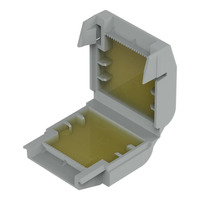
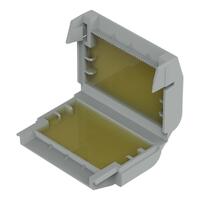
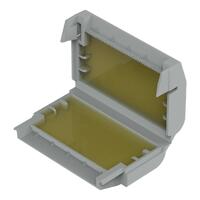
Most gel connectors are single-use. Once the lever has been closed and the gel compressed, opening the connector breaks the seal and contaminates the gel with debris. If the splice needs to be remade, fit a fresh connector. The Gelbox systems are the exception, as they are designed for the lever connector inside to be reusable.
AS/NZS 3000:2018 (the Wiring Rules) requires every electrical connection to be mechanically secure, electrically continuous, and suitable for the location. In wet, buried, or external locations, the connector must provide environmental protection appropriate to the site. Gel connectors satisfy this requirement when correctly selected and installed.
Use IP44 only in sheltered outdoor positions. Use IP67 for exposed outdoor splices that are not submerged. Use IP68 for direct burial or installations at risk of submersion.
The RCM (Regulatory Compliance Mark) is the mandatory mark for electrical equipment sold in Australia and New Zealand. SAA-approved products carry an additional independent safety certification. Both should be visible on the packaging or product body before purchase.
Sparky Direct supplies gel connectors and Gelbox systems from established brands including WAGO, 4Cabling, and CABAC. Stock is held in Australia and shipped nationally.
Trade-grade gel connectors carry RCM, list a clear current and voltage rating, and specify the conductor size range on the body. Budget options often skip one or more of these. For any installation that must comply with AS/NZS 3000, the trade-grade product is the correct choice.
Most gel connectors are sold in jars of 25, 50, or 100. Buying by the jar lowers the per-connector cost and avoids a second order partway through a job. Pair the connectors with matching electrical cables and cable glands at the same time.
If a circuit shows higher than expected voltage drop after a gel splice, the most common cause is incorrect strip length or a wire that did not fully seat in the contact. Cut back, re-strip to the specified length, and fit a new connector.
If a gel connector shows green corrosion under the gel, the seal has been broken. The usual cause is a connector reused after being opened, or a connector forced onto a conductor outside its rated size. Replace with a correctly sized, fresh connector.
Splices that fail repeatedly in the same location are often a selection problem rather than an installation one. Confirm the IP rating, voltage, current, and conductor range against the actual circuit and environment, then re-select if any spec is marginal.
Watch 4Cabling 005.002.0085 | 2 Wire Connector | Gel Filled 2 wire (per 100) video
Watch Wago 207-1372 | Size 1 Gelbox Inline Connection For 221 Series Max 4mm² Connectors video
Watch Wago 207-1332 | Size 2 Gelbox For 4mm² Wago 221 Connectors | 4 Pack video

I used WAGO two terminal connectors to go from fixed 1 mm2 building wiring to 0.75 mm stranded wiring when installing pre-wired down-lights. I found traditional screw connectors where not satisfactory in this use case. Using two terminal WAGO connectors allowed 1 mm2 building wiring to connect to 0.75 mm2 stranded wire quickly with an positive and non damaging connection. Small enough to fit in a standard J-box, quick and easy to use. Bill retired electrician.
These wago clips are awesome. Super user friendly and slimline. Making them fit pretty much anywhere.
Brilliant idea and quality as well. Fast and effective terminations, a marine electricians best friend, no more BP connectors for me. I used them on both AC and DC terminations.
Quality products in stock • Fast Australia-wide delivery • Competitive trade pricing
Browse Gel Connectors → Get Expert Advice →Yes, the gel helps protect conductors from moisture and corrosion.
Sparky Direct supplies gel connectors Australia-wide, offering moisture-resistant and reliable connection solutions with convenient delivery.
Gel connectors are securely packaged and delivered via standard courier services.
Unused products are generally eligible for return according to the seller’s returns policy.
Warranty coverage varies by manufacturer and typically covers defects in materials or workmanship.
Yes, gel connectors are typically sold individually or in packs.
Yes, selecting the correct connector ensures safety and durability.
Yes, they are commonly used when modifying or extending existing cabling.
Yes, they are designed to fit neatly within enclosures or cable runs.
Yes, their protective design helps minimise future connection issues.
Yes, they are often used in outdoor and garden lighting applications.
Quality gel connectors are designed for long-term performance in protected environments.
They are straightforward for licensed professionals to use correctly.
Gel connectors are electrical connectors filled with insulating gel, designed to protect cable joints from moisture, dust, and corrosion.
Yes, they are commonly used where extra protection is needed for cable joints.
They offer added protection against moisture and environmental damage.
Yes, they are used in residential, commercial, and light industrial applications.
Most gel connectors are designed for single-use applications.
Yes, the gel provides insulation and environmental protection around the connection.
They are commonly used with copper conductors, including data, phone, and low-voltage power cables.
Some gel connectors are suitable for underground use when specified by the manufacturer.
Yes, they are often used outdoors due to their moisture-resistant properties when correctly rated.
Yes, they are commonly used in low-voltage electrical and communication systems.
Quality gel connectors are manufactured to meet relevant AS/NZS electrical and safety standards when used correctly.
They are used to join electrical or communication cables where environmental protection is required.