
Search Results:
Search Results:
Search Results:
Search Results:
Electrical tape is a thin film coated with adhesive on one side. The film is the insulator, the adhesive is what keeps the insulator in contact with the conductor or surface being protected. Both layers must perform together for the tape to do its job.
Most general-purpose electrical tape uses a plasticised polyvinyl chloride (PVC) backing between 0.13 mm and 0.18 mm thick. PVC is chosen because it has high dielectric strength, resists most chemicals, and stretches without tearing. The adhesive is typically a rubber-resin compound that bonds quickly under hand pressure and stays flexible across the working temperature range.
Self-amalgamating tapes use a different system. The backing is uncured ethylene-propylene rubber or silicone, and the tape has no separate adhesive layer. When stretched and wrapped on itself, the layers fuse into a single waterproof block.
Dielectric strength is the voltage a material can withstand before it breaks down and lets current through. A standard 0.18 mm PVC tape provides around 8 kV of dielectric strength per layer. Wrapping multiple layers builds the rating: four overlapped half-lap wraps of a 600 V tape will safely cover most low-voltage joints in domestic and commercial wiring.
A correctly wrapped joint puts continuous insulating film between the live conductor and anything it could touch, including earthed metalwork, other phases, and the user. The adhesive seals out moisture and dust, both of which lower insulation resistance and create paths for leakage current. Without that seal, even high-spec tape can fail prematurely.
Electrical tape is a safety product first and a convenience product second. Choosing the wrong type, or using tape where a more permanent jointing system is required, creates risk for the installer and for whoever lives or works in the building afterwards.
The most common compliant use of electrical tape is re-insulating a conductor where insulation has been removed for connection. Examples include taping over the unused end of a switch terminal, re-insulating a cut-back length of cable inside a junction box, and covering a screw connector to add a second layer of protection.
Tape forms a physical barrier between live parts and anything earthed. In switchboards, it is often used to insulate the back of busbar landings, to dress unused circuit conductors so they cannot drift onto a live terminal, and to mark active conductors at meter positions. The barrier is only as good as the wrap, so application technique matters.
AS/NZS 3000:2018, the Wiring Rules, requires that all live conductors be insulated to the rated working voltage of the circuit. Tape used inside an installation must meet AS/NZS 4202 or an equivalent recognised standard, and it must be rated for the voltage and temperature class of the location. AS/NZS 2080 sets out colour standards for safety signs, including the warning tapes used to mark buried services. Licensed work must use tape that complies with both, not a generic adhesive tape from a hardware aisle.
Tape datasheets list a handful of numbers that determine whether the product will perform on the job. Reading them properly helps with selection and reduces the chance of failure.
Adhesion retention measures how well the tape stays stuck after thermal cycling, UV exposure, or contact with oils. Conformability is how easily the tape moulds to irregular surfaces such as multi-strand conductor terminations and screw heads. Higher-grade vinyl tapes such as the 3M Super 33+ class are formulated to retain both properties for years rather than months.
Elongation is the percentage a tape can stretch before snapping, typically 150 to 250 percent for premium PVC. Tensile strength is the load the tape can carry along its length. Thickness sits between 0.13 mm for economy tapes and 0.18 mm for trade-grade product. Thicker tape gives more dielectric headroom per wrap and resists abrasion better, but it is harder to conform around tight bends.
Outdoor and rooftop work demands UV-stabilised tape. Standard PVC will chalk, crack, and lose adhesion within a season under strong sun. Self-amalgamating rubber tapes shrug off UV and water but are usually overwrapped with a sacrificial vinyl layer for mechanical protection. Chemical resistance matters for industrial sites where oils, solvents, or refrigerants may contact the tape.
Different tape constructions suit different jobs. Picking the right type from the start avoids rework and prevents installations that look fine on day one but fail months later.
The bulk of day-to-day work is done with PVC vinyl tape. Self-amalgamating tape covers the harder jobs where a long-term seal matters, and the specialist tapes are kept on hand for switchboard and HV work as needed.
Every tape carries a voltage rating, a temperature class, and sometimes a flame rating. The rating must match or exceed the working conditions of the circuit.
General-purpose PVC vinyl tape is rated to 600 V. This covers all standard 230/400 V residential and commercial wiring with a comfortable safety margin when applied in the correct half-lap wrap. Higher-rated tapes go to 1 kV for industrial control wiring, and to 11 kV or 33 kV for medium- and high-voltage cable joints. HV tapes are typically used as part of a documented jointing system, not as a stand-alone repair.
Standard PVC tape is rated from around minus 10 degrees Celsius up to 80 or 90 degrees Celsius. Premium grades extend the upper limit to 105 degrees Celsius. In Queensland roof spaces and exposed switchboards, surface temperatures can climb above 70 degrees Celsius in summer, so a higher temperature class is worth specifying.
Switchboard work usually demands a 105 degree Celsius rated tape, particularly near busbars and where heat builds up under load. Industrial sites add chemical exposure into the mix, which usually means a higher specification tape and sometimes a wrap of self-amalgamating tape under the vinyl outer.
Tape is not always the right choice. Several other systems do specific jobs better, and a competent install will use whichever method gives the most reliable long-term result.
| Method | Best Use | Strengths | Limitations |
|---|---|---|---|
| PVC Vinyl Tape | Re-insulating short conductor sections, colour identification | Fast, cheap, flexible, widely available | Adhesive ages, not for buried or submerged use |
| Heat Shrink Tubing | Cable terminations, joints, strain relief | Permanent, neat, mechanical protection | Needs heat source, must be slipped on before connection |
| Self-Amalgamating Tape | Outdoor joints, antenna bases, irregular shapes | Waterproof, conforms to any shape | Needs vinyl overwrap for abrasion resistance |
| Resin Joint Kits | Underground, submerged, or HV joints | Fully encapsulated, long-term reliability | Single use, requires curing time |
| Mechanical Connectors | Multi-conductor joins inside enclosures | Reusable, clear visual confirmation | Bulkier, needs an enclosure |
Heat shrink tubing is the better choice when the install is permanent and the geometry allows the tubing to be slipped on before the connection is made. Adhesive-lined heat shrink seals against moisture and stays put for the life of the cable. Tape wins when the joint already exists and cannot be disassembled, or when geometry prevents tubing from being threaded on.
For buried or submerged cable joints, resin kits are the only compliant option. Tape will eventually let water in. Resin fully encapsulates the joint and cures into a solid block.
Tape is appropriate for short re-insulation tasks, identification, and as a secondary layer over a primary insulation system. It is not appropriate as the sole insulation on a permanent buried joint, on submerged work, or anywhere a wiring rules clause specifies a heat shrink or resin solution.
Three questions narrow the choice quickly: what voltage, what environment, and what colour. Once those are answered the brand and grade follow.
Indoor switchboard, distribution, and accessory work uses 0.18 mm trade-grade PVC at 600 V or 1 kV. Outdoor work in direct sun benefits from a UV-stabilised vinyl over a self-amalgamating base. HV work uses the tape system specified in the joint kit, never a generic substitution.
Roof spaces, plant rooms, and external switchboards demand higher temperature ratings. Coastal sites add salt to the mix, which accelerates adhesive failure on lower-grade products. Wet areas need a waterproof seal that vinyl tape alone cannot provide.
Trade-grade tape unrolls cleanly with no stringy edges, stretches consistently along its length, and holds its width without necking. The adhesive should be tacky to the touch but not transfer to the fingers. Cheap tape often fails one or more of these tests on the bench.
Most tape failures trace back to application, not to the product. Half-lap wrapping with the right amount of stretch is the foundation skill.
Each turn of the tape covers half the previous turn. After two passes back and forth along the joint, every point on the conductor has four layers of tape over it, which is the minimum for a 600 V circuit. Less overlap leaves thin spots where dielectric strength drops below the working voltage.
The conductor must be clean, dry, and free of grease before tape is applied. Start the wrap on solid insulation about 25 mm back from the bare conductor, work over the exposed area, and finish 25 mm onto solid insulation on the other side. This anchors both ends on a stable surface and stops the wrap unwinding.
Pull the tape to about 75 percent of its full stretch as it goes on. This activates the adhesive, gives a tight seal, and reduces voids. Do not overstretch the final 50 mm at each end, or the tape will retract and lift. Press each layer down with the thumb as it is applied to expel air pockets.
A few recurring errors account for the majority of tape failures seen during inspection and rework.
Tape applied without stretch traps air against the conductor. Moisture condenses in those voids and starts a slow corrosion process under the wrap. The joint may pass an immediate visual check and fail an insulation resistance test six months later.
Generic adhesive tape from a hardware aisle is not rated for any electrical use. Even some "electrical" tapes sold cheaply in retail packs are rated for 250 V or 300 V only, which is below 230 V mains working voltage with the surge margin required by the wiring rules.
If the cable insulation is nicked, cracked, or burnt, taping over the top is not a compliant repair. The damaged section must be cut out and a proper joint made, or the cable must be replaced. Tape over damage hides the fault and creates a future hazard.
Coloured tape carries information. On a switchboard or in a distribution box, the colour of the tape on a conductor often determines whether the next person to open the cover works safely or makes contact with a live phase.
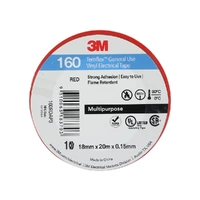
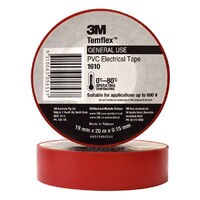
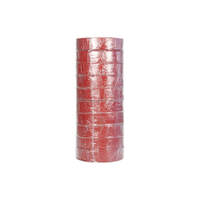
The Wiring Rules set out required colours for active, neutral, and earth conductors. Where a cable's factory colours do not match the required scheme, coloured tape can be used to identify the conductor at terminations, in junction boxes, and at switchboard landings. Red tape marks single-phase active conductors in older installations, while newer installations use brown for the active.
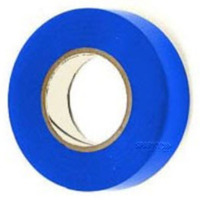
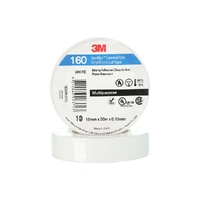
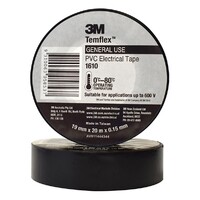
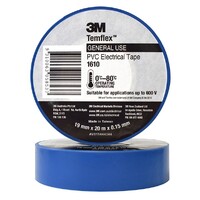
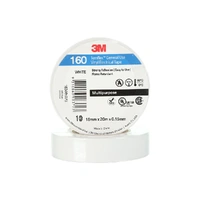
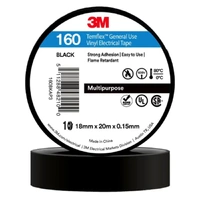
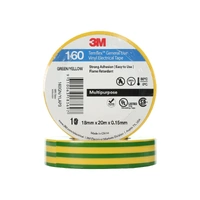
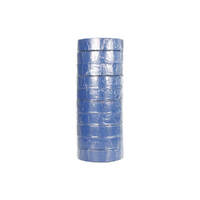
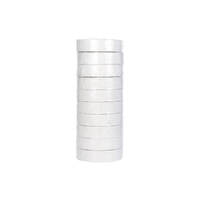
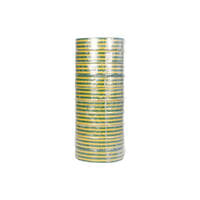
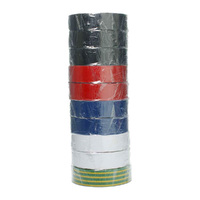
Australian three-phase systems use red, white, and blue for actives in older installations, and brown, black, and grey under the harmonised IEC scheme adopted in newer work. Neutral is black or blue, earth is green/yellow stripe. Blue, white, and black tapes cover the full set, with rainbow packs giving every colour in a single box.
Coloured tape bands at meter positions and switchboard tails identify which circuit is which without opening up the wiring. A consistent tape colour scheme also helps the next electrician work on the board without guessing.
Tape is a useful tool but it has clear limits. Knowing where those limits sit is part of using it properly.
Tape is thin, soft, and easy to cut. Anywhere a cable could be struck, abraded, or stepped on, tape alone is not enough. Conduit or a proper enclosure provides the mechanical protection that tape cannot.
For permanent in-wall, in-ceiling, or buried joints, the wiring rules and best practice both call for a recognised jointing system. Mechanical connectors, WAGO connectors, gel-filled connectors, or resin kits are the compliant options. Tape is a finishing layer, not a primary joint.
Licensed electrical work must end with the installation in compliant condition. A damaged cable wrapped in tape and left in a wall is not a compliant repair. The faulty section must be removed and replaced, or jointed using an approved system inside an accessible junction box.
Tape ages. Understanding how and why it ages helps in deciding when to specify a higher grade and when to choose a different system entirely.
Sunlight breaks down the plasticisers in PVC and oxidises the adhesive. The tape goes hard, loses elasticity, and starts to lift at the edges. Once lifting starts, moisture gets in and the seal is gone. UV-stabilised tape lasts several times longer outdoors than economy tape.
Repeated heating and cooling, common in roof spaces and exposed switchboards, drives plasticisers out of the PVC backing. The tape becomes brittle and cracks under any mechanical stress. Premium tapes use plasticiser systems engineered to stay in the film for longer service life.
Some locations have high consequences if the seal fails. Antenna bases on roofs, outdoor cable joints, and submerged work all fall into this category. The right answer is self-amalgamating tape with a vinyl overwrap, or heat shrink, or a resin kit. Standard PVC tape is not the right choice for these locations.
Different trade contexts use tape in different ways. The selection rules above translate directly into the typical jobs an electrician handles week to week.
Domestic work uses standard 600 V PVC tape for re-insulating cut-back conductors at switches and power points, dressing unused conductors in junction boxes, and identifying actives at the meter. 2.5 mm twin and earth cable terminations at junction boxes are typical points where tape is applied as a finishing layer.
Switchboards demand higher temperature and voltage ratings. Switchboard work uses 105 degree Celsius rated tape around busbars, on the back of MCB landings, and where conductors pass close to heat-generating equipment. Cable lugs are often dressed with a wrap of self-amalgamating tape followed by a vinyl outer for identification.
Outdoor work calls for UV-stabilised tape and, in most cases, a self-amalgamating base. Cable glands and outdoor terminations rely on a watertight tape seal as part of the install. Coastal sites should default to a higher specification across the board.
Tape stored badly performs badly. A few simple practices protect the investment in trade-grade product.
Heat and direct sunlight degrade the adhesive even when the tape is unused. A van toolbox sitting in summer sun reaches temperatures that age the tape on the shelf. Storing tape in a shaded, ventilated section of the van, or bringing stock indoors overnight on the hottest days, extends its working life.
Most premium tapes carry a shelf life of two to three years from manufacture, assuming reasonable storage conditions. Rotating stock so the oldest rolls are used first prevents finding hardened, unusable tape at the bottom of a toolbox after a year on the road.
Sticking to one or two trusted brands across the truck makes job-to-job results consistent. Trade buyers commonly run with 3M, NITTO, CABAC, and TuffStuff for their PVC stock and self-amalgamating ranges.
Where and how tape is bought affects both cost and quality. The cheapest tape on a shelf is rarely the cheapest over a year of use.
Online wholesalers carry a wider range of colours, voltage classes, and bulk packs than most local retail. Trade pricing on bulk orders is generally available, and stock comes direct from supplier warehouses with batch traceability intact. Sparky Direct ships the full electrical tape range Australia-wide.
The price difference between a generic PVC tape and a trade-grade product is usually under three dollars per roll. The difference in service life is often three to five times. For licensed work, the trade product is the only sensible choice. Saving money on tape and creating a callback or compliance issue is poor economics.
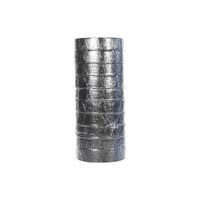
Multi-roll packs and case quantities reduce the per-roll price meaningfully. Standard pack sizes are 10 rolls per box for trade-grade vinyl, with mixed-colour packs available for switchboard work. Contractors running multiple sites usually order by the case rather than the individual roll.
When tape fails, the cause is usually one of three things: the wrong product for the conditions, poor application, or end-of-life on a previous repair.
Tape Not Sticking or Peeling: Check the surface was clean and dry at application. Oils, moisture, and dust prevent the adhesive from bonding. If the tape is old, the adhesive may have dried out. Replace with fresh stock and clean the surface with a non-residue cleaner before re-wrapping.
If an insulation resistance test shows a low reading at a taped joint, the wrap is leaking. Common causes are insufficient layers for the working voltage, voids in the wrap from poor stretch, and moisture ingress at the ends. The compliant fix is to remove the tape, inspect the conductor, and re-wrap correctly or replace with a heat shrink solution.
Faded, hardened, or cracking tape in outdoor locations indicates UV damage or thermal cycling has reached end-of-life for that product. The right response is to remove the failed wrap, inspect for water ingress or corrosion, and re-wrap with a UV-stabilised tape over a self-amalgamating base, or replace with heat shrink if the geometry allows.
When to Stop and Re-Engineer: If the same joint fails repeatedly with tape, the problem is the method, not the brand. Switch to heat shrink, a resin kit, or an enclosed mechanical connector inside a junction box. Tape is not the right tool for every job.
Watch Wago 207-1372 | Size 1 Gelbox Inline Connection For 221 Series Max 4mm² Connectors | 4 Pack video
Watch Wago 221-2411 | 4mm² 2-Way Inline Splicing Connector | Jar of 60 video
Watch Klein Tools 32288 | 8-in-1 Interchangeable Insulated Screwdriver Set | 1000V video

I have been using this tape for years to protect coaxial cable terminations and connectors on external amateur band antennas of many types. I have found it to be excellent at preventing water, dust and corrosion etc from entering these terminations. I find the tape is easy to apply, good value and appears to be virtually unaffected by the elements including UV.
Anyone doing EV wiring will know that if it's carrying >60 V DC it's got to be in orange conduit. So red 'leccy tape won't cut it. Orange tape is the ducks nuts.
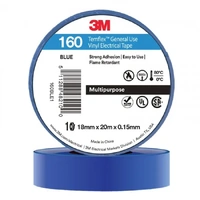
3M products hardly ever disappoint. Can be stretched sufficiently, and is sticky enough, but not too sticky. Would recommend.
Quality products in stock • Fast Australia-wide delivery • Competitive trade pricing
Browse Electrical Tape → Get Expert Advice →Yes, it is simple to apply and remove when needed.
Sparky Direct supplies electrical tape Australia-wide, offering reliable insulation solutions with convenient delivery.
Electrical tape is securely packaged and delivered via standard courier services.
Unused electrical tape is generally eligible for return according to the seller’s returns policy.
Warranty coverage varies by manufacturer and typically covers defects in materials.
Electrical tape is typically sold individually or in multi-packs.
Yes, selecting the right tape ensures proper insulation and durability.
Once applied, it generally requires no maintenance.
It may be visible depending on how it is used.
It is commonly used for temporary insulation and protection.
Yes, most electrical tape is designed to stretch for a tight wrap.
Quality electrical tape is designed for reliable performance over time.
Yes, when used correctly, it helps insulate exposed conductors.
Electrical tape is an insulating tape used to protect and insulate electrical wires and connections.
Yes, it is a standard accessory in electrical work.
It helps improve electrical safety by insulating and protecting connections.
Yes, it is available in various colours for identification and phase marking.
Outdoor-rated electrical tape can be used externally when specified.
Yes, it is widely used in indoor electrical applications.
Many electrical tapes are designed to withstand typical operating temperatures.
Yes, it is often used to bundle and organise cables.
Yes, it is designed specifically for insulating electrical conductors.
They are commonly made from PVC or vinyl with adhesive backing.
Quality electrical tape is manufactured to meet relevant AS/NZS electrical safety standards where applicable.
It is used to insulate, bundle, and protect electrical cables and joints.