
Search Results:
Search Results:
Search Results:
Search Results:
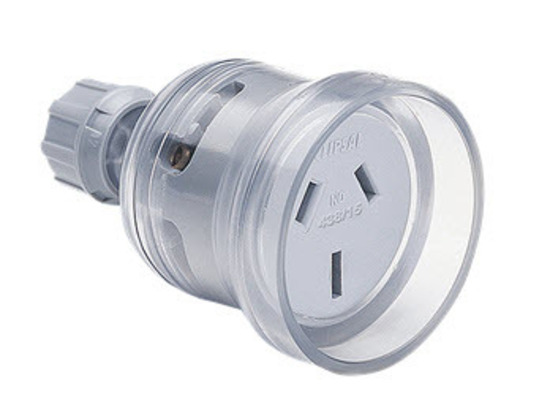
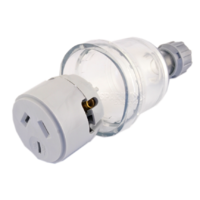
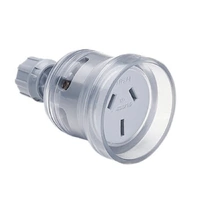
Find the best female cord extension sockets here at Sparky Direct. [ Read More ]
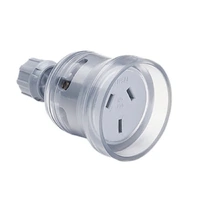
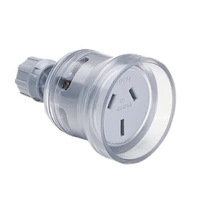
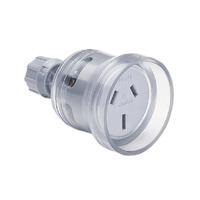
A female cord extension socket sits at one end of a flexible cable and accepts the pins of a male plug top. Inside the socket, sprung brass contacts grip those pins and complete the circuit between the appliance and the mains supply.
Every standard Australian extension lead has a male plug top at the supply end and a female socket at the appliance end. The male plug enters a wall outlet or another extension socket. The female socket then receives the appliance plug. This arrangement keeps live pins enclosed during normal use, which is the core safety principle behind the design.
The female socket houses three contacts: active, neutral, and earth. These line up with the angled flat pins of the standard Australian plug. The contacts hold the plug firmly, so the connection stays stable under appliance load and small cord movements.
On a worksite or in a workshop, a female socket lets one extension lead serve multiple tools across a shift. Tradespeople can swap appliances in and out of the socket without rewiring anything. The socket is the flexible interface between fixed wiring and mobile equipment.
Female sockets, male plug tops, and wall outlets all carry mains power, but each plays a different role in a circuit. Understanding the distinction matters for safety and for selecting the right component.
A male plug top has exposed pins. It plugs into a powered receptacle. A female socket has recessed contacts and accepts those pins. In an extension lead, the male plug is the supply side and the female socket is the load side. They are not interchangeable.
A wall outlet (a fixed GPO) is wired into the building and screwed to the wall. It cannot move. A female extension socket is the portable equivalent: it delivers power wherever the cord reaches. Many sites need both. Browse electrical power points for fixed installation needs.
An extension lead is a closed loop made of three parts. A male plug sits at the supply end, the flexible cable runs in the middle, and a female socket sits at the load end. Power travels from the wall outlet, through the cable, to the appliance. The socket is where the user-facing connection happens.
For permanent installations and outdoor work, consider weatherproof outdoor power points alongside portable lead solutions.
Every female cord extension socket sold legally in Australia must comply with the relevant electrical safety standards. Compliance is not optional and applies equally to consumer and trade-grade products.
AS/NZS 3112 governs the dimensions, materials, and electrical performance of all plugs and socket outlets sold in Australia and New Zealand. It defines pin spacing, pin angle, and contact force. Any compliant socket carries the RCM mark.
The Regulatory Compliance Mark (RCM) confirms a product meets Australian electrical safety and EMC requirements. Sockets without RCM certification cannot legally be sold or installed. Always check the moulding for the RCM tick logo before purchase.
Australian sockets use three flat pins: two angled live pins (active and neutral) and a vertical earth pin. The earth contact is longer to make first and break last during connection. Polarity matters for switched appliances and for safe fault interruption.
AS/NZS 3000:2018 (the Wiring Rules) covers the broader installation requirements for any flexible cord assembly including extension leads. AS/NZS 3760 covers in-service inspection and testing.
Female extension sockets in Australia are most commonly rated at 10A or 15A. The rating must match the cable, the plug, and the appliance load. Mismatched ratings create real fire and shock risk.
A 10A socket suits general appliances drawing up to 2400W at 240V. A 15A socket has a wider earth pin and handles up to 3600W. Caravans, large compressors, and welders typically need 15A. Trade buyers often stock both. The 15 amp power points range gives a useful reference for matching socket ratings.
| Rating | Maximum Load (240V) | Typical Use |
|---|---|---|
| 10A | 2400W | Power tools, lighting, household appliances |
| 15A | 3600W | Caravans, compressors, large welders |
| 20A | 4800W | Commercial equipment, industrial dryers |
| 32A | 7680W (3-phase) | Heavy industrial machinery |
An undersized socket will overheat, soften the housing, and may ignite. An oversized socket on undersized cable creates a hidden hazard: the cable becomes the weakest link and can fail before any protection trips. Always match the lowest-rated component to the protection upstream.
Female sockets fall into two construction types. The choice affects servicing, cost, and how long the socket stays in use.
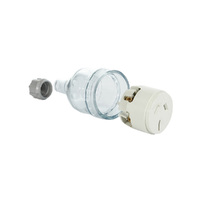
A rewireable socket has a screw-clamp terminal block inside a housing that opens with one or two screws. Licensed electricians can wire these onto custom-length leads, replace the cable when it wears, or fit new sockets to existing cables. Trade buyers favour rewireable designs for serviceability.
Moulded sockets are sealed permanently onto a factory-made cable. They cannot be opened or repaired. When the cable fails, the whole lead is discarded. These are common on retail extension leads sold for household use.
Rewireable sockets cost more upfront but last across multiple cable changes. Moulded leads are cheaper per unit but become waste at the first fault. For trade workshops, rewireable usually wins on lifetime cost.
Most consumer and light trade sockets use PVC for the outer body. PVC is cheap, easy to mould, and adequate for indoor general use. Nylon offers better impact resistance and higher temperature tolerance, which suits workshop conditions.
Industrial extension sockets often use thermoplastic rubber housings that absorb impact and resist crushing. Sites with vehicle traffic, dropped tools, or extreme cold need this level of build. The 3 pin extension socket range covers heavy-duty industrial options.
Outdoor and damp-area work calls for IP-rated housings. IP66-rated extension sockets resist dust ingress and high-pressure water jets. Indoor PVC sockets fail quickly outdoors. Plan the environment first, then pick the housing.
The cable conductor size (CSA in mm²) determines how much current the lead can safely carry. A 10A socket pairs with 1.0mm² or 1.5mm² flexible cable. A 15A socket needs 1.5mm² or 2.5mm². Stocking flex and plug cable in matched gauges keeps lead-building consistent.
Indoor sockets typically have no IP rating beyond basic finger protection. Outdoor or wet-area sockets need IP44 minimum, with IP66 preferred for marine, agricultural, and construction use. Check the data sheet, not just the colour or shape.
A socket plugged in once a week in a dry shed has very different demands from one connected and disconnected fifty times a day on a building site. High-cycle use justifies the cost premium of trade-grade rewireable products.
Longer cables mean more voltage drop. A 10A appliance running through 30 metres of 1.0mm² cable will see a measurable drop at the appliance end. For long runs, step up the cable size or shorten the lead. Sparky Direct stocks ready-made extension leads in standard lengths.
The cable cross-sectional area must support the socket rating without exceeding AS/NZS 3000 temperature limits. As a working guide: 1.0mm² for 10A short runs, 1.5mm² for 10A longer runs or 15A short runs, 2.5mm² for 15A longer runs.
A well-built lead has matched components throughout. Mixing a 15A socket with a 1.0mm² cable and a 10A plug top creates a lead that looks like it can handle 15A but cannot. Build to the lowest-rated component and label clearly.
Cable sizing rule: The cable, plug, and socket must all be rated for the load. Upgrading one component without the others creates a hidden bottleneck.
In Australia, only licensed electricians may legally wire or rewire fixed and portable mains-voltage equipment. This includes fitting a rewireable socket to a flexible cord. Non-licensed wiring is unlawful in every state and territory.
Inside an Australian female socket, the brown (or red) conductor connects to the active terminal, blue (or black) to neutral, and green/yellow to earth. Reversed polarity defeats the safety design and will fail any standard test.
Every rewireable socket has a cord clamp at the cable entry. The clamp must grip the outer sheath of the cable, not the individual conductors. Without proper strain relief, any pull on the lead will eventually fracture a conductor at the terminal.
Before plugging in, look for cracked housing or exposed conductors at the cable entry. Check the connecting plug for bent or burnt pins. Watch for any sign of melting around the contacts. Discard any socket showing these symptoms.
Workplace electrical equipment, including portable extension leads, must be inspected and tested under AS/NZS 3760. Frequency depends on the environment: every three months for construction, every twelve months for general workplace use. Tag the lead with the test date.
Common failure points include cracked socket housings, loose or springy contacts, discolouration around the active or neutral pin entries, and frayed cable at the strain relief. Any of these symptoms means the lead leaves service immediately.
A piggyback plug has a built-in socket on the back of a male plug body. It is designed for fixed wall use, not for hanging in mid-air on the end of a cable. Female extension sockets are the safer choice for portable extension lead applications.
A power board provides multiple outlets from one supply. A single female extension socket gives one outlet with maximum mechanical strength. For multiple appliances on one lead, use a board that includes overload protection.
Industrial IP66 connectors (the round screw-collar type used on construction sites) offer environmental sealing well beyond a domestic socket. They cost more, fit a wider range of pin configurations, and are required on many commercial sites. Browse IP66 3 pin industrial outlets and sockets for these applications.
Sparky Direct supplies female cord extension sockets to electricians and trade buyers Australia-wide. Brands stocked include Clipsal, NLS, HPM, and Legrand.
Generic moulded sockets cost a fraction of brand-name rewireable units. For one-off home use the cheap option may suffice. For daily trade use, the rewireable trade-grade socket pays back through service life and serviceability.
Electricians building custom leads often buy sockets, plugs, and cable in bulk. Sparky Direct supports bulk orders with trade pricing. Contact the team for project quotes on larger volumes.
If a plugged-in appliance flickers or cuts out, the socket contacts may have lost grip. Test with a known-good plug. If grip is lost, replace the socket. Do not attempt to bend the contacts back: they are designed to spring once.
Brown or black marks around the pin entries are signs of arcing or sustained overload. The socket has reached end of life. Take the lead out of service and fit a new socket of the correct rating.
Cracks in the housing, missing screws, or contact bores that no longer accept a plug all mean immediate replacement. Repairs to mains-voltage portable equipment must be carried out by a licensed electrician.
Club Clipsal is Australia's largest electrician community offering trade rewards, business support, and exclusive benefits. When you nominate Sparky Direct as your preferred wholesaler, we automatically apply your Clipsal spend points to your Club Clipsal account daily.
Entry-level offering coaching, mentoring, and training discounts
Unlock exclusive industry tools and networking events
Access Toyota fleet offers and business software discounts
Maximum benefits, including VIP experiences and rewards
1. Sign Up: Create your Club Clipsal account at clipsal.com/club-clipsal or via the iCat mobile app
2. Nominate Sparky Direct: Select Sparky Direct from the wholesaler dropdown menu in your profile
3. Add Email: Enter your Sparky Direct account email address in the membership number field
4. Start Earning: Every dollar spent on Clipsal products earns points automatically
Redeem points from the rewards store, including gift cards, tools, and experiences. Access business summits, product training, and industry networking events. Receive early access to new product launches and special promotions. Connect with fellow electricians via the Club Clipsal community app.

I've recently been coming across some appliances fitted with 20A plugs in my ventures of testing and tagging - namely some wielders, cookers and commercial drying machines. Instead of coming up with a makeshift solution onsite to test those appliances, I wanted to make a short test lead fitted with a 20A socket. None of the electrical wholesalers in my area were aware such a product existed, so I looked online and Sparky Direct was the only place in Australia that yielded a favourable result. Not only did they have them available, the price was very reasonable. I have since made the lead and it has streamlined my testing regime.
High quality fittings that gives you the safest and easiest outcome to get the job done.
There are other plug tops and plug sockets about but if you buy cheap you buy twice. Cheers
Quality products in stock • Fast Australia-wide delivery • Competitive trade pricing
Browse Female Cord Extension Sockets → Get Expert Advice →Yes, they are a standard component in extension lead assemblies.
Sparky Direct supplies female cord extension sockets Australia-wide, offering reliable and compliant extension lead components with convenient delivery.
They are securely packaged and delivered via standard courier services.
Unused products are generally eligible for return according to the seller’s returns policy.
Warranty coverage varies by manufacturer and typically covers defects in materials or workmanship.
Yes, female cord extension sockets are typically sold as individual electrical accessories.
Yes, choosing the correct current rating is important for safe operation.
They should be visually inspected occasionally for wear or damage.
Yes, they are designed for portable power applications.
Yes, compliant sockets help ensure secure and reliable electrical connections.
Yes, heavy-duty models are commonly used in workshops and garages.
Quality sockets are designed to withstand regular plugging and unplugging.
Yes, they allow power to be supplied where fixed outlets are not accessible.
Female cord extension sockets are electrical connectors fitted to the end of an extension lead to accept a plug from an appliance or tool.
Yes, they are designed for simple plug-in operation.
They provide a safe connection point for appliances and tools on an extension lead.
Yes, they are suitable for residential, commercial, and light industrial use.
Yes, they are designed to suit standard Australian plug configurations.
They are typically made from durable plastic with internal metal contacts.
Outdoor-rated female extension sockets can be used externally when correctly specified.
Yes, many models are designed specifically for indoor applications.
Yes, they are commonly used when making or repairing extension leads by licensed professionals.
Yes, they are commonly available in ratings such as 10 amp and 15 amp.
Quality female extension sockets are manufactured to meet relevant AS/NZS electrical safety standards when used correctly.
They are used to provide a safe and secure outlet at the end of an extension lead.