
Search Results:
Search Results:
Search Results:
Search Results:
Half saddles, full saddles, and conduit clips all do one job: they hold rigid or semi-rigid conduit against a surface so the cables inside stay protected and tidy. The mechanics differ between styles, but the principle is the same. A fixing presses the conduit against the substrate, and the surface itself takes the load.
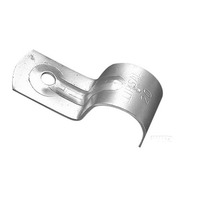
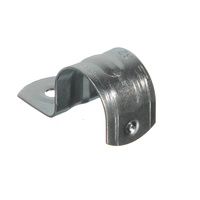
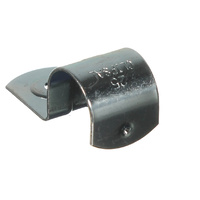
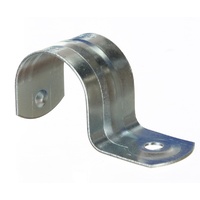
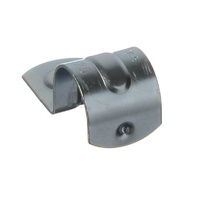
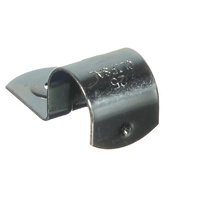
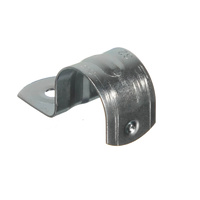
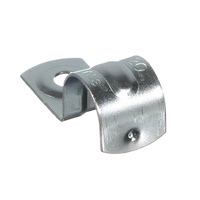
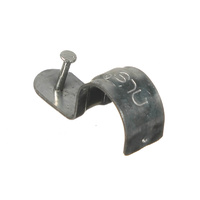
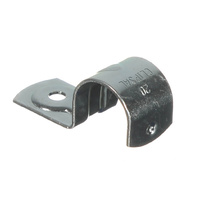
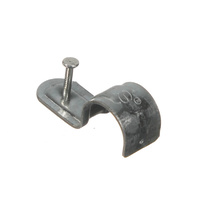
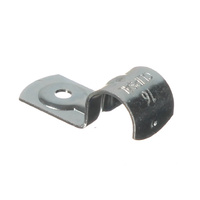
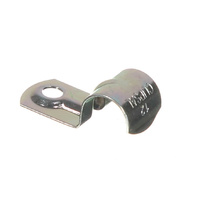
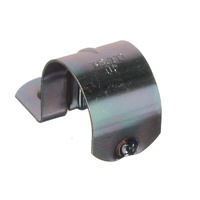
A half saddle is a stamped metal strap shaped like an upside-down U. It crosses over the top of the conduit and screws or nails into the surface on either side. The conduit sits in the curved recess. Conduit clips are lighter again. They are usually moulded plastic with a single fixing point and a snap-fit profile that grabs the conduit when you push it in.
Half saddles and clips do not wrap the conduit completely. That open profile is deliberate. It lets installers slide conduit in from the front rather than threading it through, which speeds up rough-in and makes later maintenance easier. The conduit is held tight enough to stop sag and vibration without being trapped.
Cable protection starts with keeping the conduit itself stable. If the conduit moves, flexes, or sags between supports, the cables inside chafe against fittings and joins. Saddles fix the run in place. They also stop accidental knocks from pulling the conduit off the wall, which protects the cable jacket from abrasion and damage.
Saddles look minor next to switchboards and circuit protection, but they sit inside the same compliance framework. The Australian Wiring Rules treat conduit support as part of the wiring system, not as decoration.
AS/NZS 3000:2018 (the Wiring Rules) requires wiring systems to be supported and protected against mechanical damage. Conduit must be fixed at intervals that prevent sag or movement under its own weight and the weight of the cables inside. The details of fixing intervals come from the conduit standard AS/NZS 2053, but AS/NZS 3000 is the document that makes proper support a compliance requirement.
Unsupported conduit sags between fixings. That sag concentrates stress at the fixings on either side. Over time, the strain loosens screws, splits saddles, and pulls the conduit out of fittings. Correct saddle spacing prevents all three failures. It also stops the run from flexing under thermal expansion in hot ceiling spaces.
An installation can fail inspection on saddle choice alone. Plastic clips on heavy rigid conduit, zinc saddles in a coastal salt zone, or excessive fixing intervals are all common findings. The fix is straightforward at rough-in. After the plaster goes on, it is a much bigger job.
The Sparky Direct range covers four main fixing styles. Each has a clear use case, and most jobs use a mix.
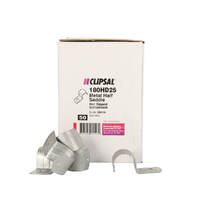
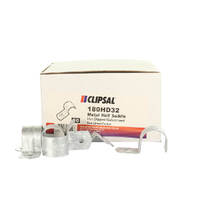
The half saddle is the workhorse. It suits most rough-in scenarios because the open top lets you set the conduit run, then drop saddles into place at marked intervals. Pricing is the lowest per fix of the rigid metal options. The half saddle range at Sparky Direct covers 16mm through 50mm.
Full saddles use a base plate and a strap, joined by two screws. They take longer to install but resist conduit pull-out under load. The full saddle range is the right call for vertical risers in plant rooms or for any situation where the conduit might be bumped from below.
The PVC conduit clip range is ideal for sheltered indoor runs in domestic work. They cost less than metal saddles and install with a single nail or screw. They are not suited to outdoor exposure or heavy mechanical loads.
Each fixing method has its place. Nail-on saddles with a built-in clout are fast on timber and soft masonry. Screw-fix gives the strongest hold and works on every substrate when the right plug is paired with the right screw. Clip-on PVC suits production-style work where a base is fixed first, and the conduit is added later.
Material choice drives how long the fixing will last in service. The zinc plate is the entry point. Galvanised, stainless, and PVC each step up for specific environments.
Zinc-plated steel is the standard for indoor and dry external work. The plating is thin but adequate for sheltered installations. Hot-dip galvanised saddles carry a thicker zinc layer and handle damp ceiling spaces, garages, and sheltered eaves well. Both rust eventually if exposed to moisture or salt.
PVC clips suit indoor domestic runs where appearance and speed matter more than mechanical strength. They will not corrode, but UV exposure and heat slowly degrade the plastic. For garages, ceiling cavities, and behind-wall installations, PVC performs well for decades.
316-grade stainless steel is the right answer near the coast. It resists chloride attack, which is what eats zinc-plated and galvanised fixings within a few years near salt spray. Stainless costs more per fix, but the alternative is replacing the whole run after corrosion stains the wall. Pair stainless saddles with stainless screws to avoid galvanic reaction.
Nylon and acetal saddles appear in food production, dairy, and chemical plants where wash-down chemistry attacks metal. They are also used where any rusting is unacceptable. These specialty fixings are usually specified by the consulting engineer rather than chosen on-site.
Saddle size matches conduit nominal size. A 25mm saddle fits 25mm rigid conduit. The match is direct and unambiguous, so most sizing errors come from picking the wrong size for the job, not from misreading the conduit.
Australian rigid conduit is sold in nominal sizes: 16mm, 20mm, 25mm, 32mm, 40mm, 50mm, and 63mm. The most common sizes in domestic and light commercial work are 20mm and 25mm. Saddles are available across the same range, with 20mm and 25mm dominating most stock inventories.
Match the printed size on the saddle pack to the conduit size. There is no oversize allowance. A 25mm saddle on 20mm conduit will leave a gap, and the conduit will rattle. A 20mm saddle on 25mm conduit cannot close at all.
Most saddles are designed for rigid conduit. Corrugated conduit has a different outer profile, and a tight rigid-conduit saddle will crush the corrugations. Use cable clips or specialised corrugated saddles for the corrugated conduit range, not standard half saddles.
Saddle spacing is set by AS/NZS 2053 and referenced by AS/NZS 3000. The intervals depend on conduit size and orientation. The principles below apply to most rigid conduit installations.
| Conduit Size | Horizontal Spacing (Indicative) | Vertical Spacing (Indicative) |
|---|---|---|
| 16mm to 20mm | Up to 1.0 m | Up to 1.5 m |
| 25mm to 32mm | Up to 1.2 m | Up to 1.8 m |
| 40mm to 63mm | Up to 1.5 m | Up to 2.0 m |
These figures are general guidance only. Always confirm against the current edition of AS/NZS 2053 and the conduit manufacturer instructions for the specific product.
Vertical runs allow longer intervals because the conduit carries its weight along its axis. Horizontal runs must resist sag, so spacing tightens. For external runs and where conduit crosses thermal zones, reduce spacing further to absorb expansion movement.
Place a saddle within 150mm of every bend and within 300mm of every termination at a junction box, switchboard, or fitting. This stops the bend from carrying the weight of the run and prevents the termination from being pulled out of true.
An inspector will check saddle intervals, fixings to bends, and material choice for the environment. Take a photo of the conduit run before plaster goes on. It saves arguments later about what was actually installed.
Substrate dictates the fixing. Get the wrong combination, and the saddle will pull out under any real load.
Brick, block, and concrete need a drilled hole and a wall plug. Match the plug to the screw size and the drill bit to the plug. A 6.5mm hole takes a green nylon plug, which suits No. 10 to No. 12 gauge screws and pairs well with most metal saddle fixing slots.
Timber takes a wood screw or clout nail directly. For plasterboard, find the timber stud or noggin behind it and fix into that. Avoid plasterboard-only anchors for conduit support. The conduit will eventually pull the anchor through the sheet.
Steel substrates take self-drilling screws (Tek screws) sized to the metal thickness. For cable tray and ladder, use proprietary tray-mount saddles or beam clamps rather than drilling holes that could compromise the tray rating.
The right saddle is the one that suits the environment, the load, and the conduit system. Cost should be the last filter, not the first.
Indoor dry: zinc plated. Indoor damp or sheltered external: galvanised. Coastal or marine: 316 stainless. Wash-down or chemical: nylon or specialty. This sequence covers most decisions on a typical job.
Heavier conduit needs stronger saddles. A 50mm conduit full of cable weighs several kilograms per metre. Use full saddles or doubled half saddles at closer intervals on large rigid runs. Light PVC clips are not appropriate for this application.
Most brands are dimensionally compatible because nominal sizes are standardised. The exception is some clip-on PVC systems, where the base and the strap are matched within a single brand. Mixing brands on clip-on saddles can leave you with a base that the wrong strap will not seat into.
A correctly chosen saddle outlives the cable run. A wrongly chosen saddle becomes the maintenance issue.
Galvanic corrosion accelerates failure when dissimilar metals touch. A zinc saddle and a stainless screw will rust faster than either metal alone. Match the fixing to the saddle. For stainless saddles, use stainless screws and stainless wall plug-compatible anchors.
Long external conduit runs expand and contract through the day. Saddles that grip the conduit too tightly transfer that movement to the fixings, which loosens screws over time. An expansion coupling at intervals on long runs takes the strain off the saddles.
Tighten fixings until firm, not crushed. A saddle does not need to deform the conduit to hold it. Over-tightening dents PVC conduit, cracks the wall of metal conduit, and concentrates stress at the fixing.
Saddles are a high-volume consumable. A single house rough-in can use a hundred or more. Bulk packs are the practical option for working electricians.
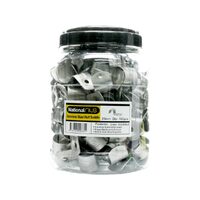
Box and jar quantities (50, 100, or more) drop the unit cost significantly compared with individual buys. They also reduce van inventory clutter, since one box of 25mm zinc half saddles handles a large slice of typical work.
Trade buyers usually carry 20mm and 25mm zinc saddles as the core stock, with 32mm and stainless lines added as project work demands. A small jar of PVC clips covers domestic light-duty jobs without committing to a full box.
Stainless steel saddles cost more per fix because the raw material is more expensive. Volume pricing helps for the standard zinc lines. Freight is a real factor on heavy bulk orders, and consolidating saddles with other conduit fittings on one delivery is the simplest saving.
Wrong material for the environment, spacing too wide for the conduit size, and over-tightening at the fixing. All three are quick to fix at rough-in, and very expensive once the wall is sheeted.
The single biggest mistake is using zinc-plated saddles in coastal or marine zones. They look fine on day one and fail within a few years. The rust runs down the wall and stains everything below it. Spec stainless from the start in any salt-air environment.
Stretching saddle intervals to save fixings is a false economy. Conduit will sag, fittings will pull, and the run will look poor. Mark out spacing with a tape before drilling, and stick to the manufacturer interval guidance.
An over-driven screw deforms PVC conduit, reduces its internal diameter, and concentrates stress at the saddle. The conduit can crack along the line of the saddle weeks or months later. Drive the screw until the saddle sits flush, and stop.
A reliable saddle supplier carries the full size range, in the materials you actually use, with the quantities that match how trade buyers work.
Look for a supplier that stocks 16mm through 50mm in zinc, galvanised, and 316 stainless. PVC clip-on options for the standard 20mm and 25mm sizes round out the range. Sparky Direct stocks the NLS and Clipsal saddle lines across these sizes.
Branded saddles carry the manufacturer compliance documentation that an inspector or principal contractor may ask to see. Generic unmarked saddles are sometimes cheaper, but missing documentation can hold up project sign-off.
Same-day or next-day dispatch matters when a job is paused waiting on fixings. Suppliers with stock on hand in standard sizes ship faster than ones that have to source on demand.
Australian electricians have several supply channels for saddles. Each has trade-offs.
Online wholesale gives the broadest size and material coverage at the lowest unit cost. Sparky Direct ships nationally from Australian stock, and the electrical accessories range sits alongside the saddle category for one-stop ordering.
Generic budget saddles are tempting on price. The plating is thinner, the steel is lighter, and the fixing slots can be undersized. Trade-grade saddles from established brands cost more per fix but install faster and last the life of the run.
Confirm the size matches the conduit nominal size, the material suits the environment, and the pack quantity matches the job. Check the fixing slot size will accept the screw or nail you plan to use. A small detail like a 5mm slot on a saddle paired with a 6mm screw will hold the job up.
Even with correct selection, saddles can fail in service. The cause is usually one of three things.
If a saddle pulls away from the wall, the cause is almost always the substrate fixing rather than the saddle itself. Re-drill into solid material, use a wall plug rated for the load, and check that the screw fully engages the plug.
Visible sag between saddles means the spacing is too wide for the conduit size or the conduit weight. Add an intermediate saddle. On long runs, check whether thermal expansion is the underlying cause and add an expansion coupling if needed.
Surface rust on a zinc-plated saddle in a damp area is a warning sign. Replace with galvanised or stainless before the saddle fails. Streaks running down the wall below the saddle indicate the fixing has already started corroding through.
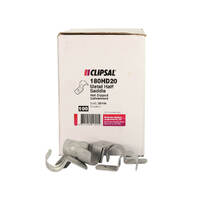
Watch NLS 30013 | 20mm Half Saddle Zinc Plated | 100 per Box video
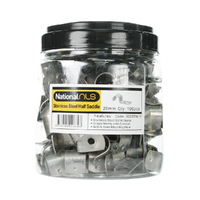
Watch NLS 30225 | 20mm Half Saddles 316 Stainless Steel (100 Jar) video
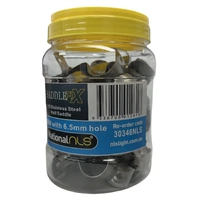
Watch NLS 30560 | 20mm Clip-On PVC Full Saddle video

I was very happy to find these stainless steel saddles as I have just had some electrical work done which included a fair bit of outside conduit. Being near the ocean I new it was only a matter of time before I had the rust marks dripping down walls. I have replaced all these standard saddles this the new stainless ones and stainless screws. Time will tell.
I live by the beach and everything rusts. 316ss saddles are very hard to find but well worth the effort and additional cost. The quality is excellent and will definitely save money in the long term. They also eliminate rust stains running down the wall of your house.
Very easy to purchase from this company. I did not have to put up with - I can’t sell to you unless you have an electrical license like I have had with other companies. Information on the website made it very easy for me to purchase the correct item(s) I required.
Quality products in stock • Fast Australia-wide delivery • Competitive trade pricing
Browse Half Saddles → Get Expert Advice →They are straightforward for trained professionals to install.
Sparky Direct supplies half saddles Australia-wide, offering reliable electrical conduit fixing solutions with convenient delivery.
Half saddles are securely packaged and delivered via standard courier services.
Unused products are generally eligible for return according to the seller’s returns policy.
Warranty coverage varies by manufacturer and typically covers defects in materials or workmanship.
Yes, half saddles are typically sold as individual electrical fixings.
Yes, choosing the correct size ensures secure fixing and compliance.
Once installed correctly, they generally require no maintenance.
Yes, they are commonly used when installing or upgrading conduit runs.
They may be visible in surface-mounted conduit installations.
Quality half saddles are designed to withstand everyday installation conditions.
Yes, they help prevent conduit from shifting or vibrating.
Yes, evenly spaced half saddles create a clean and professional finish.
Half saddles are electrical conduit fixings used to secure conduit to walls, ceilings, or other flat surfaces.
Yes, they are one of the most commonly used conduit fixings.
They provide a simple, effective, and commonly used method of securing conduit.
Yes, they help maintain straight and tidy conduit runs.
Yes, they are suitable for residential, commercial, and light industrial installations.
Yes, they are widely used in indoor electrical installations.
They are typically made from PVC or metal depending on the application.
They are available in common conduit sizes such as 20mm, 25mm, and 32mm.
Yes, they are commonly used with rigid electrical conduit.
Quality half saddles are manufactured to meet relevant AS/NZS electrical and safety standards when used correctly.
They cover only half of the conduit diameter and are fixed with a screw through the centre.
They are used to hold conduit firmly in place while allowing quick and secure fixing.