
CLEARANCE
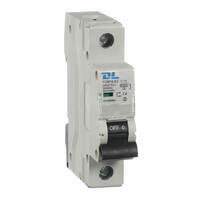
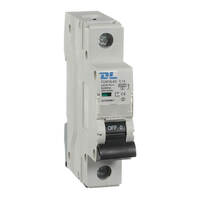
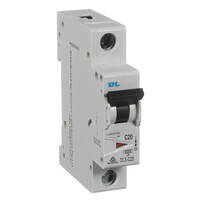
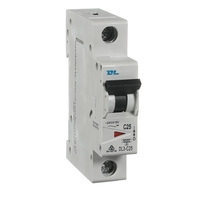
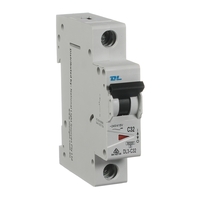
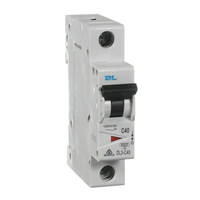
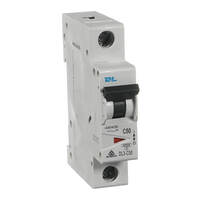
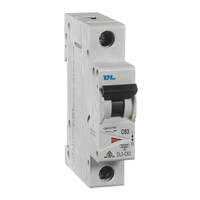
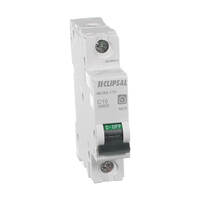
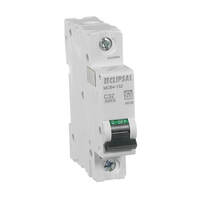
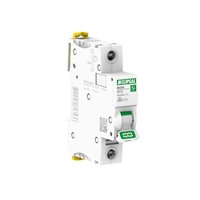
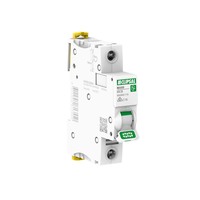
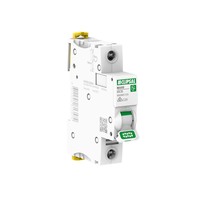
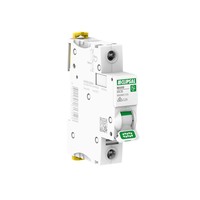
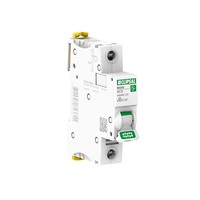
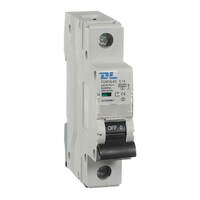
NLS 30376 | 16 amp Single Pole 10kA Circuit Breaker | DL.. Discontinued
$2.63
$2.39 ex. GST
Search Results:
Search Results:
Circuit breakers are automatic electrical switches designed to protect circuits from damage caused by excess current.
They operate by detecting faults and interrupting the current to prevent equipment damage and fire hazards.
Unlike fuses that must be replaced after operation, circuit breakers can be reset and reused multiple times.
In Australian electrical installations, circuit breakers are vital safety devices that interrupt excessive electrical current, protecting residences, workplaces, and critical infrastructure from fire risks. They act as switches that can establish, convey, and disrupt electrical currents under normal conditions, and can establish and transmit for a predetermined duration, and interrupt electrical currents under abnormal conditions, such as during a short-circuit event.
When it comes to electrical safety, circuit breakers play a crucial role. They help to cut the flow of electrical current in the event of a fault condition, such as an overload or a short circuit. Without these vital safety mechanisms, electrical equipment would risk overheating, catching fire, or even exploding.
Furthermore, circuit breakers help to protect individuals from electric shock and other potential injuries or fatalities that may occur due to an electrical fault. In accordance with AS/NZS 3000:2018, circuit breakers must be installed as part of a compliant electrical installation to ensure proper protection of circuits and connected equipment.
Circuit breakers are devices that automatically interrupt current flow in an electric circuit to protect against overload. They operate by detecting faults and interrupting current flow via a mechanical switching mechanism.
Most circuit breakers use a mechanical mechanism in which a spring's force initiates motion. However, the mechanism may be hydraulic or pneumatic in larger, more powerful circuit breakers, such as those used in electrical power stations.
When a fault such as an overload or a short circuit is detected, the circuit breaker's contacts are forced apart, "breaking the circuit" and stopping the current flow. This helps prevent damage to appliances and other electrical devices by stopping the excessive flow of current, which could otherwise lead to overheating and potential fire risks.
Uses a bimetallic strip that bends when heated by overcurrent. The bending motion releases the trip mechanism. Provides time-delayed protection for overload conditions.
Uses an electromagnet that produces enough force to pull the trip lever during short-circuit conditions. Provides instantaneous protection against high fault currents.
Most modern circuit breakers combine both thermal and magnetic trip mechanisms, providing comprehensive protection against both overloads and short circuits.
Are you worried about electrical safety in your home or business?
Circuit protection devices are essential safeguards that prevent costly damage and protect lives.
From RCBOs and RCDs to main switches and surge arrestors, our comprehensive range of circuit protection solutions ensures your electrical systems are secure, compliant, and reliable.
If your switchboard still uses porcelain-style fuses, it is strongly recommended that they be replaced with modern circuit breakers. These older fuses are often fitted with the wrong fuse wire type or size, so they may not trip at the correct current. This can damage wiring and appliances and create a serious safety risk.
In some cases, fuse wire has been replaced with nails or screws, preventing the fuse from operating. This makes the installation extremely dangerous, as the wiring or appliance will fail first, increasing the risk of fire or electric shock.
Circuit breakers come in various types, designed to handle the electrical requirements of different applications. Single-phase, double-phase, and three-phase circuit breakers play vital roles in protecting electrical circuits.
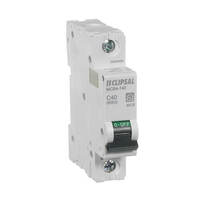
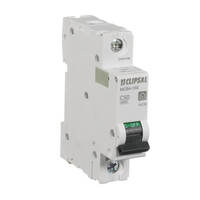
Single pole circuit breakers, commonly known as 1 pole breakers, are often used in residential, commercial and industrial applications. They are designed to interrupt the power in one live wire and are suitable for protecting 230V AC circuits.
Common applications: Lighting circuits, power outlets, small appliances
Two pole circuit breakers are commonly used for larger appliances such as dryers, hot water systems, and air conditioners. They simultaneously interrupt power to two live wires, protecting 400V equipment or equipment requiring both active conductors switched.
Common applications: Split-phase 400V loads, hot water systems, and commercial ovens
Available brands: Clipsal MAX9, Hager, DC Two Pole
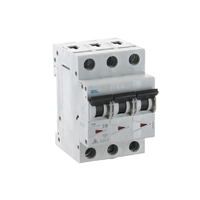
Three pole circuit breakers are predominantly used in larger homes, commercial or industrial settings where large amounts of power are required. These breakers interrupt power in three separate live wires, making them ideal for three-phase systems that demand a high power supply.
Common applications: Three-phase motors, industrial equipment, commercial HVAC systems
Typical ratings: 10A to 125A, available in various breaking capacities
Thus, depending on your system's power requirements and number of phases, you can select the appropriate circuit breaker to ensure safe and efficient operation of your electrical installations. Bear in mind that a licensed Australian electrician must always perform electrical work in accordance with the law.
The trip curves in a circuit breaker represent the relationship between the level of overcurrent and the time it takes for the breaker to trip, or in other words, to interrupt the circuit. These curves help us understand how a particular circuit breaker behaves under different current conditions.
Generally, three types of trip curves are used in residential and commercial installations – B, C, and D – each designed to handle a different level of current overload.
| Trip Curve | Trip Range | Best For | Common Applications |
|---|---|---|---|
| B Curve | 3 to 5 times rated current | Resistive or slightly inductive loads | Lighting circuits, residential distribution, and general power outlets |
| C Curve | 5 to 10 times rated current | Inductive loads with moderate surge | Motor loads, air conditioners, commercial equipment, and general circuits |
| D Curve | 10 to 20 times rated current | Highly inductive loads with high inrush | Transformers, X-ray equipment, large motors, and welding equipment |
B-Curve Circuit Breakers: B-curve circuit breakers trip when the current reaches 3 to 5 times the rated current. They are ideal for resistive or slightly inductive loads where the surge current is not significantly greater than the rated current. This makes them suitable for applications like lighting circuits and general residential use.
C-Curve Circuit Breakers: C-curve breakers trip at 5 to 10 times the rated current. They are designed for inductive loads in which the surge current is significantly higher than the rated current, such as in appliances and motor loads. C curve breakers are the most common type used in Australian installations.
D-Curve Circuit Breakers: D-curve breakers are designed to handle high inrush currents and trip when the current reaches 10-20 times the rated current. They are often used for highly inductive loads, such as transformers or motors with significant startup current.
The selection of appropriate trip curves must account for both load characteristics and the requirements of AS/NZS 3000:2018. Incorrect trip curve selection can result in nuisance tripping or inadequate protection.
The circuit breaker concept was first patented by Thomas Edison in 1879 as a device used to protect his electric lighting system. This early innovation marked the beginning of automatic overcurrent protection in electrical systems.
Over the years, circuit breaker technology has made many improvements and innovations. In the early 20th century, oil circuit breakers were standard, using mineral oil to insulate and extinguish the arc. However, due to environmental and safety considerations, they were eventually replaced by vacuum and gas-insulated circuit breakers.
Circuit breaker design continued to evolve with the development of solid-state and digital circuit breakers that use advanced electronics and microprocessors to monitor and control electrical current. Modern miniature circuit breakers (MCBs) used in residential and commercial installations represent the culmination of over a century of development in electrical safety technology.
In Australia, the evolution of circuit breaker standards has paralleled technological advancement. The current standard AS/NZS 3000:2018 incorporates the latest safety requirements and installation practices, ensuring circuit breakers provide reliable protection in Australian electrical installations.
The market is filled with numerous circuit breaker brands, each with unique offerings and specifications. Australian electricians rely on trusted brands that meet local standards and provide reliable performance.
A globally renowned brand, Clipsal's MAX9 range is the latest offering. The MAX9 range brings unparalleled installation speed with MAXBAR - the next generation of busbars.
MAXBAR enables installation speeds up to 15 times faster than cables for feeding RCBOs. It provides complete installation flexibility by connecting the main switch directly to any Clipsal RCBO-SLIM, 2 modules, 3 Phase, and even AFDD.
Popular products: MCB4-120 20A Single Pole, MAX9 Single Pole Range
Hager Circuit Breakers range includes Hager single pole MSN 6KA, HMF 10KA, NDN 10KA D curve. Known for reliability and consistent quality, Hager breakers are widely specified in commercial and industrial projects.
Popular products: MSN132 32A C-Curve, MSN163R 63A C-Curve
NLS supplies NLS Single Pole 6KA and 10KA breakers. Offering excellent value without compromising on safety standards, NLS breakers are popular for cost-conscious projects that still require compliance.
Key features: Competitive pricing, AS/NZS 60898 compliant, suitable for residential and light commercial use
Heinemann circuit breakers are known for their precision and reliability in demanding applications. Initially designed for aerospace and military applications, Heinemann breakers offer exceptional performance.
Popular products: SFM1-G3-32-2 32A Single Pole
Specialty applications: Marine, industrial control panels, specialty equipment
While both circuit breakers and RCDs (Residual Current Devices) are essential safety devices in electrical installations, they serve different purposes and protect against different types of electrical faults.
| Feature | Circuit Breaker (MCB) | RCD (RCCB/RCBO) |
|---|---|---|
| Primary Function | Protects against overcurrent and short circuits | Protects against earth leakage and electric shock |
| What It Detects | Excessive current flow in the circuit | Imbalance between active and neutral (earth leakage) |
| Protection Type | Equipment and cable protection | Personal safety and fire prevention |
| Trip Sensitivity | Rated current (e.g., 10A, 20A, 32A) | Typically, 30mA for personal protection |
| Australian Standard | AS/NZS 60898 | AS/NZS 61008 (RCCB), AS/NZS 61009 (RCBO) |
| Installation Requirement | Required on all final subcircuits | Required on socket outlets and circuits supplying equipment outdoors |
According to AS/NZS 3000:2018, modern electrical installations require both types of protection. Circuit breakers protect against overload and short-circuit conditions that could damage equipment or start fires, while RCDs protect people from electric shock by detecting even small earth-leakage currents.
An RCBO (Residual Current Circuit Breaker with Overcurrent Protection) combines both circuit breaker and RCD functions in a single device. This provides comprehensive protection while saving space in the switchboard. Many modern installations use RCBOs for ultimate protection and convenience.
Finding quality circuit breakers in Australia is straightforward with Sparky Direct's comprehensive online and physical presence. Whether you're a licensed electrician working on a commercial project or completing a residential installation, having access to reliable circuit breaker suppliers is essential.
Sparky Direct offers a complete range of circuit breakers available for online ordering with delivery across Australia. Our online platform provides detailed product specifications, installation guides, and technical data sheets to help you select the correct breaker for your application.
Based in North Brisbane, Sparky Direct maintains extensive stock levels of all major brands, including Clipsal, Hager, NLS, and Heinemann circuit breakers. Brisbane customers benefit from same-day pickup and speedy delivery options for urgent projects.
Caboolture warehouse: Comprehensive stock, trade counter, and technical support available
Searching for "circuit breakers near me"? Sparky Direct's warehouse location provides easy access for customers requiring immediate pickup. We stock thousands of circuit breakers ready for collection.
Click-and-Collect: Order online, and we’ll have it ready for pickup or deliver it anywhere in Australia.
Sparky Direct maintains substantial inventory levels to ensure popular circuit breakers are always in stock.
Stock availability: Thousands of SKUs are always in stock, regular deliveries from manufacturers, and priority stocking of trade favourites.
Order circuit breakers online and receive fast delivery anywhere in Australia. We ship to Sydney, Melbourne, Adelaide, Perth, and regional areas with reliable courier partners.
Delivery options: Express post, freight for bulk orders, metro and regional coverage
Club Clipsal is Australia's largest electrician community offering trade rewards, business support, and exclusive benefits. When you nominate Sparky Direct as your preferred wholesaler, we automatically apply your Clipsal spend points to your Club Clipsal account daily.
Entry-level offering coaching, mentoring, and training discounts
Unlock exclusive industry tools and networking events
Access Toyota fleet offers and business software discounts
Maximum benefits, including VIP experiences and rewards
1. Sign Up: Create your Club Clipsal account at clipsal.com/club-clipsal or via the iCat mobile app
2. Nominate Sparky Direct: Select Sparky Direct from the wholesaler dropdown menu in your profile
3. Add Email: Enter your Sparky Direct account email address in the membership number field
4. Start Earning: Every dollar spent on Clipsal products earns points automatically
Redeem points from the rewards store, including gift cards, tools, and experiences. Access business summits, product training, and industry networking events. Receive early access to new product launches and special promotions. Connect with fellow electricians via the Club Clipsal community app.
Learn more by watching our HAGER MSN132 | 32Amp Single Pole 6kA C-Curve Circuit Breaker video.
Learn more by watching our CLIPSAL MCB4-120 | 20amp Single Pole 4.5kA Circuit Breaker video.
Clipsal Max9: Revolutionising Circuit Protection.
Browse complete specifications, technical data sheets, and installation guides at Sparky Direct Circuit Breakers

Cheapest prices online and in-store. Very recommend.
Good quality at a great price and fast delivery easy to install
A Verry good mcb Clipsal make a wonderful product
Trusted brands • Expert advice • Fast Australia-wide delivery • Trade pricing available
Shop Circuit Breakers →Get Expert Advice →A circuit breaker is an automatic safety switch that stops the flow of electricity when it detects a problem, such as an overload or short circuit. This helps protect your wiring and appliances from damage while reducing the risk of electrical fires. Unlike a fuse, which has to be replaced once it blows, a circuit breaker can be reset manually or automatically, making it both safe and convenient.
Resetting a circuit breaker is a straightforward task that involves the following steps:
Finding out what is tripping your circuit breaker can be achieved by a process of elimination.
If the circuit breaker trips frequently, note the appliances or systems in use at the time of the trip.
Turn off and unplug these appliances, then reset the breaker.
Gradually switch on or plug in each device, noting if and when the breaker trips.
The appliance that causes the breaker to trip is likely the culprit.
Pro Tip for homeowners: To save yourself hundreds of dollars on call-outs, always unplug the appliance; do not just turn it off, as there is still a connection between neutral and earth when the plug is left in the power outlet.
Both fuses and circuit breakers protect your wiring by stopping the flow of electricity during an overload or short circuit.
The key difference is that a fuse works once and then needs replacing, while a circuit breaker can simply be reset and used again.
A fuse has a thin wire that melts when too much current passes through, but a circuit breaker uses a built-in switch to safely cut the power. This makes circuit breakers more convenient and longer-lasting for everyday use.
An RCBO, or Residual Current Breaker with Overcurrent protection, and a circuit breaker protect against overcurrent. However, an RCBO also protects against residual current faults.
This means that it not only safeguards against overloads and short circuits like a regular circuit breaker but also protects against electric shock by cutting off the circuit when it detects a leakage current, usually from a fault in the insulation of a wire.
For solar installations, a DC circuit breaker is required. The specifics depend on the system's voltage and current. A professional solar installer will be able to accurately calculate the appropriate circuit breaker size based on the configuration and requirements of your solar panel system. Sparky Direct sell the Moeller Eaton DC circuit breakers
An RCBO is a safety device that combines two functions in one – it works as both a circuit breaker and a safety switch (RCD).
This means it not only protects your wiring from overloads and short circuits but also guards against electric shocks by cutting the power if it detects a current leakage.
RCBOs are often used on individual circuits to give more precise protection, making them a safe and reliable choice for homes and businesses.
RCD stands for Residual Current Device.
It’s a safety switch designed to cut the power instantly if it detects electricity leaking to earth, such as through a faulty appliance or if someone touches a live wire.
This quick action helps prevent electric shocks and greatly reduces the risk of serious injury, making RCDs an essential safety feature in all electrical systems.
In Australia, the requirement for RCD (Residual Current Device) protection is governed by the wiring rules AS/NZS 3000:2018 (the “Wiring Rules”).
What the rules require
An RCD, or Residual Current Device, is a safety switch that quickly cuts off the electricity if it detects current leaking to earth. This can happen if someone touches a live wire or if an appliance becomes faulty. By shutting off the power in milliseconds, an RCD helps protect people from electric shocks and reduces the risk of electrical fires, making it an essential safety feature in modern homes and workplaces.