
Search Results:
Search Results:
Search Results:
Search Results:
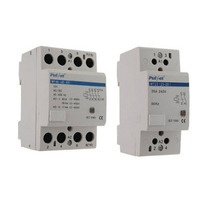
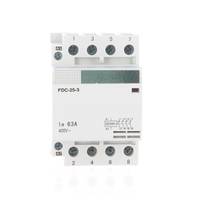
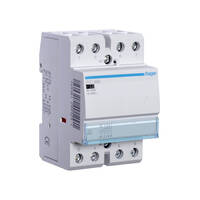
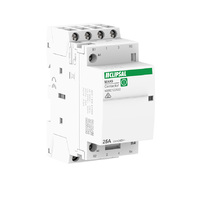
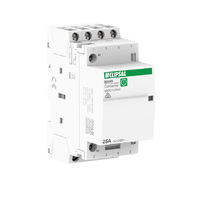
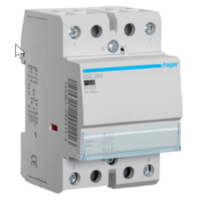
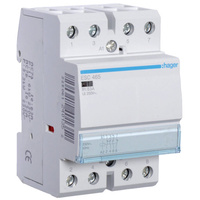
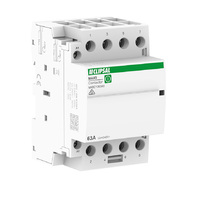
A modular contactor is a DIN rail-mounted electromechanical switching device used to control larger electrical loads from a smaller control signal. These devices are common in Australian switchboards and distribution boards, where they switch lighting banks, hot water systems, underfloor heating, pool pumps, HVAC control, and time-controlled circuits. They are selected by current rating, pole count, coil voltage, load type, and utilisation category.
Modular contactors are space-saving switching devices designed for organised switchboard installations. They mount on standard DIN rail alongside circuit breakers, timers, and other control gear. Typical applications include lighting control in commercial buildings, hot water services in residential properties, and scheduled loads in light industrial settings. The modular format allows multiple units to be installed side by side within the available panel space.
Unlike manual switches, modular contactors use electromagnetic actuation. When the coil is energised by a control signal, it creates a magnetic field that closes the main contacts, completing the load circuit. This separation of control and load circuits allows safe remote switching, integration with building management systems, and compatibility with timers, sensors, and programmable logic controllers.
The operating principle involves coil energisation, magnetic actuation, and main contact closing. When voltage is applied to the coil terminals, the electromagnetic coil creates a magnetic field. This field pulls a moving contact assembly, closing the main contacts and allowing current to flow through the load circuit. When the coil is de-energised, a return spring separates the contacts, opening the load circuit.
The control circuit and load circuit are electrically separate. The control circuit typically operates at lower current and may use different voltage, such as 24V AC or 24V DC for automation systems. The load circuit handles the full operating current of the connected equipment. This separation allows one small switch, timer, or sensor to control multiple high-current loads safely.
Most modular contactors are normally open, meaning the main contacts are open when the coil is not energised. Normally closed configurations are also available for specific applications where the load must remain energised unless the control signal is active. The choice depends on the circuit design and fail-safe requirements.
The DIN rail format saves space and simplifies installation. Modular contactors occupy minimal width on the rail, typically between one and four module spaces depending on current rating and pole count. This compact design allows electricians to organise protection, control, and switching devices in a logical arrangement within the available panel space.
Modular contactors provide repeatable switching over millions of cycles, making them suitable for frequent operation. They enable remote control from pushbuttons, timers, photocells, or building automation systems without running high-current cables to the control point. This reduces wiring complexity and improves safety by keeping high-current switching inside the protected enclosure.
The separation of control and load circuits allows automation compatibility. A single control signal can operate multiple contactors simultaneously, or logic circuits can coordinate switching sequences. This flexibility supports complex control strategies for lighting zones, heating stages, pump rotation, and load shedding.
Understanding the differences between modular contactors and similar devices helps buyers select the right product for their application. Confusion between relays, industrial contactors, DIN rail contactors, smart relays, timers, and circuit breakers can lead to incorrect purchases or unsuitable installations.
Standard relays are generally suited to lower-current control switching, often in the range of 5A to 16A. They are commonly used for signalling, interlocking, and control logic rather than direct load switching. Modular contactors are designed for higher load control in switchboards, typically rated from 16A to 63A or more, with contact systems engineered for AC load duty and inrush current.
Modular contactors are easier to integrate with DIN rail switchboard assemblies because they share the same mounting format as circuit protection and control devices. Their contact systems are rated for specific utilisation categories, which define the breaking capacity for different load types. Relays may lack this detailed load classification, making them less suitable for critical switching applications.
Traditional industrial contactors are usually larger and commonly used for motor control, direct-on-line starters, and industrial machinery. They often feature auxiliary contacts, thermal overload integration, and higher electrical and mechanical endurance ratings. Industrial contactors typically occupy more panel space and are specified for heavy-duty applications.
Modular contactors are compact switchboard devices mainly used for lighting, heating, domestic and light commercial automation, and similar load control. They prioritise space efficiency and integration with residential and light commercial distribution boards. Load duty and utilisation category must be checked before substituting one for another, as the contact system design and breaking capacity differ.
Modular contactors are a type of DIN rail contactor. The term DIN rail contactor can describe any contactor designed for DIN rail mounting, while modular contactor usually refers to compact switchboard-width devices similar in form to circuit protection modules. The distinction is not always clear in product descriptions, so checking dimensions, pole count, coil voltage, and current rating is more reliable than relying on naming alone.
Some manufacturers use the terms interchangeably. The key is to verify the physical size, mounting requirements, and electrical specifications against the available panel space and circuit design. A device marketed as a DIN rail contactor may be a full-size industrial contactor with DIN rail adapters, rather than a true space-saving modular unit.
Timers and smart relays provide control logic, while modular contactors perform the load switching. A timer can schedule when a contactor operates, but the timer itself typically cannot handle the full load current directly. Examples where a timer plus contactor is appropriate include car park lighting, hot water control, exterior lighting, and scheduled plant loads.
More complex logic may require a smart relay, building management system relay output, or programmable logic controller controlling the contactor coil. The contactor remains the switching device, while the logic controller determines when switching occurs. This architecture keeps high-current switching separate from the control electronics, improving reliability and safety.
Circuit breakers are protective devices and are not intended as regular switching devices unless specifically rated for frequent operation. They provide overcurrent protection but are not designed for the millions of switching cycles that a contactor can achieve. Using a circuit breaker for frequent load switching shortens its service life and may compromise its protective function.
Contactors handle frequent switching without degradation, but they do not provide overcurrent protection. A contactor-controlled circuit still requires a correctly sized circuit breaker or fuse for protection. Correct circuit design should be determined by a licensed electrician to ensure both protection and control requirements are met.
Modular contactors are available in different pole configurations and current ratings to suit various circuit types and load requirements. Understanding these options helps electricians and buyers narrow their selection efficiently.
Single phase applications commonly use 1 pole or 2 pole configurations depending on isolation requirements and circuit design. Common single phase uses include hot water services, lighting circuits, underfloor heating, small pumps, and residential automation. Many Australian electricians favour 2 pole switching where both active and neutral isolation is required by the design or where switching the neutral provides additional safety in certain fault conditions.
Single pole contactors switch one conductor only, typically the active. This is suitable where neutral isolation is not required and the circuit design permits single-pole switching. Two pole contactors switch both active and neutral, providing full isolation of the load when the contactor is open. The choice depends on the specific circuit design and the relevant standards applicable to the installation.
The pole configuration determines how many conductors the contactor switches. One pole switches one conductor, suitable for simple single phase active switching. Two pole switches active and neutral in single phase circuits, providing complete circuit isolation. Three pole switches three active conductors for three phase loads such as motors, heating elements, or three phase lighting circuits. Four pole switches three phases plus neutral where full four-pole switching is required, often for certain export circuit designs or fault protection strategies.
Selecting the correct pole configuration requires checking the switchboard design and relevant standards. A three phase motor typically needs a 3 pole contactor, while a three phase heating bank may require 4 pole switching if neutral isolation is part of the design. The circuit designer or licensed electrician determines which configuration applies.
Common ratings include 16A, 20A, 25A, 40A, and 63A. Physical module width, current capacity, coil voltage, pole count, and load duty all affect suitability. The same amp rating may not be suitable for every load type because inrush current and utilisation category matter. A 25A contactor rated for resistive loads may not be appropriate for a 25A inductive load without checking the utilisation category and inrush current capability.
Module width increases with current rating. A 16A contactor may occupy one or two module spaces, while a 63A unit may require three or four spaces. Panel layout must account for this physical size when planning switchboard assembly. Adequate spacing also ensures proper heat dissipation, particularly at higher continuous currents.
Forty amp modular contactors are used for larger lighting loads, hot water circuits, heating circuits, and light commercial load control where the circuit design supports the rating. Users searching for 40A units typically need clear filters for pole count, coil voltage, and brand to find the correct match. It is essential that the connected load and protective device are checked by a licensed electrician to ensure the installation is safe and compliant.
The 40A rating refers to the continuous current-carrying capacity under defined conditions. The actual load current, inrush current, duty cycle, and ambient temperature all influence whether a 40A contactor is suitable. A heating load with minimal inrush may operate well within a 40A rating, while a mixed lighting load with high inrush transformers may require derating or a higher-rated unit.
Sixty-three amp modular contactors handle heavier commercial switchboard loads, larger lighting banks, controlled heating circuits, and selected automation circuits. Top rated units should be assessed by certification, brand support, endurance rating, availability, and correct utilisation category, not rating alone. Heat management and switchboard spacing become more important at higher current ratings.
A 63A contactor generates more heat than lower-rated units, particularly under continuous full load. The switchboard design must provide adequate ventilation and spacing to prevent overheating. Some contactors include heat sinks or require forced ventilation in confined enclosures. The electrical designer specifies these requirements based on the installation environment.
Coil voltage options include 230V AC, 24V AC, and 24V DC. 230V AC coils are common in Australian switchboard control circuits, where the control voltage is readily available from the mains supply. This simplifies wiring and eliminates the need for a separate control transformer in many installations.
24V AC and DC options are common for building management systems, programmable logic controllers, smart control, and automation systems. Lower voltage control signals improve safety when control wiring runs long distances or interfaces with electronic control equipment. The coil voltage must match the available control signal exactly, as mismatched voltage will either fail to operate the contactor or damage the coil.
Selecting the correct modular contactor requires understanding several technical parameters. A methodical approach ensures the chosen device matches the circuit design and load requirements.
Different loads produce different inrush currents when switched. Resistive loads such as incandescent lighting and heating elements have minimal inrush. Inductive loads such as fluorescent lighting, transformers, and motors produce high inrush currents that can be several times the steady-state current. Capacitive loads such as LED drivers and electronic ballasts also produce inrush, though typically less than inductive loads.
The contactor must be rated to handle the inrush current without contact welding or premature failure. Manufacturers specify utilisation categories that define the breaking capacity for different load types. Checking the inrush current of the connected load and matching it to the contactor rating is essential for reliable operation.
Utilisation categories classify contactors by their ability to make and break specific load types. Common categories include AC-1 for resistive loads, AC-3 for motors with breaking during running, and AC-5a for switching discharge lamps. The category indicates the contact system design and breaking capacity.
A contactor rated at 25A AC-1 may only be suitable for 12A AC-3 duty because motor starting involves higher inrush and breaking duty. Always check the utilisation category that matches the load type rather than assuming the nominal current rating applies to all situations.
Calculate the total connected load current, add a margin for inrush, and check the utilisation category that matches the load type. For lighting loads, determine whether the load is resistive, inductive, or capacitive, and select the contactor accordingly. For motor loads, use the motor nameplate current and specify AC-3 category. For mixed loads, assess each load component and select the contactor that meets the highest demand.
The circuit protective device must also coordinate with the contactor rating. The contactor should be rated to carry the load current continuously, while the circuit breaker or fuse provides overcurrent protection. The licensed electrician designing the circuit will specify both devices to ensure correct operation.
The coil voltage must match the control signal voltage available in the installation. Check whether the control circuit supplies 230V AC, 24V AC, or 24V DC. Some contactors offer multiple coil voltage options, while others are fixed. Ordering the wrong coil voltage renders the contactor unusable without coil replacement, which may not be cost-effective.
Electrical endurance refers to the number of switching cycles the contacts can perform under load before requiring replacement. Mechanical endurance refers to the number of no-load operations the mechanism can complete. Higher-quality contactors offer longer endurance, reducing maintenance frequency and downtime.
For applications with frequent switching, such as automated lighting or time-controlled loads, high endurance is critical. For occasional switching applications, standard endurance may be adequate. The product datasheet specifies both electrical and mechanical endurance ratings.
Check the physical dimensions and module width before ordering. A contactor rated at 63A may occupy four module spaces, requiring adequate room on the DIN rail. The switchboard layout must account for this space, along with clearances for wiring, heat dissipation, and access.
Standard DIN rail is 35mm wide. Contactors typically clip onto the rail and can be removed by lifting the release tab. Planning the switchboard layout ensures all devices fit within the enclosure and meet spacing requirements for safe operation.
Modular contactors serve a wide range of applications in residential, commercial, industrial, and automation systems. Understanding typical use cases helps buyers identify the correct device for their project.
Lighting control is one of the most common applications. Modular contactors switch lighting banks in offices, warehouses, car parks, and retail spaces. They integrate with time switches, photocells, occupancy sensors, and building management systems to provide automated control. Multiple contactors can be coordinated to create lighting zones, allowing different areas to be controlled independently.
High-intensity discharge lighting and fluorescent lighting produce significant inrush current when switched. The contactor must be rated for the lamp type, typically under utilisation category AC-5a or AC-5b. LED lighting has lower inrush but may still require specific ratings depending on the driver design. Checking the total inrush current and matching the contactor rating prevents premature contact wear.
Modular contactors switch electric hot water systems in conjunction with time switches or off-peak tariff signals. In controlled load circuits, the electricity distributor provides a signal that operates the contactor during off-peak periods, reducing energy costs. The contactor must be rated for the resistive heating load, typically under AC-1 utilisation category.
A 2 pole contactor is commonly used to switch both active and neutral for full isolation. This ensures the heating element is completely disconnected when the contactor is open, improving safety during maintenance. The contactor rating must match or exceed the nameplate current of the hot water system.
Electric heating circuits, underfloor heating, and HVAC control circuits use modular contactors to manage load switching. Heating loads are typically resistive, making them straightforward to switch under AC-1 duty. However, fan coil units and air handling units may include motors or inductive loads that require higher-rated contactors under AC-3 duty.
Staging multiple heating elements or fan speeds requires multiple contactors, often controlled by a thermostat or building automation system. The control logic determines which stages operate based on temperature demand, load shedding requirements, or energy management strategies. The licensed electrician designs the control circuit to meet the project requirements.
Residential applications include hot water control, pool pump switching, exterior lighting, and home automation systems. Modular contactors allow scheduled operation without manual intervention, improving convenience and energy efficiency. Common residential uses include switching outdoor lighting at dusk via a twilight switch and contactor, or controlling pool pumps on a timer schedule.
When integrated with home automation systems, contactors provide reliable switching of high-current loads while the automation controller handles logic and scheduling. This separation ensures the low-voltage control system is isolated from mains switching, improving safety and reliability.
In commercial and industrial settings, modular contactors integrate with building management systems, programmable logic controllers, and process control systems. They provide reliable switching for conveyor systems, process heating, ventilation control, and scheduled loads. The compact format allows multiple contactors to be installed in control panels and switchboards without excessive space requirements.
Industrial automation often uses 24V DC control signals, requiring contactors with DC coils. The control system outputs switch the contactor coils, which in turn switch the high-current load circuits. This architecture allows complex logic and sequencing while maintaining electrical separation between control and power circuits.
Modular contactor installation and switchboard work must be completed by a licensed electrician in Australia. This section provides an overview of installation considerations without providing step-by-step instructions, as these would encourage unsafe DIY electrical work.
Electrical work in Australia must comply with AS/NZS 3000 (the Wiring Rules) and relevant state and territory regulations. Switchboard assembly, modification, and circuit alterations require appropriate electrical licensing. Installing or wiring a modular contactor involves working inside a switchboard, which is classified as electrical work that only licensed persons may perform.
Modular contactors installed in Australia must carry RCM compliance marking, indicating they meet Australian electrical safety standards. Purchasing uncertified or non-compliant devices creates legal and safety risks. Reputable suppliers provide compliant products with appropriate documentation.
Wiring diagrams show the connection between the control circuit, contactor coil, main contacts, and load circuit. The licensed electrician uses these diagrams to ensure correct wiring and safe operation. Circuit design includes selecting the correct contactor rating, protective devices, control voltage, and wiring sizes.
Common mistakes include incorrect coil voltage, inadequate wire sizing for inrush current, and missing overcurrent protection. The circuit design must account for all these factors to ensure reliable operation and compliance with standards. DIY attempts to wire contactors without proper training and licensing create serious safety hazards.
Contactors mount on standard DIN rail with a clip mechanism. Adequate spacing between devices ensures proper heat dissipation and allows access for wiring. Terminals are typically screw-type or spring-cage, with specified torque requirements. Over-tightening damages terminals, while under-tightening creates high-resistance connections that overheat.
Wiring should be neat, with cables dressed properly to avoid interference with other devices. Coil connections must be clearly labelled, and load connections verified against the circuit design. Testing after installation confirms correct operation before the circuit is energised under load.
Adding a contactor to an existing switchboard requires assessing available space, DIN rail capacity, and enclosure rating. The switchboard may need upgrading if insufficient space or outdated design prevents safe installation. A licensed electrician evaluates the existing installation and recommends necessary modifications.
Replacing a failed contactor requires matching the electrical specifications of the original unit. Substituting a different rating, pole count, or coil voltage without proper circuit evaluation creates risks. The electrician checks the circuit design and confirms the replacement unit is suitable before installation.
Contactor circuits must include appropriate overcurrent protection for the load circuit. The control circuit may require separate protection depending on the design. Emergency stop functionality, where required, must be integrated correctly to ensure the contactor de-energises when the stop circuit is activated.
Contactor coils generate inductive voltage spikes when de-energised. Suppression components may be required in some circuits to protect electronic control equipment. The circuit designer specifies these components based on the control system and contactor characteristics.
Several brands supply modular contactors to the Australian market, each with different quality levels, pricing, and support. Understanding brand positioning helps buyers make informed decisions.
Clipsal and Hager are well-established in the Australian market, offering reliable contactors backed by local support and comprehensive product documentation. These brands provide detailed technical specifications, application guides, and warranty support. Their products are commonly specified for commercial projects where reliability, availability, and after-sales support are priorities.
NHP Electrical supplies a range of contactors including their own brand and agency brands. NHP offers technical support and has a strong presence in the industrial and commercial sectors. Legrand is another established brand with a comprehensive range of modular contactors and switchboard components.
Entry-level brands offer lower-priced contactors that may be suitable for light-duty applications or budget-constrained projects. These products typically meet Australian compliance requirements but may have shorter endurance ratings or less comprehensive documentation. For occasional-use applications or non-critical circuits, budget options can provide adequate performance at lower cost.
The trade-off between premium and budget options depends on the application criticality, switching frequency, and project budget. High-frequency or critical applications justify premium brands with proven endurance and support. Occasional-use applications may accept lower-cost options where replacement is not a significant disruption.
Reliability factors include electrical and mechanical endurance, contact material quality, coil design, and manufacturing consistency. Premium brands typically offer higher endurance ratings, often exceeding one million mechanical operations and several hundred thousand electrical operations under rated load. This translates to longer service life and lower maintenance frequency.
Contact material affects performance. Silver alloy contacts provide good conductivity and arc resistance, making them suitable for high-duty applications. Coil design influences power consumption and heat generation. Quality coils operate efficiently with minimal heat, reducing enclosure temperature rise.
Customer reviews provide insight into real-world performance. Positive reviews often highlight reliable operation, ease of installation, and good product support. Negative reviews may indicate quality control issues, premature failure, or inadequate documentation. Reading multiple reviews helps identify patterns rather than isolated incidents.
Reviews from licensed electricians carry more weight than general consumer feedback because professionals assess products based on installation experience, longevity, and suitability for intended applications. Sparky Direct customers provide detailed feedback on products used in trade environments, offering valuable insight into performance.
Residential applications typically involve lower switching frequencies and less demanding duty cycles than commercial installations. This makes mid-range brands a practical choice for home automation, hot water control, and exterior lighting. Products from Clipsal, Hager, and similar brands provide reliable residential performance without the premium cost of industrial-grade units.
Key features for residential use include compact size, 230V AC coil for simple wiring, and 2 pole configuration for active and neutral switching. Selecting a unit with adequate endurance rating ensures years of reliable service in typical home applications.
Online purchasing offers convenience and competitive pricing, but buyers must verify several factors before placing an order to ensure they receive the correct product.
Check the current rating, pole count, coil voltage, and utilisation category against the circuit requirements. Confirm the physical dimensions and module width fit the available DIN rail space. Verify the product carries RCM compliance marking for Australian use. Review the product datasheet for electrical and mechanical endurance ratings.
Compare specifications across multiple suppliers to ensure consistency. Discrepancies in specifications may indicate different product versions or data entry errors. Contact the supplier if specifications are unclear or missing.
Check stock availability before ordering. In-stock items ship quickly, while backordered products may have extended lead times. For time-sensitive projects, confirm the delivery timeframe before committing to purchase. Some suppliers offer alternative products with similar specifications if the preferred item is unavailable.
Lead times vary by brand and product. Premium brands with local distribution typically have better availability than imported budget brands. Planning ahead and ordering early reduces project delays caused by stock shortages.
When purchasing a 40A modular contactor online, filter by current rating, pole count, and coil voltage to narrow the options. Verify the utilisation category matches the load type. Check customer reviews for feedback on reliability and ease of installation. Confirm the supplier provides technical support and warranty coverage.
Compare pricing across suppliers, but prioritise product quality and support over the lowest price. A slightly higher-priced unit with proven reliability and good warranty support may cost less long-term than a budget unit that fails prematurely.
Budget-priced contactors can offer value for appropriate applications, but buyers should verify the product meets Australian compliance standards and provides adequate endurance for the intended use. Extremely low prices may indicate non-compliant imports or units with minimal endurance ratings unsuitable for frequent switching.
Legitimate budget brands exist that provide compliant products at lower prices by minimising packaging, documentation, and marketing costs. These products may be suitable for light-duty or occasional-use applications. Critical or high-frequency applications justify spending more on premium brands with proven track records.
Choose suppliers that provide technical support, product datasheets, and clear warranty terms. Sparky Direct offers expert advice, helping customers select the correct product for their application. Access to knowledgeable support reduces the risk of ordering incorrect products and provides assistance if issues arise.
Warranty coverage varies by brand and supplier. Premium brands typically offer longer warranty periods and easier claims processes. Check the warranty terms before purchase, particularly for higher-value orders or critical applications.
Research the supplier's reputation through customer reviews and industry feedback. Established suppliers with long trading histories typically provide more reliable service than new or unknown sellers. Check delivery times, product quality, and customer service responsiveness.
Sparky Direct has served Australian electricians and contractors since 2005, building a reputation for quality products, competitive pricing, and reliable service. Thousands of customer reviews provide transparency about product performance and buying experience.
Club Clipsal is Australia's largest electrician community offering trade rewards, business support, and exclusive benefits. When you nominate Sparky Direct as your preferred wholesaler, we automatically apply your Clipsal spend points to your Club Clipsal account daily.
Entry-level offering coaching, mentoring, and training discounts
Unlock exclusive industry tools and networking events
Access Toyota fleet offers and business software discounts
Maximum benefits, including VIP experiences and rewards
1. Sign Up: Create your Club Clipsal account at clipsal.com/club-clipsal or via the iCat mobile app
2. Nominate Sparky Direct: Select Sparky Direct from the wholesaler dropdown menu in your profile
3. Add Email: Enter your Sparky Direct account email address in the membership number field
4. Start Earning: Every dollar spent on Clipsal products earns points automatically
Redeem points from the rewards store, including gift cards, tools, and experiences. Access business summits, product training, and industry networking events. Receive early access to new product launches and special promotions. Connect with fellow electricians via the Club Clipsal community app.

The Schneider Electric LC1D09U7 contactor has proven reliable for switching a 1.5 kW, 3-phase motor in my workshop. Installation was straightforward, and it's been operating smoothly for six months now without any issues. The build quality feels solid, and I appreciate the clear terminal labelling.
Easy to instal and set, a basic alternative to a solar diverter and 1/10th of the cost. Based on the assumption that the hot water system is properly insulated and its capacity is sized to keep up with household use, this is perfect.
contactor works really well for our application (woodworking bandsaw with 1hp / 750W single phase AC motor). Has a pleasingly solid, positive action that will hopefully outlive the machine itself.
Quality products in stock • Fast Australia-wide delivery • Competitive trade pricing
Shop Modular Contactors → Get Expert Advice →Yes, their compact design helps maximise space inside switchboards.
Sparky Direct supplies modular contactors Australia-wide, offering compact and reliable control solutions with convenient delivery.
Modular contactors are securely packaged and delivered via standard courier services.
Unused products are generally eligible for return according to the seller’s returns policy.
Warranty coverage varies by manufacturer and typically covers defects in materials or workmanship.
Yes, modular contactors are typically sold as individual electrical control devices.
Yes, correct sizing and specification ensure safe and reliable operation.
They generally require minimal maintenance when correctly specified and installed.
Yes, they are often used when upgrading or expanding existing switchboards.
Yes, they integrate well with timers, sensors, and control systems.
Yes, they are commonly used for controlling lighting circuits.
Quality modular contactors are designed for long service life and dependable operation.
Yes, they are typically clearly labelled and neatly arranged on DIN rail.
Modular contactors are compact electrical switching devices designed to be mounted on DIN rail within switchboards or distribution boards.
Yes, they are a popular choice for modern switchboard and automation setups.
They offer a compact, organised solution for controlling multiple electrical circuits.
Yes, they are specifically designed for installation in electrical switchboards.
Modular contactors are available with various coil voltages to suit different control systems.
Yes, they are designed for frequent switching and continuous operation within their ratings.
They are available in a range of current ratings to suit different circuit requirements.
Yes, they are widely used in commercial environments for load control and energy management.
Yes, they are commonly used in residential applications such as lighting control and automation.
Quality modular contactors are manufactured to meet relevant AS/NZS electrical and safety standards when installed correctly.
Modular contactors are smaller, DIN-rail mounted, and typically used for building services rather than heavy industrial loads.
They are used to control lighting circuits, heating systems, ventilation, and other electrical loads.