
Search Results:
Search Results:
Search Results:
Search Results:
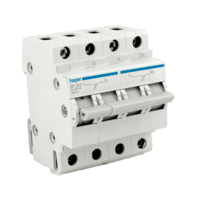
A changeover switch safely transfers your property's electrical supply between mains [ Read More ]
Licensed Installation Required: All changeover switches must be installed by a licensed electrician in compliance with AS/NZS 3000:2018 Wiring Rules. Incorrect installation can create dangerous backfeed conditions that may harm utility workers or damage equipment.
A changeover switch is a manual electrical switching device that transfers power between two sources. In Australian installations, this typically means switching between mains grid supply and a backup generator.
The switch connects to three key points:
When you operate the changeover switch, all power on that circuit changes from either the grid to the generator. The device prevents power from flowing back between the two sources, protecting equipment and utility workers.
Most changeover switches include a centre-off position. This middle setting disconnects both power sources before switching to the alternate supply. This prevents dangerous backfeed that could energise dead utility lines during mains outages.
Changeover switches are essential for:
Most common type. Clips directly onto standard DIN rail inside switchboards. Compact design saves space. Easy installation and removal. Typical width: 4 modules (70mm).
Larger capacity switches. Fixed directly to switchboard panel. Often used for higher current ratings above 100A. Requires mounting holes and secure fixing.
External handle operation. Mount through switchboard door. Clear visual indication of position. Lockable for safety during maintenance.
A 3-phase changeover switch manages power for three-phase 415V electrical systems common in commercial and industrial properties.
Switch in Position I. Mains grid supplies all three phases (L1, L2, L3) to the load. Generator remains disconnected. Neutral connects directly to the main neutral bar.
The operator moves the switch to the centre-off position. Both mains and generator disconnect completely. No power flows to the load. Prevents dangerous paralleling of sources.
Switch moves to Position II. The generator supplies all three phases to the load. Mains remains isolated. The load receives continuous power from a backup source.
Return switch to centre-off. Allow the generator to stabilise or shut down. Move switch back to Position I. Mains power restored to the load.
Three-phase changeover switches use a mechanical interlock system. This ensures:
When installing three-phase changeover switches, electricians must verify the phase rotation matches between the mains and the generator. Incorrect rotation causes motors to run backwards and may damage equipment. Always test phase rotation with a meter before energising loads.
AS/NZS 3000:2018 specifies neutral switching requirements:
Changeover switches are rated by the maximum current they can safely handle:
| Current Rating | Typical Applications | Maximum Load (Single-Phase) | Maximum Load (Three-Phase) |
|---|---|---|---|
| 25A | Small homes, sheds, workshops | 6 kW @ 240V | 11 kW @ 415V |
| 40A | Medium homes, small commercial | 9.6 kW @ 240V | 17 kW @ 415V |
| 63A | Large homes, commercial premises | 15 kW @ 240V | 27 kW @ 415V |
| 100A+ | Industrial, large commercial | 24 kW @ 240V | 43 kW @ 415V |
The maximum voltage the switch can safely handle. Australian standards: 240V single-phase, 415V three-phase. Some switches are rated up to 690V for special applications.
The maximum fault current the switch can interrupt. Typical ratings: 4.5kA to 6kA. Must coordinate with upstream protection devices.
Number of switching cycles before wear. Quality switches: 100,000 operations. Regular maintenance extends lifespan. Track operation count for critical installations.
Ingress protection level. Most DIN rail switches: IP20 (touchproof). Enclosure provides additional protection. Select IP40+ for dusty environments.
Maximum conductor sizes accepted. Typical: 16mm² flexible, 25mm² rigid. Screw terminal connections. Proper torque is essential for safety.
DIN rail space required. 2-pole 25A: 2 modules (35mm). 2-pole 63A: 4 modules (70mm). 4-pole 63A: 6 modules (105mm).
Australian changeover switches must comply with:
Multiple Earthed Neutral (MEN) systems require specific changeover switch configurations. The main switchboard MEN link must remain the only neutral-earth connection. Generator MEN links must be disconnected when using 3-pole switches or switched using 4-pole switches. All electrical work must be carried out and tested by a qualified electrician prior to energising.
Calculate total connected load:
Scenario: Home with lights (1000W), refrigerator (500W), computer equipment (800W), and essential circuits (1700W).
Calculation: (1000 + 500 + 800 + 1700) ÷ 240V = 16.7A. Add 25%: 16.7 × 1.25 = 20.9A.
Selection: Choose a 25A changeover switch (next standard rating).
| Installation Type | Poles Required | Reason |
|---|---|---|
| Single-phase with separate circuits | 1-Pole | Switch active only, shared neutral |
| Single-phase complete isolation | 2-Pole | Switch the active and neutral simultaneously |
| Three-phase, MEN at the main board | 3-Pole | Switch three phases, common neutral |
| Three-phase with generator MEN | 4-Pole | Switch phases and neutral simultaneously |
Match changeover switch to generator specifications:
Standard DIN rail-mounted switch. IP20 rating is sufficient. Compact 4-module designs. Easy integration with existing equipment.
Weather-resistant enclosure required. IP65-rated box minimum. Corrosion-resistant materials. Secure mounting is essential.
Easy operator access is critical. Clear labelling required. Adequate lighting for safe operation. Emergency access consideration.
Typical price ranges for quality changeover switches:
Premium brands (Hager, Schneider Electric) cost 15-30% more but offer superior build quality, longer mechanical life, and better support.
Switch between two separate utility connections. Different network segments or providers. Provides redundancy without a generator. Common in critical facilities.
Manage grid-connected solar installations. Switch to standalone mode during outages. Battery storage integration. Prevents islanding during grid faults.
Food trucks and catering vehicles. Market stalls with generator power. Events and temporary installations. Quick connection and disconnection.
Sparky Direct stocks Australia's most trusted changeover switch brands. Shop our best-selling models:
| Product | Type | Rating | Key Features |
|---|---|---|---|
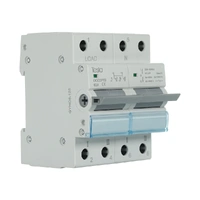
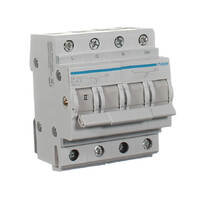
| Hager SF263 | 2-Pole | 63A | DIN rail mount, centre-off, 4 modules, 100,000 operations |
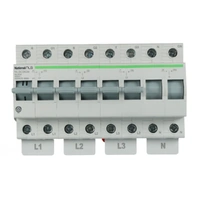
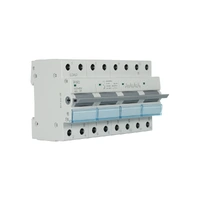
| Hager SF463 | 4-Pole | 63A | Three-phase + neutral, 6 modules, heavy-duty construction |
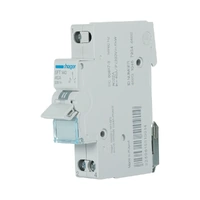
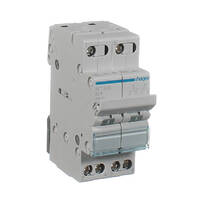
| Hager SFT240 | 2-Pole | 40A | Centre-off, compact design, residential applications |
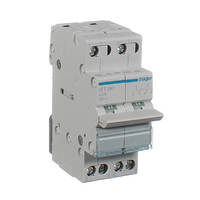
| Hager SFT140 | 1-Pole | 40A | The top common point, individual circuit control |
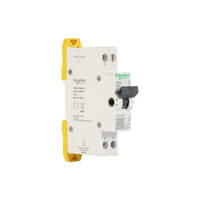
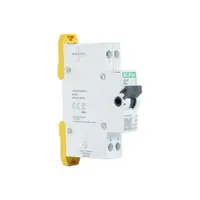
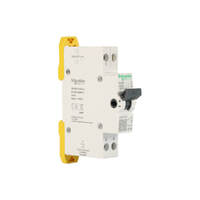
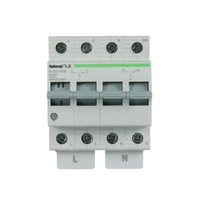
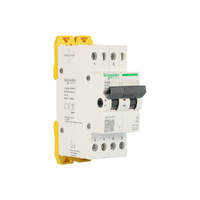
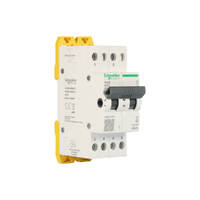
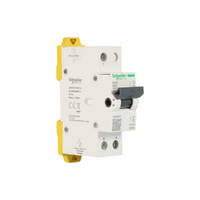
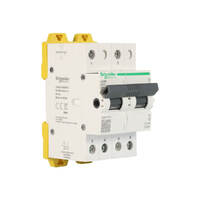
| Clipsal A9SCO263 | 2-Pole | 63A | Acti9 series, quality Schneider Electric construction |
| Hager SFT225 | 2-Pole | 25A | Small installations, sheds and workshops |
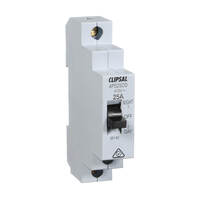
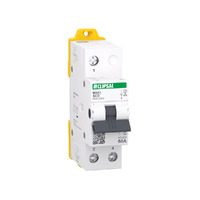
| Clipsal MX9CS163 | 1-Pole | 63A | High current single-pole switching |
Need Help Selecting? Our support team at Sparky Direct can recommend the correct changeover switch for your installation. Contact us for expert advice on generator compatibility, sizing calculations, and AS/NZS 3000 compliance.
Shop All Changeover Switches at Sparky DirectSparky Direct supplies changeover switches from industry-leading manufacturers known for quality, reliability, and compliance with Australian standards.
Quality changeover switches provide superior contact reliability, longer mechanical life, and better safety margins. Premium brands offer comprehensive technical documentation, faster warranty support, and greater confidence in critical power applications. For essential backup systems, the modest extra cost delivers significant long-term value.
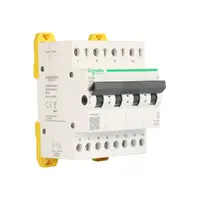
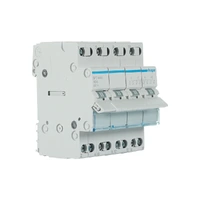
See what the Hager SF263 Change Over Switch 2 Pole 63 Amp looks like
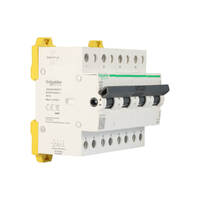
Learn more by watching our Schneider Electric A9SCO263 | 63A Changeover Switch Acti9 2P 415VAC video
Need technical advice on selecting or installing a changeover switch? Contact Sparky Direct for expert guidance on your specific application.
Club Clipsal is Australia's largest electrician community offering trade rewards, business support, and exclusive benefits. When you nominate Sparky Direct as your preferred wholesaler, we automatically apply your Clipsal spend points to your Club Clipsal account daily.
Entry-level offering coaching, mentoring, and training discounts
Unlock exclusive industry tools and networking events
Access Toyota fleet offers and business software discounts
Maximum benefits, including VIP experiences and rewards
1. Sign Up: Create your Club Clipsal account at clipsal.com/club-clipsal or via the iCat mobile app
2. Nominate Sparky Direct: Select Sparky Direct from the wholesaler dropdown menu in your profile
3. Add Email: Enter your Sparky Direct account email address in the membership number field
4. Start Earning: Every dollar spent on Clipsal products earns points automatically
Redeem points from the rewards store, including gift cards, tools, and experiences. Access business summits, product training, and industry networking events. Receive early access to new product launches and special promotions. Connect with fellow electricians via the Club Clipsal community app.

Like all Hager gear, solidly constructed and operates as expected. External jumpers make this versatile and perfect for the job

Extremely fast , well priced great quality, its always easy to shop here

Superior quality and cheapest price anywhere, postage and communication is super fast, highly recommended.
Complete range in stock • AS/NZS 3000 compliant • Fast Australia-wide delivery
Browse Changeover SwitchesGet Expert AdviceIn most cases, a transfer switch and a changeover switch are the same type of device. “Transfer switch” is more common in North America, while “changeover switch” is common in Australia and the UK.
Both move a load between two power sources. Always check the specs to make sure the switch you choose, whether called a transfer switch or changeover switch, has the right poles, amps, and duty for your job.
When you buy a changeover switch from Sparky Direct, check the amp rating, number of poles, and voltage rating first.
Then check if the changeover switch is for DIN-rail or surface mounting, and what IP rating you need for indoor or outdoor use.
You can share the Sparky Direct changeover switch product link with your electrician so they can confirm that it meets your site and standards requirements.
If you have single-phase power, you will use a single-phase changeover switch, usually 1P or 2P.
If you have three-phase power, you need a three-phase changeover switch, such as 3P or 4P, so all phases change together.
Your power type is shown on your bill or main switch, and your electrician will match the changeover switch to it.
As a rough guide, many small homes use a 25 A changeover switch for limited circuits.
Many average homes use a 40 A changeover switch, and larger or heavier-loaded homes may use a 63 A changeover switch.
These are only starting points. Your electrician will choose the final changeover switch size based on your main breaker, likely loads, and generator rating.
A changeover switch can run your whole house or just selected circuits, depending on how your electrician designs it.
Some setups use a changeover switch to feed the whole board from a large enough generator.
Others use a changeover switch just for a small backup sub-board with key loads like lights, fridge, and a few power points. Y
our generator size and budget will guide how the changeover switch is used.
Yes, that is one of the key jobs of a changeover switch.
A proper changeover switch is installed so that the mains and generator cannot be on the same load at the same time.
The OFF position can fully isolate the supply.
When a changeover switch is wired correctly, it helps prevent dangerous backfeed into the network.
A changeover switch is normally installed at or near your main switchboard.
It might be a DIN-rail changeover switch inside the board, or a surface-mount changeover switch next to it.
Your electrician will select a position for the changeover switch that suits the cable runs, available space, and safety clearances.
You must not install a changeover switch yourself.
A changeover switch is wired into your main switchboard and supply, and wrong work can cause shock, fire, or damage to the grid.
Always use a licensed electrician to select, wire, and test any changeover switch.
If you want your portable generator to run fixed house circuits, you do need a changeover switch.
A changeover switch and proper inlet are the safe and legal way to connect a generator to your switchboard.
Plugging a generator into a power point with a homemade lead is unsafe and non-compliant.
A licensed electrician can design a simple changeover switch setup for key loads.
A changeover switch lets you move your home circuits from the street power to a generator and back again.
With one handle/lever, the changeover switch selects mains, OFF, or generator.
This helps keep power safe and controlled during a blackout, so only one source feeds your home at a time.
A changeover switch is a device that moves your load from one power source to another, such as mains to a generator.
It has an OFF or “0” position so the changeover switch can fully isolate the circuits from both supplies while work is done.
Changeover switch designs are “break-before-make”, meaning the first source is turned off before the second is turned on.
A good changeover switch needs little maintenance, but it should be checked during regular electrical inspections.
Your electrician may operate the changeover switch and look for signs of heat, loose screws, stiff movement, or cracked plastic.
If the changeover switch feels rough, looks burnt, or labels are unreadable, it should be tested or replaced by a licensed electrician.
For outdoor use, a changeover switch is usually installed in a weatherproof enclosure, often IP54 or higher.
Many changeover switch units are DIN-rail mechanisms that sit inside an IP-rated board.
Some changeover switch models come as complete surface-mount weatherproof units.
Your electrician will choose an IP rating for the changeover switch to suit rain, dust, and sun at your site.
Yes. A 240 V changeover switch is made for single-phase 230–240 V systems.
A 415 V changeover switch is built for three-phase 400–415 V systems and usually has more poles.
You must never use a 240 V changeover switch on a 415 V circuit.
Always match the voltage rating on the changeover switch to your supply.
Yes. The changeover switch products sold by Sparky Direct are designed to switch between two power sources, such as mains and a generator, when correctly installed.
All models in this changeover switch range are break-before-make, so the two sources are not paralleled.
Always read the datasheet on Sparky Direct and have a licensed electrician confirm that the chosen changeover switch suits your rating, phase, and enclosure needs.
The amp rating of a changeover switch must be at least as high as the maximum current it will carry, and often higher.
As a simple guide, 25 A changeover switch units suit many small homes or a few key circuits, 40 A suits many average homes, and 63 A suits larger homes or light commercial loads.
The correct size for your changeover switch depends on your main switch size, generator rating, and planned load.
A licensed electrician should do this calculation before you choose a changeover switch.
On a changeover switch, “P” means “pole”, or how many live conductors are switched.
1P changeover switch models are for single-phase active only.
2P changeover switch models switch active and neutral for single-phase.
3P and 4P changeover switch models are for three-phase systems, with 4P also switching the neutral.
A changeover switch is usually built to AS 60947.3 for low-voltage switches.
The wiring and use of a changeover switch with a generator must comply with AS/NZS 3000 (Wiring Rules), AS/NZS 3010 for generating sets, and any local supply rules.
A manual changeover switch requires a person to move the handle when power fails and return it when mains power returns.
An automatic changeover switch, or ATS, uses sensors to detect a power loss, start the generator, and change over by itself.
A manual changeover switch is simple and common in homes. An ATS changeover switch is more complex and is often used at sites that require automatic backup, such as small commercial loads.