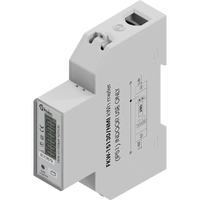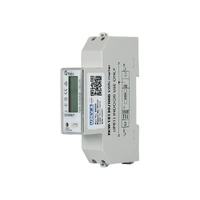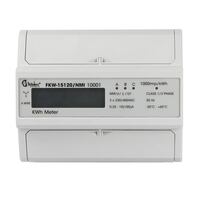

Search Results:
Search Results:
Search Results:
Search Results:
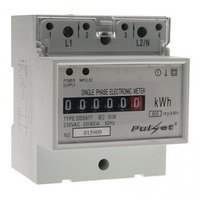
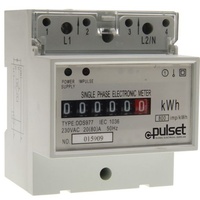
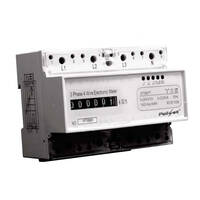
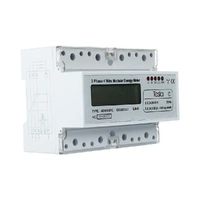
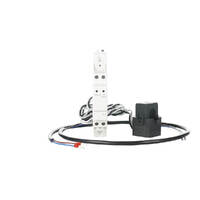
Find the best single and three-phase kilowatt hour meters here at Sparky Direct. [ Read More ]
A kilowatt hour meter records the electrical energy that passes through it from the supply to the load. The reading represents real power consumed over time and forms the basis of every electricity bill in Australia.
One kilowatt hour equals one kilowatt of demand sustained for one hour. The meter accumulates this value continuously, then displays the total on a mechanical register or a digital LCD. Sub-meters and revenue meters serve the same measurement function but apply to different reporting boundaries.
The meter samples voltage and current at the supply terminals many times per second. Multiplying these values gives instantaneous power in watts, and integrating that figure over time yields energy in kilowatt hours. Electronic meters perform these calculations on a dedicated metering chip. Older induction-disc meters rely on a magnetic disc that rotates at a speed proportional to power.
Accurate measurement protects both the energy supplier and the connected customer over the long term. A meter that reads 2 percent high on a 30,000 kWh annual load creates 600 kWh of disputed billing every single year. National Measurement Institute approval ensures revenue meters meet a defined accuracy class before they leave the factory.
Energy retailers rely on revenue-grade meters to issue accurate bills under the National Electricity Rules. Building managers and electricians use sub-meters downstream of those revenue meters to allocate costs, verify tenant usage and identify waste in plant rooms or common areas.
Network-installed revenue meters belong to the distributor or retailer, not the building owner. Sub-meters owned by the building owner sit downstream of the revenue meter and break down consumption by tenancy, plant or department for internal cost allocation.
A meter with a pulse output or Modbus communication port lets you log half-hourly data into a building management system. Patterns then become visible: standby loads at night, peak demand at shift changeover, weekend baseloads that should be zero.
Once consumption data is captured, the highest-cost loads can be targeted first. A site with three identical units can compare them side-by-side. The outlier almost always reveals a fault, a setting error or a leak in the system.
Single phase metering covers the majority of Australian residential connections and smaller commercial supplies up to roughly 100 amps.
A single phase supply uses one active conductor and one neutral, delivering 230 volts to general-purpose outlets. Most homes, small offices and light commercial tenancies run on this configuration.
The meter sits in series with the active conductor and references the neutral. Internal CTs or shunts sense current, while the voltage tap reads supply voltage directly. The product of the two integrated over time produces the kWh reading.
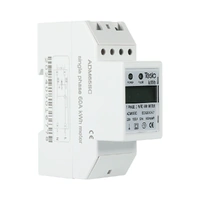
Common applications include house mains metering, granny flat sub-metering, hot water tariff metering, off-grid system monitoring and tenant billing in small unit blocks. The Tesla 60A and 100A DIN rail units in this category cover most of these jobs.
Three phase metering serves any installation with a balanced or unbalanced multi-phase load. This includes workshops, factories, larger commercial sites and most modern homes with high-load equipment such as ducted air conditioning, large solar inverters or EV charging.
Three phase supply delivers three active conductors, each carrying alternating current 120 degrees out of phase with the others, plus a shared neutral and earth. The line-to-line voltage is 400 volts and the line-to-neutral voltage is 230 volts.
A three phase meter measures voltage and current on each phase independently, then sums the three power values to produce a total kWh reading. Direct-connect meters take the load current through internal terminals, while CT-operated meters use external current transformers for higher capacities.
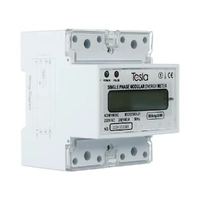
Common uses include main switchboard metering for commercial premises, sub-metering of plant rooms, separate metering of solar exports and revenue metering for embedded networks. The Tesla 100A three phase DIN unit is a popular choice for these roles where direct connection is suitable.
Choosing between single and three phase metering depends on the supply, the load and any future expansion plans.
| Feature | Single Phase | Three Phase |
|---|---|---|
| Typical capacity | Up to 100 A | Up to 100 A direct, higher with CTs |
| Voltage reference | 230 V active to neutral | 400 V line to line, 230 V to neutral |
| Common application | Homes, small offices, sub-metering | Industrial, commercial, EV chargers, large solar |
| Wiring | Active, neutral, earth | Three actives, neutral, earth |
| DIN rail width | Typically 1 to 2 modules | Typically 4 to 7 modules |
A single phase 100 A meter handles around 23 kW continuous. A three phase 100 A meter handles approximately 69 kW continuous. Loads that exceed single phase capacity must move to three phase or use CT-operated metering.
Three phase units take more physical space on the DIN rail and need a wider three phase meter box. Single phase units fit comfortably inside a single phase meter box alongside the main switch and circuit protection.
Match the meter to the supply. A single phase meter on one leg of a three phase load measures only one third of the energy and produces an immediate billing dispute. Confirm the supply configuration with the network operator before ordering and any new installation.
The Australian fleet is steadily moving from electromechanical disc meters to fully electronic units. Both technologies still appear in service across legacy and new-build installations.
An induction-disc meter uses a rotating aluminium disc driven by the magnetic field of the load current to drive a mechanical register. An electronic meter samples voltage and current digitally, then displays the result on an LCD screen with no moving parts in the measurement path.
Digital meters read to 0.01 kWh, hold the count through outages, and resist tampering. Many include a pulse output for telemetry and some support Modbus or wireless data export. The Tesla and Matelec DIN rail units in this category are fully electronic.
Electronic meters hold Class 1 accuracy across a wider temperature range. Disc meters drift slowly with bearing wear and can stick at very low loads. Maintenance on electronic units is limited to terminal re-tensioning during scheduled inspections.
Smart meters combine measurement with two-way communication functions in a single unit. They sit at the centre of the advanced metering infrastructure used by retailers and behind-the-meter energy platforms across the National Electricity Market.
Smart meters transmit interval data to the retailer over cellular, RF mesh or PLC networks. Behind-the-meter smart energy meters such as the SUNGROW S100 connect to the customer inverter or gateway over RS485 Modbus.
Half-hourly interval data lets retailers offer time-of-use tariffs that price energy differently across the day. Customers respond by shifting loads such as pool pumps and hot water to off-peak windows, and by limiting peak demand to avoid demand charges on commercial accounts.
Modbus output from a smart energy meter feeds into solar inverters, battery management systems and building dashboards. The meter becomes the source of truth for export limiting, self-consumption optimisation and tenant billing reports.
DIN rail mounting is the standard form factor for modern sub-metering inside switchboards and distribution boards. Wireless options remove the need for a dedicated communications cable to a building management system or data logger.
DIN rail meters clip onto a 35 mm rail in the switchboard or distribution board. The single phase units occupy 1 or 2 modules, while three phase units occupy 4 to 7 modules. Plan the board layout to leave clearance for terminations and conductor bending radius.
Wireless variants use Wi-Fi, Zigbee or LoRa to send pulse counts or kWh totals to a local gateway device. The gateway then forwards data to a cloud platform for storage and dashboard display. Cellular signal strength inside metal enclosures is the most common installation issue to plan for during commissioning.
Sub-meters allocate energy use within a single revenue connection, dividing the parent meter reading among internal users. Common deployments include unit blocks, retail centres, EV charging bays and embedded networks. Each tenancy gets its own meter, then billing is calculated from the difference between the parent revenue meter and the sum of sub-meters.
Revenue metering in Australia is regulated through the National Measurement Act and network operator service rules. Sub-meters used only for cost allocation have lower compliance requirements but should still be specified to a published accuracy class for credibility with tenants.
Meters used for trade or revenue billing must hold NMI pattern approval. The Matelec FKW-15110-NMI and FKW-15130-NMI units in this category are NMI approved for these uses.
Class 1 meters hold ±1 percent accuracy at full rated load. Class 0.5 meters hold ±0.5 percent and are typically used for high-value commercial billing. Calibration is performed at the factory against a reference meter traceable to national standards.
Wiring to and from the meter must follow AS/NZS 3000:2018 for clearances, terminations and protection. The meter installation itself must also follow the network operator's service rules where the meter forms part of the revenue installation.
Three questions narrow the field quickly: what is the supply type, what is the maximum load current, and what is the meter for.
Single phase supplies need single phase meters, while three phase supplies need three phase meters. Mixed installations such as light residential plus a three phase EV charger are best handled with a three phase meter on the main. Add dedicated single phase sub-meters where required for tenant or department billing.
Rate the meter for at least 125 percent of the calculated maximum demand to allow headroom for future load growth. A 60 A meter suits loads up to roughly 13 kW single phase. A 100 A direct-connect meter suits loads up to 23 kW single phase or 69 kW three phase. Above this rating, use CT-operated metering with externally mounted current transformers.
Bi-directional units such as the Matelec FKW-15130-NMI record both import and export energy on a single meter. Choose this style if solar export is now or planned for the connection point. Pair the meter with a Modbus-capable variant if the inverter or battery system will need real-time energy data for control purposes.
Solar installations create two-directional energy flow at the connection point with the network. Metering needs to handle both directions accurately and to record each total separately for billing purposes.
A bi-directional meter separately records energy imported from the grid and energy exported back to the grid, with the two totals billed at different rates. Single-direction meters cannot perform this role and will produce incorrect bills on solar sites that export to the network.
A dedicated generation meter on the inverter output records the gross output of the PV system. Combined with the bi-directional revenue meter and a load meter, this gives a complete picture: generation, self-consumption, import and export.
The Fronius and SUNGROW smart energy meters in this category communicate directly with their respective solar inverters over Modbus. The inverter then controls export limits, optimises self-consumption and reports performance to the customer app.
A clean installation starts with planning the board layout, sizing the conductors and confirming the protection upstream and downstream.
Calculate the maximum demand using AS/NZS 3000 methods for the connected load profile. Choose a meter rated for at least 125 percent of that demand to allow growth. Confirm DIN rail space in the existing meter box or specify a new enclosure with sufficient capacity for the planned circuits.
Wire the meter strictly per the manufacturer terminal diagram supplied with the product. Tighten terminals to the specified torque value using a calibrated torque screwdriver. Where the meter is sealed for revenue purposes, route conductors so that the seal cover can be fitted without disturbing the wiring inside.
After connection, energise the supply with the load disconnected and confirm voltage on each phase. Connect a known load, time a complete revolution of the indicator pulse and verify the kWh increment matches the expected value within tolerance. Document the initial reading on the commissioning record and retain it with the project file for future reference.
Most metering faults trace back to a small number of repeated errors during installation.
Metering data only delivers value when it gets reviewed regularly by a person who can act on it. The right meter installed at the right point in the system makes that review possible without specialist equipment or external consultants.
A whole-of-house bi-directional meter combined with circuit-level sub-meters reveals where energy goes inside the home. Hot water, pool, air conditioning and EV charging are usually the largest residential loads.
Commercial sites face demand charges based on the highest 30-minute average over the billing period. A meter with demand recording captures these peaks and identifies which loads contribute. Shifting one or two large loads off the peak window can substantially reduce the demand charge.
Industrial sites use sub-metering to allocate energy to production lines, support utilities and HVAC. The data feeds into energy management systems certified to ISO 50001 and supports mandatory reporting under the National Greenhouse and Energy Reporting Act.
A modern electronic kWh meter is a long-life device with no moving parts in the measurement path. Specifying a quality unit at install time avoids replacement costs years later when access to the switchboard may be more difficult.
Electronic DIN rail meters carry a 10-year design life and many remain accurate well beyond that. The main failure modes are LCD degradation and terminal corrosion in damp environments. Marine-influence sites should specify enclosures rated to suit the local environment and service conditions.
Most electronic meters store the cumulative reading in non-volatile memory and retain it through outages. Communication uptime depends on the network: cellular smart meters have 99 percent uptime, while wired Modbus inside a switchboard is essentially 100 percent.
Re-verification against a reference meter every 5 to 10 years is good practice for revenue-grade installations. Sub-meters used for internal allocation can be checked by cross-comparison: the sum of sub-meters should track the parent meter within a small percentage.
Trade-grade meters are stocked locally and ship Australia-wide from major distribution centres. Sourcing through a specialist electrical wholesaler avoids the compliance risks of imported grey-market units that may not hold valid Australian approvals.
Sparky Direct stocks Tesla, Matelec, Pulset, SUNGROW and Fronius kWh meters covering single phase, three phase, NMI-approved revenue and smart energy variants.
Cheap online meters often lack NMI approval and may not meet AS/NZS accuracy requirements. The price difference between a budget meter and a trade-grade unit is usually small once installation labour is factored in. The Tesla DIN rail range covers the budget end without sacrificing trade quality.
Contractors fitting multi-tenanted buildings often need 10 to 100 meters per project. Trade pricing is available on bulk orders, and stock is held to support full-project deliveries. Contact the Sparky Direct trade team for quotes on volume orders.
Most metering complaints fall into one of three categories: incorrect readings, communication faults or wiring problems.
If a meter reads consistently high or low, first verify the load with a calibrated clamp meter and a separate multimeter. Confirm the CT ratio in the meter menu matches the installed CTs. Drift over years typically indicates end-of-life and warrants replacement.
For Modbus issues, check the RS485 wiring polarity, address setting and baud rate. For wireless meters, check signal strength at the meter location and consider an external antenna inside metal enclosures. Cellular smart meters depend on the carrier signal at the install site.
On three phase installations, large discrepancies between phase readings usually indicate a wiring fault or a heavily unbalanced load on one phase. Verify the phase rotation, confirm the neutral is solidly connected and check that each CT is on the correct phase. Phase imbalance over 20 percent should be investigated and corrected before commissioning.
Watch Tesla ADM100SC | 1 Phase 100Amp Kilowatt Hour Meter DIN Rail | Digital video
Watch Tesla ADM100TC | 3 Phase 100Amp Kilowatt Hour Meter Din Rail | Digital video
Watch MTLFKW-15110NMI | Single Phase 100Amp Kilowatt Hour Meter | NMI Approved video

What you see is what you get. Easy installation, reasonable quality for price. I'm using it to monitor my very large, off-grid power solution, directly after a 15kW Victron inverter. The display is easy to read and so far (early days), matches my usage.
Thanks to Sparky direct for their clear, easy to follow website and online invoices and tracking. Item arrived on time and packaged safely with bubble wrap. Good reliable service will recommend using them again no problem.
I was concerned about the startup current might be as much as 57watts but I found that even 1 x 9watt downlight was enough power draw to begin the meter recording
Quality products in stock • Fast Australia-wide delivery • Competitive trade pricing
Browse Kilowatt Hour Meters → Get Expert Advice →Yes, monitoring usage can help identify areas where energy savings are possible.
Sparky Direct supplies kilowatt hour meters Australia-wide, offering reliable energy monitoring solutions with convenient delivery.
Kilowatt hour meters are securely packaged and delivered via standard courier services.
Unused items may be returned if they are in original condition, in line with Sparky Direct’s returns policy.
Warranty coverage varies by manufacturer and typically covers defects in materials or workmanship.
Yes, kilowatt hour meters are typically sold as individual devices.
Yes, selecting the correct phase, rating, and type ensures accurate measurement.
They are usually visible within switchboards or meter enclosures.
They are factory calibrated, with testing requirements depending on application.
Quality meters are designed for accurate and reliable long-term operation.
Yes, they are widely used in offices, shops, and industrial facilities.
Yes, they are often used for sub-metering in rental or shared properties.
Modern digital meters are designed to be clear and easy to read.
Kilowatt hour meters are electrical measuring devices used to record the amount of electrical energy consumed over time.
Yes, they are a standard component in many electrical monitoring installations.
It allows users to monitor electricity consumption and better understand energy usage.
Yes, they help track and manage electricity usage effectively.
Yes, they are commonly used for sub-metering individual circuits or tenancies.
Yes, they are designed to accurately measure real energy usage over time.
Yes, meters are available for both single-phase and three-phase electrical systems.
They are available in analogue and digital formats, depending on application requirements.
Yes, they are commonly installed in switchboards or meter panels.
Quality kilowatt hour meters are manufactured to meet relevant AS/NZS electrical and safety standards when installed correctly.
They are used in residential, commercial, and industrial installations to measure electricity consumption.
A kilowatt hour meter measures energy usage, calculated as one kilowatt of power used for one hour.