
Search Results:
Search Results:
Search Results:
Search Results:
A Hager RCBO sits on a switchboard DIN rail and protects a single circuit against three fault conditions at once. It detects earth leakage, trips on overload, and interrupts short-circuit current before cable damage or fire risk can develop. That single-device approach is why RCBOs have become the default protection method for new and upgraded Australian switchboards.
RCBO stands for Residual Current Circuit Breaker with Overcurrent protection. The device combines residual current detection and overcurrent protection in one DIN rail housing. Typical applications include lighting circuits, power circuits, fixed appliances, commercial fitouts, switchboard upgrades, and three-phase loads. Hager makes single-pole, 1P+N, and four-pole versions to suit residential, commercial, and three-phase installations.
Residual current detection compares the active and neutral current flowing through the device. Any difference between the two indicates leakage to earth. When the leakage exceeds the rated sensitivity (commonly 30mA), the RCBO trips and disconnects the circuit within milliseconds. Overcurrent protection works in parallel. Overloads and short circuits are interrupted by a thermal-magnetic mechanism before conductors can overheat. Recurring trips should be diagnosed by a licensed electrician, because nuisance tripping often points to a wiring, load, or appliance fault.
An MCB (miniature circuit breaker) protects against overload and short circuit only. An RCD (residual current device) detects earth leakage but has no overcurrent protection. An RCBO provides both functions in one unit. This reduces board space, improves circuit-level fault isolation, and means a single tripped circuit no longer takes down every load sharing a common RCD.
| Device | Overcurrent Protection | Earth Leakage Protection | Typical Use |
|---|---|---|---|
| MCB | Yes | No | Overload and short-circuit protection on a single circuit |
| RCD | No | Yes | Earth leakage protection across grouped circuits |
| RCBO | Yes | Yes | Combined protection on a single dedicated circuit |
AS/NZS 3000:2018, known as the Wiring Rules, requires 30mA residual current protection on final sub-circuits in new Australian residential installations and many commercial applications. RCBOs are the cleanest way to meet this requirement at the circuit level. Installation and switchboard alteration work must be carried out by a licensed electrician.
The Wiring Rules require RCD protection for final sub-circuits in modern Australian installations. Typical examples include lighting, socket outlets, cooktops, air conditioning, hot water systems, pool equipment, and other fixed equipment where applicable. Switchboard alterations or circuit additions may trigger an upgrade obligation depending on the scope of work and the state or territory rules in force. The licensed electrician carrying out the work is responsible for confirming what applies.
Type A RCBOs detect both AC residual current and pulsating DC residual current. They suit modern appliances and electronic loads that can produce DC components, such as inverters, variable speed drives, induction appliances, LED drivers, and EV-related circuits. Older Type AC devices respond only to pure AC leakage. They are less suitable for many of today's loads. Hager's Type A range is the appropriate choice for most current Australian installations.
30mA is the standard personal protection sensitivity used across most residential and commercial circuits. 10mA sensitivity is reserved for higher-risk or specialised applications, including selected medical-related environments where specified by the designer. 100mA is generally used for equipment or fire protection in selected applications. It is not a substitute for 30mA personal protection where 30mA is required.
The Hager RCBO range covers single-module, 1P+N, and four-pole formats. Current ratings span 6A through 40A, with 6kA and 10kA breaking capacity options. Type A operation, C and D trip curves, and 10mA, 30mA, and 100mA sensitivities are available across the range. Buyers can also fit Hager RCD Add-On Blocks to compatible existing MCBs where a full board replacement is not justified.
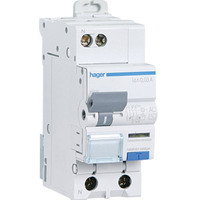
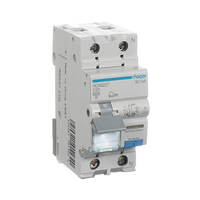
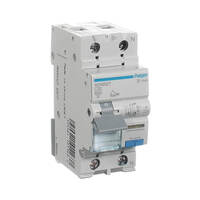
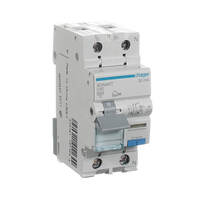
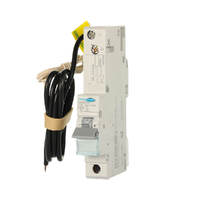
The ADC9 onekombo format is a single-module 1P+N RCBO. The compact footprint frees DIN rail space, which matters in older domestic switchboards and tight retrofit jobs. Common ratings run 6A to 32A. Most units are 30mA Type A with 6kA breaking capacity. C and D curve options cover general loads and higher inrush loads such as motors.
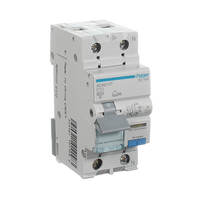
1P+N configuration suits standard single-phase lighting, power, and fixed equipment circuits. Hager offers both 10mA and 30mA options where required. Fitting an RCBO per circuit means a fault on one circuit isolates only that circuit. The rest of the house or premises keeps running, which is a major improvement over older shared-RCD board layouts.
Four-pole RCBOs protect three-phase circuits such as larger air conditioning, commercial cooking, hot water plant, and selected industrial loads. They are rated for 415V operation, with current ratings up to 40A where applicable, and 30mA or 100mA sensitivity options. Three-phase RCBO selection must match the load, cable size, fault level, and required residual current protection. See the 4 Pole MCB/RCD Combinations category for the full three-phase range.
Hager RCD Add-On Blocks convert compatible Hager MCBs into RCBO-style protection assemblies. They are useful in commercial and light industrial board upgrades where replacing the entire board is not practical. The result is added residual current protection without the cost and disruption of a full rebuild.
Picking the right RCBO comes down to four decisions: current rating, trip curve, breaking capacity, and switchboard system compatibility. Each one affects compliance, fault performance, and long-term reliability. The licensed electrician carrying out the work is responsible for the final specification.
RCBO amperage must match the circuit design current and the cable current-carrying capacity. Common ratings include 6A, 10A, 16A, 20A, 25A, 32A, and 40A. Lighting circuits typically use 6A or 10A. General power circuits sit at 16A or 20A. Larger fixed loads such as cooktops, hot water, or air conditioning may need 25A, 32A, or 40A. Over-rating an RCBO to stop nuisance tripping is unsafe and non-compliant. The fault should be diagnosed instead.
C curve is the common choice for general lighting, power, and moderate inrush circuits. D curve handles higher inrush loads such as motors, transformers, and selected commercial equipment where specified. The trip curve should be selected by the licensed electrician or designer, based on load characteristics and fault protection requirements.
Breaking capacity is the maximum prospective fault current the device can safely interrupt. 6kA suits many residential and light commercial applications. 10kA is used in higher fault-level environments, including some commercial sites close to large transformers. Prospective fault current must be assessed before specifying protection devices. Under-rating the breaking capacity creates a real safety risk.
Hager's onekonekt busbar system supports cleaner, faster switchboard layouts. The system is compatible with Hager invicta panelboards where applicable. Sourcing the devices, busbars, and switchboards from the same manufacturer simplifies compliance, layout, and future maintenance. The full Hager component range is available in the Hager brand section.
Hager RCBOs deliver three concrete benefits: better fault isolation, neater switchboards, and faster compliance with current Wiring Rules. The brand is well known among Australian electricians and has good local stock support.
Single-module RCBOs free up DIN rail space in older domestic switchboards where fuse or shared MCB/RCD layouts are being modernised. Each circuit gets its own protection, so a fault on one circuit no longer takes down others. Typical applications include power circuits, lighting circuits, air conditioning, hot water, cooktops, and pool circuits. Compliance with current AS/NZS 3000 requirements becomes much easier to demonstrate.
Per-circuit RCBOs reduce downtime by limiting trips to the affected circuit. That matters in retail, offices, workshops, small industrial sites, plant rooms, and multi-tenancy buildings. Hager Add-On Blocks and higher breaking capacity options give commercial contractors practical upgrade tools without forcing a full board rebuild every time.
Compare brands on standards compliance, physical footprint, busbar compatibility, breaking capacity options, local availability, accessory support, and electrician familiarity. Common alternatives include Clipsal, Legrand, NHP, and HPM. The best choice is usually the brand that matches the existing switchboard system, not the lowest unit price. Brand mixing inside one board complicates busbar selection and future maintenance.
Buying RCBOs online makes sense for trade and informed retail buyers. Online ordering gives clear pricing, model references, stock visibility, and fast delivery. The key is confirming the specification against the circuit and switchboard system before purchase.
Confirm amperage rating, pole configuration, residual current sensitivity, trip curve, breaking capacity, DIN rail footprint, and busbar compatibility. Decide whether the job needs a single-module 1P+N RCBO, a four-pole RCBO, or an Add-On Block. The licensed electrician on the job should confirm the specification against the product datasheet before the order goes through.
Hager RCBOs are stocked by Australian electrical wholesalers and specialist online suppliers. Sparky Direct is an online electrical wholesaler supplying Hager RCBOs to trade and retail customers across Australia, with the full Hager RCBO range available alongside other circuit protection categories.
The cheapest RCBO is not always the best value. A unit that lacks the correct type, sensitivity, breaking capacity, or busbar compatibility costs more in rework and downtime than the saving on the device. For board upgrades, ordering by the full circuit schedule helps avoid delays and keeps the device series consistent across the installation. The wider RCBO category and safety switch range give buyers options across multiple brands and configurations.
Hager RCBO installation, replacement, and switchboard work must be performed by a licensed electrician. The notes below cover safety and compliance awareness only. They are not step-by-step wiring instructions.
Switchboard work must be carried out in accordance with AS/NZS 3000 and the relevant state or territory electrical safety legislation. Depending on the jurisdiction and the scope of work, the job may require a Certificate of Compliance or state-equivalent electrical safety certificate. Unlicensed switchboard work is illegal in every Australian state and territory. It is also extremely dangerous.
RCBOs must be tested before commissioning, using appropriate test procedures and instruments. The integral test button is a functional check that the trip mechanism works. It does not replace full electrical testing by a licensed electrician. Homeowners and facility managers can press the test button periodically as part of responsible maintenance. The device should trip immediately and reset cleanly.
Common causes of trips include earth leakage, overloaded circuits, appliance faults, moisture ingress, damaged cabling, incompatible loads, or incorrect trip curve selection. Do not keep resetting an RCBO without identifying the cause. Call a licensed electrician for recurring trips, failed resets, heat marks on the device, buzzing sounds, or any suspected appliance fault.
Safety reminder: An RCBO that keeps tripping is doing its job. It is warning of a real fault. Resetting it without diagnosis can mask a fire or shock hazard. Always engage a licensed electrician to investigate.
Watch HAGER ADC916T | 16Amp 6 kA Single Pole RCBO video
Watch HAGER ADD920T | 20 Amp 1P + N 30mA 6kA RCBO | D Curve video
Watch HAGER ADA920T | 20 Amp 2 Pole 6kA | 30mA RCD/MCB RCBO video

Outstanding quality product, Super fast delivery, Perfect fitment. I researched before I ordered this product - the service and ease of ordering on the Sparky Direct site was one of the best I've experienced. The products were in stock, exactly as described, and a premium quality product that fitted... and they arrived ahead of time too! The overall customer experience was excellent. Sparky Direct do what they say and outshine others who pale by comparison. I couldn't be happier and would highly recommend to all.
Hager all the way! Especially in domestic, Hager offers the best circuit protection set up in my opinion. Single phase & three phase bus bar is so easy to install with this switch gear and these new RCBO’s that are suitable to test from the terminals are Great!!!
Great rcd/mcb combo for switch board breaks downs to replace existing failed 2 pole units or as a single replacement in a caravan inlet safety switch rcd/mcb the Hagar products with stand the test of time and insure your safety
Trusted brands • Expert advice • Fast Australia-wide delivery • Trade pricing
Shop Hager RCBO → Get Expert Advice →