
Search Results:
Search Results:
Search Results:
Search Results:
Modern surge protection devices rely on metal-oxide varistor (MOV) technology. The MOV acts as a voltage-controlled switch inside the device.
At normal operating voltage, the MOV presents very high resistance and draws almost no current. When voltage exceeds the rated threshold, resistance drops sharply and a low-impedance path to earth opens.
The MOV block is built from zinc-oxide grains bonded together, where each grain junction behaves like a microscopic diode that blocks current at low voltage but conducts freely at high voltage.
The clamping action happens in microseconds: from the instant a surge appears to the moment it is diverted, less time passes than a single cycle of AC supply.
MOV arresters have displaced older spark-gap arresters for several practical reasons:
Gap-type arresters relied on a spark gap that needed periodic inspection, and contamination or humidity affected operation; MOV arresters are sealed units that require no servicing across their working life.
The voltage protection level (Up) is the highest voltage that appears across protected equipment during a surge. Lower Up values give tighter protection. Choose an SPD with a Up rating compatible with the impulse withstand of the equipment downstream.
Surge protection devices are classified by location in the installation and by the surge current they can carry. AS/NZS 61643 and IEC 61643 use Type 1, Type 2, and Type 3 classifications.
Type 1 devices handle direct or partial lightning strike currents on the supply side. They are installed at the main switchboard or service entrance, often upstream of the main switch.
Type 2 devices are the most common SPDs in Australian installations. They protect against induced surges and residual energy that passes a Type 1 device.
Type 3 devices give final protection close to sensitive equipment such as control systems, network gear, and electronics.
The terms surge arrester and lightning arrester are often used interchangeably, but they describe different protective systems.
A lightning arrester, more correctly called an air terminal or lightning rod, is part of a structural protection system. It provides a preferred strike point on the building and a down-conductor path to earth.
Air terminals prevent direct strikes to the structure, but on their own they do not stop the electrical effects of a nearby strike from entering wiring inside the building.
Surge protection devices sit inside the electrical installation, not on the building exterior. They divert transient overvoltage from any source: lightning, switching, or grid disturbances.
SPDs handle both lightning-induced surges and switching transients, so coverage is not limited to lightning events alone.
A building with structural lightning protection still needs SPDs. A strike to the air terminal creates strong electromagnetic fields inside the structure. Those fields induce surges in nearby wiring, and only an SPD will divert them.
AS/NZS 3000:2018 uses the term "surge protection device" (SPD), which matches the IEC framework and separates electrical protection from structural lightning protection.
Older product names and trade catalogues still use "surge arrester" or "lightning arrester" for the same device, but in current Australian practice SPD is the correct term.
Placement is critical for effective protection, and a coordinated scheme uses SPDs at several points in the installation rather than relying on a single device at the main switchboard.
The primary SPD installs at the main switchboard, as close to the incoming supply as practical. This stage handles externally generated surges before they reach internal wiring.
Secondary SPDs at distribution boards catch surges that pass the main device or originate inside the installation.
Final-stage protection sits close to critical or sensitive equipment, where this stage gives the tightest voltage clamping for electronics and control systems.
Keep SPD connections short. Every metre of lead adds inductance, which lifts the voltage seen by protected equipment during a surge. AS/NZS 3000 sets a target of 0.5 m total lead length between the live terminal, the SPD, and the earth bar.
Some installations need closer attention to SPD selection:
Solar PV systems: SPDs are required on both DC and AC sides, with DC-rated devices fitted to protect the array string and inverter input.
Rural sites: Overhead supplies are more exposed to lightning, so multiple protection stages are usually justified on long service runs.
Medical locations: SPD coordination must not compromise supply continuity in patient-care areas, and AS/NZS 3003 applies.
Industrial sites: Large motor and transformer switching generates frequent transients, so control electronics should be protected separately at the equipment.
Choosing an SPD involves matching the device to the supply, the exposure level, and the equipment downstream. The wrong choice leads to either nuisance failure or inadequate protection.
The surge rating should reflect the exposure of the installation: urban sites with underground supply can use lower ratings, while rural sites with overhead supply need higher surge current capacity.
For most urban domestic supplies, a Type 2 device rated 20 kA to 40 kA per pole is adequate. In areas with frequent lightning activity or long overhead service lines, 65 kA Type 2 devices or combined Type 1+2 protection are appropriate.
The pole count must match the supply configuration:
In TN-S systems, four-pole devices may not be required at the main switchboard. In TT systems, or where neutral integrity cannot be assumed, four-pole protection is the safer choice.
The continuous operating voltage (Uc) must exceed the maximum continuous voltage that the SPD will see in service. For 230 V single-phase systems, choose devices with Uc of at least 275 V.
For three-phase 400 V systems, use devices rated for 440 V Uc or higher to allow for voltage variation and neutral displacement under fault conditions.
Multiple SPDs must coordinate so that the higher-capacity upstream device handles the largest surge current. Without coordination, a downstream Type 2 device can fail trying to absorb energy meant for a Type 1 device.
Manufacturers publish coordination tables showing compatible Type 1 and Type 2 combinations, and these tables should be followed rather than mixing devices from different ranges.
Choose SPDs with a visual status indicator or a remote signalling contact, since these features allow protection status to be confirmed without disconnection or test gear.
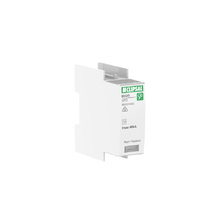
Replaceable-cartridge designs simplify service, because the base remains wired and a failed cartridge can be swapped in seconds without further work.
| Application | SPD Type | Surge Rating | Location |
|---|---|---|---|
| Residential, urban underground | Type 2 | 20 to 40 kA | Main switchboard |
| Residential, rural overhead | Type 1+2 | 40 to 65 kA | Service entrance |
| Commercial premises | Type 1+2 | 40 to 65 kA | Main and distribution |
| Industrial sites | Type 1+2+3 | 65 kA or higher | Multiple stages |
| Sensitive equipment | Type 3 | 3 to 10 kA | Equipment inlet |
The following surge protection devices are proven performers in Australian installations. Sparky Direct stocks Clipsal, Hager, and National Light Sources (NLS) SPDs with same-day dispatch.
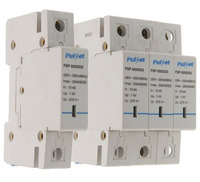
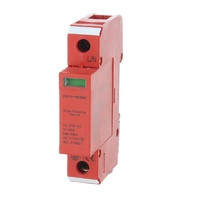
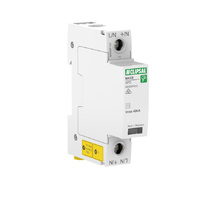
NLS 30539 Surge Arrester 1-Pole 20kA 275V delivers cost-effective single-phase protection, suiting residential boards on urban underground supplies, with DIN-rail mounting that fits standard switchboard rails.
Clipsal MX9SP140 MAX9 SPD 1P 40kA raises capacity to 40 kA on single-phase systems. The visual indicator window shows protection status at a glance, with no test gear required.
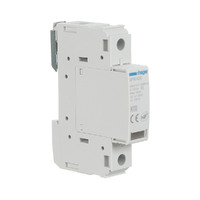
Hager SPB140D 1-Pole 40kA With Replaceable Cartridge matches the Clipsal capacity and adds quick-swap cartridge service, with cartridge replacement taking seconds and leaving the wiring undisturbed.
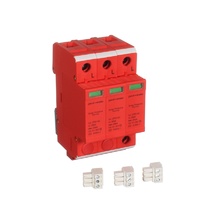
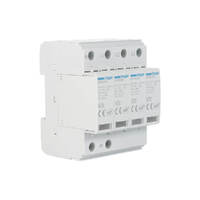
NLS 30719 3-Pole SPD 40kA protects three-phase installations in a compact DIN-rail body, and the slim form factor saves switchboard space in retrofit work where rail capacity is limited.
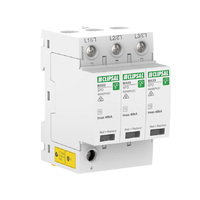
Clipsal MX9SP340 MAX9 SPD 3P 40kA brings the Clipsal MAX9 platform to three-phase systems. The device is widely specified in commercial fit-outs across Clipsal MAX9 and Resi MAX switchboards.
For the complete current stock list, including replacement cartridges and accessories, view the surge arresters category. SPDs sit alongside RCBOs, RCDs, and safety switches in a complete protection assembly.
Surge arrester installation in Australia must comply with AS/NZS 3000:2018 Electrical Installations (Wiring Rules). The standard does not mandate SPDs in every installation, but it sets the rules where SPDs are fitted.
The Wiring Rules cover surge protection in Clause 2.7 and Appendix F. Key points include:
Appendix F gives detailed guidance on selection and installation. It is informative rather than mandatory, but it represents industry best practice.
AS/NZS 3000:2018 directs the designer to a risk assessment rather than a blanket rule. The assessment weighs the exposure level against the consequences of equipment failure.
Factors that increase risk include:
When a structural lightning protection system is fitted, AS/NZS 3000:2018 requires primary SPDs as a minimum. A strike to the air-terminal network creates strong induced surges inside the building, and only an SPD can clamp them.
Surge arresters must comply with product standards for safety and performance:
Devices certified to these standards give a known performance baseline and coordinate predictably across a multi-stage scheme.
All SPD installation work must be carried out by a licensed electrician. This ensures:
DIY installation voids product warranties and breaches the electrical safety acts in every state and territory.
After installation, verify operation as part of the certificate of compliance:
Routine inspection during periodic testing keeps protection effective. Replace SPDs at end of indicator life or after a known major surge event.
Club Clipsal is Australia's largest electrician community offering trade rewards, business support, and exclusive benefits. When you nominate Sparky Direct as your preferred wholesaler, we automatically apply your Clipsal spend points to your Club Clipsal account daily.
Entry-level offering coaching, mentoring, and training discounts
Unlock exclusive industry tools and networking events
Access Toyota fleet offers and business software discounts
Maximum benefits, including VIP experiences and rewards
1. Sign Up: Create your Club Clipsal account at clipsal.com/club-clipsal or via the iCat mobile app
2. Nominate Sparky Direct: Select Sparky Direct from the wholesaler dropdown menu in your profile
3. Add Email: Enter your Sparky Direct account email address in the membership number field
4. Start Earning: Every dollar spent on Clipsal products earns points automatically
Redeem points from the rewards store, including gift cards, tools, and experiences. Access business summits, product training, and industry networking events. Receive early access to new product launches and special promotions. Connect with fellow electricians via the Club Clipsal community app.
Watch NLS 30539 | Surge Arrestor 1 Pole 20ka 275V | SPD1R video
Watch Clipsal MX9SP340 | MAX9 SPD 3P 40kA Surge Protection Device video
Watch Hager SPB140D | 1 Pole 40kA Surge Protection Device With Replaceable Cartridge video

We all spend a fortune insuring our home and vehicles. Installing a surge protection device is great insurance and affordable when you consider it protects thousands of dollars of electronic equipment (TV's, Entertainment equipment, Oven, Dishwasher, Washing Machine, Items such as phones & devices connected to chargers) within your home -should a surge in voltage occur.
Quality Type-2 MOV surge protecter with good specifications (40 kA maximum discharge current) and fault indicator window for each phase. Replaceable cartridge type, protecting from the meter box to the rest of the premise.
I bought products from Sparky Direct several times. Every time the products were shipped fast and I had no issues. I like the website with its easy navigation. Pricing is also good
Trusted brands • Expert advice • Fast Australia-wide delivery • Trade pricing
Shop Surge Arresters → Get Expert Advice →For urban areas with underground supply, 20-40kA SPDs are adequate. Rural properties with overhead lines require 65-100kA surge protection. Industrial sites and lightning-prone areas need 100kA rated devices.
Type 1 SPDs (65kA+) install at service entrance for direct lightning protection.
Type 2 SPDs (20-40kA) protect distribution boards from switching surges.
Type 3 SPDs (8-20kA) provide point-of-use protection for sensitive equipment.
Replace SPDs immediately after major surge events or when status indicators show failure. Devices with visual indicators should be inspected quarterly. Manufacturers typically recommend replacement every 5-10 years depending on surge exposure and usage.
Yes, one properly rated SPD installed at a distribution board protects all circuits downstream from that board.
However, sensitive equipment benefits from additional dedicated SPDs installed at the equipment location.
Yes, solar PV installations require surge protection on both DC (array side) and AC (grid side) circuits. Use DC-rated SPDs for array protection and standard AC SPDs for the grid connection.
Solar photovoltaic systems are particularly vulnerable to lightning and switching surges. The large array area acts as a lightning collector, while the inverter contains sensitive electronics.
AS/NZS 3000:2018 does not mandate SPDs for all installations but requires them when structural lightning protection exists.
A risk assessment determines whether protection is needed based on lightning exposure, supply configuration, and equipment value.
Australian Wiring Rules take a risk-based approach to surge protection rather than universal mandatory installation.
AS/NZS 3000:2018 covers SPD installation in Clause 2.7 and Appendix F.
Key requirements include connecting to the main earthing terminal, minimising lead lengths, providing disconnection means, and coordinating overcurrent protection with SPD ratings.
The Wiring Rules provide comprehensive guidance on surge protection device installation.
Clause 2.7.3 - Basic Requirements:
Appendix F - Detailed Guidance:
Installation Location:
Overcurrent Protection:
Lead Length Critical:
Status Indication:
Labeling:
Connection Points:
Yes, all surge protection device installation must be performed by licensed electricians in Australia.
SPD work involves main switchboard connections, overcurrent device coordination, and compliance with AS/NZS 3000:2018 - all requiring electrical licensing.
Unlicensed electrical work carries significant penalties:
All three brands meet Australian Standards.
Clipsal offers an extensive product range and Club Clipsal rewards.
Hager provides replaceable cartridge designs for easier maintenance.
NLS delivers cost-effective protection for budget-conscious projects.
Choose based on specific features, budget, and maintenance preferences.
Replaceable cartridge SPDs have a permanent base unit and a removable protection element.
When the SPD fails, replace only the cartridge (30 seconds) rather than rewiring the entire device (15 minutes).
This reduces maintenance time by 95% and labour costs significantly.
SPDs have visual indicators that indicate the protection status.
Green typically means operational, red indicates failure.
Some models include remote alarm contacts.
Failed SPDs may also show physical signs like discolouration, melting, or a burning odour.
No, properly installed SPDs should not cause nuisance RCD tripping.
Install SPDs after the main switch but before RCDs as specified in AS/NZS 3000:2018.
If an RCD trips, check for earth leakage at the SPD or for incorrect installation.
Yes, surge protection provides excellent ROI.
A $350 residential SPD installation protects thousands of dollars in electronics.
Commercial installations save tens of thousands in equipment replacement and downtime costs.
Insurance claims and equipment warranties often require surge protection.
Yes, Sparky Direct provides free technical support for surge protection selection.
Our team helps licensed electricians choose appropriate SPD ratings, brands, and configurations.
Contact us for project-specific recommendations, coordination guidance, and product availability.