
Search Results:
Search Results:
Search Results:
Search Results:

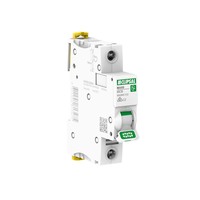
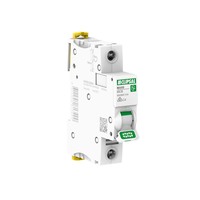
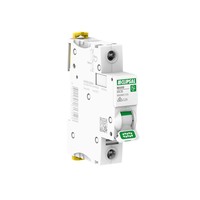
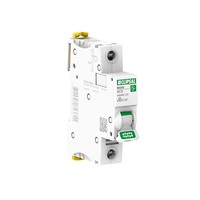
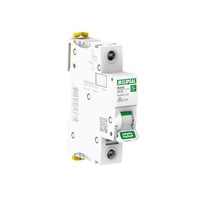
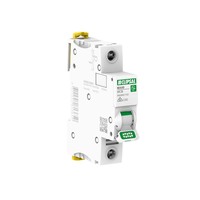
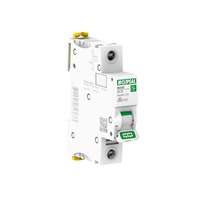
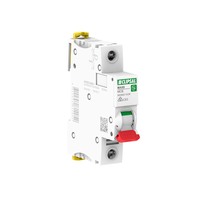
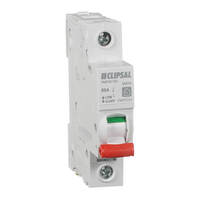
Find the best Clipsal MAX9 and Resi MAX products here at Sparky Direct. [ Read More ]
The Clipsal MAX9 and Resi MAX circuit protection range covers the protective devices that sit inside a modern Australian switchboard. It includes miniature circuit breakers, RCBOs, main switches, surge protection devices, and the busbars and accessories that tie them together. Sparky Direct stocks both ranges for licensed electricians, switchboard installers, builders, and small electrical contractors who need compliant gear for new builds, retrofits, and switchboard upgrades.
Correct circuit protection is the difference between a safe installation and a fire risk. Protective devices interrupt fault currents, isolate damaged circuits, and provide shock protection through earth leakage detection. Compliance with Australian Standards is not optional for fixed wiring, and switchboard work must be performed by a licensed electrician. The ranges below give you the documentation, certification, and local support needed for compliant installation.
MAX9 is a modular circuit protection and switchgear family aimed at residential and light commercial switchboards. The range includes MAX9 circuit breakers, RCBOs, main switches, and surge protection devices that mount on standard 35mm DIN rail. Common amperage ranges run from 2A up to 63A for branch protection, with main switches available in higher ratings. Pole configurations span single pole, two pole, three pole, and four pole devices, and breaking capacity is typically 6kA for residential applications. Every device is built for Australian installation requirements and carries the documentation needed for compliance work.
Resi MAX is Clipsal's residential-focused switchboard and protection system. It bundles together MCBs, RCDs, RCBOs, enclosures, and busbar accessories designed specifically for Australian homes. The system simplifies device selection by grouping compatible parts, so contractors can build out a residential board without cross-checking ratings between unrelated product lines. Resi MAX integrates with the wider Clipsal MAX9 ecosystem, sharing module widths and busbar pitch where the datasheets confirm compatibility.
Licensed electricians and switchboard installers are the primary buyers, followed by solar installers, EV charger installers, and maintenance contractors. Small electrical businesses use these ranges as a standard specification across projects to keep stock simple and installation predictable. Informed homeowners and builders may also buy components for projects, but fixed wiring and switchboard work must always be completed by a licensed electrician under Australian law.
Both ranges sit under the Clipsal brand and share a common DIN-rail mounting standard, but they target slightly different jobs. MAX9 is a broader circuit protection family suitable for residential and light commercial installations, while Resi MAX is built specifically around residential switchboards with selection and installation simplicity in mind. Choosing between them comes down to switchboard system, project scope, and the devices the board already uses.
| Attribute | Clipsal MAX9 | Clipsal Resi MAX |
|---|---|---|
| Primary application | Residential and light commercial | Residential switchboards |
| Device range | MCBs, RCBOs, RCDs, main switches, SPDs | MCBs, RCDs, RCBOs, enclosures, busbars |
| Selection model | Broader catalogue, mix and match | Bundled residential system |
| Module width | Standard DIN modules | Compact residential layout |
| Busbar integration | Comb busbar compatible | Comb busbar compatible |
Choose MAX9 when the job needs a broader catalogue of devices, including dedicated surge protection devices, multiple main switch configurations, and a mix of single-phase and three-phase protection. Electricians often prefer MAX9 for its known brand, local stock availability, clear product documentation, and consistency across a switchboard system. Light commercial jobs, larger residential builds, and switchboards needing SPDs are typical MAX9 territory.
Resi MAX suits residential switchboard upgrades, new home builds, retrofit compliance work, and compact layouts where DIN rail space is tight. The bundled selection model speeds up specification because parts are designed to work together. RCBO options across common ratings cover most residential circuit needs, and the system is reliable for residential switchboard upgrades because of the controlled compatibility envelope.
Compatibility depends on device type, board or enclosure series, busbar system, module width, and terminal configuration. Always check the Clipsal datasheet, switchboard schedule, and the electrician's design before mixing components from different generations or product families. The general rule is that devices share the same module pitch and busbar pin spacing, but specifics vary by model. Confirm matching documentation rather than assuming visual compatibility.
The ranges include several distinct device types, each with a specific protective role. Understanding what each device does helps you specify the right part the first time and reduces the risk of mismatched components on the order list.
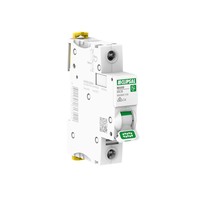
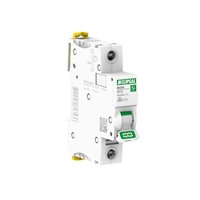
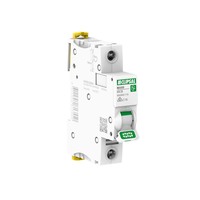
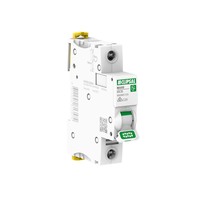
Miniature circuit breakers protect cables and circuits from overload and short-circuit faults. The MAX9 MCB range covers common current ratings including 6A, 10A, 16A, 20A, 25A, 32A, and 63A, with single, two, three, and four pole configurations available. Type B trip curves suit resistive and lightly inductive loads, while Type C curves handle higher inrush currents common with motors and lighting drivers. MCBs do not provide earth leakage protection on their own, so they must be paired with an RCD or used as part of an RCBO where personal protection is required.
Residual current devices, also called safety switches, detect earth leakage currents. They trip quickly to protect against electric shock. RCDs are typically rated at 30mA for personal protection and are available in single-phase and three-phase configurations. Under AS/NZS 3000, RCD protection is required on most final subcircuits including socket outlets, lighting circuits, and dedicated load circuits. RCDs do not provide overcurrent protection unless they are combined with an MCB or built into an RCBO.
RCBOs combine the functions of an RCD and an MCB into a single device. They provide earth leakage protection plus overload and short-circuit protection. Clipsal MAX9 RCBOs are often considered better than standard MCBs for residential switchboards because each circuit gets independent shock and overcurrent protection. This circuit independence means a fault on one circuit does not trip the rest of the board. The result is reduced nuisance impact and easier fault-finding. RCBOs are now the preferred choice for most residential switchboard upgrades in Australia.
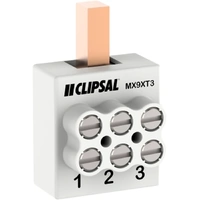
A complete switchboard needs more than just MCBs and RCBOs. Main switches isolate the entire board for maintenance and emergency shutdown. Surge protection devices clamp transient voltages from lightning or grid switching, protecting downstream electronics. Comb busbars link circuit devices together neatly without point-to-point wiring, while active and neutral links, blanks, and labelling accessories complete the build. Together these supporting products produce a safer, neater, more compliant switchboard.
Device selection is a structured process that weighs current rating, pole count, trip curve, breaking capacity, RCD type, board compatibility, and available DIN rail space. The right approach is to map the protective device to the circuit it serves, then verify compatibility against the switchboard documentation.
Lighting circuits typically use 10A or 16A MCBs or RCBOs on Type B or Type C curves. General power circuits often use 20A devices. High-load appliances like ovens or pool pumps may need 25A or 32A protection, often on Type C curves. Solar PV inverter supply, EV charging, and workshop circuits each have specific design considerations. Final device selection depends on cable size, load type, prospective fault level, and the current Australian Wiring Rules, and should be confirmed by the installing electrician.
Common ratings in the MAX9 range cover 6A through 63A for branch protection. Type B curves trip on lower magnetic faults and suit lighting, heating, and socket circuits without significant inrush. Type C curves tolerate higher inrush and suit motors, fluorescent banks, and switch-mode loads. Breaking capacity must exceed the prospective fault current at the device location. Residential boards typically require 6kA breaking capacity, but a fault level assessment may justify a higher rating for installations close to the supply transformer.
Compact residential switchboards fill quickly when each circuit gets its own RCBO. Slimline single-module RCBOs help, but planning spare DIN modules from the start is smarter than retrofitting later. Allow space for future solar PV protection, battery storage isolation, and EV charger circuits. Specifying a slightly larger electrical enclosure at the build stage can reduce the cost of later upgrades dramatically. Confirm busbar length, neutral and earth bar space, and gland capacity before ordering.
Resi MAX is primarily residential and light residential focused. MAX9 covers residential and light commercial work. For broader commercial requirements with higher fault levels, dedicated motor protection, or specialised tripping characteristics, the Schneider Acti9 range is often more appropriate. Check the load type, prospective fault level, compliance requirements, and project documentation before committing to a system.
Modern residential loads are growing fast. Solar PV systems, home battery storage, and EV charging circuits all add demand and complexity to the switchboard. Circuit protection selection is becoming more specialised, and the MAX9 and Resi MAX ranges cover most of these applications when matched against the right device type and rating.
Solar PV installations need protection on the inverter supply circuit, plus integration with the existing switchboard layout. RCD type selection matters because some inverters produce DC residual currents. Ordinary Type AC devices cannot detect DC residual current reliably. Solar circuit breakers and surge protection at the array and inverter end are also part of the design. AS/NZS 4777.1 covers grid-connected inverter installations at the standards level. Solar PV design and installation must be handled by qualified solar and electrical contractors.
Battery-backed circuits require dedicated protection devices, clear labelling, and visible isolation. Backup supply arrangements need careful circuit separation so loads switch cleanly between grid and battery power. Avoid mixing AC and DC protection without checking ratings, and never assume an MCB rated for AC handles DC current at the same level. Always check the battery manufacturer's installation requirements, and confirm that the inverter and protection devices are compatible with the chosen home battery system.
EV charger circuits are usually dedicated, with 32A single-phase or three-phase loads being common. RCD type selection depends on the charger's internal design. Some chargers include built-in DC fault detection, in which case Type A RCD protection upstream may be sufficient. Others require Type F or Type B RCDs at the switchboard. The B EV Type Acti9 iID device is a Type B RCD designed specifically for EV applications. EV charger protection must be designed by a licensed electrician and aligned with the EV charger manufacturer's documented requirements. Future-proofing the switchboard is worth planning even if EV adoption is still a year or two away.
Circuit protection is governed by several Australian and joint Australian/New Zealand Standards. Selecting and installing these devices is licensed electrical work in every Australian state and territory. This section covers compliance awareness for buyers, not installation instructions.
Clipsal MAX9 products supplied through authorised Australian channels are designed for Australian installation requirements and carry the appropriate compliance documentation. Always check the product datasheet, RCM marking status, and exact model specification before installation. Non-compliant imported protection devices should not be installed in Australian switchboards because they may not meet the relevant standards for breaking capacity, RCD response time, or insulation rating.
AS/NZS 3000, known as the Wiring Rules, governs installation requirements, RCD protection coverage, circuit protection selection, labelling, isolation, and testing. The Wiring Rules apply to new builds, switchboard upgrades, renovations, solar PV installations, battery storage systems, and EV charger circuits. Each device type also has its own product standard: AS/NZS 60898.1 for MCBs, AS/NZS 61008 for RCDs, and AS/NZS 61009 for RCBOs. A licensed electrician assesses the switchboard against these standards and selects compliant devices.
Commissioning covers RCD and RCBO trip testing, polarity verification, insulation resistance, circuit labelling, and electrical compliance records (CCEW or state equivalent). These tests confirm the installation is safe before it is energised and handed over. Testing must be performed by a licensed electrician using suitable, calibrated test equipment. Documentation should be retained for warranty, future maintenance, and any future inspection or rectification work.
Buyers often compare Clipsal with other brands available in the Australian market. The right brand for a project depends on the existing switchboard system, project specification, and stock availability, not on a blanket judgement.
Compliance documentation, manufacturer warranty, local technical support, and ongoing replacement stock are the key reasons to prefer named-brand circuit protection over generic alternatives. Price should not be the only deciding factor for protective devices. Uncertified or unsupported imported circuit protection products may not meet Australian standards and create a real safety risk, regardless of how similar they look on the outside.
Schneider Acti9 is often specified for higher-specification commercial and industrial projects, while Resi MAX and MAX9 are typically selected for residential and light commercial work. Acti9 offers a broader range of trip curves, breaking capacities, and accessory devices, but the depth is rarely needed for a standard home. Stock availability, range complexity, and project suitability should guide the choice. The Acti9 category page lists the full available range for direct comparison.
Hager is another well-known Australian switchboard brand with its own board ecosystem, busbar design, and accessory range. Compare on compatibility with the existing board, electrician familiarity, stock continuity, and local support rather than declaring one brand superior. Hager RCBOs work well in Hager boards, just as Clipsal devices work best in Clipsal boards. Mixing brands within a single board requires careful datasheet review and is not always supported.
Online ordering has changed how contractors source switchboard parts. The benefits are stock visibility, transparent pricing, and fast dispatch, but the buyer still needs to verify product codes against the project documentation before clicking purchase.
Australian electrical wholesalers, trade-focused online suppliers, and authorised distributors are the practical sources for genuine MAX9 stock. Buying from a reputable Australian supplier ensures the gear carries the correct compliance documentation and warranty support. Sparky Direct supplies Clipsal products through transparent online ordering with fast dispatch and trade and retail access. Contractors can order Clipsal MAX9 gear from Sparky Direct on standard business days with same-day dispatch on most in-stock lines.
Best price is rarely just the unit cost. Bulk pricing should consider full project quantities, freight, returns handling, delivery timelines, and stock continuity for future top-ups. Standardising on common RCBO, MCB, SPD, and switchboard component sizes across projects reduces downtime when a contractor needs to swap a faulty unit quickly. Sparky Direct can supply Clipsal MAX9 components in the quantities most residential contractors need, with bulk pricing visible at checkout for higher volumes.
Confirm the full product code, amperage, pole count, trip curve, RCD type, breaking capacity, module width, board compatibility, busbar compatibility, and accompanying documentation before placing the order. Ordering visually similar protective devices without checking specifications causes delays on site and creates compliance issues during commissioning. When in doubt, confirm the part with the installing electrician before purchase.
Switchboard work is licensed electrical work in Australia. This section covers what users should know and what electricians should check, not step-by-step wiring instructions.
A licensed electrician installing Resi MAX uses standard switchboard tools and calibrated testing equipment, including insulation testers, RCD test sets, and torque drivers. Specific accessories, comb busbars, torque settings, and documentation depend on the selected product. Always check the Clipsal datasheet for torque values on terminal screws, because under-torqued or over-torqued connections are a common source of nuisance tripping and longer-term failure. The electrician will refer to manufacturer documentation rather than relying on general practice.
Nuisance tripping is rarely a faulty breaker. Likely causes include load inrush exceeding the trip curve, accumulated earth leakage across several appliances, and shared neutrals between circuits. Other common drivers include moisture ingress in outdoor outlets, faulty appliances, incorrect curve selection, or a mismatch between RCD type and the actual load profile. Professional fault-finding using a clamp meter and insulation tester is the right path, not repeated resetting. The relevant device categories like RCBOs and safety switches include datasheets to help diagnose mismatches.
Periodic RCD test-button checks every three to six months keep the household familiar with the safety switch action. Professional inspection intervals depend on the installation type, but signs of overheating, discolouration, repeated trips, or damaged enclosures should trigger immediate licensed electrician attention. Replacement devices should match the original specification unless the electrician has redesigned the circuit. Maintenance contractors managing rental, strata, and commercial sites should keep common single pole RCBO ratings on the van for fast replacements.
Club Clipsal is Australia's largest electrician community offering trade rewards, business support, and exclusive benefits. When you nominate Sparky Direct as your preferred wholesaler, we automatically apply your Clipsal spend points to your Club Clipsal account daily.
Entry-level offering coaching, mentoring, and training discounts
Unlock exclusive industry tools and networking events
Access Toyota fleet offers and business software discounts
Maximum benefits, including VIP experiences and rewards
1. Sign Up: Create your Club Clipsal account at clipsal.com/club-clipsal or via the iCat mobile app
2. Nominate Sparky Direct: Select Sparky Direct from the wholesaler dropdown menu in your profile
3. Add Email: Enter your Sparky Direct account email address in the membership number field
4. Start Earning: Every dollar spent on Clipsal products earns points automatically
Redeem points from the rewards store, including gift cards, tools, and experiences. Access business summits, product training, and industry networking events. Receive early access to new product launches and special promotions. Connect with fellow electricians via the Club Clipsal community app.
Watch CLIPSAL RMSW180 | 80 amp Main Switch single pole | Resi Max 4 video
Watch Terasaki Din-Safe DSRCBH2030A | 20 Amp RCBO 1P+N 10kA 30mA video
Watch HAGER ADA940T | 40 Amp 2 Pole 6kA | 30mA RCD/MCB RCBO video

The MAX9 MCBs are smart looking, easy to visually identify the switch position, and has large tunnels so it is easy to connect to with combs of various types (rather than just in-brand).
These are so easy to install with the Max9 busbar saved so much time with installation of switchboard
It’s slimline feature is an asset because it helps keep your board neat and tidy which aide’s the ability to fault find if needed A great product.
Quality products in stock • Fast Australia-wide delivery • Competitive trade pricing
Browse Clipsal MAX9 and Resi MAX → Get Expert Advice →