
Search Results:
Search Results:
Search Results:
Search Results:
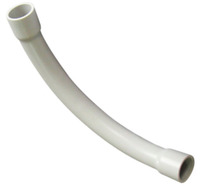
Communication conduit is a hollow tube — usually rigid PVC or flexible HDPE — that houses data, voice, and fibre cabling inside a protected pathway. The conduit itself does not carry signal. Its job is mechanical and electromagnetic: shield the cable from impact, abrasion, moisture, rodents, and stray electrical fields that would otherwise degrade the data running through it.
In Australia, communication conduit is most commonly white (sometimes labelled "comms white") to distinguish it from orange electrical conduit at a glance on site. The cable is pulled or pushed through the conduit at the time of cabling, with draw ropes pre-installed during the rough-in stage so future upgrades don't need walls or slabs reopened.
Mains power generates electromagnetic fields. When data cabling runs alongside power cabling, those fields induce noise into the data signal, causing dropped packets, slower throughput, and degraded voice quality. Separation also reduces the fire and shock risk if a power cable faults inside a shared pathway.
Australian Standard AS/CA S009 sets minimum separation distances between communication and power cabling. The simplest way to meet that requirement on site is to run them in separate, colour-coded conduits from the outset.
The differences between communication conduit and electrical conduit come down to colour, wall thickness, and intended use. Electrical conduit is orange under AS 1345 and is rated to carry the mechanical and thermal demands of mains-voltage cabling. Communication conduit is white, generally thinner-walled, and sized around the bend radius and pulling force required for fibre and data cables rather than current-carrying capacity.
Using the wrong colour conduit on a job is a compliance failure even if the cable inside is correct, because future trades rely on colour as a fast, unambiguous identifier.
A communication conduit's protective role covers four threats: physical damage during construction, ongoing wear from movement or vibration, environmental exposure (UV, moisture, chemicals), and electromagnetic interference. For fibre optic in particular, even minor crushing or sharp bends inside a wall cavity can damage the glass core and require a full re-pull. A properly sized conduit prevents that.
PVC is the workhorse of Australian comms installations. It comes in two main mechanical ratings: medium duty (MD) for standard residential and light commercial work, and heavy duty (HD) for areas exposed to higher impact risk such as exposed walls, plant rooms, and concrete-encased runs.
Medium duty handles the majority of NBN, structured cabling, and CCTV installs in homes. Heavy duty is the default in commercial fit-outs and anywhere the conduit is buried in concrete or run through trafficked spaces.
High-Density Polyethylene (HDPE) conduit is supplied in long coils and is the standard choice for underground communication runs. Its flexibility lets crews pull hundreds of metres through a single trench without joins, and its impact resistance and chemical inertness handle direct burial conditions that would crack rigid PVC over time.
HDPE is widely used by NBN Co, Telstra, and civil contractors for street-side telecommunications conduit, fibre lead-ins, and pit-to-pit pathways.
The benefits of flexible communication conduits become obvious wherever the cable path bends, drops into a wall plate, or transitions between rigid sections. Corrugated flexible conduit (sometimes called convoluted or "concertina") absorbs movement, navigates around obstacles, and protects the final 300–600 mm into a termination point. It's almost always used in combination with rigid PVC rather than as the main pathway.
Some environments demand specialised materials. Low Smoke Zero Halogen (LSZH) conduit emits minimal smoke and no toxic halogens when burned, making it the choice for hospitals, schools, data centres, and high-occupancy buildings where smoke inhalation risk is a primary concern. Plenum and riser rated products extend that protection into return-air spaces and vertical service shafts where fire propagation behaviour is critical.
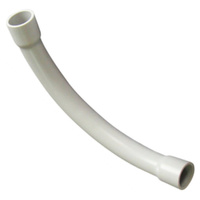
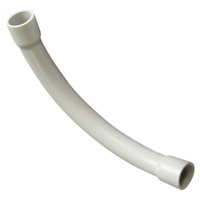
PVC is rigid, lightweight, easy to cut and join with solvent cement, and resists most common chemicals found on construction sites. It performs well indoors and in protected outdoor locations and accepts a full range of fittings — sweeps, elbows, couplings, adaptable boxes — that keep installs neat and serviceable.
HDPE's molecular structure gives it a combination of toughness and flexibility that PVC can't match. It resists cracking under ground movement, tolerates a wide temperature range, and shrugs off the moisture, soil chemicals, and root pressure that long buried runs face over decades.
Fire-rated communication conduits explained simply: they are conduits made from formulations that either resist ignition, slow flame spread, or limit smoke and toxic gas output during a fire. LSZH is the most common low-smoke option in Australian commercial work. For penetrations through fire-rated walls and floors, the conduit itself is only part of the system — fire-stopping collars and intumescent sealants must be specified to maintain the wall's fire rating.
Standard PVC conduit degrades under prolonged UV exposure, becoming brittle and cracking after a few years on a sunlit external wall. UV-stabilised PVC and HDPE handle direct sunlight without breakdown. For any exposed external run, specifying UV-rated conduit upfront avoids a far more expensive replacement job later.
Communication conduits come in sizes ranging from 20mm up to 100mm and beyond, with 20mm, 25mm, 32mm, 40mm, and 50mm being the most stocked sizes for trade work in Australia. 20mm suits a single Cat6 or fibre lead-in, 25mm is the residential structured cabling default, 32mm covers most commercial drops, and 40–50mm is used for backbone runs and underground civil work.
Cables should never fill more than 40% of a conduit's internal cross-sectional area. This isn't an arbitrary number — it's the threshold below which cables can be pulled without binding, friction-burning their jackets, or kinking. It also leaves room for at least one future cable. Overfilled conduit is one of the most common causes of failed certification on commercial structured cabling jobs.
The best communication conduit for data cables depends on the cable type and count. A single Cat6 Ethernet fits comfortably in 20mm. Two to four Cat6 cables need 25mm. Bundled multimode or single-mode fibre lead-ins typically use 25–32mm depending on the strand count. RG6 coaxial sits between Cat6 and fibre on stiffness, and a single run is fine in 20mm but bundles need 25mm or larger.
The cheapest time to add capacity is the day of the rough-in. Sizing up by one increment — 25mm instead of 20mm, 32mm instead of 25mm — adds a few dollars per metre but doubles the future capacity of every run. Combined with a draw rope left in place, future upgrades become a one-person job rather than a builder, plasterer, and painter callout.
Environment drives material choice before anything else. Indoor concealed runs use standard PVC. External exposed runs need UV-stabilised PVC. Underground runs use HDPE. High-occupancy buildings or fire-sensitive areas use LSZH. Get this decision wrong and the conduit either fails early or fails compliance.
Why choose rigid communication conduits for the main pathway? Rigid PVC and HDPE deliver the cleanest pulls, the best long-term cable protection, and the most professional appearance on exposed runs. Flexible conduit earns its place at terminations, transitions, and around obstacles — not as a substitute for a properly planned rigid pathway.
Indoor: standard medium-duty PVC handles 90% of work. Outdoor exposed: UV-stabilised, heavy-duty PVC. Outdoor concealed (eaves, soffits): standard PVC is acceptable. Underground direct buried: HDPE every time. Underground in a conduit pit network: HDPE for the main runs, UV-rated PVC for the riser into the building.
The most frequent selection errors on Australian sites are: using orange electrical conduit for comms because it was on the truck; specifying medium duty where heavy duty is required; using non-UV PVC for an external run; and undersizing the conduit "because it'll fit". Each of these creates rework, compliance issues, or both.
Why use communication conduits in buildings starts at the residential level. Every new home in Australia needs a pathway for the NBN lead-in, internal data drops to bedrooms, studies, and TV points, plus increasingly capacity for smart home hubs, security cameras, and AV distribution. A planned conduit system at the framing stage costs a fraction of retrofitting later and gives the homeowner a future-proofed property.
Commercial fit-outs run on structured cabling. Conduit pathways link the comms room to every workstation, access point, camera, and meeting room. The conduit network is what allows certified Cat6, Cat6A, or fibre to be installed, tested, and warranted as a system rather than a collection of cables.
Communication conduit for telecom wiring in industrial and infrastructure settings carries SCADA cabling, control network data, and site-wide fibre backbones. These environments demand heavy-duty mechanical protection, often LSZH where occupancy is high, and rigorous separation from the high-current power conduits running alongside.
NBN Co, Telstra, and private telco operators deploy thousands of kilometres of HDPE conduit annually for fibre lead-ins, backbone runs, and pit-to-pit pathways. The conduit is installed first, often years before the fibre itself, and the fibre is blown or pulled through when service is required.
How to install communication conduit properly starts with the route plan. Map the run before cutting a single length: shortest practical path, minimum bends, accessible junction points, and at least one spare conduit to every major destination. Document the route on the as-built drawings so future trades know where the pathway is without invasive investigation.
Saddle clips at maximum 1m centres on horizontal runs, closer on vertical runs and through plant rooms. Every change of direction needs support within 300mm. Solvent-welded joints on PVC must be clean, square, and given full cure time before pulling cable. Loose or unsupported conduit sags, kinks, and damages the cable inside.
Always install a draw rope before sealing the conduit. Use cable lubricant on long pulls to reduce friction and protect cable jackets. Pull steadily — jerking the cable can stretch fibre or split Ethernet pairs. Where pull tension is critical (long fibre runs especially), use a tension-monitoring puller rather than pulling by hand.
The minimum separation distances under AS/CA S009 must be maintained for the entire run, not just at endpoints. Where comms and power must cross, the crossing should be at 90 degrees, and the conduits must not run parallel within the specified distance. Using clearly differentiated colours (white for comms, orange for power) makes separation easy to verify on inspection.
AS/NZS 2053 is the suite of standards covering conduits and fittings for electrical installations, including communication conduit. It defines mechanical performance ratings (light, medium, heavy duty), dimensional tolerances, marking requirements, and test methods. Compliant product carries the standard reference printed on the conduit itself.
AS 1345 governs the identification of contents in pipes and conduits. White is the recognised colour for communication and signal services; orange is reserved for electrical mains. Using the correct colour isn't optional — it's a fundamental safety identifier that every trade on site relies on.
AS/CA S009 covers the installation of customer cabling, including the rules for separation between communication and power cabling, conduit fill, and termination practice. AS/CA S008 covers the requirements for customer cabling products themselves. Both are mandatory references for any registered cabler working in Australia.
AS/NZS 3000 (the Wiring Rules) sets the requirements electricians must follow when running power cabling, including the separation between power and communication services. The two standards — AS/NZS 3000 for the power side and AS/CA S009 for the comms side — work together to keep installations safe and signal integrity intact.
The PVC vs metal communication conduits comparison most installers ask about actually applies more practically as PVC vs HDPE in the comms space — metal conduit is rare in Australian communication installations because it can act as an antenna for interference. The choice between PVC and HDPE comes down to where the conduit will live.
| Feature | PVC Conduit | HDPE Conduit |
|---|---|---|
| Form | Rigid lengths (typically 4m) | Flexible coils (50–500m+) |
| Best for | Indoor, exposed external, in-wall | Direct buried, civil, long runs |
| Joint method | Solvent cement, push-fit fittings | Mechanical couplers, electrofusion |
| Impact resistance | Good (HD rated) | Excellent |
| UV resistance | UV-stabilised grades only | Good (most grades) |
| Cost | Lower per metre | Higher per metre, fewer joints |
| Feature | Rigid Conduit | Flexible Conduit |
|---|---|---|
| Best use | Main pathway runs | Terminations, transitions, around obstacles |
| Cable protection | Excellent | Good (lower than rigid) |
| Pulling friction | Low | Higher (corrugated walls) |
| Appearance | Clean, professional | Suited to concealed use |
| Rating | Typical Use | Wall Thickness | Where to Specify |
|---|---|---|---|
| Medium Duty (MD) | Concealed indoor, residential | Standard | NBN drops, in-wall structured cabling |
| Heavy Duty (HD) | Concrete-encased, exposed, commercial | Thicker | Slabs, plant rooms, trafficked areas |
The cheapest conduit on the market is not always the best value. Non-compliant or unbranded product can fail at inspection, fail prematurely under UV, or split during cable pulling. The price difference between compliant medium-duty PVC and a no-name alternative is small per metre but enormous if the run has to be redone. Buy compliant product from a known supplier every time.
Electromagnetic interference is the silent killer of data networks. EMI doesn't usually take a network down outright — it degrades it, causing intermittent slowdowns, dropped video calls, and unreliable VoIP. Maintaining proper conduit separation from power cabling is the most cost-effective EMI prevention available, far cheaper than shielded cabling or post-install troubleshooting.
The cable inside the conduit determines what the network can do. Crushed, kinked, or bend-radius-violated cable underperforms forever, regardless of how good the equipment at each end is. A correctly sized, well-routed conduit protects the cable's electrical and physical integrity for the life of the building.
Underground, in-slab, exposed external, plant rooms, and humid coastal environments all stress conduit differently. Specifying the right material (UV PVC, HDPE, LSZH) and the right mechanical rating (HD over MD) for the environment delivers reliability measured in decades, not years.
The single best maintenance investment is a draw rope left in every conduit at install time. A conduit with a draw rope is a future-ready asset; a conduit without is a wall-opening project. Document conduit routes, capacities, and spare capacity on the as-built so the next upgrade is planned rather than guessed.
The single most damaging mistake is running comms cable inside the same conduit as power, or running them in parallel below the AS/CA S009 separation distance. This creates EMI on the data side and a fire-spread risk on the power side. The fix is straightforward — keep separate, colour-coded conduits — but the cost of getting it wrong is rerunning the entire data cable.
Using orange electrical conduit for comms (or vice versa) breaks the AS 1345 colour identification system that every trade depends on for safe identification. It also signals to inspectors that the installer doesn't understand the standards.
Exceeding the 40% fill rule causes friction damage during the pull and prevents future cable additions. Bend radius violations — particularly with fibre — cause permanent signal loss. Both errors are usually invisible after the install but show up at certification.
A conduit without a draw rope is barely better than no conduit at all. A conduit not on the as-built is invisible. Both errors compound over the life of the building, turning what should be simple upgrades into expensive investigation work.
Communication conduit prices in Australia vary by material, size, and rating. Standard 20mm and 25mm medium-duty white PVC sits at the low end per metre, with heavy-duty grades and larger diameters moving up from there. HDPE is sold by the coil and works out competitively per metre once the absence of joints is factored in. LSZH and fire-rated grades carry a premium that's justified in the buildings that need them.
Bulk communication conduit deals near me usually means buying coil-quantity HDPE or pallet-quantity PVC for a known project. Bulk pricing typically applies above defined thresholds and delivers material-cost savings of 15–30% compared with bits-and-pieces purchasing. For smaller jobs and ongoing work, project-based purchasing keeps cash flow tight without overcommitting to stock.
Cheap communication conduit suppliers in Australia are easy to find online — but cheap and compliant aren't always the same thing. Non-compliant conduit can lack the AS/NZS 2053 marking, fail mechanical testing, or use UV-unstable PVC that cracks within months on an external wall. The cost of a re-pull always exceeds the savings on the original conduit. Buy compliant, branded product from a supplier that backs it.
Sparky Direct vs others for conduits comes down to four practical factors: pricing transparency, stock availability, dispatch speed, and trade support. Retail hardware chains stock limited size ranges and often only medium duty. Trade-focused suppliers carry the full range — 20mm through 100mm, MD and HD, PVC and HDPE — with trade pricing that reflects volume rather than retail markups.
To order 20mm communication conduit fast, the key is supplier stock depth and dispatch cut-offs. Same-day or next-day dispatch on in-stock items keeps jobs moving. Sparky Direct dispatches in-stock orders the same day from Queensland and New South Wales warehouses, with Australia-wide delivery on the standard PVC, HDPE, and flexible conduit ranges.
The top communication conduits for electricians on a typical residential or light commercial project are 25mm medium-duty white PVC for the main runs, 20mm medium-duty for single-cable drops, and 25–32mm flexible corrugated for terminations. For underground or civil work, 32–50mm HDPE in 50m or 100m coils covers most lead-ins. Recommend durable communication conduits in heavy duty for any concrete-encased or trafficked-area run.
The frequent buyer mistakes are: under-ordering on length and being short at the rough-in; ordering medium duty where heavy duty is needed; forgetting to order matching couplers, sweeps, and saddles; and buying the cheapest product without checking AS/NZS 2053 compliance. A 10% margin on quantities and a complete fittings list saves a return trip to the supplier.
Measure the route, add 10–15% for cuts, terminations, and waste, then list every fitting separately: solvent cement, couplers, sweeps (90° and 45°), adaptable boxes, saddle clips, and draw rope. For HDPE, count couplers and end caps. A complete material list prepared from the route plan is faster to order and faster to install.
To buy communication conduit online in Australia, look for suppliers carrying the full range of sizes, durability ratings, and accessories under one cart. Sparky Direct stocks the complete electrical conduit range, including communication-specific PVC, HDPE coils, and flexible conduit, with live stock levels, trade pricing for registered trade customers, same-day dispatch on in-stock orders, and Australia-wide delivery tracking. Sparky Direct communication conduit reviews from registered electricians consistently flag dispatch speed and order accuracy as the deciding factors.
Watch 73-100 | TELSTRA CONDUIT PIT BUSH 20MM WHITE | 73-100PITBUSH video
Watch TELSTRA CONDUIT COUPLING 20MM WHITE | 73-037TelstraCoupling video
Watch Trademate JL3-1000 | Cable Pull Line Rope 3mm x 1000mt Coil | 90kg Break (Orange) | JETLINE video

Ordered the 25mm white comms conduit for a domestic NBN rough-in. Stock arrived next day, marked correctly to standard, and pulled smoothly with the draw rope. Pricing was sharper than my local wholesaler and ordering online late at night meant the gear was on site before I was. Solid product, no issues.
Needed heavy duty white conduit for an in-slab run on a commercial fit-out. Sparky Direct had stock when two other suppliers couldn't help, dispatched the same day, and the order was complete with all the sweeps and couplers I'd added. Compliant gear, accurate listings, fast freight. Will order again.
Have used Sparky Direct for HDPE coils on NBN lead-in work for over a year now. Coils are well wound, no kinks, and the orange and white sizes I order regularly are always in stock. Trade pricing kicks in at checkout without me having to chase anyone. Reliable supplier, good gear.
A communication conduit is a hollow PVC or HDPE tube used to route and protect data, voice, and fibre cabling separately from electrical power circuits. It's identified by its white colour under AS 1345 and is required by Australian wiring rules to maintain separation from mains power.
Communication conduit works by providing a protected pathway for data and signal cabling. The conduit shields the cable from physical damage, moisture, and electromagnetic interference from nearby power cables. Cable is pulled or pushed through the conduit at install time, often using a pre-installed draw rope.
Communication conduits are used in buildings to maintain compliant separation between data and power cabling, protect cabling from damage during and after construction, prevent electromagnetic interference on data signals, and allow future cabling upgrades without opening walls or slabs.
Communication conduits come in sizes from 20mm up to 100mm and beyond. The most commonly stocked sizes for trade work in Australia are 20mm, 25mm, 32mm, 40mm, and 50mm. 25mm is the default for residential structured cabling, while larger sizes handle commercial backbones and underground civil runs.
PVC communication conduit is the Australian standard for data cabling because it's non-conductive, lightweight, easy to install, and doesn't act as an antenna for electromagnetic interference. Metal conduit is rare in Australian comms installations because its conductivity can compromise signal integrity. Where extra mechanical protection is needed, heavy-duty PVC or HDPE is the practical choice.
Proper communication conduit installation involves planning the route in advance, using saddle clips at maximum 1m centres, keeping bends within the cable's bend radius, maintaining separation from power cabling under AS/CA S009, leaving a draw rope in every conduit, and documenting the route on as-built drawings. Cabling work in Australia must be performed by a registered cabler.
Trusted brands • Expert advice • Fast Australia-wide delivery • Trade pricing available
Yes, they are a standard part of modern cabling installations.
Sparky Direct supplies communication conduits Australia-wide, offering reliable cable protection solutions with convenient delivery.
Communication conduits are securely packaged and delivered via standard courier services.
Unused products are generally eligible for return according to the seller’s returns policy.
Warranty coverage varies by manufacturer and typically covers defects in materials or workmanship.
Yes, communication conduits are typically sold in individual lengths.
Yes, correct sizing allows for current needs and future upgrades.
Yes, they are often installed during renovations to improve cabling access.
Yes, they help keep cabling organised and out of sight.
Yes, they are commonly used for TV antenna and data cabling.
They are usually concealed within walls, ceilings, or floors.
They are straightforward for licensed professionals to install as part of a compliant system.
Separating communication and power cables can help reduce interference.
Communication conduits are electrical conduits specifically used to house and protect data, phone, TV, and communication cabling.
Yes, they make it easier to add or replace cables without damaging walls.
They help keep data and communication cables protected, organised, and easy to upgrade.
Yes, they help protect communication cables from physical damage and interference.
Yes, they are primarily designed for indoor and concealed installations.
Yes, they are commonly used in offices, retail spaces, and commercial buildings.
Yes, they are widely used in homes for data, phone, and TV cabling.
Yes, they are available in a range of diameters to suit different cabling requirements.
They are commonly installed in new builds to allow future cabling upgrades and compliance with cabling practices.
They are typically used for low-voltage services and help separate communication cabling from power cabling.
Quality communication conduits are manufactured to meet relevant AS/NZS electrical and safety standards when installed correctly.
They commonly carry data cables, phone cables, coaxial cables, and other low-voltage communication wiring.