
Search Results:
Search Results:
Search Results:
Search Results:
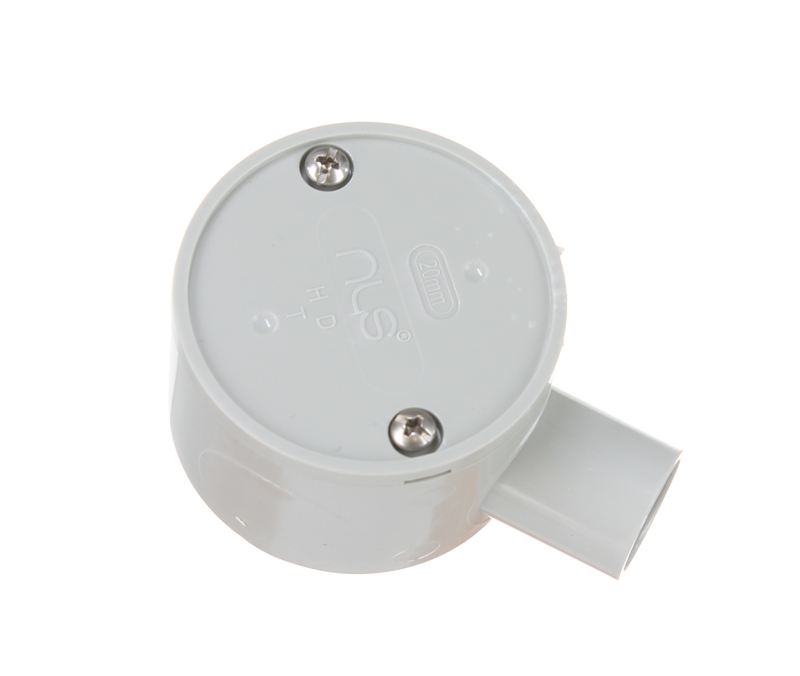
Find the best 20mm Conduit Junction Boxes here at Sparky Direct. [ Read More ]
A junction box gives the electrician a sealed cavity where two or more conductors can be connected safely. Conduit enters the box through 20mm entries, the cables are stripped and terminated inside, and the lid seals the connections away from dust, moisture, and accidental contact. The fitting protects the joint mechanically, electrically, and environmentally.
20mm is the dominant conduit size for general-purpose 2.5mm and 4mm cabling, which covers the majority of lighting and power circuits in Australian homes and small commercial fit-outs. Sticking to 20mm keeps the system uniform, simplifies stocking, and matches the most widely available range of medium duty rigid conduit and accessories.
A junction box terminates conductors and provides a branching point for circuit changes. A pull box is used purely to assist cable pulling through long or complex runs, with no terminations made inside. Larger sealed wall-mounted units fall into a separate product family of electrical enclosures, which house switchgear or distribution gear rather than simple cable joints.
AS/NZS 3000:2018 requires every cable joint to be enclosed, accessible for inspection, and protected from mechanical damage. A correctly installed 20mm junction box satisfies all three requirements. The standard also dictates that joints must not be buried in plaster or rendered inaccessible after installation.
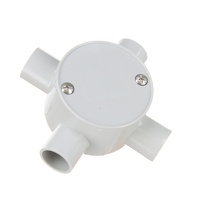
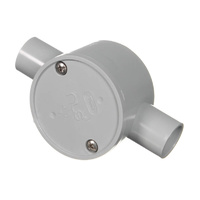
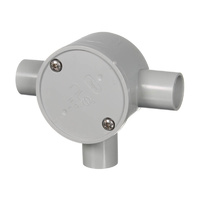
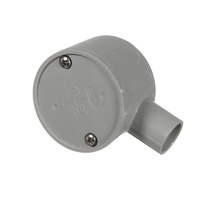
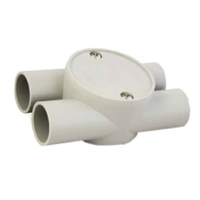
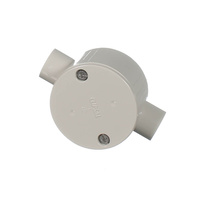
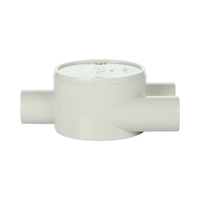
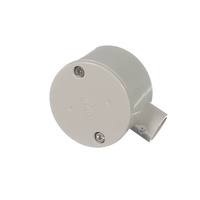
The number refers to the count of 20mm conduit entries on the box body. A 2-way is used as a straight pull-through or simple in-line joint between two cable runs. A 3-way (tee) branches one circuit off another at right angles. A 4-way is used at the meeting point of two conduit runs, common in ceiling roses and circuit branching points where multiple cables converge.
Round shallow boxes such as the Clipsal 240 series are the standard choice for ceiling and wall-mount conduit work. Square boxes are usually deeper and used where more terminal space is needed or where multiple cables converge in surface installations.
Shallow boxes suit single-cable joints and tight ceiling cavities. Deep boxes provide additional internal volume for terminal blocks, larger cable bundles, or DIN-rail components. Choosing depth correctly avoids cramming, which generates heat and breaks compliance.
Fixed-entry boxes have permanent 20mm holes at preset positions. Knockout designs ship with sealed entries that the installer breaks out only as needed, leaving unused entries closed and weather-protected. Knockouts are useful in outdoor and damp areas where unused holes would compromise the IP rating.
Most 20mm junction boxes for general wiring are moulded from grey PVC. PVC is non-conductive, lightweight, easy to glue with PVC conduit glue, and fully compatible with rigid PVC conduit systems. Grey is the standard colour for medium-duty residential and commercial work.
Metal junction boxes are used where mechanical strength, fire resistance, or earthing through the enclosure is required. They suit factory floors, plant rooms, and infrastructure projects. Metal boxes typically pair with metal conduit systems and use threaded entries rather than glued joints.
For coastal and high-humidity environments, PVC outperforms uncoated metal because PVC simply does not rust over time. Where metal is preferred for mechanical reasons, look for galvanised, powder-coated, or stainless-steel options to handle the salt-laden air. Pair the boxes with corrosion-rated saddles for the full system to perform consistently across its service life.
IP ratings indicate the level of dust and moisture resistance the box provides. Standard internal junction boxes are typically rated between IP20 and IP40, which is fine for protected ceiling cavities. For outdoor or wet-area work the rating must lift to IP56 or higher. The lid seal, entry glands, and box body all contribute to the final IP rating, so all three components must match the same grade.
An IP66-rated box loses its rating instantly if a non-rated entry gland is fitted, or if a knockout is removed but not sealed. Always specify 20mm cable glands to the same IP grade as the box.
All 20mm junction boxes accept any 20mm rigid PVC, medium-duty, or heavy-duty conduit, plus 20mm corrugated conduit when paired with the correct adapter. This standardisation means stock can be drawn from a single conduit family without compatibility checks.
The internal volume determines how many conductors and connectors can fit while leaving room for heat dissipation and bend radius. As a rule of thumb, a shallow 1-way box handles a single in-line joint of 2.5mm cable, while a deep 4-way is needed for multi-circuit branching with terminal blocks.
Larger cables (4mm and 6mm) need deeper boxes to allow proper termination. The same applies when WAGO-style lever connectors or screw terminals are used inside. Shallow boxes are generally restricted to single-circuit twist joints in 2.5mm cable.
Overfilling a junction box traps heat at the connections, accelerating insulation breakdown and creating a long-term fire risk. If a box looks full, the installer should step up to the next size. The right answer is rarely "make it fit".
The junction box must match the conduit family being used. PVC rigid conduit pairs with PVC boxes glued at the entries. Corrugated systems use compression entries. Mixing systems without the correct adapter creates poor joints and breaks the IP rating.
Indoor wall and ceiling work uses standard grey PVC boxes. Outdoor and weather-exposed work needs IP56 or higher with sealed lids and glanded entries. Wet areas, plant rooms, and pool surrounds require even higher ratings, often IP66 or IP67.
Selecting the correct IP rating is a compliance decision under AS/NZS 3000:2018, not a preference. The standard sets minimum protection levels for each environmental category. Under-specifying the box is a code breach that becomes obvious at the next inspection.
The most common errors are choosing a shallow box when terminal blocks are needed, picking a box without enough entries for future expansion, and ignoring the lid seal type. Each of these causes rework on site or compliance failures later.
20mm junction boxes carry most of the lighting and power circuit branching in Australian homes. They sit in ceiling cavities, wall chases, and roof spaces, joining lighting droppers, branching power runs, and providing access for future modifications.
In commercial fit-outs where conduit runs along walls and ceilings on view, junction boxes are placed at every change of direction or branch. Surface installations make access easier but raise the standard for finish quality, since the boxes are visible.
Industrial work usually steps up to IP-rated metal or heavy-duty PVC boxes paired with heavy duty rigid conduit. Plant rooms, switchrooms, and infrastructure jobs often combine 20mm circuits with larger 25mm and 32mm runs.
Outdoor installations need sealed boxes with proper glands at every entry. Garden lighting, gate motors, pool equipment, and external power points all rely on weatherproof junction boxes to keep moisture out of joints exposed to the elements.
AS/NZS 3000 requires every junction box to remain accessible for inspection. Boxes cannot be sealed behind plaster, tiled walls, or fixed cabinetry. The standard exists so faults can be found and repaired without demolition.
PVC boxes are joined to PVC conduit using solvent cement applied to both surfaces. The joint is pushed home and held briefly while the cement cures. For weather-rated installations, every entry must use a glanded fitting matched to the box IP rating.
Terminations inside a junction box must use approved connectors such as terminal blocks, WAGO lever connectors, or screw connectors rated for the cable size. Twisted-wire-and-tape joints are not compliant under AS/NZS 3000 and will fail any inspection. All terminations must be insulated to the same standard as the original cable insulation.
Lids must be fitted with all retaining screws, and the seal (where present) must be intact. Missing screws compromise the IP rating and may allow the lid to vibrate loose over time, especially in ceiling cavities subject to thermal cycling.
Burying a junction box behind plaster is the most common AS/NZS 3000 breach. It seems convenient at the time but creates a permanent fault point that future trades cannot reach. Always plan box positions so they can be opened later.
Using an indoor-rated box outside is a guaranteed failure point. Water entry causes corrosion, short circuits, and earth faults within months. Even partly sheltered locations such as eaves can collect condensation and demand a sealed box.
Cramming too many conductors into a small box creates heat, makes future work impossible, and may exceed the box's rated capacity. The fix is to upsize the box, not to force the lid closed.
Unsealed knockouts, missing glands, and badly glued conduit joints are the three most common entry-related failures. Each one breaks the IP rating and lets dust or moisture into the joint. A small upfront discipline saves a lot of return-visit work.
20mm covers most residential and light commercial wiring across Australia. 25mm junction boxes step up for larger cables, multi-circuit installations, and commercial branching where more terminal space is needed. Size up when cable count or termination space demands it on the project.
PVC wins on cost, corrosion resistance, and ease of installation in most environments. Metal wins on mechanical strength, fire performance, and earthing through the enclosure body. The choice usually follows the conduit family already specified for the project rather than being made in isolation.
Shallow boxes are slim and tidy but limit total cable count and termination volume. Deep boxes accept more conductors, full terminal blocks, and larger conductor sizes for complex joints. For a single 2.5mm twist joint, shallow is fine; for anything more complex, go deep.
Upgrade when the existing box is full, when adding circuits is likely in future, or when moving to larger cable sizes. 32mm junction boxes handle the largest standard installations including main feeders and heavy multi-circuit branching.
| Selection Factor | 20mm | 25mm | 32mm |
|---|---|---|---|
| Typical cable size | 1.5mm to 2.5mm | 2.5mm to 4mm | 4mm to 16mm |
| Common application | Residential lighting and power | Commercial circuits | Industrial and main feeders |
| Conductor capacity | Low to medium | Medium | High |
| Stocking priority | Highest | High | Project-specific |
The whole purpose of a junction box is to isolate the joint from the surrounding environment. A correctly sized, correctly sealed box keeps moisture, dust, rodents, and mechanical impact away from the live terminations.
Insulation breakdown at a joint causes earth faults, nuisance tripping, and in worst cases ignition. The box prevents physical damage to the insulation and contains any thermal event that does occur.
For coastal, industrial, and outdoor work, box selection determines service life. A good IP66 PVC box outlasts the conduit it joins. A poorly chosen box becomes the failure point within years.
Boxes installed with future access in mind save hours during fault-finding and renovations. Position lids towards the access side of the cavity, keep retaining screws standard, and do not paint the lid shut.
Standard PVC 20mm junction boxes are inexpensive on a per-unit basis. Prices rise with IP rating, depth, and metal construction. Bulk pricing typically applies on cartons or jars of 50 to 100 units.
For ongoing residential and commercial work, bulk packs cut per-unit cost and reduce stock-outs. For one-off jobs, single units suit the immediate need without tying up capital. Sparky Direct lists both formats where the brand offers them.
Generic imported boxes may lack proper IP testing, turn brittle in cold weather, or fail UV exposure tests when used outdoors. The savings disappear quickly when one fails on site and triggers a callback or warranty claim. Stick to the known brands listed below to avoid the false economy.
Trade suppliers carry the depth of range, accessories, and bulk packs that retail outlets do not stock. They also list the technical data needed for compliance decisions. Sparky Direct is a trade-focused supplier serving licensed electricians Australia-wide.
Sparky Direct ships nationally with stock held against active SKUs. Online ordering removes the wholesaler trip and arrives at the site address. This matters most on jobs running short of a single line item.
Start with the conduit system already specified, then layer in IP rating, entry count, and depth. Avoid mixing brands within a single run unless gland and entry compatibility is confirmed.
The leading brands stocked at Sparky Direct include Clipsal (see Club Clipsal section below), NLS, Trader, Alco, and Legrand. Each carries a full range of entries, depths, and IP ratings.
Buying without checking the lid type, ordering the wrong colour for the conduit family, and underestimating the quantity needed are the three most common purchase errors on a project. A short pre-order check against the takeoff list saves a return trip to the wholesaler later in the week.
Always order at least 10 percent over the takeoff figure to cover unexpected variations on site. Boxes get damaged in transit, knockouts get removed by mistake, and last-minute design changes add branches that were not in the original drawings. Carrying spares in the van prevents stoppages when the next job runs slightly over its planned scope.
Sparky Direct stocks the full Australian range with online ordering and trade pricing. Other related products that often appear on the same takeoff include conduit couplings, conduit bends, and conduit elbows.
Club Clipsal is Australia's largest electrician community offering trade rewards, business support, and exclusive benefits. When you nominate Sparky Direct as your preferred wholesaler, we automatically apply your Clipsal spend points to your Club Clipsal account daily.
Entry-level offering coaching, mentoring, and training discounts
Unlock exclusive industry tools and networking events
Access Toyota fleet offers and business software discounts
Maximum benefits, including VIP experiences and rewards
Browse the full Clipsal range at Sparky Direct and start earning Club Clipsal points on every order.
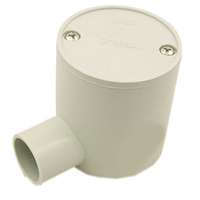
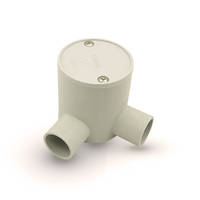
Watch Clipsal 240-20-1-GY | 1 Way 20mm Round Shallow Junction Box video
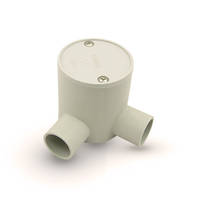
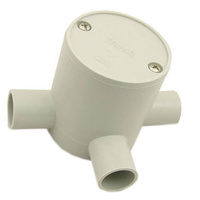
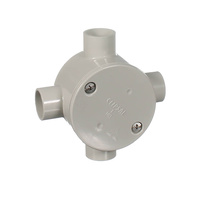
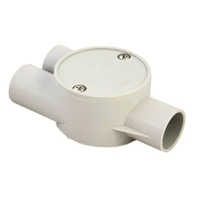
Watch Clipsal 240-20-3-GY | 3 Way 20mm Round Shallow Junction Box video
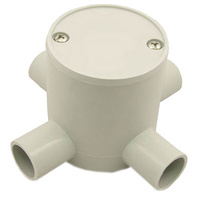
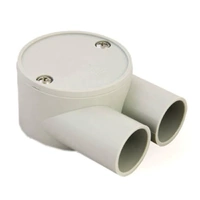
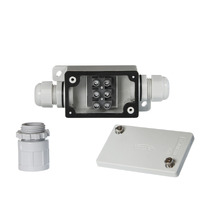
Watch 4 Way 20mm Junction Box | JB4-20 30060 video

Needed some single entry 20mm Junction boxes for a renovation wiring project. Not use to buying small amounts of electrical fittings ?? Sparky Direct made it easier & simpler, at a competitive cost. Good price, and a varied range of fittings via a prompt post made it easier to finish my project. Saved running around 30 km + and sorting through numerous half depleted shelves, to come away with nothing useful. Direct to your door .....what you want .... easy choice!
Great product. Used on an outdoor light to flood. Easy able to connect flex and TPS. Purchase 2 spare for the next problem job. Inclusion of corri connection helpful
Ordered, delivered all in less than a week. Makes my days at the wholesalers look silly. As Arnie said I'll be back.
Quality products in stock • Fast Australia-wide delivery • Competitive trade pricing
Browse 20mm Conduit Junction Boxes → Get Expert Advice →They are straightforward for trained professionals to install as part of a compliant system.
Sparky Direct supplies 20mm conduit junction boxes Australia-wide, offering reliable electrical enclosures with convenient delivery.
They are securely packaged and delivered via standard courier services.
Unused products are generally eligible for return according to the seller’s returns policy.
Warranty coverage varies by manufacturer and typically covers defects in materials or workmanship.
Yes, they are typically sold as individual components.
Yes, choosing the correct size and depth helps ensure safe and compliant installations.
Once installed correctly, they generally require no ongoing maintenance.
Yes, they are often used where minimal space is required.
Yes, they help protect connections from dust, impact, and accidental contact.
They may be surface-mounted or concealed, depending on the installation method.
Yes, they are a standard component in many electrical installations.
Yes, they help keep cable joints organised and accessible.
20mm conduit junction boxes are enclosures designed to house electrical cable joints and terminations connected to 20mm conduit.
Deep boxes are useful when more space is needed for additional cables or larger connections.
They provide a neat and safe way to protect electrical connections in conduit systems.
Yes, they are designed to suit standard 20mm conduit and accessories.
Yes, weather-resistant options are available for outdoor or damp environments.
Yes, many are designed for indoor and concealed installations.
They are typically made from durable plastic or metal depending on application requirements.
Yes, they are suitable for commercial and light industrial installations.
Yes, they are commonly used in residential electrical wiring systems.
Quality junction boxes are manufactured to meet relevant AS/NZS electrical and safety standards when installed correctly.
They are used to join, branch, or terminate electrical wiring within a conduit system.
Shallow boxes provide limited internal space, while deep boxes offer more room for additional cables and connections.