
Search Results:
Search Results:
Search Results:
Search Results:
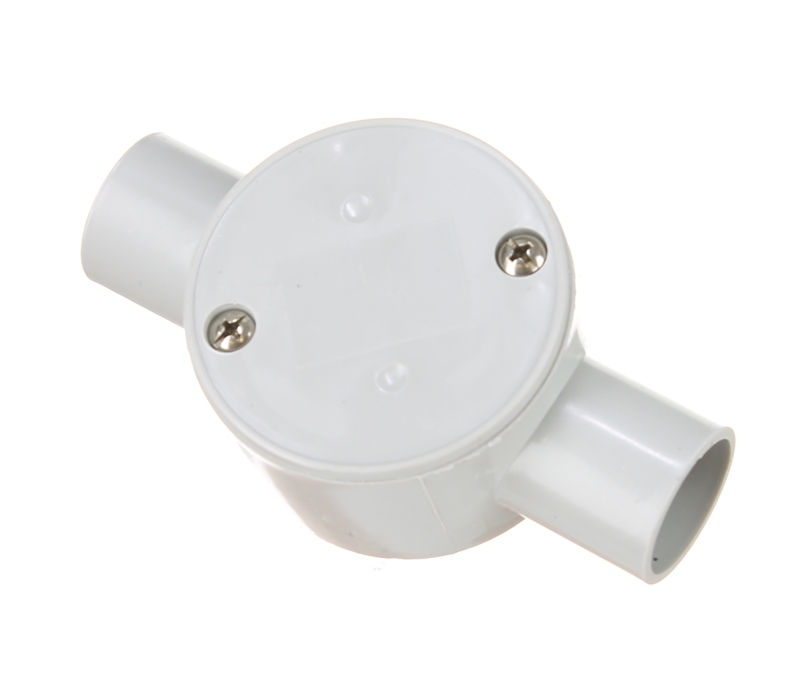
Find the best 25mm Conduit Junction Boxes here at Sparky Direct. [ Read More ]
A 25mm conduit junction box is a moulded enclosure designed to accept 25mm rigid PVC or steel conduit at fixed entries. The box provides a sealed cavity where active, neutral, and earth conductors can be joined using approved terminals or screw connectors. A removable lid allows future access for testing or rework. Junction boxes are mandatory wherever cable runs need a splice, a branch, or a change of direction that the conduit alone cannot achieve.
The 25mm size is the workhorse for sub-mains, switchboard tails, and cabling that carries multiple circuits. It accepts larger conductor cross-sections than 20mm without the bulk of 32mm. Most Australian houses, light commercial fitouts, and shed wiring use 25mm heavy duty rigid conduit or medium duty grey PVC for fixed wiring. Junction boxes in this size match the surrounding system without needing reducers.
AS/NZS 3000:2018 requires that all cable joints be enclosed and accessible. Junction boxes deliver both. The enclosure protects the joint from impact, dust, and accidental contact. The lid stays accessible for inspection and maintenance. Using a compliant box with the correct IP rating is a non-negotiable part of safe wiring practice.
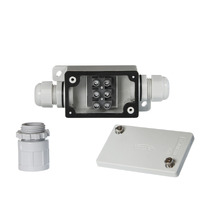
A junction box has fixed conduit entries moulded into the body, suiting standard 1-to-4 way layouts. An adaptable box is a plain rectangular enclosure where the installer drills knockouts to suit the job, allowing custom entry positions. A pull box is a larger enclosure used to assist long cable pulls without making any connections inside. Each serves a different purpose.
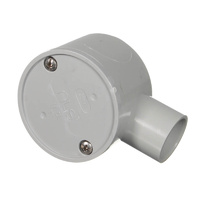
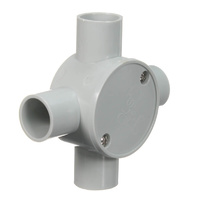
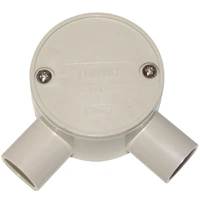
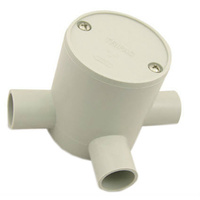
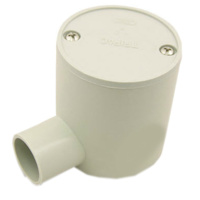
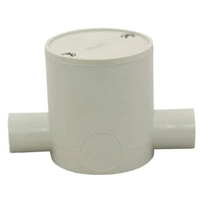
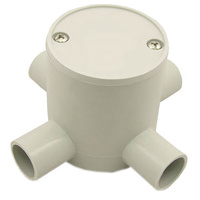
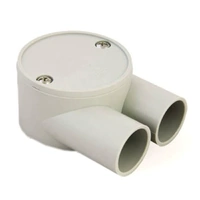
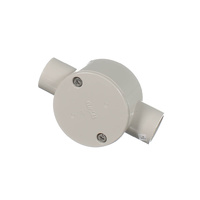
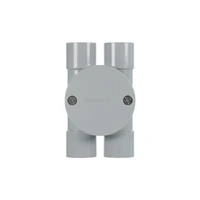
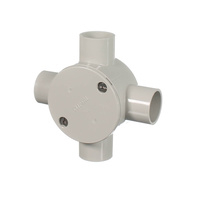
Junction box configuration is described by the number of conduit entries. A 1-way box terminates a single run. A 2-way box (sometimes called a coupling box) joins two ends in line. A 3-way (T-piece) creates a branch. A 4-way (cross) provides a junction point for two runs that intersect. Choose the configuration that matches the conduit layout drawn on the plan.
Round boxes suit ceiling and wall surface mounting where the cable layout is symmetrical. Square boxes give more internal volume for the same footprint and accept larger conductor counts. Round shallow boxes from Clipsal dominate Australian residential work. Square deep boxes are used where extra wiring space is needed.
Shallow boxes are used in surface-mounted installations and where wiring volume is small. Deep boxes accept extra cable, larger terminals, and devices like fast junction modules. Where a job involves heavier conductors or multiple circuits passing through, a deep body is the safer choice.
Pre-configured entries are moulded as open holes in the chosen positions. Knockout entries are stamped or scored discs that the installer pops out only where needed. Knockouts give flexibility on site but need a clean break to maintain the IP rating around the gland.
PVC is the dominant material for residential and light commercial work. It is non-conductive, lightweight, and resistant to most household chemicals. PVC junction boxes pair naturally with PVC conduit using solvent cement to create a sealed system. The plastic is impact-resistant for normal trade handling.
Metal boxes are specified where mechanical impact is a real risk: workshops, warehouses, factory floors, and infrastructure work. They provide superior protection against direct strikes and arc events. Metal also accepts threaded fittings without the need for adhesive, which suits steel conduit systems.
PVC does not rust and tolerates damp environments without surface degradation. Metal boxes need either galvanising or a powder coat to handle outdoor or humid conditions. For coastal sites, a stainless steel option may be specified to resist salt corrosion. Always match the box material to the long-term environment, not just the install day weather.
The IP rating tells you how much protection the box gives against solid objects and water. IP55 and IP66 are common for outdoor and weather-exposed sites. Lower ratings such as IP20 are acceptable indoors in dry, protected ceiling cavities. The IP rating depends on the lid, the seal, and the gland used at every entry, not just the box body.
IP20: Indoor dry only. IP44: Splash protection. IP55: Dust-protected, low-pressure water jets. IP66: Dust-tight, powerful water jets, suits external walls and exposed sites. IP67: Temporary immersion. Match to the actual environment, including future use changes.
A 25mm junction box accepts 25mm OD conduit at every entry. Most boxes fit Clipsal, NLS, and other Australian-made conduit without an adapter. Always check the entry dimensions on mixed-brand jobs. The conduit must seat fully into the spigot or threaded entry to maintain the IP rating.
Internal volume drives how many conductors you can safely terminate inside. AS/NZS 3000 limits packing density to allow for heat dissipation and safe bending radius. As a working rule, leave at least 25 to 30 percent free space after all terminals are in place. Crowded boxes overheat and make rework slow.
Light circuits with a single 1.5mm cable pair can use a shallow box without issue. Multiple 2.5mm or 4mm cables need a deeper body to keep terminals clear of the lid. Sub-main runs with 6mm or 10mm conductors should always sit in a deep box or a small adaptable enclosure.
An overfilled junction box runs hot. Heat ages insulation, weakens terminal screws, and shortens the life of the joint. Sizing the box correctly at design stage avoids the temptation to force conductors into a box that is one size too small.
The first match is conduit type. Medium duty grey PVC, heavy duty orange PVC, and corrugated conduit each pair with junction boxes designed for that system. Mixing types without proper adapters creates weak joints. Confirm the brand and series before ordering.
Indoor protected locations accept basic IP20 to IP44 boxes. Outdoor walls, eaves, and external lighting circuits need a minimum IP55. Wet zones, marine sites, and chemical environments need IP66 or higher with the correct gasket material and gland choice.
Selecting the IP rating is not just about the box. The chosen rating must be maintained at every entry using compatible glands or adhesive seals. A box rated IP66 with an unsealed knockout drops to IP20 in practice. Treat the system as a chain.
The two most common errors are undersizing the box for the circuit count and using the wrong IP rating for the location. Both lead to failed inspections and rework. Specify the box based on the worst-case environment and the busiest circuit, not the easiest.
In Australian homes, 25mm junction boxes appear in roof spaces, garages, and external walls. They join sub-circuits feeding power outlets, lighting, and dedicated circuits for hot water or air conditioning. Most are surface-mounted on rafters or noggins for easy future access.
Surface-mounted commercial systems run conduit and junction boxes along walls and ceilings where re-fits and tenancy changes are common. The visible system makes future modifications quicker than chasing into walls. 25mm is the standard for general lighting and small power runs in this work.
Plant rooms, factories, and infrastructure work use 25mm junction boxes as part of larger conduit systems carrying control wiring, auxiliary power, and instrumentation cables. Metal bodies are common to handle impact and the local environment.
Garden lighting, driveway sensors, irrigation control, and pool equipment all need IP-rated junction boxes. The 25mm size carries the larger cables typical of outdoor circuits. Use a weatherproof junction box rated to the local exposure and seal every entry.
AS/NZS 3000 requires every junction box to remain accessible for inspection and maintenance. Boxes buried in plaster, sealed behind tiles, or hidden above immovable ceilings are non-compliant. Mount the box on a fixed surface with mechanical fixings sized for the substrate.
Glue PVC conduit into PVC box spigots using approved conduit cement to form a chemically welded joint. For metal systems, use threaded fittings with locknuts. For knockout entries, fit a gland or grommet sized to the cable to maintain the IP rating.
Use approved screw terminals, push-fit connectors, or terminal blocks rated for the conductor size. Strip insulation cleanly, twist stranded conductors before insertion, and verify torque on screw terminals. Loose terminations are the leading cause of joint failure.
Tighten lid screws evenly to compress the gasket where one is fitted. Avoid overtightening, which can crack PVC lids or distort metal flanges. Confirm the lid sits flush all the way around. Label the box clearly when it serves a critical circuit.
Compliance Note: Junction boxes hidden behind permanent finishes such as plasterboard, tiles, or render do not satisfy AS/NZS 3000:2018 accessibility requirements. Plan box locations during rough-in so they remain reachable for inspection.
Sealing a junction box behind permanent finishes is the most common compliance failure on residential work. Inspectors fail the job, the wall comes off, and the box is repositioned. Plan accessibility into every box location at design stage.
Fitting an indoor-rated box to an external wall is a frequent error on small jobs. Water ingress causes corrosion, tracking, and eventual circuit failure. Always check the rating against the actual location, including future weather exposure.
Cramming too many conductors into a small box raises operating temperature and makes future rework slow. The fix is simple: choose a deeper or larger box at the start. Allow space for tool access.
Unsealed knockouts let water and dust enter even on indoor jobs where condensation builds up. Use a blanking plug or gland on every unused entry. Repair any cracks in the body or lid before energising the circuit.
The 20mm size suits lighting circuits and smaller cabling where the conductor count is low. The 25mm size carries more conductors and pairs with the larger cabling typical of power circuits, sub-mains, and longer runs. Picking the right size at design stage avoids reducers and adapters later.
A junction box has fixed entries set during manufacture, suiting standard layouts. An adaptable box is a blank rectangular enclosure where the installer drills knockouts as needed. Adaptable boxes give more flexibility for non-standard cable layouts and larger volume requirements.
PVC is lighter, cheaper, and easier to install with solvent cement. Metal is more robust against impact and supports threaded fittings without adhesive. Most residential work specifies PVC. Industrial and infrastructure jobs often specify metal.
If the design includes more than four conduit entries or carries large conductors, a 25mm junction box may be undersized. Step up to a small adaptable enclosure or surface mount enclosure sized for the circuit. The extra volume reduces heat and makes terminations cleaner.
| Feature | 25mm Junction Box | Adaptable Box | Larger Enclosure |
|---|---|---|---|
| Entry positions | Fixed (1, 2, 3, or 4 way) | Custom (knockouts as needed) | Custom, multiple sizes |
| Internal volume | Small to medium | Medium | Large |
| Typical use | Splice, branch, change of direction | Custom layouts, larger conductor counts | Distribution, multiple circuits |
| IP options | IP20 to IP66 | IP54 to IP66 | IP54 to IP67 |
| Install effort | Quick, fixed entries | Drill or punch knockouts | Knockouts plus mounting hardware |
A correctly rated and correctly sealed junction box keeps water and dust away from live conductors for the design life of the building. The body resists impact from minor knocks during fitout and post-occupancy use.
Enclosed terminations remove the risk of accidental contact with live parts. The non-conductive PVC body adds an extra layer of insulation between the conductor and any bystander. Metal boxes need a continuous earth bond from the conduit system to maintain safety.
UV, temperature swings, and chemical exposure age the lid and gasket faster than the body itself. Specify UV-stable products for outdoor work and inspect older installations during routine maintenance. Replace any box showing cracks, brittleness, or chalking.
Schedule periodic inspection of accessible junction boxes, particularly outdoor and industrial installations. Look for signs of moisture, terminal discolouration, and lid integrity. A junction box that fails silently can take a circuit down without warning.
Prices vary by configuration, material, and IP rating. A basic 1-way PVC shallow box sits at the lower end. A 4-way deep IP66 metal box sits at the higher end. Sparky Direct lists current trade prices on every product page so you can compare options before ordering.
Buying in carton quantities reduces per-unit cost and avoids the wholesaler trip mid-job. For a typical residential rough-in, plan around carton or strip packs of the most-used configurations and order singles for the unusual sizes.
Imported boxes without an Australian compliance mark may not meet AS/NZS standards. Failed compliance puts the certifying electrician at risk and creates rework if the inspector rejects the install. Buy from suppliers who stock products tested to Australian standards.
Trade suppliers carry the configurations electricians actually use day to day, in quantities that suit the job. Retail outlets often stock only the most common 1-way and 2-way boxes and may not list the IP rating clearly. Trade pricing is generally lower for the same product.
Sparky Direct dispatches stock items the same day from Australian warehouses. Most metro deliveries arrive within one to two business days. For remote and rural sites, freight is calculated at checkout. Stock levels are visible on each product page.
Start with the conduit drawing. Count entries at every junction point. Match the IP rating to the location. Choose deep over shallow where conductor count or terminal size justifies the extra volume. Pre-allocate spares for likely additions.
The frequent mistakes are undersizing for circuit count, choosing the wrong IP rating, and ordering only the most common configurations. Cover the unusual entries (4-way crosses, deep bodies, IP66 outdoor) at the same time as the bulk order to avoid a second trip.
Add 10 to 15 percent to the count from the drawing for unforeseen layout changes, breakages, and incidental additions. For larger jobs, order full cartons of the most-used types and break into smaller packs only for the rare configurations.
Sparky Direct stocks the full range of 25mm conduit junction boxes from Clipsal, NLS, M-ELEC, Trader, Tripac, General Trade Supplies, and Alco. Sister categories such as 20mm and 32mm junction boxes, plus solid elbows, couplings, and straight tees, complete the system. Trade pricing applies on every product.
Club Clipsal is Australia's largest electrician community offering trade rewards, business support, and exclusive benefits. When you nominate Sparky Direct as your preferred wholesaler, we automatically apply your Clipsal spend points to your Club Clipsal account daily.
Entry-level offering coaching, mentoring, and training discounts
Unlock exclusive industry tools and networking events
Access Toyota fleet offers and business software discounts
Maximum benefits, including VIP experiences and rewards
1. Sign Up: Create your Club Clipsal account at clipsal.com/club-clipsal or via the iCat mobile app
2. Nominate Sparky Direct: Select Sparky Direct from the wholesaler dropdown menu in your profile
3. Add Email: Enter your Sparky Direct account email address in the membership number field
4. Start Earning: Every dollar spent on Clipsal products earns points automatically
Redeem points from the rewards store, including gift cards, tools, and experiences. Access business summits, product training, and industry networking events. Receive early access to new product launches and special promotions. Connect with fellow electricians via the Club Clipsal community app.
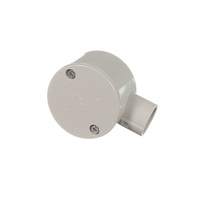
Watch Clipsal 240-25-1-GY | 1 Way 25mm Round Shallow Junction Box video
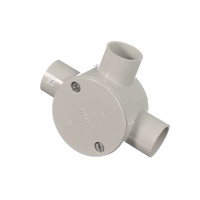
Watch NLS 30064 | 25mm 3 way Junction Box video
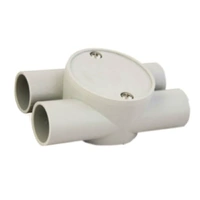
Watch NLS 30065 | 25mm 4 way Junction Box video

Super cheap & shipped and received within days. We need a couple of these to replace some sorely rusted out ones we had out the backyard. Bunnings didn't stock them but Sparky Direct had them in stock ready to go at an awesome price. I've bookmarked these guys for the next time I need electrical gear.
Needed some single entry 20mm Junction boxes for a renovation wiring project. Not use to buying small amounts of electrical fittings ?? Sparky Direct made it easier & simpler, at a competitive cost. Good price, and a varied range of fittings via a prompt post made it easier to finish my project. Saved running around 30 km + and sorting through numerous half depleted shelves, to come away with nothing useful. Direct to your door .....what you want .... easy choice!
Great adaptable box, heavy gauge walls and lid. It's the little details that set this apart from the others - the lid has a slight camber on the sealing edge so that her the 4 corner screws are secured the camber compresses the sealing gasket in the middle.
Quality products in stock • Fast Australia-wide delivery • Competitive trade pricing
Browse 25mm Junction Boxes → Get Expert Advice →They are straightforward for trained professionals as part of a compliant installation.
Sparky Direct supplies 25mm conduit junction boxes Australia-wide, offering reliable electrical enclosures with convenient delivery.
They are securely packaged and delivered via standard courier services.
Unused products are generally eligible for return according to the seller’s returns policy.
Warranty coverage varies by manufacturer and typically covers defects in materials or workmanship.
Yes, 25mm conduit junction boxes are typically sold as individual components.
Yes, selecting the correct depth ensures safe connections and easier installation.
Once installed correctly, they generally require no ongoing maintenance.
Yes, shallow boxes are often used where minimal internal space is required.
Yes, they help protect connections from dust, impact, and accidental contact.
They may be surface-mounted or concealed depending on the application.
Yes, they are a standard choice for larger conduit installations.
Yes, they keep cable joints contained and accessible.
25mm conduit junction boxes are enclosures designed to house electrical cable joints and terminations connected to 25mm conduit.
Deep boxes are ideal when additional wiring space or easier cable management is required.
They provide a safe and organised way to manage electrical connections in larger conduit systems.
Yes, they are designed to suit standard 25mm conduit and accessories.
Yes, weather-resistant options are available for outdoor or damp locations.
Yes, many models are designed for indoor and concealed installations.
They are typically made from durable plastic or metal, depending on application and environment.
Yes, they are suitable for commercial and light industrial electrical projects.
Yes, they are commonly used in residential wiring where larger conduit is required.
Quality 25mm junction boxes are manufactured to meet relevant AS/NZS electrical and safety standards when installed correctly.
They are used to join, branch, or terminate electrical wiring within a 25mm conduit system.
Shallow boxes provide limited internal space, while deep boxes offer extra room for additional cables and larger connections.