
Search Results:
Search Results:
Search Results:
Search Results:
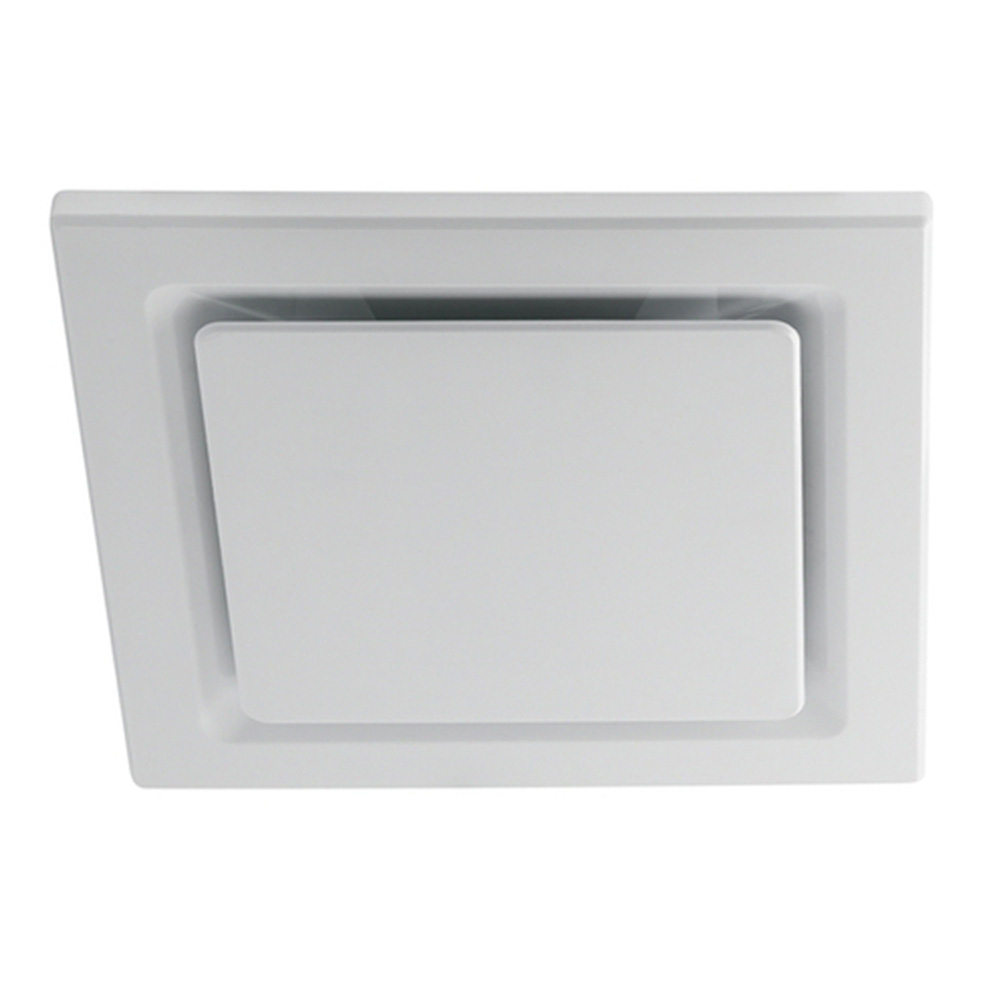
Bathroom exhaust fans remove moisture, prevent mould, and control odours by venting humid air outside. [ Read More ]
Bathroom exhaust fans remove moisture, prevent mould, and control odours by venting humid air outside. Available in ceiling-mounted, wall-mounted, and inline models with airflow ratings from 100-350 m³/h, these fans suit bathrooms from 10 to 35 cubic metres.
Key features include quiet operation (1.0-2.0 sones), energy-efficient motors, and optional lighting or heating elements for Australian homes and commercial properties.
Bathrooms generate significant moisture from showers, baths, and hot water use. Without proper ventilation, this humidity causes serious problems:
A properly installed exhaust fan vents moist air outside, protecting your bathroom and extending the life of finishes and fixtures.
Even bathrooms with windows benefit from mechanical ventilation for consistent moisture removal.
The most common type is installed directly in the ceiling above the shower or bath. Vents moisture straight up through ducting to the roof or outside wall. Ideal for standard bathroom layouts with accessible ceiling space.
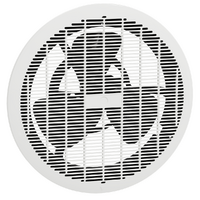
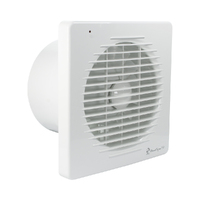
Clipsal Airflow CE250N 250mm - Heavy-duty ceiling fan for larger bathrooms
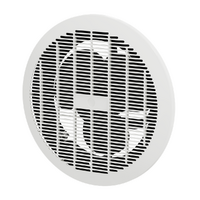
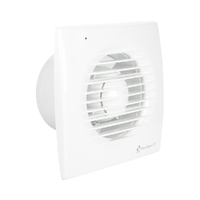
Clipsal Airflow CE200N 200mm - Compact ceiling fan for standard bathrooms
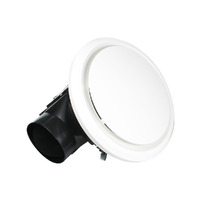
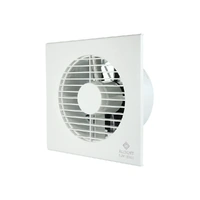
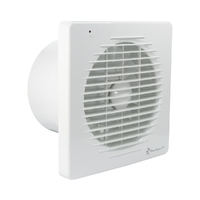
Clipsal Airflow 7106AN - 200mm Wall-mounted fan for direct external venting
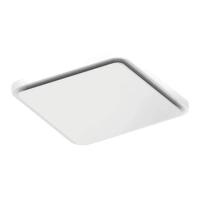
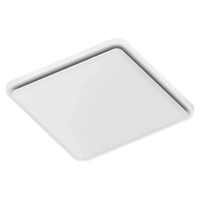
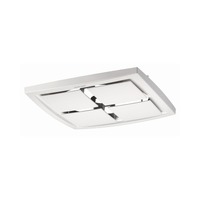
Clipsal Airflow CEF40N-WE 287mm - Ductable square fan with 150mm duct connection
The fan size should match your bathroom's volume in cubic metres (m³). Calculate length × width × height, then multiply by 10 air changes per hour (ACH) to get the required airflow in m³/h. Australian Building Code requires a minimum of 25 L/s (90 m³/h) for bathroom exhaust fans. ncc.abcb.gov.au
Measure your bathroom dimensions in metres and use this formula:
V = L × W × H
Where V = room volume (m³), L = length (m), W = width (m), H = height (m)
ACH measures how many times per hour all the air in your bathroom is replaced. For effective steam and moisture removal:
Once you know volume and ACH, calculate the fan capacity needed:
Q (m³/h) = V × ACH
Where Q = required airflow in cubic metres per hour
Australian Building Code specifies a minimum of 25 L/s for bathroom exhaust fans. Convert between units:
Your fan must be rated at least 90 m³/h and vented to outside, not into roof spaces or attics.
This is mandatory under the Australian Building Code.
Let's calculate requirements for a standard bathroom:
Length = 3.0 m
Width = 3.0 m
Height = 2.4 m (standard ceiling)
V = L × W × H
V = 3.0 × 3.0 × 2.4
V = 21.6 m³
Using ACH = 10 for bathroom with shower
Q = 21.6 × 10
Q = 216 m³/h
Convert to L/s: 216 ÷ 3.6 = 60 L/s
NCC minimum: 25 L/s
Result: Compliant
For this 3m × 3m bathroom, choose a fan rated at least 220-250 m³/h. This allows for airflow losses from ducting, grilles, and static pressure. Always select the next size up from your calculated minimum.
Use this table to match bathroom volume to fan capacity:
| Bathroom Volume | Required m³/h (ACH=10) | Equivalent L/s | Recommended Models |
|---|---|---|---|
| 10-15 m³ (Small ensuite) |
100-150 m³/h | 28-42 L/s | 200mm ceiling Exhaust Fan or wall fans |
| 15-25 m³ (Standard bathroom) |
150-250 m³/h | 42-70 L/s | 250mm ceiling Exhaust fans |
| 25-35 m³ (Large bathroom) |
250-350 m³/h | 70-97 L/s | 300mm ceiling or inline fans |
| 35+ m³ (Master ensuite) |
350+ m³/h | 97+ L/s | Airflow Performance Ceiling Fan, Multiple fans or commercial units |
Enter your bathroom dimensions below and we'll calculate the exact m³/h rating you need:
Need Expert Advice?
Our team can help with complex installations, multiple bathrooms, or commercial projects. Get personalised recommendations from our helpful team.
Contact Our TeamBathrooms with separate showers and baths, or combined bath/toilet/laundry spaces, may need higher-capacity fans or multiple units for adequate ventilation.
Sones measure fan noise. Lower numbers mean quieter operation.
Look for fans with energy-efficient motors. Modern EC (electronically commutated) motors use up to 70% less energy than traditional motors whilst delivering equivalent airflow. Lower running costs over the fan's lifetime.
Yes, it is best practice: new builds require it. Bathroom exhaust fans must vent outside to effectively remove moisture and prevent mould growth.
Venting into roof spaces or attics causes moisture buildup, structural damage, and mould in hidden areas.
Always duct directly to external air through roof vents or external walls.
All bathroom exhaust fan installations must comply with AS/NZS 3000:2018 (Australian Wiring Rules). Only licensed electricians can perform permanent electrical work. Bathroom fans require appropriate IP ratings for wet area installation.
Use rigid metal ducting where possible for best airflow and durability. Flexible ducting is acceptable for short runs but reduces efficiency. Avoid sharp bends or kinks that restrict airflow.
Keep duct runs as short and straight as possible. Each bend reduces airflow by approximately 10%. Insulate ducting in cold roof spaces to prevent condensation.
Never vent into roof spaces, attics, or wall cavities. Always exhaust directly outside through roof vents or external walls. Install external vent covers with backdraft dampers.
Engage a licensed electrician for:
Installing fans in bathrooms without existing ventilation requires new electrical circuits and ducting work.
Long duct runs, multiple bends, or installations requiring structural modifications need professional assessment.
Adding dedicated circuits, upgrading switchboards, or installing humidity sensors requires licensed electrical work.
Commercial bathroom ventilation must meet specific building codes and standards requiring professional installation.
Dust and debris accumulate on fan blades and grilles, reducing efficiency and increasing noise. Clean every 3-6 months for optimal performance.
| Problem | Symptoms | Solution |
|---|---|---|
| Excessive Noise | Rattling, vibrating, or grinding sounds | Clean fan blades. Check mounting brackets are secure. Lubricate motor bearings if accessible. Replace worn bearings. |
| Poor Airflow | Moisture not clearing, mould still growing | Clean the fan thoroughly. Check ducting for blockages or kinks. Verify the external vent isn't blocked. Consider upgrading to a higher airflow (m³/h) model. |
| Fan Won't Start | No sound or movement when switched on | Check the circuit breaker. Test switch operation. Engage an electrical contractor to check connections and replace the failed motor or the entire unit if necessary. |
| Backdraft | Cold air or odours entering through the fan | Install or replace the backdraft damper on the external vent. Check damper moves freely. Ensure correct duct slope. |
Consider replacement if:
Upgrading to modern energy-efficient fans reduces electricity costs by up to 70% whilst improving ventilation performance. New models also operate more quietly and include features like humidity sensors and LED lighting.
We stock Australia's most trusted brands of bathroom exhaust fans for residential and commercial installations.
The best bathroom exhaust fan for small bathrooms is often the Clipsal CE200N, a 200mm Airflow exhaust fan.
Size: 250mm ceiling-mounted
Best for: Medium to large bathrooms
Features: Heavy-duty construction, low noise operation, reliable performance
Size: 200mm ceiling-mounted
Best for: Standard bathrooms
Features: Compact design, energy efficient, easy installation
Size: 300mm round ceiling
Best for: Large bathrooms or commercial use
Features: High airflow capacity, quiet operation, durable construction
Size: 200mm wall-mounted
Best for: Direct external wall venting
Features: Simple installation, no ducting required, weatherproof external cover
Size: 287mm square suits 150mm duct
Best for: Flexible ducting installations
Features: Accepts standard 150mm ducting, square design fits ceiling tiles, white finish
Size: 150mm commercial exhaust
Best for: Commercial bathrooms and heavy-duty use
Features: Wall or ceiling mount, powerful motor, long service life
Need Help Choosing? Our team can recommend the best exhaust fan for your specific bathroom size, layout, and requirements. We stock all major brands with Australia-wide delivery.
Get Expert AdviceLearn more by watching our Clipsal Airflow CE250N Ceiling Mounted Exhaust Fan 250mm video.
Learn more by watching our Clipsal Airflow CEF40N-WE Ductable Square Exhaust Fan 287mm Suits 150mm Duct video.
Club Clipsal is Australia's largest electrician community offering trade rewards, business support, and exclusive benefits. When you nominate Sparky Direct as your preferred wholesaler, we automatically apply your Clipsal spend points to your Club Clipsal account daily.
Entry-level offering coaching, mentoring, and training discounts
Unlock exclusive industry tools and networking events
Access Toyota fleet offers and business software discounts
Maximum benefits, including VIP experiences and rewards
1. Sign Up: Create your Club Clipsal account at clipsal.com/club-clipsal or via the iCat mobile app
2. Nominate Sparky Direct: Select Sparky Direct from the wholesaler dropdown menu in your profile
3. Add Email: Enter your Sparky Direct account email address in the membership number field
4. Start Earning: Every dollar spent on Clipsal products earns points automatically
Redeem points from the rewards store, including gift cards, tools, and experiences. Access business summits, product training, and industry networking events. Receive early access to new product launches and special promotions. Connect with fellow electricians via the Club Clipsal community app.

This fan was as advertised - but cheaper than Amazon and arrived three days earlier than any other supplier. Easy to install

I couldn't buy the Clipsal Airflow CE250N ceiling mounted exhaust fan locally, so I ordered one through Sparky Direct. It was delivered very quickly and was easy to install as a replacement for a 29 year old Mistral fan. It works very well and is reasonably quiet. I hope it lasts as long as the fan it replaced.

Great product - installed in our shower, it is quiet and very effective. Also very impressed with the prompt and efficient service from Sparky Direct. Would definitely recommend this company.
Australia's trusted range of ceiling, wall, and ductable exhaust fans in stock
Browse All Bathroom Fans Get Expert AdviceYes, Bathroom Exhaust Fans such as Clipsal CE200N and CE250N have low-profile grilles that unclip for cleaning and can often be replaced if damaged or yellowed.
You can replace them; however, you can not just buy the covers from Clipsal, which means that you have to buy the complete fitting.
Make sure any new cover matches the exact model and cut-out size. If the motor is noisy or weak as well, it’s usually smarter to replace the whole Bathroom Exhaust Fan assembly.
Bathroom Exhaust Fans are very common in rentals and help protect the landlord’s building from moisture damage.
Tenants should use Bathroom Exhaust Fans during and after showers, and report any noisy, weak, or non-working fans.
Landlords must use licensed electricians for the installation and repair of bathroom exhaust fans.
Bathroom Exhaust Fans from Sparky Direct are shipped Australia-wide with flat-rate standard delivery and a 100-day money-back guarantee shown on the site.
If a fan size or style doesn’t suit your bathroom, you can follow Sparky Direct’s 100 Day Money Back Guarantee returns process, provided the Bathroom Exhaust Fans are in resellable, unused condition.
Always check their current returns policy page before ordering.
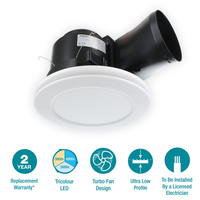
Many 3-in-1 Bathroom Exhaust Fans (fan, light, heater) need extra wiring and switches, so a straight swap is not always “plug and play”.
A licensed electrician can tell you if existing wiring can handle a new combo unit or if a new circuit or switch is required.
When shopping for Bathroom Exhaust Fans, look for models that clearly state whether they are suitable for “replacement” "DIY" installs.
Total cost for Bathroom Exhaust Fans usually includes the fan unit, ducting and an external vent, plus electrician labour.
Price depends on roof access, duct length, switches or timers, and whether you are replacing an existing fan or cutting a new hole.
Get a written quote from a local licensed electrician before buying Bathroom Exhaust Fans so there are no surprises.
For safety, only a licensed electrician can replace hard-wired Bathroom Exhaust Fans.
They will isolate the power, remove the old fan, check the cut-out, wiring and duct, then fit and test the new unit.
You can help by choosing the new Bathroom Exhaust Fans in advance and ensuring there is clear access to the bathroom and the roof space.
Sparky Direct has many Bathroom Exhaust Fans
Bathroom Exhaust Fans may need replacing if they rattle, hum loudly, spin slowly, or leave the room steamy even after cleaning the grille.
Age matters too; older Bathroom Exhaust Fans may not meet current airflow or efficiency expectations.
A licensed electrician can confirm if a simple exhaust fan fitting will do or if a full replacement is better.
Bathroom Exhaust Fans are often rated in “sones” or dB. Around 1.0–1.5 sones (or low 40s dB) is considered quiet for ensuites near bedrooms.
Louder Bathroom Exhaust Fans over 3 sones can be annoying at night, so look for quiet or “low noise” models if you are a light sleeper.
Bathroom Exhaust Fans pull steam out before it can sit on walls, ceilings and mirrors. This keeps surfaces drier, which slows mould growth and stops paint from peeling.
Run Bathroom Exhaust Fans during showers and for at least 10–15 minutes afterwards to clear moist air.
Bathroom Exhaust Fans & Ventilation work together with openable windows to keep moisture under control.
The fan actively pulls air out, while under-door gaps or vents let dry air in to replace it.
In many builds, the NCC still requires mechanical Bathroom Exhaust Fans even when a window is fitted, to ensure consistent performance in all seasons.
Run your bathroom exhaust fan for 10-20 minutes after showering to completely remove moisture.
Timer switches automate this process, ensuring adequate ventilation without wasting energy.
The CSG MRT10 Run On Timer is Ideal for the job
Bathroom Exhaust Fans installed in wet “zones” generally need at least IPX4 splash protection, and often SELV or extra precautions if within Zone 1.
Many bathroom-rated fans, like Clipsal CE200N and CE250N, are IPX4 and suit typical ceiling locations outside direct water spray.
Your licensed electrician will confirm the correct IP rating and zone for your layout, in accordance with AS/NZS 3000.
Bathroom Exhaust Fans work best near the main steam source, usually above or close to the shower or bath.
They must be placed in a suitable bathroom “zone” and at a safe distance from direct water spray, in accordance with AS/NZS 3000.
Inline and ducted Bathroom Exhaust Fans can sit in the roof space with a ceiling grille in the ideal spot.
Always have a licensed electrician plan and install the location.
Measure length × width × height to get room volume in m³.
Most Bathroom Exhaust Fans are sized for about 10 air changes per hour, so multiply volume by 10 to get m³/h. (Or use Sparky Direct's handy Calculator)
Make sure the fan rating is at least 90 m³/h (25 L/s), which is the NCC minimum for bathrooms.
Choose the next size up to allow for duct losses.
Bathroom Exhaust Fans pull moist, stale air out of the room and push it outside.
This bathroom ventilation system reduces humidity, prevents mould, and clears odours after showers and baths.
Many Bathroom Exhaust Fans on Sparky Direct are sized from about 100–350 m³/h to suit small to large bathrooms.
Install a backdraft damper on the external vent cover. This flap closes when the fan isn't running, preventing cold air, wind, and insects from entering. Check that existing dampers aren't stuck open.
Ducted fans vent moisture outside through ducting (required by the Australian Building Code for new builds).
Ductless fans, ie, fans that shoot the air up into the ceiling space without a duct, recirculate air and are not suitable for moisture removal in bathrooms.
Most bathroom exhaust fan replacements and installations don't require building approval; however, structural modifications may require council approval.
Always use a licensed electrician who understands the current rules.
Loud exhaust fans are usually caused by dust buildup on blades, loose mounting brackets, or worn bearings.
You can fix this by cleaning the fan thoroughly and tightening all fixings.
If noise persists, consider upgrading to a modern fan rated at 2.0 sones or less.
You can replace a plug-and-socket connected fan yourself, but hardwired installations require a licensed electrician under Australian regulations (AS/NZS 3000:2018).
New installations also require proper ducting to the exterior.