
Search Results:
Search Results:
Search Results:
Search Results:
The accessory category covers every component that connects a fan to the building and controls how it operates. That includes flexible and rigid ducting, duct connectors and reducers, internal grilles, external wall caps and roof cowls, back-draft dampers, run-on timers, fan speed controllers, humidity sensors, mounting brackets, duct clamps, and acoustic lagging. Each piece has a specific function: ducting carries air out, grilles direct it, dampers stop it coming back, timers extend run time after the light is off.
A 250 m3/h fan rarely delivers 250 m3/h at the grille. The loss comes from undersized ducting, sharp bends, long runs, and cheap flexible duct that crushes or kinks. Matching the right accessories to the fan recovers that lost performance. Accessories also carry the compliance load: AS 1668.2 sets the minimum extraction rates, and the components upstream and downstream of the fan determine whether the system meets them.
Ventilation in Australian buildings is governed by AS 1668.2 (mechanical ventilation in buildings), AS/NZS 3000:2018 (electrical wiring rules for the fan and its control circuit), and the National Construction Code. The NCC sets the minimum continuous or intermittent extraction rates for bathrooms, laundries, kitchens, and sanitary compartments. Accessories that restrict airflow below the design rate put the installation outside compliance.
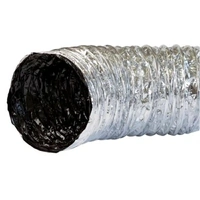
Flexible aluminium or insulated flex duct is quick to install around obstructions in a ceiling cavity, but every ripple in the wall creates turbulence and pressure loss. Rigid PVC or galvanised duct delivers significantly better airflow for the same stated diameter because the internal surface stays smooth. On runs longer than 3 metres, or where the bend count exceeds two 90-degree turns, rigid duct is the more reliable choice.
Duct diameter follows the fan outlet specification. A 150 mm fan spigot needs 150 mm duct throughout the run, not a reducer to 100 mm to make routing easier. Each step down in diameter roughly doubles the static pressure the fan has to overcome. Common residential sizes are 100 mm, 125 mm, and 150 mm; commercial installations often run 200 mm or larger.
Connectors join two duct sections without creating leaks or restrictions. Reducers are used where a smaller grille or termination is unavoidable, and they should be placed as close to the termination as possible, not in the middle of the run. Sealed joints with foil tape or mastic prevent leakage into ceiling cavities, which is a common cause of damp insulation and ceiling staining.
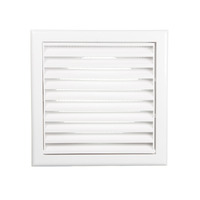
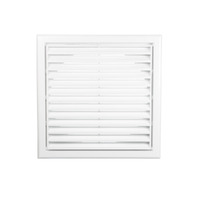
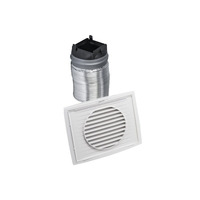
The internal grille is the visible component inside the room. Flush square grilles sit close to the ceiling plane for a clean finish; stepped or louvred grilles add depth. ALLVENT and similar brands manufacture flush square ceiling grilles sized to standard duct diameters, so a 150 mm duct pairs with a matching 150 mm grille without adaptation. Finish options include white powder-coat, brushed aluminium, and plastic.
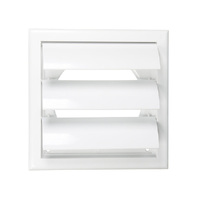
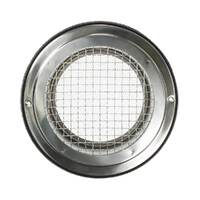
The external termination takes extracted air outside the building envelope. Wall vents typically feature a louvred face with a fly screen; roof cowls sit on tile or metal roofs and include flashing to seal the penetration. The external point must never discharge into a roof cavity, soffit, or subfloor. Discharging into an unvented cavity pushes moisture into building fabric and voids compliance with AS 1668.2.
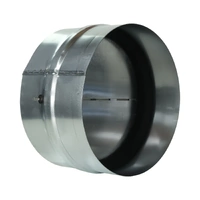
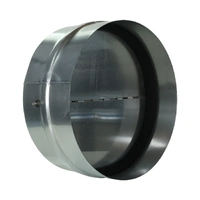
A back-draft damper is a one-way gravity or spring-loaded flap that opens when the fan runs and closes when it stops. It prevents cold outside air from flowing back into the room through the duct, and it blocks insects, rain spray, and odours. Many modern fans include an integrated damper; where one does not, an inline damper should be fitted close to the fan. Check valves serve the same purpose in horizontal runs where gravity dampers will not seat reliably.
A fan speed controller drops the voltage to a single-phase induction motor to reduce speed, airflow, and noise. They suit applications where full extraction is only needed intermittently, such as a kitchen or laundry where lower continuous flow is acceptable most of the time. Not all fans are speed-controllable; check the motor type and manufacturer data before pairing a controller with a specific fan.
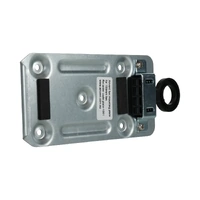
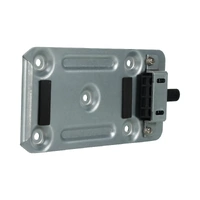
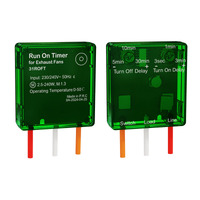
A run-on timer keeps the fan running after the light or a dedicated switch is turned off. This clears residual steam from a bathroom or toilet without leaving the fan running indefinitely. Typical run-on ranges are 1 to 30 minutes, with the setting chosen to match the room size and use pattern. Common wiring places the timer in the switch cavity, wired between the light switch active and the fan load.
A humidity sensor starts the fan when relative humidity crosses a setpoint, typically 60 to 70 percent, and runs it until humidity drops. This suits bathrooms used by people who forget to turn the fan on, or commercial premises where occupancy is unpredictable. Some sensor modules combine humidity sensing with a run-on timer for belt-and-braces control.
Inline fans mounted in a ceiling cavity need secure fixing to a joist or batten. Purpose-made mounting brackets and strap hangers distribute the load and keep the fan aligned with the duct axis. An unsupported fan hanging from its ducting will sag, kink the flex, and vibrate against ceiling joists.
Duct clamps secure flexible duct to fan spigots, grille collars, and duct joiners. Worm-drive stainless clamps are the standard trade fitting. Horizontal duct runs need support straps every 1 to 1.5 metres to prevent sag, which would otherwise pool condensate and restrict airflow.
Acoustic lagging wraps around rigid or flex duct to reduce noise transmission between rooms served by the same system, and to reduce fan noise reaching the occupied space. Insulated flex duct combines the duct and the lagging in one product. Lagging also helps control condensation in ducts that run through cold roof cavities by keeping the internal duct wall closer to room temperature.
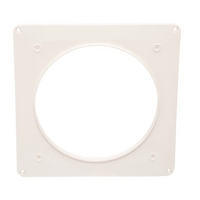
Wall-mounted axial fans, ceiling-mounted centrifugal fans, inline fans, and 3-in-1 heat-fan-light units each call for different accessories. A wall axial like those in the Airflow wall mount exhaust fans range usually needs an external wall vent and possibly an internal cover plate, but no ducting. A ceiling-mounted unit in the Airflow bathroom exhaust fan range needs ducting, a roof or wall termination, a damper, and an internal grille.
Residential accessories prioritise quiet operation, clean aesthetics, and simple installation. Commercial accessories prioritise duty cycle, flow rate, and serviceability. A bathroom grille that looks right in a home is not sized for a commercial change room; a commercial stainless grille would look out of place in a domestic ensuite.
The most common compatibility traps: mismatched duct and spigot diameters, grilles that block too much free area, dampers that will not open against low-pressure fans, and speed controllers paired with motors that are not compatible. Check the fan datasheet for accessory recommendations before ordering. Where the manufacturer specifies a kit, the kit is almost always the safer choice than mixing brands.
Bathrooms and laundries are the most common residential ventilation tasks. A 150 mm ducted fan with a flush ceiling grille, back-draft damper, and run-on timer is the standard specification. Ducting runs to a wall vent or roof cowl, never into the roof cavity. For bathrooms used by multiple people in sequence, a humidity sensor reduces dependence on users remembering the switch.
Kitchen rangehoods typically run larger diameter ducting (150 mm or 200 mm) because the airflow rates are higher and the exhaust contains grease that narrows the effective duct cross-section over time. Kitchen ducts need smooth-bore rigid ducting wherever possible; flex duct collects grease in the ripples and becomes a fire risk. The external termination must not discharge near a neighbouring window.
Commercial ventilation uses heavier-duty fans, larger ducting, and specified accessories to meet AS 1668.2 for the occupancy type. Change rooms, sanitary compartments, commercial kitchens, and plant rooms each have specific extraction rate requirements. Industrial settings add filtration, spark arrestors, and specialised dampers to the accessory list.
Every bend, transition, and restriction in a duct system adds static pressure the fan has to push against. Manufacturers publish static pressure curves that show how airflow drops as resistance rises. A 250 m3/h rating at zero static pressure might deliver 180 m3/h at 50 Pa and 120 m3/h at 100 Pa. Accessory choices (duct type, bend count, grille free area) determine where on that curve the system actually operates.
Keep duct runs as short and straight as possible. Each 90-degree bend adds roughly the pressure loss of 3 to 4 metres of straight duct. Two bends and 5 metres of flex duct can easily consume half a fan's rated capacity.
Fan noise reaches the room through three paths: airborne through the grille, structure-borne through mounting, and duct-borne along the duct walls. Acoustic lagging, anti-vibration mounts, and flexible duct connectors at the fan inlet and outlet reduce each path. Upsizing the duct one step beyond the spigot also reduces velocity-generated noise at the grille.
A sealed duct system with a properly seated damper stops heated or cooled room air escaping when the fan is off. In winter, an unsealed fan is a direct path from the warm room to the cold roof cavity. Foam gaskets around the grille, a functioning damper, and sealed duct joints together can noticeably reduce HVAC load.
AS 1668.2 specifies minimum ventilation rates for each occupancy class. Bathrooms and toilets typically require 25 L/s intermittent or 10 L/s continuous per fixture. Kitchens vary by size and use. Commercial occupancies scale with floor area or occupant count. The accessory specification must preserve the fan's ability to deliver these rates at the rated static pressure.
The NCC references AS 1668.2 for mechanical ventilation and imposes additional requirements on termination location, fire-rated penetrations, and interaction with other building services. Penetrations through fire-rated ceilings need rated collars or dampers. Discharge locations must meet setback distances from openable windows, air intakes, and property boundaries.
The electrical work (fan wiring, timer wiring, speed controller installation) is a licensed trade task in every Australian state. The mechanical installation (ducting, grilles, terminations) can often be carried out by the electrician or a separate trade depending on local arrangements. Either way, the finished installation is what gets inspected against AS 1668.2 and AS/NZS 3000:2018.
Compliance note: Discharging exhaust air into a roof cavity is a breach of AS 1668.2 and the NCC. Moisture-laden air condenses on roof timbers and insulation, creating mould and structural damage. Every exhaust system must terminate outside the building envelope.
Club Clipsal is Australia's largest electrician community, offering trade rewards, business support, and exclusive benefits. When you nominate Sparky Direct as your preferred wholesaler, Sparky Direct automatically applies your Clipsal spend points to your Club Clipsal account daily.
Entry-level offering coaching, mentoring, and training discounts
Unlock exclusive industry tools and networking events
Access Toyota fleet offers and business software discounts
Maximum benefits, including VIP experiences and rewards
1. Sign Up: Create a Club Clipsal account at clipsal.com/club-clipsal or via the iCat mobile app.
2. Nominate Sparky Direct: Select Sparky Direct from the wholesaler dropdown menu in the profile.
3. Add Email: Enter the Sparky Direct account email address in the membership number field.
4. Start Earning: Every dollar spent on Clipsal products earns points automatically.
Redeem points from the rewards store, including gift cards, tools, and experiences. Access business summits, product training, and industry networking events. Receive early access to new product launches and special promotions. Connect with fellow electricians via the Club Clipsal community app.
Trade electrical wholesalers carry the accessory range that matches the fans they sell. Buying accessories from the same supplier as the fan reduces compatibility risk and simplifies warranty claims. Sparky Direct stocks accessories across the fans and ventilation category to pair with the fans supplied.
Cheap flex duct, plastic grilles, and stamped-metal dampers exist for a reason: they are inexpensive. They also fail earlier, restrict airflow more, and leak more than trade-grade equivalents. For a rental or temporary installation the saving may be acceptable; for a house the owner plans to live in, trade-grade accessories pay back in reliability and performance.
Check the duct diameter against the fan spigot. Check grille free area against the stated duct size. Check the damper opening pressure against the fan's rated static pressure. Check whether the speed controller or timer is rated for the fan's motor type and load. Accessory brochures and manufacturer datasheets contain these numbers; skipping them is the main source of post-installation complaints.
Premium accessories use thicker material, better sealing, and tighter manufacturing tolerances. They cost more per item but reduce callback risk. Budget accessories suit short-life installations or where the accessory is protected from the harshest conditions.
Several established names dominate the Australian accessory market. Clipsal (through the Airflow range) supplies complete ducted fan kits and matching accessories. Fantech produces run-on timers and purpose-built extract fans with dedicated accessory lines. Martec covers fan-light combinations and compatible ducting. Mercator supplies ceiling-mount fans and a matching accessory range. ALLVENT specialises in grilles and ducting components. Connected Switchgear manufactures the CSG run-on timer range used widely in wet-area installations.
Warranty terms vary by brand and component type. Timers and electronic controls typically carry 1 to 2 year warranties; mechanical components such as dampers and grilles often carry longer terms. Warranty claims are simplest when the accessory, fan, and retailer are aligned. Mixing brands across a single installation splits the support path if something fails.
Grilles collect dust and lint; dampers collect grease in kitchens and laundries; ducting collects condensate and debris. An annual clean of the internal grille and a visual inspection of the damper keep the system at rated performance. Commercial installations often require scheduled cleaning on a documented cycle.
Flex duct damage comes mostly from foot traffic during subsequent trades: plumbers, cable pullers, and insulation installers stepping on the duct in the roof cavity. Supporting flex duct above joist level and running rigid duct in high-traffic zones reduces this risk. Blockages come from rodent nests, bird intrusion at the external termination, and collapsed insulation.
Dampers fail open (they stop closing and let backflow happen) or fail shut (spring fatigue holds the flap against the duct). Grilles yellow and crack under UV exposure near windows. Flex duct develops pinhole leaks where it has been compressed. Replacing individual accessories is straightforward on most systems; full replacement is rarely needed if the fan itself is still sound.
If a fan moves noticeably less air than expected, the usual causes are predictable. Check for kinked or compressed flex duct, a reducer placed mid-run, a damper not opening fully, a grille with inadequate free area, or a blocked external termination. A clamp meter on the fan motor and a smoke pencil at the grille quickly narrow the cause.
Whistling usually means a restriction near the grille or an undersized duct. Rumble usually means loose duct wall or inadequate mounting. Periodic bang-click noise is often a damper flap catching on the duct wall. Fan-body vibration transmitted to the ceiling is solved by anti-vibration mounts or a flexible duct connector at the fan spigot.
Air flowing back through the fan when it is off means the damper is not seating. Odours from one bathroom appearing in another bathroom usually means the two fans share a common duct or termination without check valves. Condensation dripping from the grille or the fan body almost always means an uninsulated duct running through a cold roof cavity; adding lagging fixes it.
Exhaust fan installations often call on products from adjacent categories. Wiring runs through electrical conduit and junction boxes. Run-on and schedule-based control is supported by digital timers and analogue timers. Automatic activation via presence or light level is handled by a motion sensor. For bathrooms that combine ventilation and heating, the exhaust fans with light range integrates extraction with lighting in a single unit.
Watch Wago 221-612 | 6mm² 2-Way Compact Splicing Connectors | Jar of 50 video
Watch Klein Tools 32317-INS | 6-Piece Insulated Screwdriver Set (Orange and Graphite) video
Watch Clipsal Iconic 41EPBDWCLMZ-VW | Zigbee Wiser Connected Dimmer with ControlLink video

Excellent little unit with good functionality, if a little expensive compared to other units available. Great for toilets where you can set an on delay for number 1's that don't need fans but will kick in for number 2's withe the application of the light switch. However a very neat bit of kit to ensure your enclosed wet/toilet areas are fully evacuated after the switch is turned off with a ten minute run on time.
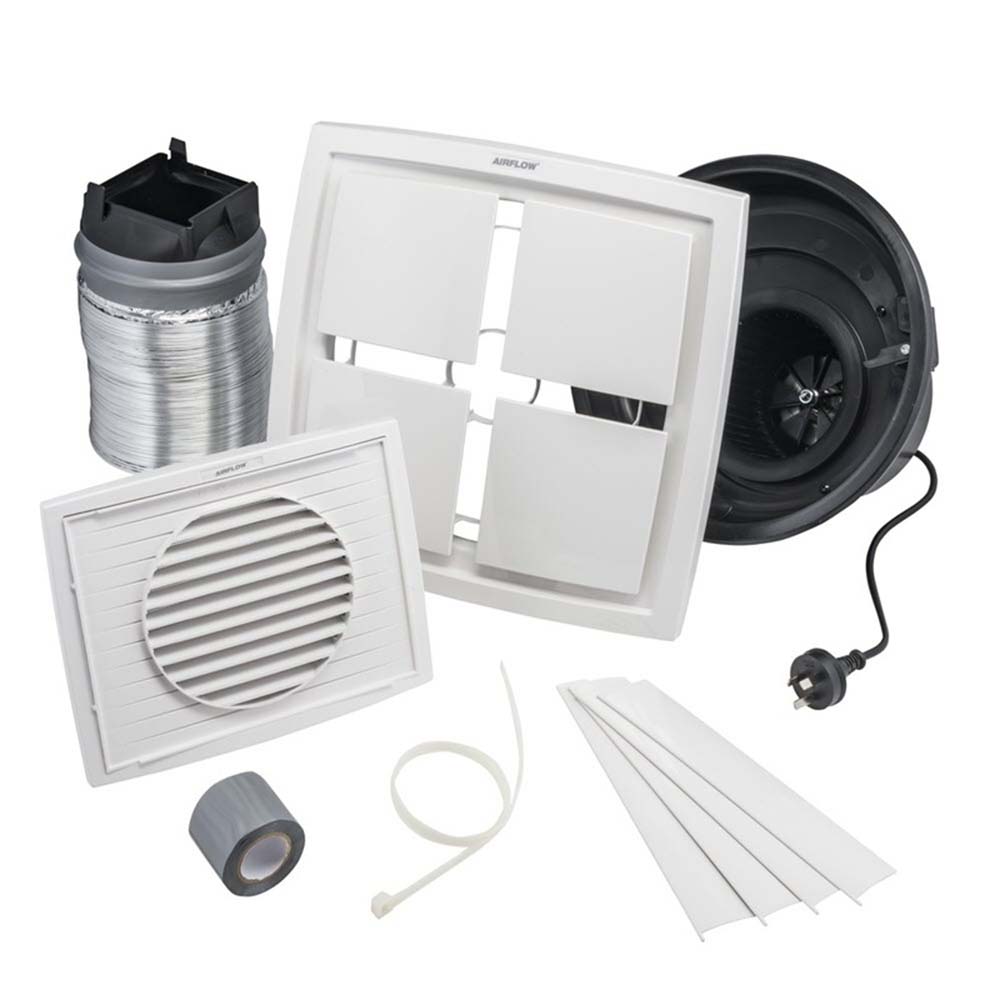
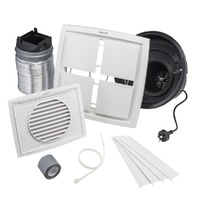
As a DIYer replacing an older non-ducted Clipsal exhaust fan, I was a bit nervous about stepping up to a ducted system—but the Clipsal Airflow CEF40WK-WE made the process surprisingly smooth. If you're upgrading from a basic non-ducted fan and feeling unsure, this kit is a solid choice. It's thoughtfully designed for ease of use, and the performance upgrade is immediately noticeable.
Fantastic Service!! I received a product that had a manufacturing defect, no issue of Sparky Direct. Within 48 I was sent a replacement part at no cost and provided a post paid bag to return the faulty product. Customer service was great to deal with via text message and incredibly responsive, despite not being at fault for the issue. Can not fault these guys. 11/10 will be using for all orders in the future.
Quality products in stock • Fast Australia-wide delivery • Competitive trade pricing
Browse Exhaust Fan Accessories → Get Expert Advice →Installation complexity varies, and any fixed electrical work should be completed by a licensed electrician.
Sparky Direct supplies exhaust fan accessories with fast Australian delivery to support reliable ventilation installations.
Any accessories involving fixed electrical connections must be installed by a licensed electrician.
Warranty coverage varies by product and manufacturer and typically applies to manufacturing defects.
Check fan compatibility, size requirements, material type, and installation conditions.
Yes, most exhaust fan accessories are available individually to suit specific installation needs.
Professional advice can help ensure correct selection and compatibility.
Yes, incorrect sizing or incompatible accessories can reduce airflow and efficiency.
Yes, accessories are available to suit both modern and older installations.
Yes, proper ducting and vents help direct moist air outside, improving moisture management.
Some accessories like grilles are visible, while others such as ducting are concealed.
Basic maintenance may include cleaning grilles or checking duct connections over time.
Some accessories can be added later, depending on access and system design.
Exhaust fan accessories are used to support installation, performance, and maintenance of exhaust fan systems.
Certain accessories, such as quality ducting and grilles, can help minimise vibration and airflow noise.
Some accessories may be reused, but others may need replacement to ensure proper fit and performance.
Yes, they are commonly used in wet areas to support ventilation requirements.
Yes, correct accessories can help optimise airflow, reduce noise, and improve overall system efficiency.
Grilles are designed for specific mounting positions, so suitability should be confirmed for wall or ceiling use.
A backdraft damper helps prevent outside air from flowing back into the room when the exhaust fan is not operating.
Yes, both rigid and flexible ducting options are available depending on installation needs and space constraints.
Ducting directs extracted air from the fan to an external vent, helping remove moisture and odours effectively.
Compatibility depends on the fan model, size, and manufacturer, so specifications should be checked before selection.
Yes, accessories supplied in Australia should comply with relevant AS/NZS electrical and safety requirements where applicable.
Common accessories include ducting, grilles, backdraft dampers, mounting kits, extension leads, and replacement covers.