

DIY
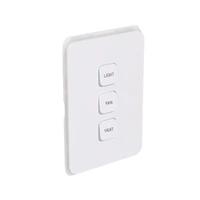
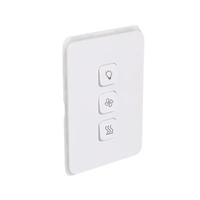
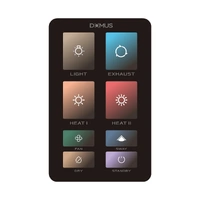
Domus 56035 | Black Film Cover for AIRSWAY 56013 & 56014 Heater Switch Controllers
$4.89
$4.45 ex. GST
Search Results:
Search Results:
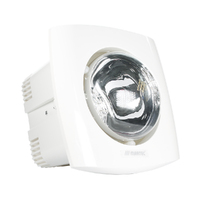
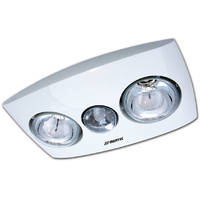
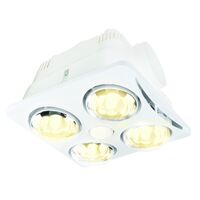
Bathroom heat lights combine three or more bathroom functions into a single ceiling fitting. Most Australian units pair two or four infrared heat lamps with an LED light and a centrifugal exhaust fan. Each function operates from its own wall switch, so the occupant can run heat alone, light alone, or any combination.
A bathroom heat light is a compliant ceiling unit rated for wet areas. Unlike standard exhaust fans, these combination units carry IPX2 or IPX3 ratings and pass AS/NZS 60598 lighting fixture testing. The typical footprint ranges from 250mm square to 400mm for larger 4-in-1 models.
Brands such as Martec, Clipsal, and Brilliant Lighting manufacture the bulk of compliant units sold in Australia. Each uses the same core principle of infrared radiant heating paired with active extraction.
The three functions work independently inside a shared housing. Infrared lamps emit radiant heat that warms skin and surfaces directly, rather than heating air. An LED module, usually rated between 8W and 12W, provides general room illumination. A ducted or non-ducted exhaust fan pulls steam and moist air out of the room at rates between 100 and 300 cubic metres per hour.
Primary applications include main bathrooms, en-suites, and powder rooms. They also suit laundries and small changing areas where spot heating helps on cold mornings. In larger bathrooms, two single-lamp units positioned above the vanity and above the shower often outperform a single multi-lamp unit.
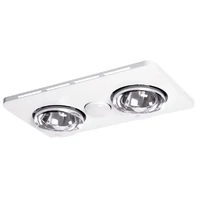
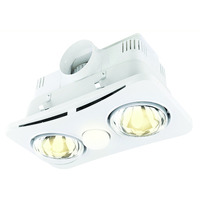
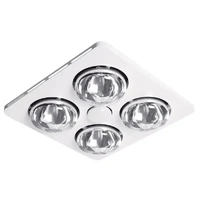
Bathroom heat lights fall into three common configurations. Each balances heating output, ventilation capacity, and ceiling space differently.
Two-function units suit bathrooms that already have adequate ceiling lighting. The single cutout reduces installation time, and the absence of a central light simplifies the electrical layout. These units work well when paired with Tri Colour LED Downlights already fitted to the ceiling.
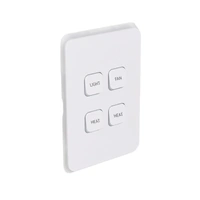
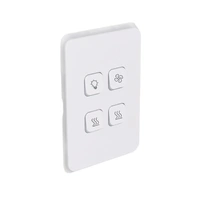
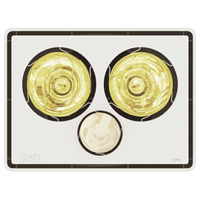
The three-function format dominates the Australian market. Popular examples include the Clipsal Airflow 6600ADS-WE and the Brilliant Newton series. Installation uses a single rectangular cutout, and wiring typically runs to a four-gang wall plate with independent switches for each function.
Four-function units add a second fan that circulates warm air back into the room, rather than out through the ducting. This helps in bathrooms larger than about 8 square metres, where infrared alone struggles to reach cold corners. The extra motor adds noise and power draw, so the trade-off suits cooler climates more than tropical zones.
Two heating technologies dominate Australian bathroom heat lights: infrared heat lamps and fan-forced ceramic elements. Infrared accounts for the bulk of installed units because it delivers instant warmth without preheating the air.
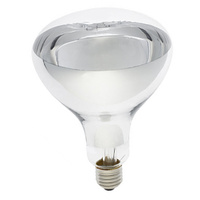
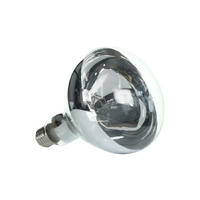
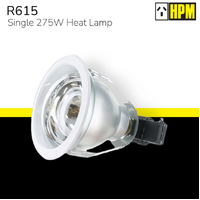
Infrared heat lamps use a tungsten filament inside a reflector-coated quartz envelope. The standard rating is 275 watts per lamp, with red-coated envelopes being the most common. Heat reaches the user within one to two seconds of switching on, which suits the short usage pattern of a post-shower dry-off.
Because infrared warms surfaces rather than air, the effect disappears as soon as the lamps switch off. This is efficient for quick bathroom visits but less suitable as a primary heat source for prolonged occupancy.
Fan-forced ceramic units pull air across a PTC heating element and push warmed air into the room. They take two to five minutes to bring a bathroom up to comfort temperature, but the heat persists after the unit switches off. Martec Thermo and similar ceramic units draw around 2000W and suit users who want the whole room warmed rather than targeted spot heating.
| Bathroom Size | Recommended Configuration | Total Heat Output |
|---|---|---|
| Under 4m² (ensuite, powder room) | 2 x 275W heat lamps | 550W |
| 4m² to 8m² (standard main bathroom) | 4 x 275W heat lamps | 1100W |
| Over 8m² (large bathroom) | 2 units at 2 lamps each, or 1 ceramic 2000W | 1100W to 2000W |
The light module is the most-used function on any bathroom heat light. Modern units ship with LED technology as standard, with halogen appearing only on older stock and some budget imports.
LED modules draw between 8W and 12W and deliver 700 to 1200 lumens. They last 30,000 to 50,000 hours and run cool enough to sit next to infrared heat lamps without accelerated ageing. Halogen lamps, where still fitted, draw 50W to 75W for equivalent output and last roughly 2,000 hours. Running cost comparisons favour LED by a factor of five or more over the life of the fitting.
Tricolour LED modules let the user switch between 3000K warm white, 4000K natural white, and 5000K cool white using a small slide switch inside the unit. This matters for bathrooms because cool light (5000K) helps with shaving and makeup application, while warm light (3000K) suits evening use and relaxation. The Brilliant Marvel and Martec Contour ranges include tricolour as standard.
Lumens measure total light output; Kelvin measures colour temperature. For a main bathroom, aim for 800 to 1200 lumens from the integrated light, supplemented by separate vanity lighting at the mirror. CRI (Colour Rendering Index) above 80 is the benchmark, with Ra90 units preferred for accurate skin-tone rendering at the mirror.
The extraction fan is the most overlooked function when buyers compare units. Inadequate airflow leads to mould, peeling paint, and swollen door jambs. The National Construction Code requires ventilation in any bathroom without an openable window.
Australian specifications quote airflow in cubic metres per hour (m³/h) or litres per second (L/s). Conversion is straightforward: 100 m³/h equals 27.8 L/s. The Building Code of Australia specifies a minimum of 25 L/s (90 m³/h) for a bathroom, rising to 40 L/s (144 m³/h) for a shared family bathroom. Most 3-in-1 units deliver 150 to 250 m³/h.
Effective moisture control needs three elements: adequate airflow, correct ducting, and run-on time after the shower stops. Running the fan for 20 to 30 minutes after showering clears residual humidity and prevents condensation from settling on cold surfaces. A timer or humidity-sensing switch handles this automatically.
Ducted systems push extracted air outside the building through flexible or rigid ducting to a roof cowl or eave vent. Non-ducted systems dump the extracted air into the roof cavity, which is now discouraged because it transfers moisture to insulation and timber framing. Compliant installations in new work are always ducted to the outside, and ducting components are available in the Exhaust Fan Accessories category.
Australian Standard AS/NZS 3000 (the Wiring Rules) divides bathrooms into zones based on proximity to baths and showers. Each zone has minimum IP rating requirements for any electrical fitting installed within it.
Licensed electrician required: Installing or replacing a bathroom heat light is electrical work under Australian law. Only a licensed electrician may connect the unit to the circuit and certify the installation.
| Zone | Location | Minimum IP Rating |
|---|---|---|
| Zone 0 | Inside the bath or shower | IPX7 (SELV only) |
| Zone 1 | Directly above the bath or shower up to 2.25m | IPX4 |
| Zone 2 | 0.6m horizontally from Zone 1 edge | IPX4 |
| Zone 3 | Beyond Zone 2 | IPX1 (IPX2 typical) |
Most 3-in-1 bathroom heat lights carry IPX2 or IPX3 ratings, which means they suit Zone 3 installation. Some dedicated shower-zone units carry IPX4 and can sit directly above a shower. Always verify the specific model's IP rating before installing in Zone 1 or Zone 2.
The circuit must be protected by a 30mA RCD (residual current device) per AS/NZS 3000 Section 2.6. The installer must also confirm the fan cable is rated for continuous operation and that the ducting exits the building correctly. A Certificate of Electrical Safety (or state equivalent) must be issued on completion.
Three factors drive unit selection: bathroom size, ceiling type, and switching layout. Get these right at the planning stage and the installation goes smoothly.
Small ensuites (under 4m²) rarely need more than two heat lamps. Standard main bathrooms (4m² to 8m²) suit 4-lamp units or dual 2-lamp installations. Anything over 8m² benefits from splitting the heating into two separate units, one above the shower and one above the vanity, so users can warm the area where they are actually standing.
Most units need 200mm to 250mm of clearance above the ceiling line for the fan body and wiring loom. Check rafter spacing before cutting: standard Australian joists sit at 450mm or 600mm centres, and many unit footprints assume clearance between joists rather than through them. For raked or cathedral ceilings, surface-mount models may be the only compliant option.
Four-gang wall plates are the standard for 3-in-1 units, giving dedicated switches for heat, light, fan, and (where fitted) the tri-colour selector. Some installers run the fan through a Dimmer Switch but this is not recommended: fan motors are inductive loads that most dimmers cannot handle safely. A dedicated fan speed controller or run-on timer is the correct approach.
Heat lamps are the largest single electrical load in an average bathroom. Understanding power draw and typical usage patterns keeps running costs predictable.
| Configuration | Heat Power | Light Power | Fan Power | Total at Full Load |
|---|---|---|---|---|
| 2-lamp 3-in-1 | 550W | 10W LED | 25W | 585W |
| 4-lamp 3-in-1 | 1100W | 12W LED | 30W | 1142W |
| Ceramic 4-in-1 | 2000W | 15W LED | 35W | 2050W |
Most cost savings come from three habits. First, run heat lamps only when actively drying off, typically three to five minutes. Second, fit a run-on timer so the fan extracts steam for 20 to 30 minutes after the shower, then shuts itself down. Third, choose LED over halogen for the light module, cutting bulb running cost by around 80 percent.
Over a ten-year service life, a 4-lamp LED unit used for ten minutes per day costs approximately $70 per year in electricity at 30c per kWh. The same usage pattern on a halogen-light unit adds around $25 per year. Replacement lamp costs add a further $40 to $60 over the decade on the heat side, since infrared lamps last roughly 5,000 hours.
A well-installed bathroom heat light runs quietly, extracts effectively, and lasts the warranty period. A poorly installed one rattles, drips condensate into the ceiling cavity, and fails early.
Position the unit between the shower and the main dry-off area, not directly above the shower recess unless the model is rated for Zone 1. A typical placement is 300mm to 500mm clear of the shower enclosure, giving radiant heat coverage for someone stepping out. Avoid placing directly above the toilet or hand basin where heat delivery is not needed.
Keep duct runs short and straight. Each 90-degree bend reduces airflow by roughly 15 percent, and every metre of flexible ducting adds friction loss. A practical maximum is 3 metres with no more than two bends. Longer runs need rigid PVC ducting or a larger-diameter flexible section to maintain extraction rates.
Beyond the core heat, light, fan combination, several features separate premium units from budget stock. Not every feature suits every installation, but knowing which ones matter helps with specification.
Humidity-sensing switches turn the fan on when bathroom humidity rises above a threshold (typically 65 percent relative humidity) and off when it drops back to normal. This removes the need for user intervention and ensures extraction always runs when needed. Standalone humidity switches integrate with most fan circuits via a standard four-gang wall plate.
Run-on timers keep the extraction running for a set interval after the wall switch is turned off. Most models offer 5, 15, or 30-minute options. A 20 to 30-minute default suits standard bathroom use and is the single most effective upgrade for moisture control.
Fan noise is measured in decibels at one metre. Premium units run at 35 to 45 dB, which sits below normal conversation level. Budget units often exceed 55 dB and are noticeably intrusive. DC motor units are quieter than AC motor units at the same airflow rating, and sleeve bearings are quieter than ball bearings in the first few years of use.
Deciding between a heat light, a standalone exhaust fan, and premium versus budget tiers depends on the use case. This section unpacks the main trade-offs.
A standalone Exhaust Fan extracts moisture but provides no heat. Heat lights bundle both functions into a single ceiling cutout, which saves labour and reduces the number of wall switches. Standalone fans are the cheaper option when heating is not needed, and they come in higher airflow ratings (up to 400 m³/h) for large bathrooms or laundries.
An Exhaust Fan with Light (2-in-1) sits between the two, adding an LED but skipping the heat function. This is a compact, low-cost option for bathrooms with existing ducted heating.
Budget units (under $200) typically use AC motors, basic LED modules without tri-colour, and shorter warranty periods (1 to 2 years). Premium units ($300 and up) include DC motors, tri-colour LED, humidity-sensing options, and 3 to 5-year warranties. For rental properties the budget tier is often adequate; for owner-occupier bathrooms the premium tier usually pays back in lifespan and noise comfort.
| Brand | Known For | Typical Price Range |
|---|---|---|
| Clipsal Airflow | Long service life, strong availability, Schneider-backed warranty | $250 to $450 |
| Martec | Contemporary styling, tri-colour LED, single-lamp options | $150 to $400 |
| Brilliant Lighting | Budget to mid-range, wide distribution, easy retrofit | $120 to $280 |
| Mercator Lighting | Designer aesthetics, specialty units, round formats | $180 to $350 |
| Ventair | Higher airflow, ducted specialists, commercial ratings | $200 to $500 |
Sparky Direct stocks heat lights from the major Australian suppliers, with trade pricing available to licensed electricians. This section covers what to check before placing an order.
Trade-focused online wholesalers like Sparky Direct carry the full range of compliant brands with stock held in Australian warehouses. Hardware retailers carry limited SKUs, mostly budget tier. Avoid grey-market imports from overseas marketplaces: unit voltage, plug configuration, and compliance with AS/NZS standards cannot be assured.
Trade-grade units come with verified compliance labelling, documented IP ratings, and local warranty support. Genuine price differences between trade and cheap retail units often reflect motor quality, LED driver stability, and housing material. A $120 budget unit and a $300 trade unit can look similar in catalogue photos but perform very differently after 12 months of daily use.
1. Confirm IP rating suits the intended zone (minimum IPX2 for Zone 3, IPX4 for Zone 1 or 2).
2. Verify ceiling cavity depth accommodates the unit body.
3. Check whether the unit includes the ducting kit or requires separate duct, grille, and cowl purchase.
4. Confirm the unit matches the existing wall plate gang count, or plan the wall plate upgrade into the scope.
5. Book a licensed electrician for installation before the unit is delivered.
Bathroom heat lights are set-and-forget fittings but not maintenance-free. A small amount of regular attention extends service life significantly.
Dust builds up on heat lamp reflectors and fan blades over time. Every six to twelve months, switch off at the circuit breaker, let the lamps cool fully, then wipe reflectors with a dry microfibre cloth. Remove the fan grille and vacuum dust from the blades and motor housing. Never use water or cleaning sprays on a heat light fitting.
Infrared heat lamps typically last 3,000 to 5,000 hours. Replacement is straightforward: switch off at the circuit breaker, wait for the lamp to cool completely (at least 15 minutes), unscrew the failed lamp, and fit the replacement rated for the correct wattage. Only use genuine replacement lamps. LED modules in modern units are usually not user-serviceable; failure typically means replacing the full unit or fitting a manufacturer-supplied module.
A trade-grade bathroom heat light should last 10 to 15 years. The fan motor is usually the first component to fail, followed by the LED driver. Budget units often fail within 3 to 5 years, making the lifetime cost higher despite the lower purchase price. Warranty claims are simpler when the unit is registered with the manufacturer at install time.
Most heat light faults fall into three categories: heat lamp failure, poor ventilation, and noise from the fan. Each has a small number of likely causes.
Single lamp not working: the most likely cause is a blown lamp. Replace with a genuine 275W infrared lamp of the correct fitting. All lamps not working: check the wall switch, then check the circuit breaker. If both are fine, the internal wiring or thermal cut-out may have tripped, which needs a licensed electrician to diagnose.
If the fan runs but moisture stays in the room, check the ducting for crushing, disconnection, or blockage. Also inspect the roof cowl or eave vent for bird nests or debris. A duct run longer than 3 metres or with multiple bends may simply be undersized for the fan rating.
New noises usually come from loose mounting, dust buildup on the fan blades, or wearing bearings. Tighten mounting screws first, then clean the fan. If noise persists, the motor bearings are likely failing, which on most units means full unit replacement rather than motor repair.
Club Clipsal is Australia's largest electrician community offering trade rewards, business support, and exclusive benefits. When you nominate Sparky Direct as your preferred wholesaler, we automatically apply your Clipsal spend points to your Club Clipsal account daily.
Entry-level offering coaching, mentoring, and training discounts
Unlock exclusive industry tools and networking events
Access Toyota fleet offers and business software discounts
Maximum benefits, including VIP experiences and rewards
1. Sign Up: Create your Club Clipsal account at clipsal.com/club-clipsal or via the iCat mobile app
2. Nominate Sparky Direct: Select Sparky Direct from the wholesaler dropdown menu in your profile
3. Add Email: Enter your Sparky Direct account email address in the membership number field
4. Start Earning: Every dollar spent on Clipsal products earns points automatically
Redeem points from the rewards store, including gift cards, tools, and experiences. Access business summits, product training, and industry networking events. Receive early access to new product launches and special promotions. Connect with fellow electricians via the Club Clipsal community app.
Watch Clipsal 6600LEDLAMP | Airflow LED Lamp 8W Suits 6600ADP-WE | Warm White video
Watch IXL12309 | Tastic Prime 3 in 1 Bathroom Heater, Exhaust Fan & Light video
Watch Martec MBHT2000W | Thermo Bathroom Ceramic Heater | White video

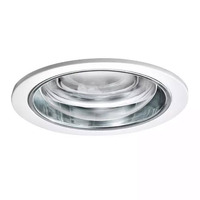
Sparkies spend alot of time everyday ensuring downlights are evenly spaced in a room for correct beam dispersal and aesthetic. So why do they often overlook the bathroom? These lights bring a premium feel to any bathroom as everything isn't crammed into a large piece of plastic hanging off the ceiling. Used in conjunction with a seperate fan be that an in line one plumbed to a grille or a more typical pass through. The assembly of the light fitting is robust and what you would expect. Being a larger diameter and depth than a standard downlight check your clearances before committing to cutting the hole.
I second Dr Watts! No bloated bland bezel bulging from the ceiling, just a more elegant fixture. Great for heating separate areas of a large bathroom more efficiently (e.g. above sink, above shower). Most bathroom shall use more than one for faster heating, but a single lamp can be used for keeping the loo warm. Another advantage is the lamps can be more flexibly controlled, such as by having separate switches, and using a smart thermostat with multi-stage heating for automation and energy-saving. I used a Google Nest thermostat with a relay box I built.
I had an older model which lasted 12 years, still works , but the fan would make banging noises while on and sometimes not even work. So I decided to get a new one and didn't want to cut a bigger hole or patch the existing hole for a different size fan. Went online and straight away found same looking fan with updated model on sparky direct website. Purchased and few days later delivered, that's how I like it. Got my sparky mate to install it and works a treat. Good stuff.
Quality products in stock • Fast Australia-wide delivery • Competitive trade pricing
Browse Bathroom Heat Lights → Get Expert Advice →Noise levels vary by model, with many designed to operate quietly during normal use.
Sparky Direct supplies heat fan lights with fast Australian delivery to support warm, well-ventilated bathroom spaces.
Yes, installation must be completed by a licensed electrician under Australian regulations.
Warranty coverage varies by manufacturer and typically applies to manufacturing defects.
Consider room size, heating output, noise level, light type, and ducting requirements.
Yes, products are available in a range of sizes, finishes, and heating capacities.
Power usage depends on heater size and usage time, with intermittent use common in bathrooms.
Yes, they are commonly used in ensuites and small bathrooms.
Yes, subject to ceiling space, electrical capacity, and compliant installation.
Basic maintenance includes cleaning vents and light covers to maintain airflow and brightness.
Yes, they are commonly used to improve comfort during colder months.
They are designed for safe operation when used as directed, but should not be left running unnecessarily.
Yes, the exhaust fan function helps remove steam and moisture from the bathroom.
Heat fan lights provide heating, ventilation, and lighting in a single unit, commonly installed in bathrooms.
Many models allow independent control of each function, depending on wiring and switches.
Heat fan lights are designed to provide fast, targeted warmth during bathroom use.
Yes, installation must be completed by a licensed electrician in accordance with Australian regulations.
In many cases they can, subject to ceiling space, wiring, and ventilation suitability.
Models designed for bathrooms meet appropriate safety requirements when installed correctly.
Many models require ducting to vent air outside, while requirements depend on the specific product and installation.
Yes, models are available with different heating capacities to suit small or large bathroom spaces.
Energy efficiency varies by model, with many modern units using efficient fans and LED lighting.
Most units combine a heater, exhaust fan, and light, with some models offering multiple heat settings.
Heat fan lights supplied in Australia should comply with relevant AS/NZS electrical safety and performance standards.
Yes, heat fan lights are widely used in Australian bathrooms and designed for local conditions and requirements.