
Search Results:
Search Results:
Search Results:
Search Results:
Self drilling screws look similar across products, but visual similarity does not mean they are interchangeable. Drill point capacity, gauge, length, thread profile, head style, washer type, and drive profile each shape how the screw performs in a given substrate. Choosing the wrong specification can burn out the point, strip the thread, or leave a fixing that loosens over time.
Drill points are classified by number, broadly from #1 through #6. Points numbered #1 to #3 suit light to medium steel, sheet metal, light framing, brackets, and purlins. Points numbered #4 to #6 handle heavier gauge steel, structural sections, and high-capacity metal-to-metal fastening. The point must match the combined thickness of every layer the screw passes through, not just the top sheet.
Gauge refers to the screw diameter and directly affects shear strength, pull-out resistance, and clamping force. Common trade gauges include 10G, 12G, and 14G. Length must cover the top material plus enough thread engagement into the base to develop full holding strength. Battens, roofing sheets, light steel framing, brackets, and cladding all have different length requirements based on substrate thickness.
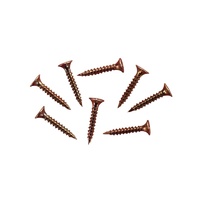
Head choice controls clearance, load distribution, and finish appearance. Hex flange heads suit roofing, cladding, and steel framing where high torque is required. Wafer heads give a low-profile fixing useful for roof clips, concealed brackets, and light steel framing. Pan and button heads offer a rounded finish for light-duty metal, plastic, and equipment panels. Bugle heads spread load on plasterboard and fibre cement, while countersunk heads sit flush in boards and interior panels.
Fine thread profiles suit steel-to-steel applications, where each turn cuts a sharp thread into hard material. Coarse thread profiles grip softer materials such as timber, particleboard, and softwood structural members. Wing-tipped variants are designed for fibre cement, polycarbonate, and plastic sheet, where the wings clear a hole through the upper layer before the thread engages the steel beneath. Selecting the correct thread reduces stripping, premature loosening, and joint failure.
Self drilling screws appear across almost every Australian construction and electrical workflow. The trade choice depends on substrate, exposure, head style, and the level of torque a job demands. Structural and electrical fastening must follow project documentation and applicable Australian standards.
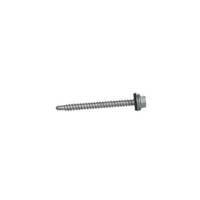
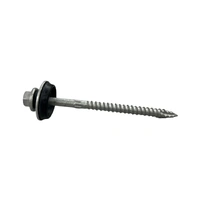
Roofing screws are typically hex head 12G or 14G fixings with bonded EPDM washers that compress to seal the penetration. Stitch screws fasten sheet overlaps and lap joints at the edges of metal roofing. Coatings should be matched to the roofing material, with Colorbond, Zincalume, and aluminium each calling for compatible fastener finishes. Manufacturer fixing schedules cover screw spacing, length, and weatherproofing requirements.
Light gauge steel framing, C and Z purlins, and roof battens are common targets for self drilling fixings. The drill point number and screw length must match the combined steel thickness. Heavy-duty structural steel may require high-capacity drill points and engineered fastener schedules. Mismatched gauge or length leads to spinning fixings, stripped threads, and incomplete clamping.
Self drilling screws fix conduit saddles, cable tray brackets, switchboard mounting plates, equipment frames, and metal enclosures to steel substrates. HVAC work uses them on sheet metal ductwork, access panels, and light framing. Fixed wiring, switchboard assembly, and electrical equipment connections must be carried out by a licensed electrician in accordance with AS/NZS 3000.
Coarse-thread and wing-tipped self drilling screws fix timber, fibre cement, plasterboard, and composite board to steel framing. Button head, wafer head, bugle head, and countersunk variants offer different finish profiles. Board manufacturers publish fastening schedules covering spacing, edge distance, and coating, and those documents take precedence over generic guidance.
Coating choice determines how long a fixing holds up in real conditions. Indoor dry work, exterior framing, coastal exposure, treated timber, and industrial environments each demand a different level of protection. The cheapest screw is not always the most cost-effective when the failure mode is a call-back, a leak, or premature corrosion staining.
Zinc plated fixings suit dry internal use only and will corrode quickly outdoors. Class 3 galvanised or equivalent coatings cover most general exterior work away from severe marine exposure, while Class 4 or higher-rated coatings are intended for coastal, industrial, and harsher Australian environments. Coating selection should match the exposure class of the site and the substrate the screw is anchored into.
Stainless steel is preferred in coastal, marine, high-humidity, and chemically aggressive environments. Grade 304 stainless suits most corrosion-resistant external applications, while grade 316 offers higher resistance for direct marine exposure. Stainless fixings can drill differently than hardened carbon steel, so the substrate thickness and point capacity must be checked carefully against the manufacturer rating.
Bonded EPDM washers compress against the sheet surface to seal water out of the penetration. Overdriving crushes the washer, distorts the sheet, and compromises the seal, while underdriving leaves the joint loose without a watertight clamp. Roofing system manufacturers publish washer compression guidance, and following it protects the warranty on the roof.
Galvanic corrosion occurs when dissimilar metals contact each other in a wet environment. The fastener and substrate must be metallurgically compatible to avoid accelerated corrosion at the contact point. Colorbond and Zincalume sheets call for fasteners specified for those coatings. Aluminium cladding calls for fasteners that will not drive galvanic attack. Mixing incompatible metals in coastal or wet environments is one of the most common reasons roof fixings stain or fail early.
A simple four-step framework removes most fastener selection errors on site. The order matters because each later step depends on the substrate decision made first.
Start by determining whether the fixing is metal-to-metal, timber-to-metal, plastic-to-metal, board-to-steel, or roofing sheet-to-purlin. Add up the total thickness the screw will pass through, including the top sheet, any intermediate layer, and the base metal beneath. Pick a drill point with adequate rated capacity for that combined thickness.
10G works for lighter fixings, 12G suits common roofing and general trade fastening, and 14G handles heavier roofing, structural steel, and high-load applications where specified. Length must give full thread engagement into the base material after passing through every layer. Coarse thread for timber and softer substrates, fine thread for steel-to-steel.
Hex heads transfer high torque for roofing and framing work, while wafer heads deliver low-profile fastening with minimal protrusion. Bugle or countersunk heads work well for board and flush applications, and pan or button heads cover light-duty finishing and equipment panels. Torx and hex drives transfer more torque than Phillips and reduce cam-out in trade settings.
Indoor dry, general outdoor, coastal, treated timber, and industrial exposures each call for different corrosion protection. Avoid the cheapest screw if a coating failure would cause call-backs, leaks, structural problems, or visible corrosion staining. Match the coating to the substrate to avoid galvanic issues.
| Application | Typical Head | Common Gauge | Notes |
|---|---|---|---|
| Metal roofing sheets | Hex with bonded washer | 12G, 14G | Match coating to sheet material |
| Steel purlins and battens | Hex or wafer | 10G, 12G | Drill point matched to steel thickness |
| Light steel framing | Wafer or pan | 8G, 10G | Fine thread preferred |
| Fibre cement to steel | Countersunk or bugle | 8G, 10G | Wings clear soft layer first |
| Electrical brackets and enclosures | Pan, button, wafer, hex | 8G, 10G | Depends on clearance and torque |
| Coastal exterior work | Hex with bonded washer | 12G, 14G | Class 4 or stainless steel |
Gauge is selected by load, substrate thickness, and pull-out requirement. 10G covers lighter fixings such as light framing and equipment panels. 12G is the workhorse gauge for general roofing and trade fastening. 14G handles heavier roofing, structural sections, and high-load applications where specified by the engineer or roofing system.
Batten length depends on batten thickness, the sheet or bracket on top, and the required thread engagement into the base material. Add the top layer thickness to the batten thickness, then add enough length to reach a full thread engagement into the base. Manufacturer fixing schedules give the definitive answer for proprietary roofing systems.
Self drilling screws solve specific problems extremely well, but they are not the right answer for every fastener question. Understanding when a different fastener performs better reduces wrong-product purchases and avoids reinstallation work later.
Self drilling screws bore the hole and tap the thread in one operation. Self tapping screws form a thread but normally require a pre-drilled pilot hole. Self drilling is faster on site for metal-to-metal work within drill point capacity. Self tapping suits jobs where holes are drilled in a separate operation for accuracy or alignment, or where the substrate is too thick for any drill point rating.
Screws are removable and faster to install for many metal-to-metal fixings. Rivets provide a permanent, vibration-resistant joint and can suit applications where the back face of the joint is inaccessible. HVAC ductwork, sheet metal panels, and equipment enclosures use both, depending on whether future removal is needed.
Self drilling screws install quickly into sheet and light-to-medium steel. Bolts handle high-load, removable, and engineered structural connections where shear and tension are calculated and certified. Engineered structural connections must follow the specified fastener schedule, not a generic substitution.
Self drilling screws are not a universal replacement for timber screws. Standard timber screws often perform better in timber-to-timber where no metal needs to be drilled. Self drilling fixings come into their own for timber-to-steel and mixed-material fastening where the screw must penetrate a steel layer before threading into timber or board.
Correct tooling and torque control make the difference between a clean fixing and a stripped joint. This section gives high-level planning guidance only. Electrical, structural, and roofing work must be carried out in accordance with project specifications and applicable Australian standards.
Magnetic hex sockets suit hex head roofing screws and reduce dropped fixings on a ladder. Torx, Phillips, and square drives all have a place, but the bit must match the screw drive exactly. Impact driver bits are common, but the torque setting must be controlled to avoid overdriving. Worn bits cam out and damage the head.
No. The drill point is built into the screw itself, so no separate pilot drill bit is required when the screw is correctly matched to the substrate. A correctly sized driver bit or socket is essential. Where a substrate exceeds the rated drill point capacity, a self tapping screw with a pre-drilled hole or a heavier fastener system becomes the right choice.
Overdriving strips threads, crushes EPDM washers, distorts sheets, and compromises weather seals, while underdriving leaves sheets loose with poor clamping and potential leak points. Use an appropriate driver setting and follow the screw and roofing system manufacturer recommendations for compression and torque.
Electrical fixings involving switchboards, fixed wiring, and electrical equipment must be installed by a licensed electrician working to AS/NZS 3000. Structural fastening should follow project documentation, National Construction Code requirements, and any engineering specification that applies. Roof penetrations and weatherproof connections should follow the roofing system manufacturer requirements to prevent water ingress.
Most self drilling screw failures trace back to a small number of root causes. Recognising the symptom on site is the fastest way to identify the correct fix.
Several root causes account for most drilling failures on site. A drill point rated below the combined substrate thickness will not bite through cleanly. Excessive driver speed or pressure burns out the hardened tip before it can cut a hole. Screw material that is too soft for the steel being drilled wears down rapidly under load. Harder structural steel may need a higher-capacity fastener altogether. Reducing speed, easing pressure, and stepping up to a higher point rating usually resolves the issue.
Strip and cam-out problems trace back to a small group of issues that are quick to identify on site. An incorrect or worn drive bit cannot transfer torque cleanly into the head. Excessive torque drives the bit out of the head before the screw is fully seated, and low-quality screw head geometry compounds the problem. A Phillips drive used in a high-torque application will often cam out where hex or Torx would perform better. Fresh bits and the correct drive profile fix the majority of these issues quickly.
Surface rust and brown staining on a finished roof or wall almost always indicate a coating mismatch. The screw coating may not match the exposure conditions, the screw and substrate may not be galvanically compatible, or the coating may have been damaged during installation. Coastal and high-humidity sites need higher corrosion-resistance ratings or stainless steel fixings.
Online buying suits trade workflows because stock visibility, transparent pricing, and fast dispatch reduce job delays. Pack sizes, drill point ratings, and coating classes are easier to compare on a product page than at a hardware store counter.
Confirm the gauge, length, drill point number, head type, drive type, washer type, coating class, pack quantity, and substrate compatibility. Check whether the product is rated for metal-to-metal, timber-to-metal, roofing, board fixing, or a specialist material such as polycarbonate. The product page specifications take precedence over generic information.
Contractors who use the same sizes daily benefit from bulk packs. Bucket packs standardise the most common gauges and reduce per-screw cost. Smaller value packs suit renovation jobs and maintenance work where only a handful of fixings are needed. Stocking a sensible range across the most common gauges and lengths reduces job delays.
Australian trade and electrical suppliers carry compliant stock, clear pack sizes, accurate product details, and trade-oriented ranges. Sparky Direct is an online electrical wholesaler with fast Australia-wide dispatch. The trade-friendly product range covers the full Screws and Fixings category, including dedicated Self Drilling Screws, Washer Head Screws, and Pan Head Screws. Related categories such as Drill Bits and Screwdriver Kits ship from the same dispatch warehouse.
The page also covers focused questions on metal-to-metal fixing, roofing sheet selection, wing-tipped screws, stainless steel use, drill bit requirements, and timber frame applications. The Frequently Asked Questions accordion sits at the bottom of the page.
Club Clipsal is Australia's largest electrician community offering trade rewards, business support, and exclusive benefits. When you nominate Sparky Direct as your preferred wholesaler, we automatically apply your Clipsal spend points to your Club Clipsal account daily. Clipsal supplies a substantial part of the Self Drilling Screw range in stock, including 357 Series bugle head, pan head, wafer head, and washer head fixings, so each bucket pack and packet adds to your earning balance.
Entry-level offering coaching, mentoring, and training discounts
Unlock exclusive industry tools and networking events
Access Toyota fleet offers and business software discounts
Maximum benefits, including VIP experiences and rewards
1. Sign Up: Create your Club Clipsal account at clipsal.com/club-clipsal or via the iCat mobile app
2. Nominate Sparky Direct: Select Sparky Direct from the wholesaler dropdown menu in your profile
3. Add Email: Enter your Sparky Direct account email address in the membership number field
4. Start Earning: Every dollar spent on Clipsal products earns points automatically
Redeem points from the rewards store, including gift cards, tools, and experiences. Access business summits, product training, and industry networking events. Receive early access to new product launches and special promotions. Connect with fellow electricians via the Club Clipsal community app.
Watch Clipsal 357/50B Self Drilling Screw, Bugle Head, 8Gx50mm, 500 per Bucket Incl. Free Phillips (Ph.2) Double-Ended Magnetic Screwdriver Bit video
Watch Clipsal 357WF30 Self Drilling Screw, Wafer Head, 10G x 30mm, 100 per Packet video
Watch Clipsal 357WH12B Self Drilling Screw, Washer Head, 8Gx12mm, 1000 per Bucket Incl. FREE Phillips Double-Ended Magnetic Screwdriver Bit video

These are fantastic for installing a ceiling fan timber in a roof space. With your drill on the low speed you can drill through the truss and into your noggin with confidence
Deliver promptly and specified on the web site, another excellent product from Sparky Direct
Handy container for the van or Ute, quality is good. Like these for wall mates and the like.
Quality products in stock • Fast Australia-wide delivery • Competitive trade pricing
Browse Self Drilling Screws → Get Expert Advice →